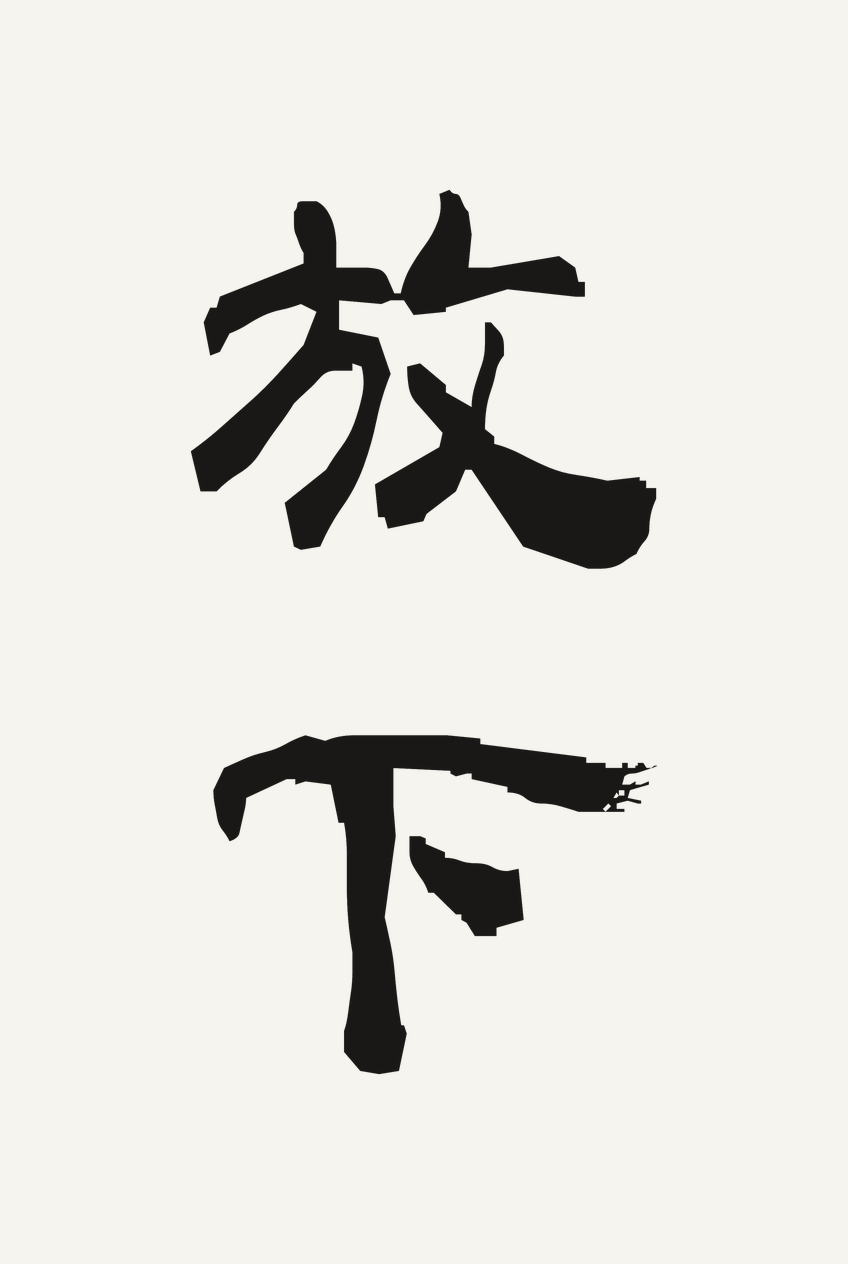
放下 · Fàng Xià
Set It Down
系列: 单字禅意 · Design #19
笔法: two characters, vertical column · clerical script (lishu) · same form 放下 · small-to-medium
形态: 二字竖列,隶书
名字
放下——松手,放下。两个字,一条穿着精神外衣的身体指令:不管你提着什么——怨恨、前任、错误版本的自己、手机——手本来就认识这个动作。禅宗把它修成了公案级的功课词,它的权威来自平凡:放下一个重物不需要任何哲学。纹下它,是一份两个音节的说明书,说给全身唯一永不松手的那个部位。
*Fàng xià* — release, put down. Two characters that are a physical instruction wearing a spiritual one: whatever you are carrying — the grudge, the ex, the wrong version of yourself, the phone — the hands already know the motion. Chan (Zen) made it a koan-grade practice word, and its authority comes from being ordinary: no philosophy is required to let go of a weight. As a tattoo, it is an instruction manual in two syllables, addressed to the one body part that never stops gripping.
出处
禅门立了这一幕:《五灯会元》记一位僧人对赵州说自己什么都不曾带来——一物不將來——接下来呢?赵州答:放下著。僧人抗议:我说了我什么都没拿!赵州:那麼,擔起去。作为功课指令的「放下」自唐以下贯穿禅录;这里按传统自己引用它的方式引用。墨线转写:本设计以传统母题的经典线条造型为底,转写为纹身墨线。
The Chan canon fixes the scene: 《五灯会元》records a monk telling Zhaozhou (趙州) he has nothing at all — 一物不將來 — so what now? Zhaozhou answers: 放下著 — "set it down." The monk protests: I said I'm carrying nothing! Zhaozhou: 那麼,擔起去 — "then pick it up and go." The word 放下 as a practice instruction runs through the Chan records from the Tang onward; it is cited here as the tradition itself cites it. Inking note: this design adapts the classic line construction of the traditional motif and re-inks it as tattoo linework.
设计灵感
本设计的每一处形制决定都有出处可查,逐条对账。① 二字竖列——按顺序读的指令:先是松开的手(放),然后是落下的东西(下)。这一列的下坠就是那个手势。② 隶书、同形「放下」——「放」的手旁挨着有力的「方」;「下」一笔从水平线落下:放开的全部物理学,四笔写完。③ 小到中尺寸——6–8 厘米;这个词是整件事里最轻的部分。④ 只用墨——放下的东西不剩渣。
Every form decision points to a recorded source, element by element. ① Two characters, one vertical column — the instruction read in order: first the releasing hand (放), then the falling thing (下). The column's descent is the gesture. ② Clerical script, same form 放下 — 放's hand radical beside the striking 方; 下's single drop falling from a level line: the whole physics of letting go in four strokes. ③ Small-to-medium scale — 6–8 cm; the word is the lightest thing about it. ④ Black ink only — a thing set down leaves no residue.
来历
赵州那段是禅录里最好的短篇小说。一位僧人进门宣布最高成就:我什么都放下了,一无所有。老和尚当场接住他的破绽——如果你什么都没拿,肩为什么是弯的?放下著:把那个也放下。僧人抗议说没东西可放。那好,赵州说,拿起来,出去。教法像一次重物脱手般落地:大声宣布「我无所负担」,本身就是一件重物。连开悟,攥紧了也是行李。
这正是这个词的精确之处:放下说的不是变空——说的是你的握力正在做什么。传统把它同样用在悲伤与怨恨上,而且从不谎报力学:放下不是一次性的戏剧动作,是重复的动作,一只手开了、合了、再开。这个纹身的工作方式相同。你不是在「完成了」的那天戴它;你是在手指还蜷着的时候戴它——于是一天几次,在腕与眼之间的某处,指令抵达,那只手——无论它攥着什么——考虑一下自己的选项。
The Zhaozhou exchange is the best short story in the Chan canon. A monk arrives announcing the highest spiritual achievement: I have let go of everything, I carry nothing at all. And the old master catches him in the trap instantly — if you carry nothing, why are your shoulders bent? 放下著: set that down too. The monk objects that there is nothing to set down. Then, says Zhaozhou, pick it up and carry it out. The teaching lands like a weight released: "nothing to carry" announced loudly is itself a heavy thing to carry. Even enlightenment, clutched, is baggage.
That is the word's precision: 放下 is not about becoming empty — it is about what your grip is doing. The tradition applies it to grief and grudges alike, and it never lies about the mechanics: letting go is not one dramatic act but a repeated one, a hand that opens, closes, opens. The tattoo works the same way. You do not wear it the day you are done; you wear it while the fingers are still curled — so that somewhere between wrist and eye, several times a day, the instruction arrives, and the hand — whatever it is holding — considers its options.
释义
给攥着的人——记仇的、哀恸的、凌晨两点重读聊天记录的。它不宣称那些重量不该存在。它只以赵州式的平淡善意问一句:提着的感觉,进行得如何?
For the grippers — the resentful, the grieving, the ones re-reading the message thread at 2 a.m. It does not claim the weight is wrong to have existed. It only asks, with Zhaozhou's flat kindness: how is the carrying going?
位置
两个字,一个平面:腕内侧(直接落在握持装置上)、后颈、肋侧。6–8 厘米读作一条私人指令;低于 5 厘米「下」的物理学会被抹平。
Two characters, one plane: inner wrist (directly on the gripping apparatus), nape, ribcage. 6–8 cm reads as a private instruction; below 5 cm the physics of 下 flattens.
纹之前
两个字就是全部设计。 ② 同形「放下」——简繁同形。③ 隶书保持平。 「下」的那条水平线是一笔落下之处——全设计最稳的一笔。④ 5 厘米起。 ⑤ 放下不等于消失。 禅门的意思是:东西放下了,你仍然可能每天路过它。这个纹身标记的是摊开的手,不是空掉的房间。
Two characters are the whole design. ② Same form 放下 — identical in traditional script. ③ Clerical script stays level. The level line of 下 is what the drop falls from — the steadiest stroke in the design. ④ Minimum 5 cm. ⑤ Set down is not the same as gone. The Chan point is that you can set a thing down and still walk past it daily. The tattoo marks the open hand, not the empty room.
本卡每一个汉字都由中文母语者选定并逐笔核对。



