环带纹 · Huán Dài Wén
The Wave That Learned Order
系列: 符号纹样 · Design #09
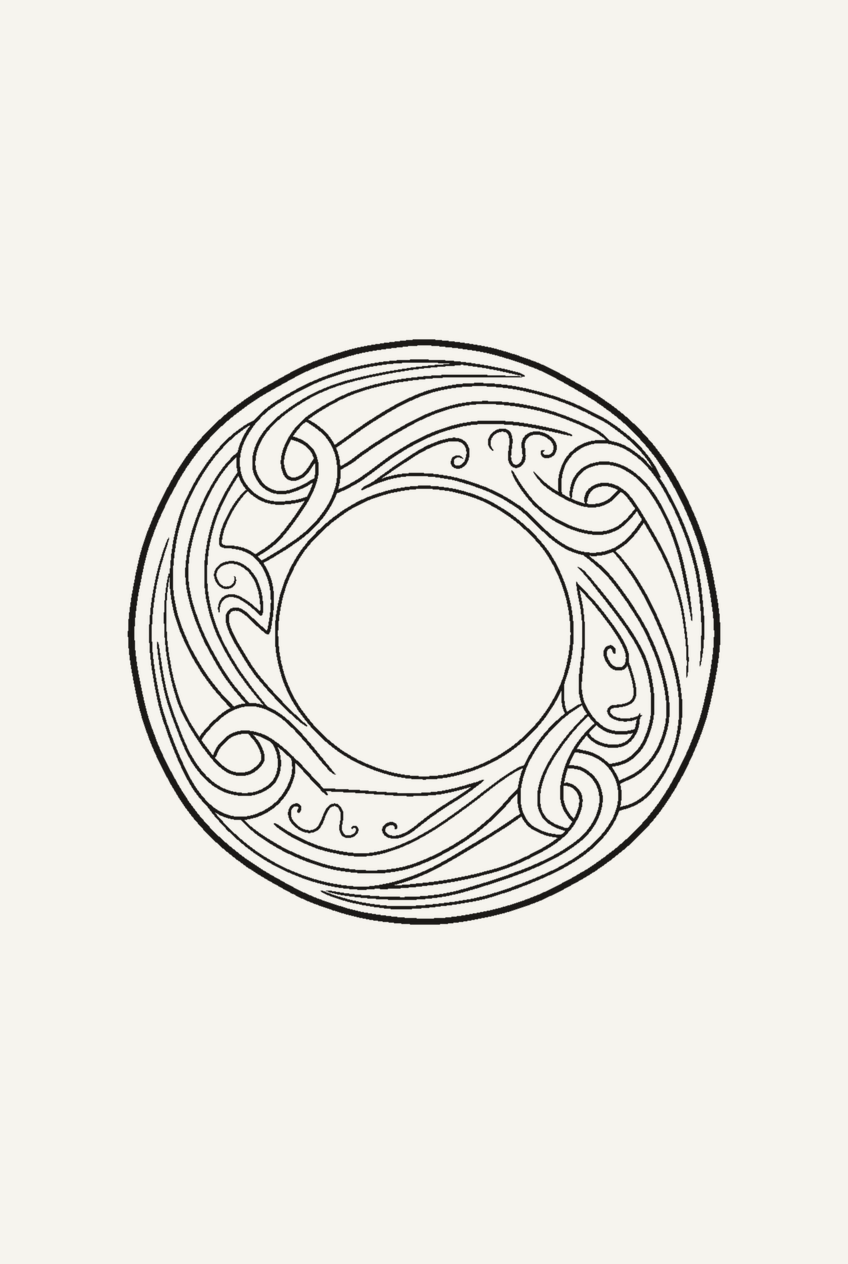
笔法: A bold circular band of alternating wave scrolls and spiraling curls around an open center · black-grey · scalable 8–14 cm
形态: 环形波曲带,粗外轮廓环体填充卷浪涡纹,中孔空净
名字
环带纹(huán dài wén)——学界称「波曲纹」:西周青铜器最恢弘的节律母题。商人用密不透风的螺旋填满器表,那是焦虑的密度;周人用波画下一条定理——起、伏、再起——铸进有史以来最大的几件铜器的腹上。这是一个文明决定「稳定不是静止,而是可以托付的节律」时发出的声音。
*huán dài wén* — the "ring-band pattern," known in scholarship as the wave band (波曲纹): the great rhythmic motif of Western Zhou bronzes. Where the Shang filled surfaces with dense spirals of anxiety, the Zhou drew a single lesson in wave form — rise, fall, rise — and cast it around the bellies of the largest vessels ever made. It is the sound of a civilization deciding that stability is not stillness: it is rhythm you can trust.
出处
波曲带纹(环带纹)是西周大型礼器腹部的主纹——中期的大鼎与大盘,宽幅相间的峰与谷环器一周,如浮雕的山峦列队。它接替了商代纹样的密螺旋场,又开启了后世周式装饰的横向带状系统。形制参考:西周青铜器上的环带(波曲)纹带。墨线转写:本设计以传统母题的经典线条造型为底,转写为纹身墨线。
The wave band (环带纹/波曲纹) runs as the principal belly-zone motif on large Western Zhou ritual bronzes — grand cauldrons and basins of the middle Zhou, its broad alternating crests and troughs framing the vessel like ranges of hills in relief. It succeeds the dense spiral fields of Shang surface design and anticipates the horizontal band system of later Zhou ornament. Historical form reference: wave-band zones on Western Zhou bronze vessels. Inking note: this design adapts the classic line construction of the traditional motif and re-inks it as tattoo linework.
设计灵感
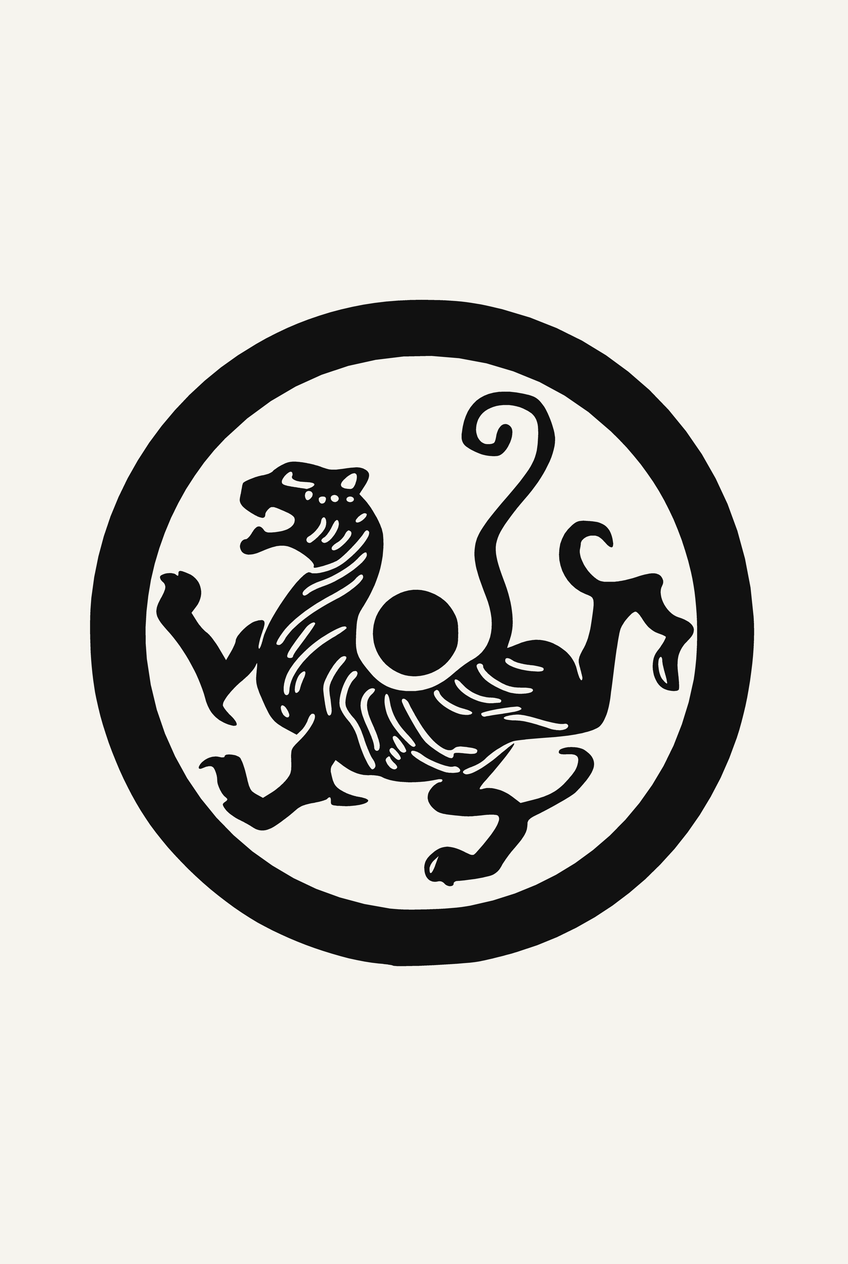
本版每一处形制决定都有出处可查,逐条对账。① 粗外轮廓——周式波曲带的宽幅边线,本版以印章级的粗度落笔。② 相间的波卷——「波曲」的峰谷节律,一浪让位给下一浪。③ 螺旋涡纹填充——铜器上每个波峰内部呼吸着的勾卷。④ 空净的圆心——环形构图,带子首尾自合:节律,无一剩余。
Every form decision on this design points to a recorded source, element by element. ① The bold outer contour — the wide band-edge of the Zhou wave zone, drawn here at seal-thickness. ② The alternating wave scrolls — the crest-trough rhythm of 波曲, one swell yielding to the next. ③ The spiraling curl fill — the hooked volutes that breathe inside each wave crest on the bronzes. ④ The open circular center — the ring composition, the band closed on itself: rhythm without remainder.
来历
什么时候去站在一件西周大鼎面前——那种铸来宴飨军队与祖先的大器——看它的腹部。旁边的商器全是表面:每平方厘米都在嗡嗡作响,螺旋、目纹、雷纹,一整面精神噪声的墙。周器反其道而行。一条带。宽波,相间,从容。峰、谷、峰、谷,绕器一周,也绕世界一周。
美术史家称之为「礼制」;你也不妨称之为「政策」。周人刚靠讲道理夺了权——天命赏德,不赏血脉——他们的铜器便把这道理化作装饰:秩序即节律,而非密度。不需要叫喊的权力。波曲带就是这份自信的视觉注册:它不填满每一寸空间,因为它信任自己留下的空白。
然后,如本版这样,把带子首尾合拢成环,母题便得到最后一条附款。在鼎上,波曲绕器一周,在看不见处与自己的起点相接——铸工的提醒:节律从未真正停止。落在皮肤上,这个圆把话说得更诚实:你起步的那道波峰,就在你正盯着的这道波谷身后的某处。「周而复始」在这里不是口号,是几何。当你恰好站在波谷时纹它——并且记得,这道波已经在往上走。
Stand in front of a Western Zhou cauldron sometime — the big kind, cast to feed armies and ancestors — and look at the belly. The Shang vessel nearby is all surface: every square centimeter buzzing with spirals, eyes and thunder-marks, a wall of spiritual noise. The Zhou vessel does the opposite. One band. Broad waves, alternating, patient. Crest and trough, crest and trough, all the way around the pot, all the way around the world.
Art historians call it decorum; you could equally call it a policy. The Zhou had just argued their way into power — heaven rewards virtue, not blood — and their metalwork adopted the argument as ornament: order as rhythm, not density. Power that does not need to shout. The wave band is the visual register of that confidence: it does not fill every space, because it trusts the spaces it leaves.
Then close the band into a ring, as this design does, and the motif gains its final clause. On the cauldron the wave marches around the vessel and, out of sight, meets its own beginning — the craftsman's reminder that the rhythm never actually stops. On skin, the circle is honest about it: the crest you start on is somewhere behind the trough you are looking at. 周而复始 is not a slogan here; it is geometry. Wear it when the trough is where you happen to be standing — and remember the wave is already on its way up.
释义
可以托付的节律:峰必回,谷必去,带子不断。全站最安静的权力符号——把秩序穿成耐心。
Rhythm you can trust: the crest returns; the trough is temporary; the band never breaks. The calmest power symbol on the site — order worn as patience.
位置
这个环为「圆而平」的地皮而生:8–10 厘米置上臂或肩帽,10–14 厘米作独立主体横陈背或胸。中孔读作负空间——别让纹身师「填」它;空即设计。
The ring is made for round, flat ground: 8–10 cm on the upper arm or the shoulder cap, 10–14 cm across the back or chest as the single subject. The open center reads as negative space — do not let your artist "fill" it; the emptiness is the design.
纹之前
带子必须一环贯通——波「起笔」处若留可见接缝,整环的论证就断了。② 峰谷交替要有节拍器的纪律:数一数;不匀的波就是断的波。③ 只宜墨线(见本站色彩规则):青铜原器本就因材质而单色;粗带自担重量。④ 留够尺寸。 最小 8 厘米:再小螺旋填充焊死,环就读成一根普通的圈。圆润部位(上臂、肩帽)天生配环;平整的大面积(背、胸)给它呼吸。
The band must stay one continuous ring — a visible seam where the wave "starts" breaks the loop's whole argument. ② Crests and troughs alternate with machine discipline: count them; an uneven wave is a broken wave. ③ Ink-only by design (see the collection's color rule): the bronze original was monochrome by material; the bold band carries the weight. ④ Respect the scale. Minimum 8 cm: under that the spiral fill welds and the band reads as a plain ring. Round placements (upper arm, shoulder cap) honor the ring; flat expanses (back, chest) give it room to breathe.
本卡每一个汉字都由中文母语者选定并逐笔核对。