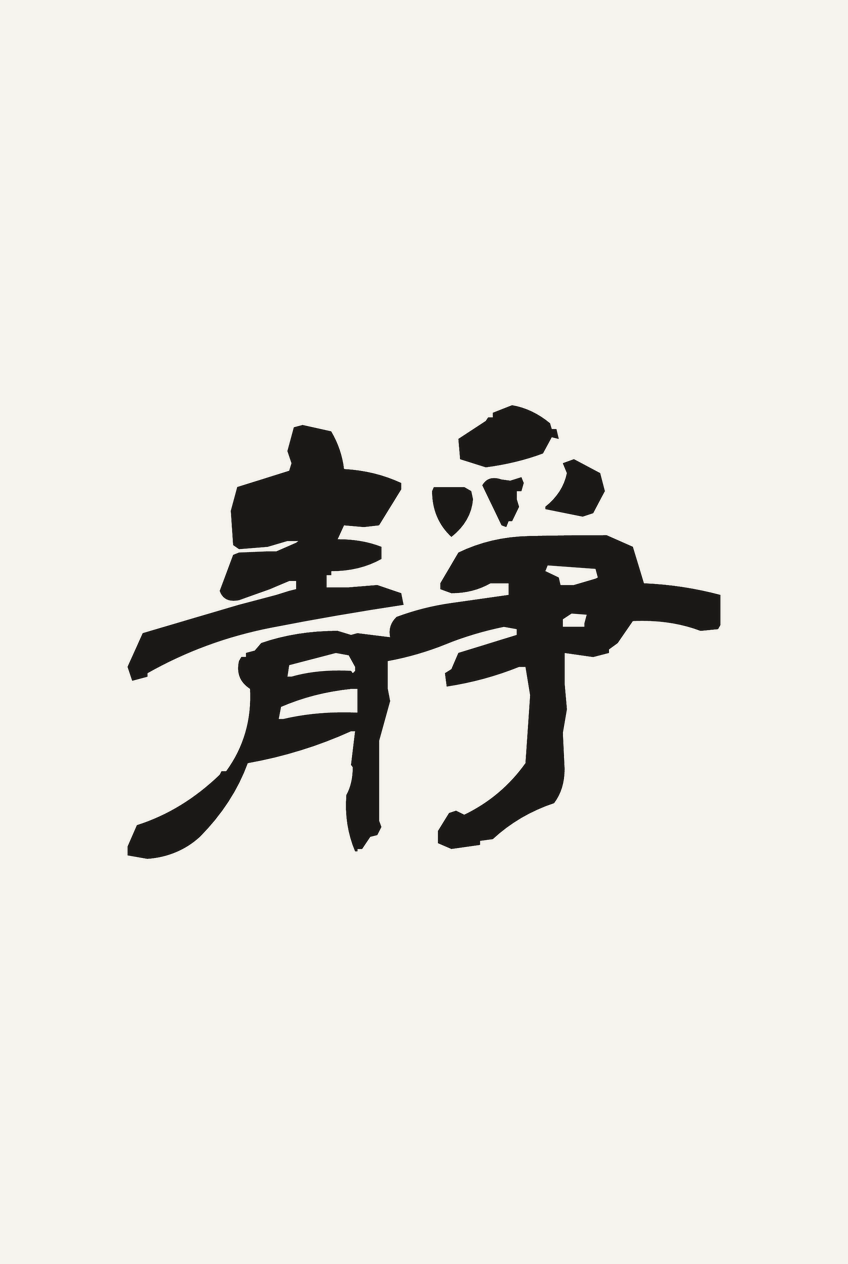
静 · Jìng
Stillness
系列: 单字禅意 · Design #04
笔法: single character, large · clerical script (lishu) · traditional form 靜 · medium-to-large
形态: 单字大字,隶书
名字
静——看繁体「靜」,这个字自己在讲自己:青(生长之色、深水之色)傍着爭(争斗)。这个字形最古老的读法就是一场论证——青的东西,是停止了争夺的东西。中国的冥想文本最后都落在这个字上;纹这一个字,就是纹下整句功课。
*Jìng* — stillness. Look at the traditional form 靜 and the character explains itself: 青 (the color of growth, of clear water seen deep) standing beside 爭 (contending). The oldest reading of the glyph is an argument — that what is green and alive has stopped fighting. Every Chinese meditation text ends up in this character; the tattoo is one character carrying the whole instruction.
出处
这个字是本系列姊妹成语所出的那句话的锚——诸葛亮《诫子书》(公元 234 年)「非宁静无以致远」——并且更深:《老子》十六章「致虛極,守靜篤」,静是心的主宰态。无论中医还是宋明儒的功夫论,静都是训练有素之心的常态默认,不是对行动的逃避。墨线转写:本设计以传统母题的经典线条造型为底,转写为纹身墨线。
The character anchors the line this series' sister idiom comes from — 非宁静无以致远 in Zhuge Liang's *Admonition to My Son* (234 AD) — and reaches further back: 大器晚成,《老子》hapter lines turn on 靜 as the master-state of the mind (致虛極,守靜篤 — "reach emptyness utmost, guard stillness sincerely," *Daodejing* 16). In Chinese medicine and Neo-Confucian practice alike, 靜 is the regulated default of a trained mind, not an escape from action. Inking note: this design adapts the classic line construction of the traditional motif and re-inks it as tattoo linework.
设计灵感
本设计的每一处形制决定都有出处可查,逐条对账。① 一字、独处、够大——单字悬挂在中国书法文化里是有专名的格式;「靜」是它最经典的内容之一。② 隶书、繁形「靜」——隶书平缓从容的笔画,正是「静」的视觉语域本身;波磔是安顿,不是流动。③ 中到大尺寸——单字要有权威才撑得住一个平面;小了读成印章。④ 只用墨——功课是做减法:墨、笔、一个字、静。
Every form decision points to a recorded source, element by element. ① One character, alone, large — the single-character hanging is a format with its own name in Chinese calligraphy culture; 靜 is among its most classic contents. ② Clerical script, traditional form 靜 — lishu's level, unhurried strokes are the visual register of stillness itself; the wave-flourish settles rather than moves. ③ Medium-to-large scale — a single character needs authority to hold a plane; small it reads as a stamp. ④ Black ink only — the instruction is reduction: ink, brush, one glyph, silence.
来历
《老子》十六章是现存最早的中文心智说明书:致虚极,守静笃——然后是那句惊人的话:万物并作,吾以观复。静不是运动的缺席;静是观看一切运动的主看台。不再与世界较劲的心,才第一次看清世界。
这门传统一直在打磨这件工具。诸葛亮的家书把它设为雄心的前置条件——静不下来,就够不着远处。宋代理学家把它变成每日操课:静坐半时辰,再开始一天的决断——理论依据是:带着躁气开局的心,一整天都决策糟糕。医家把它开成处方。茶人把它建成建筑。每一个版本里,静都不是从世界退场——而是一个人变成为世界所用的那块训练场。
繁体字形把「青」放在「爭」旁边是有原因的。青是按自己的时刻表生长的东西的颜色——在地下蛰伏多年才破土的竹。这个字悄悄主张:争,才是延迟。停止争夺的那一刻,生长开始。
Laozi's sixteenth chapter is the oldest surviving instruction manual for the mind in Chinese: empty yourself to the utmost, guard stillness sincerely — and then, the astonishing claim: 万物并作,吾以观复 — "the ten thousand things arise together, and I watch them return." Stillness is not the absence of motion; it is the grandstand seat for all of it. The mind that stops competing with the world finally sees the world.
The tradition kept refining the tool. Zhuge Liang's letter made it the precondition of ambition — you cannot reach far unless you are still. The Neo-Confucians of the Song made it a daily drill: half an hour of seated quiet, 靜坐, before the day's decisions, on the theory that a mind which begins agitated decides badly all day. The physicians made it a prescription. The tea masters made it an architecture. In every version, 靜 is not retreat from the world — it is the training ground where a person becomes usable to the world.
There is a reason the traditional glyph puts 青 beside 爭. 青 is the color of what grows on its own schedule — bamboo that takes years underground before it breaks the soil. The character quietly asserts: the fighting is the delay. What stops contending starts growing.
释义
训练有素之心的常态默认——不是消极,而是「看见」成为可能的那把椅子。给世界天生喧嚣的人:救火者、照料者、永远在线的人。一个字,功课已完整:停止争夺;开始生长。
The regulated default of a trained mind — not passivity, but the seat where seeing becomes possible. This is a design for people whose worlds are loud by circumstance: the responders, the caretakers, the always-on. One character, and the instruction is complete: stop contending; start growing.
位置
一个字,一个平面:后颈、腕内侧、胸骨、肩胛。6–8 厘米读作私印;10–15 厘米读作公开的纪律。居中的位置最配这个字的方建筑;避开折叠的关节。
One character, one plane: the nape, the inner wrist, the sternum, the shoulder blade. At 6–8 cm it reads as a private seal; at 10–15 cm, a stated discipline. Centered placement suits the glyph's square architecture; avoid folding joints.
纹之前
一个字就是全部设计。 字四周的空不是等着被填的空白。② 繁形「靜」。 青傍爭是这个字的论证;简体静丢掉了它所回应的那场争夺。③ 隶书保持平。 波磔安顿每一笔——它该像呼气,不该像动作。④ 5 厘米起,字内细节才立得住。⑤ 静是功课。 这个字是对你日程表的判决,不是对你审美的:如果一周里没有一段安静,这个纹身是愿景——允许,但你自己要知道。
One character is the whole design. The emptiness around it is not empty space to be filled. ② Traditional form 靜. 青 beside 爭 is the character's argument; simplified 静 loses the contention it answers. ③ Clerical script stays level. The wave-flourish settles each stroke — it should feel like breathing out, not like motion. ④ Minimum 5 cm for the glyph's internal detail to hold. ⑤ 静 is a practice. The character is a verdict on your calendar, not your aesthetics: if nothing in your week is quiet, the tattoo is aspirational — which is allowed, but know it.
本卡每一个汉字都由中文母语者选定并逐笔核对。



