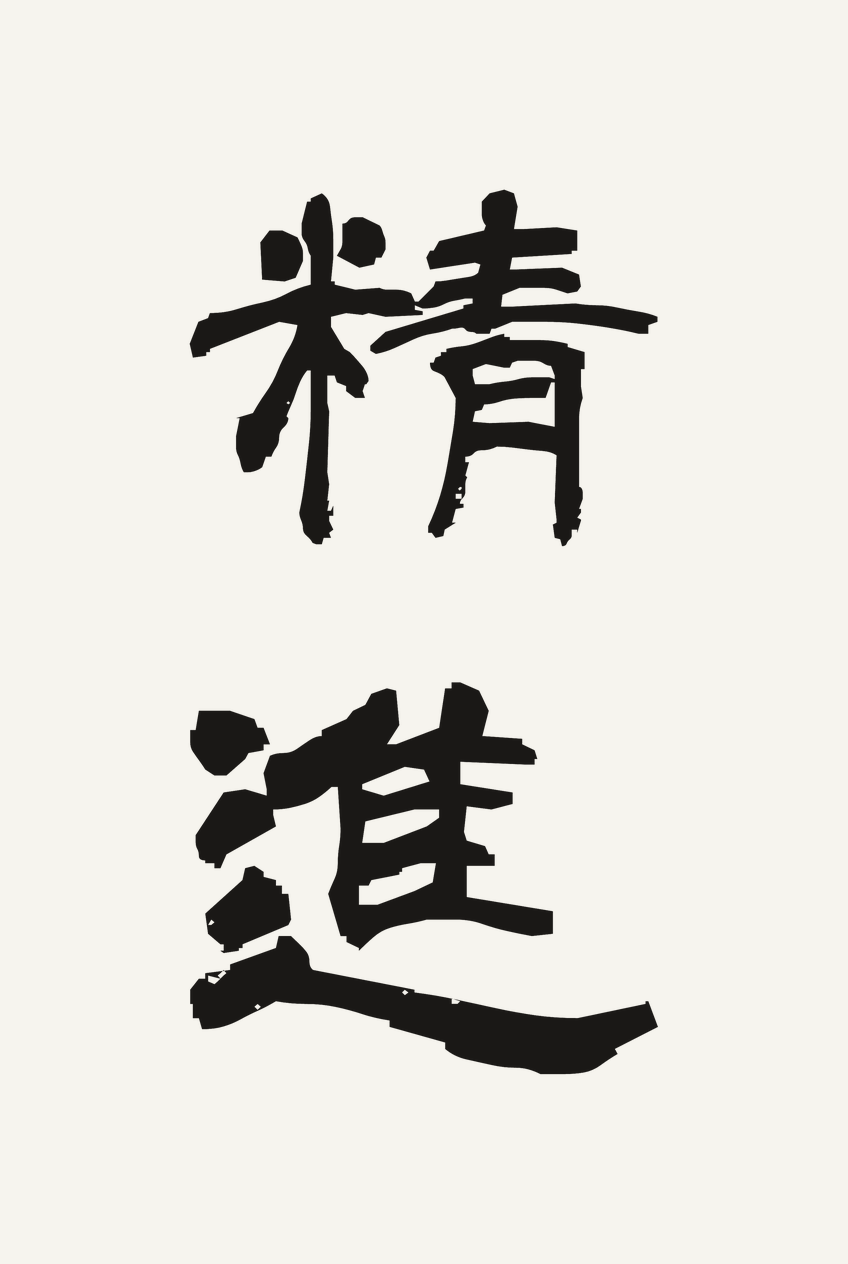
精进 · Jīng Jìn
Diligent Advance
系列: 单字禅意 · Design #21
笔法: two characters, vertical column · clerical script (lishu) · traditional form 精進 · small-to-medium
形态: 二字竖列,隶书
名字
精进——精纯地前行。这个词(梵语 vīrya,心之活力)是六世纪对「清醒的努力长什么样」给出的答案——这个问题今天励志书架还在吵。精进不是内耗式的苦磨——苦磨是带日历的白日梦。它是经文列为六度之一的有纪律、可再生的前行:有能量,且有方向,因此能持久。纹下它,是给打算十年后还在做这件事的人准备的。
*Jīng jìn* — refined advancing. The Buddhist term (vīrya, "virility of spirit") that became the sixth-century answer to a question the self-help shelf still argues about: what does effort look like when it is sane? 精进 is not grinding — grinding is 白日梦 with a calendar. It is the disciplined, renewable forward motion the sutras rank among the six perfections: energy, but aimed, and therefore able to last. As a tattoo, it is for people who plan to still be working at this in ten years.
出处
精进对应六度中的第四度(vīrya),从《法华经》到《维摩诘经》的大乘经论里都有它的位置:用在道上、毫不动摇的能量。词组的形状是纯中文的——精(精纯)加進(前行)——又一个抵达后穿上汉衣的梵语概念。墨线转写:本设计以传统母题的经典线条造型为底,转写为纹身墨线。
精进 renders vīrya, the fourth of the six perfections (六度, pāramitās) in Mahayana doctrine, catalogued across sutras from the 《法華經》 to the 《維摩詰經》: unswerving energy applied to the path. The compound is native Chinese in shape — 精 (refined) + 進 (advance) — one of the many Sanskrit concepts that arrived and put on Chinese clothes. Inking note: this design adapts the classic line construction of the traditional motif and re-inks it as tattoo linework.
设计灵感
本设计的每一处形制决定都有出处可查,逐条对账。① 二字竖列——义理就在版式里:先「精」(精纯),后「進」(方向);质量把关速度。② 隶书、繁形「精進」——「精」的米旁挨着「青」:谷粒扬净见精华;「進」的辵旁带着运动——这个词字面上是向前走的。③ 小到中尺寸——6–10 厘米;这个词是一种步频,不是广告牌。④ 只用墨——这门纪律不穿戏服。
Every form decision points to a recorded source, element by element. ① Two characters, one vertical column — the doctrine in layout: refinement (精) first, direction (進) second; quality gates speed. ② Clerical script, traditional form 精進 — 精's rice radical (米) beside the pure (青): grain winnowed to essence; 進's walking radical (辵) carries motion — this word literally walks forward. ③ Small-to-medium scale — 6–10 cm; the word is a pace, not a billboard. ④ Black ink only — the discipline has no costume.
来历
在这件事上,佛经更像教练,不像神秘主义者。精进度的描述带着运动员的精确:警觉而不紧绷;坚持而不僵硬——像一根调得不松不紧的琴弦,佛陀自己的琵琶譬喻:弦在两端都断过之后,他才找到中道。精进命名的正是那个调准的状态:一种可以持守多年的努力,因为它从可再生的账户里支出。它的反面恶德不是懒惰,是敷衍——没有质量的动作,一张排了日程的跑步机。
所以这个词熬过了每一个借用它的健身风潮与生产力系统。字形本身拒绝「努力是一种情绪」的现代谎言:精坚持先讲精纯——你在工作里磨刀,不在幻想里磨刀;進坚持精纯必须移动——永不交付的打磨是自负。合起来:质量,反复施用,随时间。戴在皮肤上,两个字是与未来那个自己的合同——那个会在第三年把强度误认成进展的自己。纹身在腕或小臂上竖成一列,读起来像配速员搭在肩上的手:慢一点,稳一点,继续走。
The sutras are more like coaches than mystics on this subject. The Perfection of Energy is described with an athlete's specificity: alert, not tense; persistent, not rigid; like a string tuned neither too tight nor too slack — the Buddha's own lute metaphor, from the string that snapped in both directions before he found the middle. 精进 names that tuned state: effort you could hold for years because it spends from a renewable account. The opposite vice is not laziness but 敷衍 — motion without quality, the treadmill with a schedule.
That is why the word has survived every fitness fad and productivity system that borrowed it. The characters refuse the modern lie that effort is a mood: 精 insists on refinement first — you sharpen the tool inside the work, not before it in fantasy; 進 insists the refinement must move — polish that never ships is a vanity. Together: quality, applied repeatedly, over time. Worn on skin, the two characters are a contract with your future self — the one who will be tempted at year three to confuse intensity with progress. The tattoo, in a column down the wrist or forearm, reads like a pace-setter's hand on the shoulder: slower, steadier, still going.
释义
给长跑中的建造者——以十年计的训练、没有捷径的手艺、按一个个周二发生的康复。它认证「慢」是一种方法,不是失败。
For the builders in it for the long haul — the training for the decade, the craft with no shortcut, the recovery that happens in Tuesdays. It certifies slow as a method, not a failure.
位置
两个字,一个平面:腕内侧、小臂内侧(配速员的位置)、后颈。6–8 厘米读作一次私人的步频;10 厘米读作一条公开的誓言。居中竖排最合那个走之旁。
Two characters, one plane: inner wrist, inner forearm (the pace-setter's site), nape. 6–8 cm reads as a private pace; 10 cm, a stated vow. Centered vertical placement suits the walking radical.
纹之前
两个字就是全部设计。 ② 繁形「精進」。 「進」的走之旁是全设计的引擎——这个词在动。③ 隶书保持平。 均匀的笔画,均匀的步频;这个形制拒绝冲刺。④ 5 厘米起,「精」的扬净密度才立得住。⑤ 调准,不是绷紧。 佛陀的琴弦在两端都断过。如果这个纹身开始为通宵背书,它是被误读了——「精」排在「進」前面是有原因的。
Two characters are the whole design. ② Traditional form 精進. The walking radical in 進 is the design's engine — the word moves. ③ Clerical script stays level. Even strokes, even pace; the form refuses sprinting. ④ Minimum 5 cm for 精's winnowed density. ⑤ Tuned, not tightened. The Buddha's lute string snapped at both extremes. If the tattoo starts co-signing all-nighters, it is being misread — 精 comes before 進 in the column for a reason.
本卡每一个汉字都由中文母语者选定并逐笔核对。



