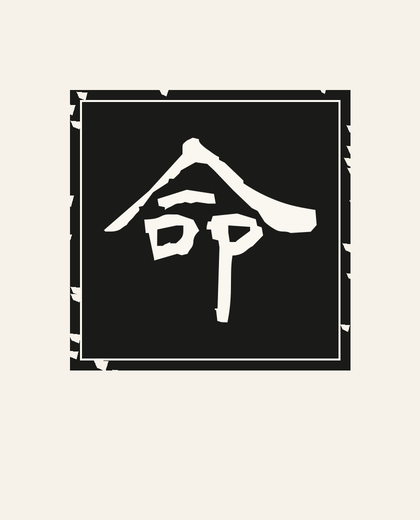
命 · Mìng
Fate / Life
系列: 单字禅意 · Design #56
笔法: Single character · Han-seal filled-white (bǎiwén) stamp — black ground, reversed white glyph, weathered border · clerical script (lishu) · medium scale
形态: 单字大字;汉印满白文,黑底白字、残边;青柳隶繁形
名字
命(mìng)——命运、命,以及被交到你手里的那条命。这个字由「口」和「令」组成:一道命令,一句加在人身上的话。它最早的意思不是哲学抽象,而是一道敕令——决定一个人一生是什么样的命令。中国人把两层意思都留下了:你领到的命,和你实际活出来的命。
*Mìng* — fate, destiny, and the life that is handed to you. The character joins 口 (mouth) and 令 (command): an order given, a word spoken over someone. Its oldest sense is not a philosophical abstraction but a decree — the command that fixes what a life will be. The Chinese kept both meanings: the fate you receive, and the life you actually live.
出处
字源与出处:《说文解字》(东汉):命,使也,从口从令。段玉裁注:命者,天之令也。《中庸》:天命之谓性。《论语》呈现另一层"活出来"的意思:死生有命,富贵在天。本设计未使用任何第三方源图像。墨线转写:本设计以传统母题的经典线条造型为底,转写为纹身墨线。
Etymology and text: *Shuōwén Jiězì* (Eastern Han): 命,使也。从口从令 — "ming is to command; it follows mouth and order." Duan Yucai's commentary: 命者,天之令也 — "ming is the command of Heaven." The *Doctrine of the Mean* (*Zhōngyōng*): 天命之谓性 — "what Heaven commands is called human nature." The *Analects* shows the other, lived sense: 死生有命,富贵在天 — "life and death are a matter of fate; wealth and honour lie with Heaven." No third-party source image was used for this design. Inking note: this design adapts the classic line construction of the traditional motif and re-inks it as tattoo linework.
设计灵感
本设计每一处形制决定都有出处可查,逐条对账。① 满白文印——命从暗里刻出来:敕令留下可辨的字,其余沉在影里。② 隶书——汉石经的语域,「命」正是在这些文本里定成哲学词的。③ 顶部的口保持张开——口/令的部件要读成一个开口,不能变成实心块,否则字丢了"被说出的话"这个根。④ 残边——手工压出的印,像一道被时间磨掉边的敕令。
Every form decision points to a recorded source, element by element. ① The filled-white seal — fate cut out of the dark: the decree left legible, the rest in shadow. ② Clerical script — the Han-stone register, the script of the texts in which 命 was fixed as a philosophical term. ③ The 口 kept open at the top — the mouth/command element must read as an opening, not a solid block, or the character loses its "spoken order" root. ④ Weathered border — a seal pressed by hand, like a decree whose edge has been worn by time.
来历
这个字从一张下命令的嘴开始。「命」是被*对你*下达的东西——而在中国人的想象里,最终下命令的是天。「天命」这个词撑起了整个传统:你的本性、你的寿数、你拿到的那手牌。
但中国人从没把命当成消极认命的借口。同一个说「死生有命」的传统,也说「天命之谓性」——天所命令的,成了你的*性*,是你来此要活明白的东西。照这个语法,命不是要服从的剧本,是起跑的位置。《论语》有一句讲人"五十而知天命"——不是因为能预言未来,是因为不再被自己的局限吓到。
所以「命」适合纹在已经活出一段"关于自己被给到什么"的故事的人身上。它不是认命,也不是抗命。它正在中间:认清条件,然后照样把这一生活完。
纹「命」,是承认有一条命被交到你手里——而你怎么接这份交付,是你自己的事。
The character begins with a mouth giving an order. 命 is what is commanded *to* you — and in the Chinese imagination the one who commands, ultimately, is Heaven. 天命, the command of Heaven, is the phrase behind the whole tradition: your nature, your span, the hand you are dealt.
But the Chinese never made fate into a excuse for passivity. The same tradition that says 死生有命 also says 天命之谓性 — what Heaven commands becomes your *nature*, the thing you are here to work out. Fate in this grammar is not a script you obey. It is a starting position. The *Analects* has the great line about the person who "knows the mandate of Heaven" at fifty — not because they can predict the future, but because they have stopped being startled by their own limits.
That is why 命 sits well on people who have lived enough to have a story about what they were given. It is not resignation, and it is not defiance. It is the Exact middle: to recognize the terms, and then spend the life anyway.
To wear 命 is to acknowledge that a life was handed to you — and that what you do with the handing is your own.
释义
被交给你的那条命,以及你回应它的方式。「命」同时是敕令(天命)和活出来的那段;是认清,不是认输。给那些已经和条件和解、却没有和放弃和解的人。
The life you are handed and the way you answer it. 命 holds both the decree (Heaven's command) and the lived span; it is recognition without resignation. For people who have made peace with the terms without making peace with giving up.
位置
中等密度、直立的字。小臂外侧和上背 5–8 厘米能让顶上的口和底下的折分开;后颈 4–6 厘米是经典位;锁骨下 5–7 厘米也成立。避开收细处,否则底部笔画会挤在一起。
A mid-density, upright character. Outer forearm and upper back at 5–8 cm let the top 口 and the lower 叩-like bends stay distinct; back of the neck at 4–6 cm is the classic spot; below the collarbone at 5–7 cm works too. Avoid tapering areas where the lower strokes would crowd.
纹之前
负形印——用随卡附的白底黑线转印页。② 顶上的口要张开——闭成实心就变了字。③ 切勿徒手。 ④ 只用墨。 ⑤ 最小 5 厘米。 ⑥ 只纹一体——本款隶书,勿与篆书「命」混纹。
Negative-form seal — use the supplied white-ground black-line transfer sheet. ② Keep the top 口 open — a closed block changes the character. ③ No freehand. ④ Ink only. ⑤ Minimum 5 cm. ⑥ One script only — clerical version; do not combine with a seal-script 命.
本卡每一个汉字都由中文母语者选定并逐笔核对。



