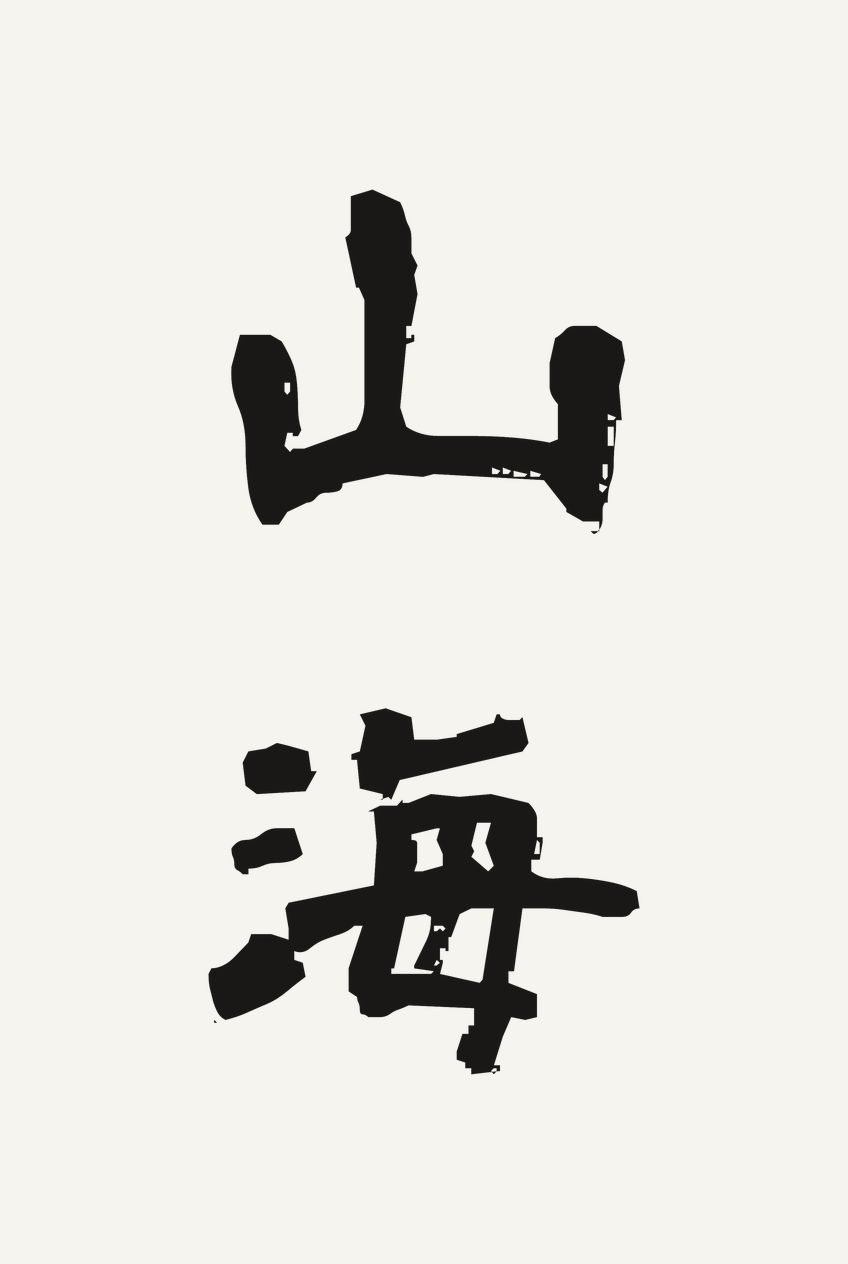
山海 · Shān Hǎi
Mountains and Seas
系列: 单字禅意 · Design #44
笔法: two characters, vertical column · clerical script (lishu, traditional form 山海) · small-to-medium
形态: 二字竖列,隶书
名字
两个名词,叠着,合起来命名全部已知与未知的世界。山海借用的框架来自《山海经》——战国时代那本「可能世界」的地理总纲:每一道山梁、每一条河、每一位神与每一只怪物的所在——九尾狐住在哪,不周山是在哪里折的,海到底有多远。复合词本身是现代用法——跨越山海——但这两个字,是中国画在「门外一切」之上的最老的一张地图。
Two nouns, stacked, that name the entire known and unknown world. 山海 borrows its frame from the Classic of Mountains and Seas (山海經) — the Warring States guidebook of every ridge, river, god and monster the geography of the possible could hold: where the Nine-Tailed fox lives, where the Buzhou mountain broke, how far the sea goes. The compound itself is modern usage — 跨越山海, to cross mountains and seas — but the two characters are the oldest map China drew of everything outside the door.
出处
框架来自《山海经》(战国汇编)——这两个字就是其书名的原对;作为日常用语的二字复合词是现代的(跨越山海),如实断代:框架古老,句子当代。墨线转写:本设计以传统母题的经典线条造型为底,转写为纹身墨线。
The frame is the Shanhaijing (Classic of Mountains and Seas, Warring States compilation) — the two characters are its title's own pair; the two-character compound as daily usage is modern (跨越山海), and dated as such: old frame, current sentence. Inking note: this design adapts the classic line construction of the traditional motif and re-inks it as tattoo linework.
设计灵感
本设计的每一处形制决定都有出处可查,逐条对账。① 二字竖列——山的体量在上,水的田野在下:这正是那部经典的目录结构。② 隶书、繁形「山海」——「山」的三峰是全店最干净的剪影;「海」的水在底部铺开。③ 小到中尺寸——6–10 厘米。④ 只用墨——地图志天生单色。
Every form decision points to a recorded source, element by element. ① Two characters, one vertical column — mountain mass above, water field below: the classic's own table of contents. ② Clerical script, traditional form 山海 — 山's three peaks are the cleanest silhouette in the shop; 海's water spreads at the base. ③ Small-to-medium scale — 6–10 cm. ④ Black ink only — the atlas is monochrome by nature.
来历
《山海经》是一本比「神话」怪得多的书:一半是方物志,一半是药典,还有一部分是给「下一个山谷可能改变你的物种」之世界的旅行须知。古人读它,做的是所有边疆民族都在做的事——把恐惧画进地形,恐惧才能被规划。山海作为纹身,把这一招变成了私人的:山与海不再在外面。它们是你翻过的,或者正要翻的。这个词把地图志翻成了自传。
The Classic is a stranger document than "mythology" suggests: it is part gazetteer, part pharmacopoeia, part travel advisory for a world where the next valley might change your species. Reading it, the ancients were doing what every frontier people does — mapping fear into terrain so it could be planned around. 山海 as a tattoo takes that move personally: the mountains and seas are no longer out there. They are the ones you crossed, or are about to. The word turns the atlas into an autobiography.
释义
给搬过家的人、迁徙者、长距离的人:翻过真实的海拔与真实的水面才抵达此刻的人。这是一枚坐标纹身——目的地不写,距离被承认。
For the moved, the migrant, the long-distance: the one who crossed real water and real altitude to be where they are. It is aCoordinates tattoo — the destination implied, the distance honored.
位置
二字竖列:腕内侧、后颈、胸骨;6–8 厘米私人,10 厘米公开;5 厘米起。
Two characters, one column: inner wrist, nape, sternum; 6–8 cm private, 10 cm stated; minimum 5 cm.
纹之前
两个字就是全部设计。 ② 繁形「山海」。 ③ 5 厘米起——「山」的峰小了会糊。④ 它与店里的神兽们是邻居——《山海经》是它们共同的栖息地。⑤ 说出你自己的那次翻越——词是画框;画应该是你自己的。
Two characters are the whole design. ② Traditional form 山海. ③ Minimum 5 cm — 山's peaks blur small. ④ It pairs with the shop's mythic beasts — the Classic is their shared habitat. ⑤ Name your own crossing — the word is a frame; the picture is supposed to be yours.
本卡每一个汉字都由中文母语者选定并逐笔核对。



