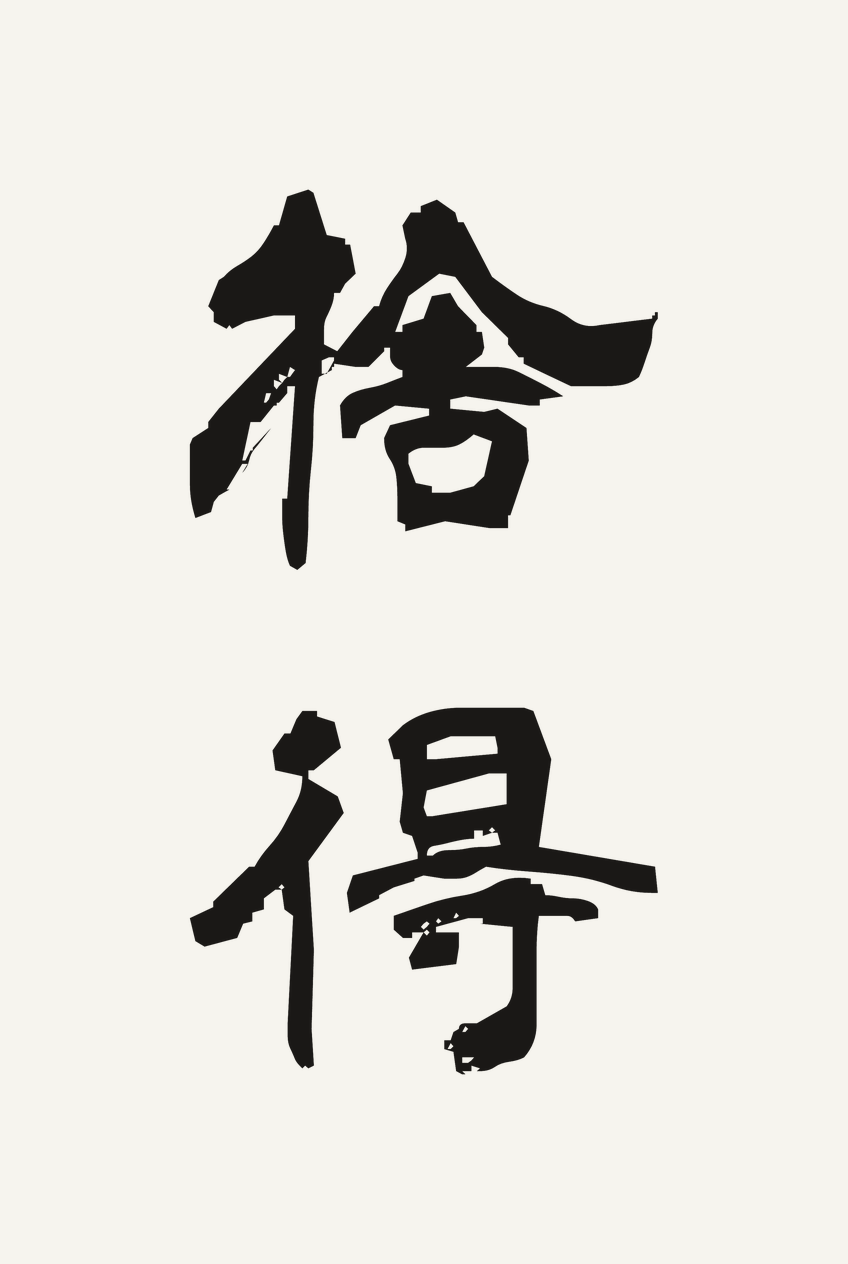
舍得 · Shě Dé
To Give Is to Gain
系列: 单字禅意 · Design #07
笔法: two characters, vertical column · clerical script (lishu) · traditional form 捨得 · small-to-medium
形态: 二字竖列,隶书
名字
舍得——松手,然后得到。两个动词拴在一起:放开的那只手,就是腾出来接的那只手。这个词组从佛家布施的经济学里长出来,被中国的商人、茶人、父母接了过去,当作一切好决策的诚实算式:总有什么要花出去;花出去不是损失——攥着才是。纹下它,是一只手的座右铭:先张开。
*Shě dé* — release, and obtain. The two verbs are chained: the hand that lets go is the same hand that becomes free to receive. The compound grew out of the Buddhist economics of dāna (giving) and was adopted by Chinese merchants, tea masters, and parents as the honest calculus of every good decision: something must be spent; the spending is not the loss — the clutching is. As a tattoo, it is a hand's motto: open first.
出处
佛家的根是布施波罗蜜——六度之首:摊开的手给出的东西,不会让手枯竭。民间四字谚「舍不得孩子套不着狼」用猎人的算术保住了同一道算式;明代小说家把「舍得」放进那些必须支付真实代价的人物嘴里。墨线转写:本设计以传统母题的经典线条造型为底,转写为纹身墨线。
The Buddhist root is dāna paramita — the perfection of giving, first of the six perfections: what is released with an open hand does not deplete the hand. The four-character folk proverb 舍不得孩子套不着狼 ("unwilling to spare the shoe leather, you never catch the wolf") preserves the same calculus in hunter's arithmetic; the Ming novelists put 舍得 in the mouths of characters who must pay real prices. Inking note: this design adapts the classic line construction of the traditional motif and re-inks it as tattoo linework.
设计灵感
本设计的每一处形制决定都有出处可查,逐条对账。① 二字竖列——交易自上而下读:先舍,后得;顺序不可协商。② 隶书、繁形「捨得」——「捨」保留手字旁:放手是手做的事,不是抽象的灵魂。③ 小到中尺寸——8–10 厘米;一页账边批注,不是广告牌。④ 只用墨——设计遵守自己的逻辑:什么都不加。
Every form decision points to a recorded source, element by element. ① Two characters, one vertical column — the transaction reads top to bottom: first the release, then the gain; the order is non-negotiable. ② Clerical script, traditional form 捨得 — 捨 keeps the hand radical 扌: release is something a hand does, not an abstract soul. ③ Small-to-medium scale — 8–10 cm; a trader's margin note, not a billboard. ④ Black ink only — the design pays its own logic: nothing added.
来历
茶人的演示:客人来了,手里攥着一只已经满的杯。茶人继续斟,继续斟,任茶漫过桌面——客人的手终于动了,把旧茶倾掉,同一只杯,忽然能够再接。杯没有任何变化。变的是攥着。人生里每一笔交易都是这个形状:关系、旧怨、职业、城市——障碍从来不是新的 unavailable;是旧的还在占用。
商人把它做成算术,僧人把它做成祈祷,但父母说得最好:孩子远行,远行就是得——你养的那个人,现在能走了。舍得不承诺汇率;它只坚持顺序。先攥着,什么都进不来。先张开,世界恢复发货。纹在一只手的皮肤量级上,它就是关于第一个动作的每日工坊。
The tea master's demonstration: a guest arrives clutching a cup already full. The master pours, and pours, and lets the table flood — the guest's hand finally moves, tipping out the old tea, and the cup, the same cup, is suddenly able to receive. Nothing about the cup changed. The holding did. Every trade in a life has this shape: the relationship, the grudge, the career, the city — the obstacle is never the availability of the new; it is the occupancy of the old.
The merchants made it arithmetic and the monks made it prayer, but the parents say it best: the child leaves, and the leaving is the gain — the person you raised can now walk. 舍得 does not promise the exchange rate; it only insists on the sequence. Grip first, and nothing arrives. Open first, and the world resumes its deliveries. The tattoo, on a hand's worth of skin, is a daily workshop on the first motion.
释义
给正处在交换中段的人:辞掉安稳工作的、卖掉祖宅的、结束过期关系的、订下单程机票的。这一列是一张尚未到货的收据——它把「舍」定价为「得」的那笔付款。
For people mid-exchange: the one quitting the safe job, selling the inherited house, ending the relationship that expired, booking the one-way flight. The column is a receipt for something not yet delivered — it prices the release as the purchase.
位置
两个字,一个平面:腕内侧(这个设计的原生产地——手的座右铭纹在手上)、小臂、胸骨。6–8 厘米是一页批注;10 厘米是一页账本。
Two characters, one plane: inner wrist (the design's native address — a hand's motto on a hand), forearm, sternum. 6–8 cm keeps it a margin note; 10 cm makes it a ledger page.
纹之前
两个字就是全部设计。 ② 繁形「捨得」。 手字旁就是论点——留着。③ 隶书保持平。 「舍」要读作刻意的,不是洒出来的。④ 6 厘米起。 ⑤ 顺序就是教义。 舍在上、得在下:谁想让这个设计承诺「不经舍而得」,就是在要求这一列从下往上读。它不读。
Two characters are the whole design. ② Traditional form 捨得. The hand radical is the argument — keep it. ③ Clerical script stays level. The release should read as deliberate, not spilled. ④ Minimum 6 cm. ⑤ The order is the teaching. 舍 above 得: anyone asking the design to promise gain without listing the release is asking the column to read bottom-up. It will not.
本卡每一个汉字都由中文母语者选定并逐笔核对。



