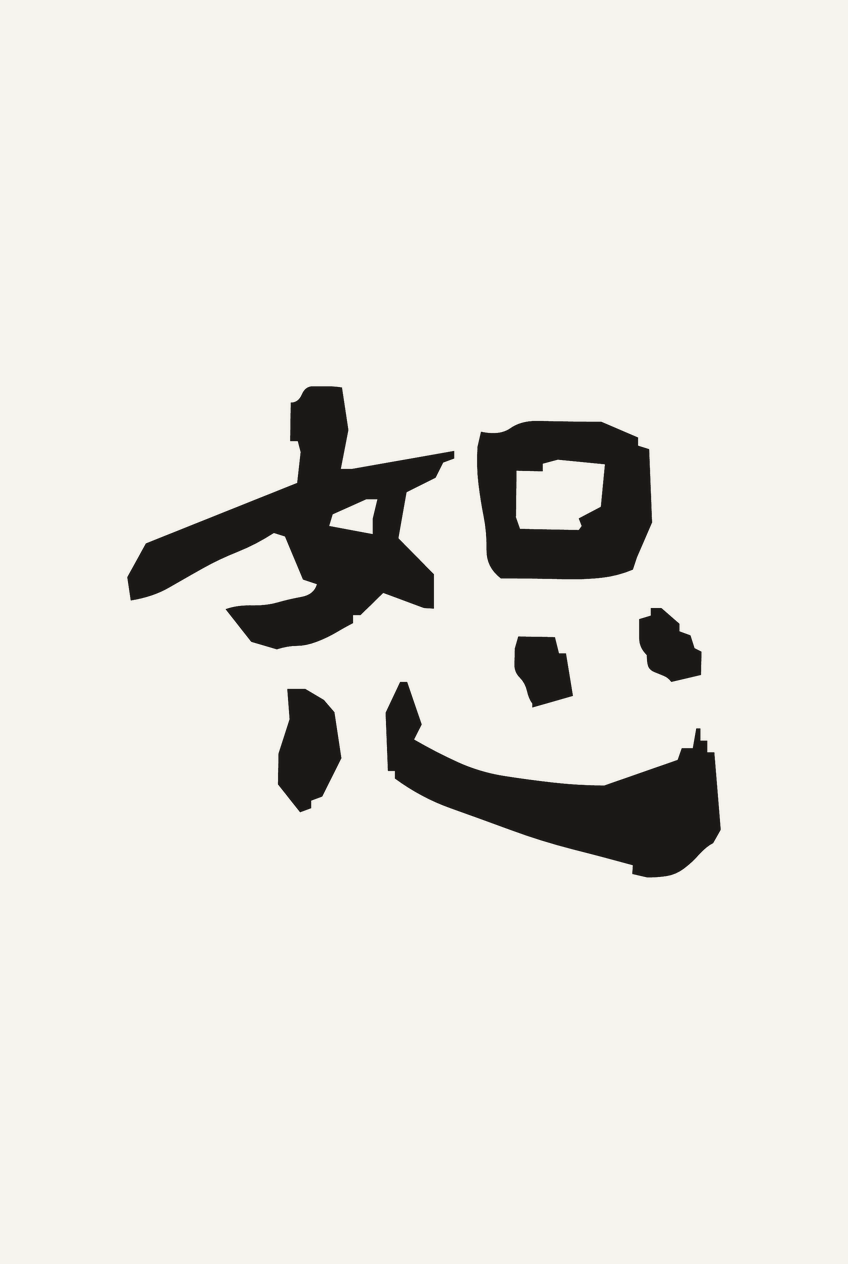
恕 · Shù
The Heart That Puts Itself Across
系列: 单字禅意 · Design #45
笔法: single character · clerical script (lishu) · traditional form 恕 · small-to-medium
形态: 单字,隶书
名字
有弟子问孔子:有没有一个字,可以拿来奉行一辈子?有一言而可以終身行之者乎?答案是:其恕乎——大概是恕吧——己所不欲,勿施於人:你自己不想要的,不要加给别人。这个字本身就带着说明书:如加心——一颗心走过去,站到另一颗心站的地方。金律,以其否定式的原始版本,压缩成一个字形。
A disciple once asked Confucius for one word he could act on his entire life. 有一言而可以終身行之者乎?The answer: 其恕乎 — surely it is 恕 — 己所不欲,勿施於人: what you do not want done to you, do not do to others. The character itself carries the instruction: 如 over 心 — a heart that goes over and stands where the other one stands. The golden rule, in its negative-form original, compressed to a single graph.
出处
《论语·卫灵公》15.24:子貢問曰:「有一言而可以終身行之者乎?」子曰:「其恕乎!己所不欲,勿施於人。」——原文实录;「如心」的拆字是《说文》以来的传统字源。墨线转写:本设计以传统母题的经典线条造型为底,转写为纹身墨线。
Analects 15.24 (Wei Ling Gong): 子貢問曰:「有一言而可以終身行之者乎?」子曰:「其恕乎!己所不欲,勿施於人。」— original text; the etymology 如心 is traditional word-lore carried by Shuowen. Inking note: this design adapts the classic line construction of the traditional motif and re-inks it as tattoo linework.
设计灵感
本设计的每一处形制决定都有出处可查,逐条对账。① 单字一列——交换发生在一个字形内部:没有第二个字可以讨价还价。② 隶书、繁形「恕」——如在上、心在下,正是那段对话描述的位置关系。③ 小到中尺寸——4–6 厘米。④ 只用墨——这条规则是二值的:做了,或没做。
Every form decision points to a recorded source, element by element. ① One character, one column — the exchange takes place inside a single graph: nothing to barter with a second character. ② Clerical script, traditional form 恕 — 如 sits above 心, the placement the dialogue itself describes. ③ Small-to-medium scale — 4–6 cm. ④ Black ink only — the rule is binary: done or not done.
来历
否定式是要紧的,而且它是原版:勿施於人不强制热情、不强制救援、不强制爱。它画的是人人都真的守得住的那一条线——主动加害的那条线——并让「终身奉行」成为可思考的选项。孔子在恕与仁之间选了恕,正因为这个:仁是山顶;恕是有一个能用的心的人晚饭前就到得了的登山口。字的结构也同意:一颗学会了出门的心。
The negative form matters, and it is the original: 勿施於人 does not obligate enthusiasm, rescue, or love. It draws the one line everyone can actually hold — the line of active harm — and makes lifelong compliance thinkable. Confucius chose 恕 over 仁 for exactly that reason: 仁 is the summit; 恕 is the trailhead that anyone with a working heart can reach by dinner. The character's build agrees: a heart that has learned to travel.
释义
给决定把最低标准办成终身订阅的人:两头都站过、却仍然画线的人。这是全店最小的纹身,管辖范围最大。
For the ones who have decided the minimum standard is worth a lifelong subscription: the person who has been on both ends of things and draws the line anyway. It is the smallest tattoo in the shop with the largest jurisdiction.
位置
单字:腕内侧、后颈、胸骨;4–6 厘米;心旁不糊需 4 厘米起。
One character: inner wrist, nape, sternum; 4–6 cm; minimum 4 cm for the heart-radical to stay open.
纹之前
一个字就是全部设计。 ② 繁形「恕」。 ③ 4 厘米起。 ④ 它是地板,不是天花板——经典从未承诺恕会让你变好;只承诺让你不再是「那样」。⑤ 这个词双向都读得通——给出去和收进来,按同一条规则。
One character is the whole design. ② Traditional form 恕. ③ Minimum 4 cm. ④ It is a floor, not a ceiling — the classic never promised 恕 would make you good; only that it would keep you from being that. ⑤ The word reads on both ends — give it and receive it by the same rule.
本卡每一个汉字都由中文母语者选定并逐笔核对。



