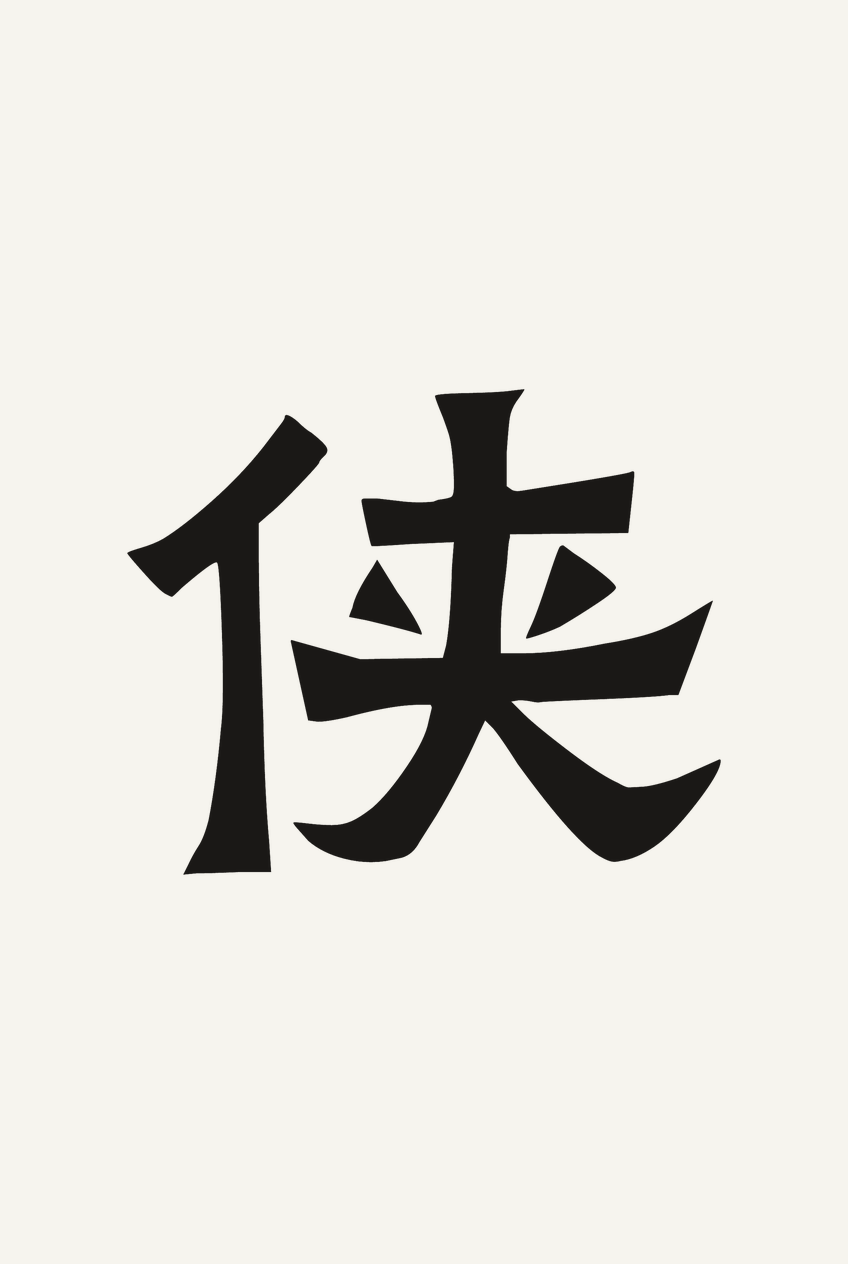
侠 · Xiá
The Knight-Errant
系列: 单字禅意 · Design #46
笔法: single character · dao lishu (blade clerical, simplified form 侠) · small-to-medium
形态: 单字,刀隶
名字
太史公在史书里专门给一个国家一直想取缔的群体立了传:游俠,对任何衙门都不负责、凭力气行走的人。他的判词,用检察官的准确度和粉丝的心肠写成:其言必信,其行必果,已諾必誠,不愛其軀——话必可信,事必可果,承诺必兑现,不惜己身——赴士之阸困——而且他们是朝别人的灾难骑过去的,不是背对的。
The imperial historian Sima Qian devoted a chapter of the Records to a class the state kept trying to abolish: the 游俠, wandering men of force who answered to no office. His verdict, delivered with a prosecutor's accuracy and a fan's heart: 其言必信,其行必果,已諾必誠,不愛其軀 — their word held, their actions landed, their promises were honored at the cost of their own bodies, 赴士之阸困 — and they rode toward other people's disasters, not away from them.
出处
《史记·游侠列传》:其言必信,其行必果,已諾必誠——原文实录;法家的对照句「俠以武犯禁」(韩非子)也是记录的一部分。墨线转写:本设计以传统母题的经典线条造型为底,转写为纹身墨线。
"Records of the Grand Historian," Biographies of Wandering Knights (史記·游俠列傳): 其言必信,其行必果,已諾必誠 — original text; the legalist counterpoint 俠以武犯禁 (Han Feizi) is part of the record too. Inking note: this design adapts the classic line construction of the traditional motif and re-inks it as tattoo linework.
设计灵感
本设计的每一处形制决定都有出处可查,逐条对账。① 单字一列——一个站立的人形:这个词本身就是站在岔路口的一个人。② 刀隶、简形「侠」——左侧的人旁扛起整个论点:侠先是人,然后才是行为。笔画入刀重、出锋干净,像这一行当用钢口结账的书写方式。③ 小到中尺寸——4–6 厘米。④ 只用墨——没有纹章,没有配色;这行当不挂牌。
Every form decision points to a recorded source, element by element. ① One character, one column — a single standing figure: the word itself is a person at the crossroads. ② Blade clerical script, simplified form 侠 — the person-radical on the left carries the whole argument: 侠 is a person before it is an act. The strokes land like blade-cuts: entry heavy, exit clean — the lettering style of a trade that settled its accounts with steel. ③ Small-to-medium scale — 4–6 cm. ④ Black ink only — no heraldry, no colors; the trade is unbadged.
来历
这门传统在太史公的账本上跑了两千年:朝廷惩罚侠,街头用侠给孩子起名,说书人最后把他们搬进了江湖——店里那件「江湖」纹身的户口所在地。这个字每次被穿上身,都还在问同一个问题:穿戴者的力气,是否对什么东西负责。史学家的五条审计标准今天仍然有效——话可信、事可果、诺可践、身可险、方向可辨:朝有难处的那边去。
The tradition has run two thousand years on Sima Qian's accounting: the state punished the 侠, the streets named their children after them, and the storytellers finally moved them into the rivers and lakes where the shop's 江湖 tattoo keeps house. What the character still tests, every time it is worn: whether the wearer's strength answers to anything. The historian's five tests remain the audit — word held, deed landed, promise honored, body risked, direction ridden: toward.
释义
给出事时第一个动的人:站到中间去的那位,凌晨三点到场的那位。这个字是一份职位描述,薪资栏空着。
For the ones who move first when something goes wrong: the one who steps between, who shows up at 3 a.m. The character is a job description with the salary column left blank.
位置
单字:腕内侧、后颈、胸骨;4–6 厘米;4 厘米起。
One character: inner wrist, nape, sternum; 4–6 cm; minimum 4 cm.
纹之前
一个字就是全部设计。 ② 刀隶笔意,简形「侠」。 ③ 4 厘米起。 ④ 史学家的五条审计随身携带——不过审的力气,只是穿了戏服的暴力。⑤ 它瞄准的是别人的急难——当威慑来用,就辜负了自己的传记。
One character is the whole design. ② Blade-cut lettering, form 侠. ③ Minimum 4 cm. ④ The historian's five tests travel with it — strength without the audit is just force with a costume. ⑤ It is aimed at other people's emergencies — worn as a threat, it fails its own biography.
本卡每一个汉字都由中文母语者选定并逐笔核对。



