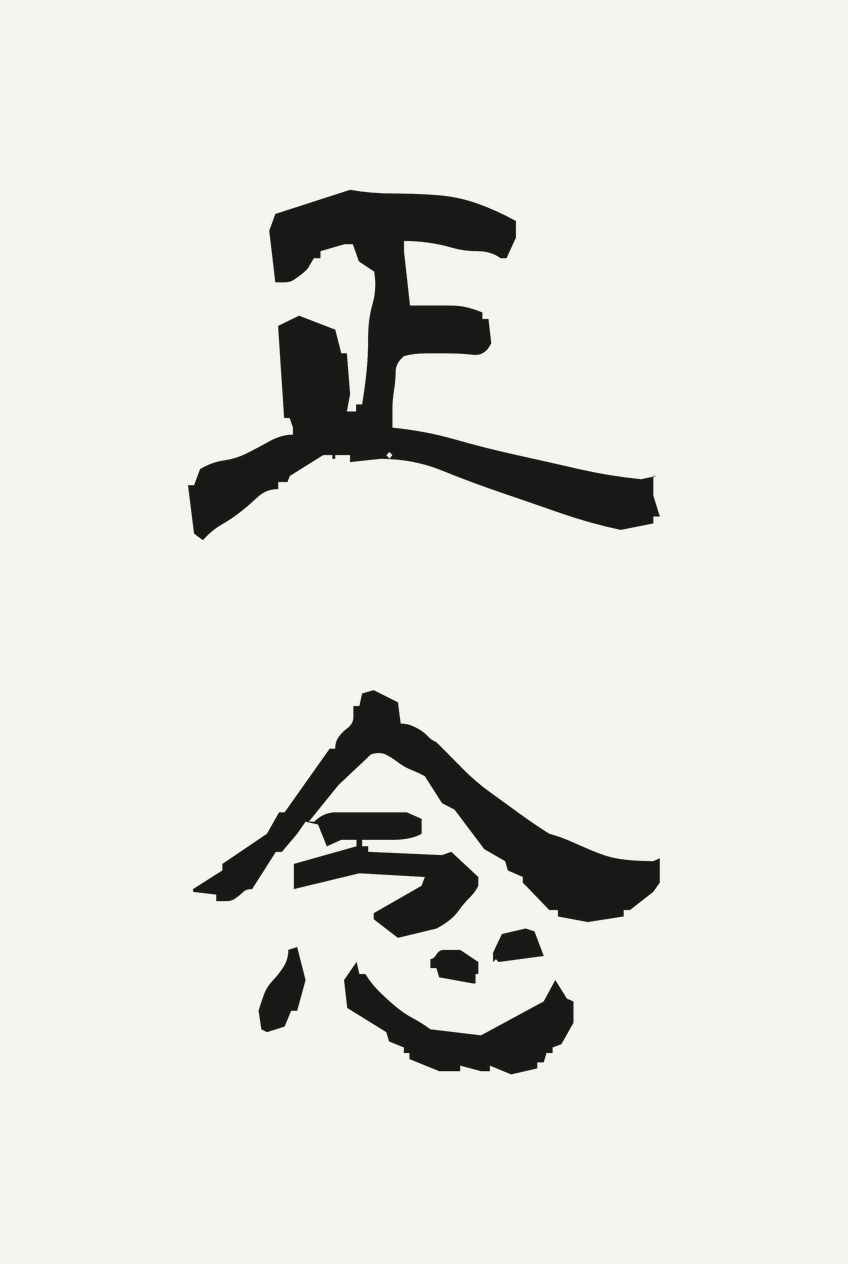
正念 · Zhèng Niàn
Right Mindfulness
系列: 单字禅意 · Design #18
笔法: two characters, vertical column · clerical script (lishu) · same form 正念 · small-to-medium
形态: 二字竖列,隶书
名字
正念——正确地记着。西方在冥想工作室里遇见这个词;中国人已经用了两千五百年,它是八正道的一支——正念,巴利语 sati——那种不断回到「正在发生的事」的注意力:这个身体,这口气,这一个小时。「正」在这里不是「积极」,是「正」,像工具的正:与任务相合。纹下它,是戴在你无法忽视之处的提醒:回来。
*Zhèng niàn* — right remembering. The West met this word in mindfulness studios; China had it for twenty-five centuries as one step of the Buddha's Eightfold Path — 正念, sati, the attention that keeps returning to what is actually happening, in this body, this breath, this hour. 正 here is not "positive" — it is "right," as a tool is right: fitted to the task. As a tattoo, it is the reminder worn where you can't ignore it: come back.
出处
《念处经》教四念处——身、受、心、法——八正道把「正念」立为第七支。随佛经传入汉语后,这个词组成了母语:正念在禅宗语录里处处可见,指守在目标上的心。现代正念运动(卡巴金,1979)把这个词再出口到全世界——一个出门又回家的借词。墨线转写:本设计以传统母题的经典线条造型为底,转写为纹身墨线。
The Satipatthana Sutta teaches the four foundations of mindfulness — body, feeling, mind, phenomena — and the Eightfold Path (八正道) seats 正念 as its seventh step. Transmitted into Chinese with the sutras, the compound became native speech: 正念 appears across Chan (Zen) records as the mind kept on target. The modern mindfulness movement (Kabat-Zinn, 1979) re-exported the term worldwide — a loanword that went out and came home. Inking note: this design adapts the classic line construction of the traditional motif and re-inks it as tattoo linework.
设计灵感
本设计的每一处形制决定都有出处可查,逐条对账。① 二字竖列——如修行时的次第:上面是「正」(校正),下面是「念」(注意),像呼吸与身体那样叠着。② 隶书、同形「正念」——「正」的水平底座像一个安顿好的坐姿;「念」的今字头压着心字底——「当下」直接放在「心」上,整条法门就在字形里。③ 小到中尺寸——腕上 6–8 厘米;是提醒,不是布道。④ 只用墨——修行一次只做一件事。
Every form decision points to a recorded source, element by element. ① Two characters, one vertical column — the discipline as it is practiced: the correction (正) above, the attention (念) below, stacked like breath and body. ② Clerical script, same form 正念 — 正's level base sits like a settled posture; 念's 今-over-心 puts "now" directly on top of "heart," which is the whole instruction. ③ Small-to-medium scale — 6–8 cm wrist; a reminder, not a sermon. ④ Black ink only — the practice is one thing at a time.
来历
佛陀关于注意力的教导实用得几乎让人扫兴。坐。知道自己在坐。心跑去吃午饭了,就发现它跑去吃午饭——那个「发现」就是修行,不是失败。回来。重复,直到回来的速度快过游荡。正念就是那个循环的名字,而经文的承诺是机械的,不是神秘的:注意力放在什么上面,什么就长大;停止喂养的,就变薄。没人被要求把心掏空——那是工作室时代的走样。教导是用「实际在此的东西」把它装满。
二十五百年后,这个词绕行星一圈回家,换了一身新衣——临床试验、减压应用、企业团建。汉语的这个词组在所有翻译中完好存活,因为字形本来就载着整台机器:今(当下)站在心(心)上,正(正)让整台机器保持校准。戴在皮肤上,这个词做的就是修行做的事:打断。有人问起它,而在回答的那几秒里,你已经回到了当下——纹身按设计运行,一次对话运转一回。
The Buddha's instruction on attention is almost disappointingly practical. Sit. Know that you are sitting. If the mind walks off to lunch, notice it walked off to lunch — that noticing is the practice, not a failure of it. Return. Repeat until the returning becomes quicker than the wandering. 正念 is the name of that loop, and the sutra's promise is mechanical, not mystical: what you place attention on grows; what you stop feeding, thins. Nobody is asked to empty the mind — that is the studio-age distortion. The instruction is to fill it with what is actually here.
Twenty-five centuries later, the word circled the planet and came back wearing new clothes — clinical trials, stress apps, corporate retreats. The Chinese compound survived every translation intact because the characters already carried the whole mechanism: 今 (now) standing on 心 (heart), with 正 (right) keeping the whole thing calibrated. Worn on skin, the word does what the practice does: it interrupts. Someone asks about it, and in the seconds it takes to answer, you have already been returned to the present — the tattoo functioning as intended, one conversation at a time.
释义
给心住在隔壁两个房间的人——预演灾难的、刷屏停不下的、讨厌「提前离场却迟到抵达」的所有人。它不是性格升级;是一个写着你自己名字的归航信标。
For the ones whose minds live two rooms away — the anxious rehearsers, the doomscrollers, anyone tired of arriving places after having left early. It is not a personality upgrade; it is a homing beacon with your own name on it.
位置
两个字,一个平面:腕内侧(低头即见的位置——它的原生点位)、后颈、胸骨。6–8 厘米读作一次私人的修行;低于 5 厘米「念」的心底会糊。
Two characters, one plane: inner wrist (the glance-down spot — its native site), nape, sternum. 6–8 cm reads as a private practice; below 5 cm 念's heart-base clogs.
纹之前
两个字就是全部设计。 ② 同形「正念」——简繁同形。③ 隶书保持平。 「正」的底座就是坐姿;让它成为全字最稳的一笔。④ 5 厘米起。 ⑤ 这个词是循环,不是状态。 你买下的不是永久平静;装上的是「回来」。每次在情绪下坠中途看见它并回神——那次看见与回来,就是设计在运行。
Two characters are the whole design. ② Same form 正念 — identical in traditional script. ③ Clerical script stays level. 正's base is the posture; let it be the steadiest stroke. ④ Minimum 5 cm. ⑤ The word is a loop, not a state. You are not buying permanent calm; you are installing the return. Every time you notice the tattoo mid-spiral and come back — that notice-and-return is the design working.
本卡每一个汉字都由中文母语者选定并逐笔核对。



