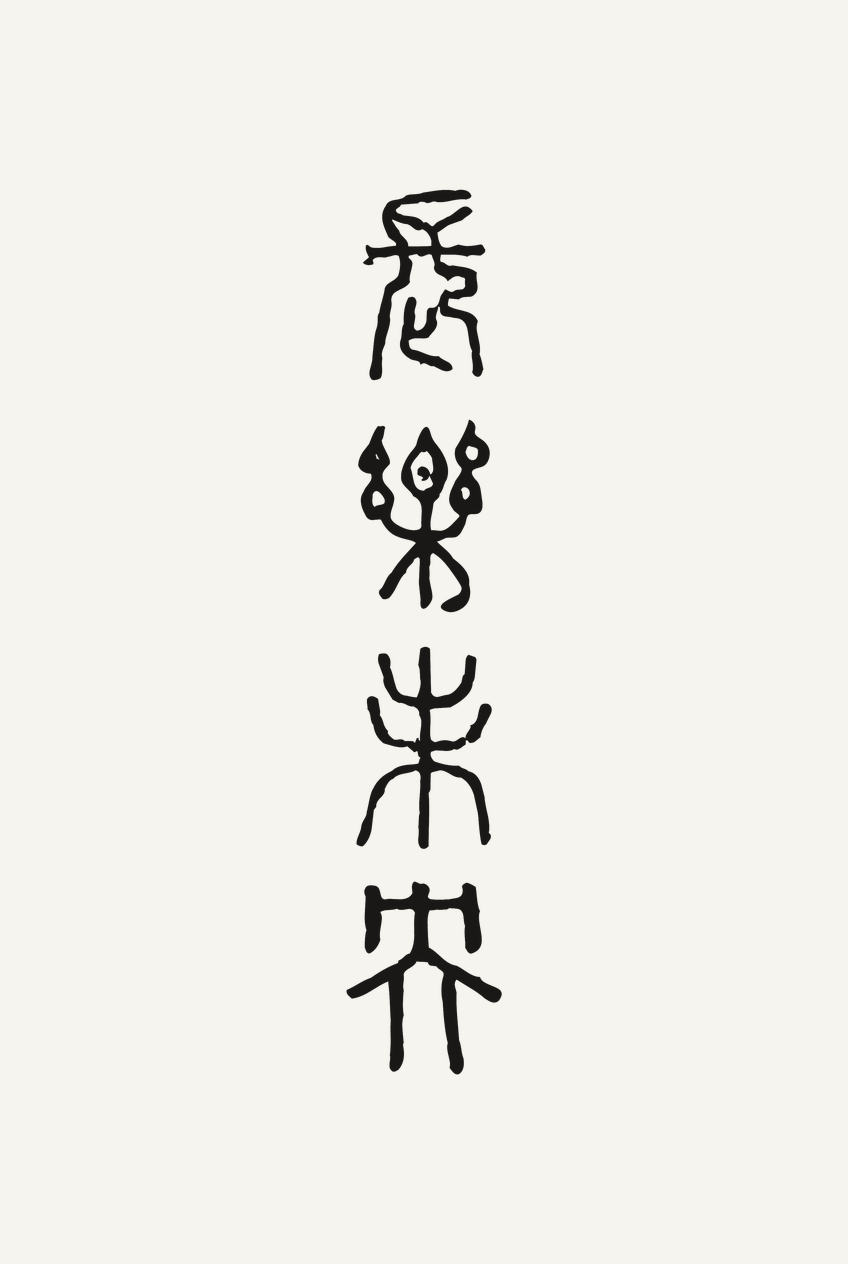
长乐未央 · Cháng Lè Wèi Yāng
Endless Joy; Not Yet Ended
系列: 吉语成语 · Design #33
笔法: four characters, vertical column · seal script (zhuanshu) · medium
形态: 四字竖列,篆书
名字
这句话今天仍能握在手里。它被压进汉代瓦当的陶土、织进锦缎的边饰、铸上铜镜:長樂未央——长久的乐,还没有到头。它也是两座宫殿的名字,长乐宫与未央宫,汉朝的皇帝真的住在里面。这是本店出处的最老一档:不是一部幸存的书,而是任何一间有汉代展厅的博物馆里都去得成的、烧硬了的陶土。
You can still hold this phrase in your hand. It was pressed into the clay of Han-dynasty eaves tiles, woven into brocade borders, stamped on mirrors: 長樂未央 — long joy, not yet ended. It was also the names of two palaces, Changle and Weiyang, where the Han emperors actually lived. This is the oldest provenance in the shop: not a book that survived, but fired clay you can visit in any museum with a Han room.
出处
汉代物质文化:吉语瓦当、织锦与铜镜铭文「長樂未央」——考古实物,非传世文本;长乐、未央两座宫名见汉史。篆书呈现直接承瓦当文字传统。墨线转写:本设计以传统母题的经典线条造型为底,转写为纹身墨线。
Han-dynasty material culture: 吉語 eaves tiles (瓦當), brocades and mirrors inscribed 長樂未央 — archaeological objects, not transmitted texts; the palace names Changle and Weiyang are attested in the Han histories. Seal script rendering follows the tile tradition itself. Inking note: this design adapts the classic line construction of the traditional motif and re-inks it as tattoo linework.
设计灵感
本设计的每一处形制决定都有出处可查,逐条对账。① 四字竖列——瓦当绕心而读;竖列保留了圆心的均衡。② 篆书——瓦当本身所用的书体:线条匀停、起收圆浑、不赶时间。③ 中等尺寸——12–14 厘米;篆书需要呼吸的余地。④ 只用墨——瓦当只有一种陶、一层浮雕;纹身只有一种墨、一条线。
Every form decision points to a recorded source, element by element. ① Four characters, one vertical column — the tile reads around a center; the column keeps the roundel's balance. ② Seal script — the script the tiles themselves are cut in: lines even, ends rounded, nothing rushed. ③ Medium scale — 12–14 cm; seal script needs room to breathe. ④ Black ink only — the tile was one clay, one relief; the tattoo is one ink, one line.
来历
未央是「还没到一半」——《诗经·小雅·庭燎》里的同一句:夜如何其?夜未央——夜到什么时候了?夜还没到中腰。所以祝人長樂未央,用的是一种精确得奇怪的希望语法:不是「永远快乐」——没人签得动那张保票——而是快乐尚未过峰,一场还停在第一幕的幸福。汉人把这套语法压在建筑的边缘,因为它本来就属于事物的边缘:门、屋檐、手腕,生活与天气相接的地方。
未央 means not yet reached its middle — the same 未央 as in the ode 夜如何其?夜未央: how goes the night? The night is not yet half spent. To wish someone 長樂未央 is therefore a strangely precise grammar of hope: not "joy forever" — no one can sign for that — but joy that has not yet peaked, a happiness still in its first act. The Han embossed that grammar on the edges of buildings because it belongs on the edges of things: doors, eaves, wrists, the borders where a life meets the weather.
释义
给那些配得上一句烧了两千年的祝愿的开端:婚礼、开业、痊愈、正在展开的那个十年。全店最幸福的纹身,也是最老的。
For the beginning that deserves a wish with two thousand years of firing behind it: the wedding, the opening, the recovery, the decade that is still opening. The happiest tattoo in the shop, and the oldest.
位置
四字竖列:小臂内侧最佳,脊柱、胸;12–14 厘米;篆书线条 9 厘米起仍清晰。
Four characters, one column: inner forearm best, spine, chest; 12–14 cm; seal script lines stay legible from 9 cm.
纹之前
四个字就是全部设计。 ② 篆书,照瓦当的样子——不要现代化字形;年代就是重点。③ 9 厘米起。 ④ 它可以对着博物馆核销——这是少数能亲自验货的纹身。⑤ 未央是时态,不是装饰——乐未结束,就得继续像没结束那样活。
Four characters are the whole design. ② Seal script, as on the tiles — do not modernize the forms; the age is the point. ③ Minimum 9 cm. ④ It pairs with museum reality — this is one of the few tattoos you can fact-check in person. ⑤ 未央 is a tense, not a decoration — the joy is unfinished; keep living like it.
本卡每一个汉字都由中文母语者选定并逐笔核对。