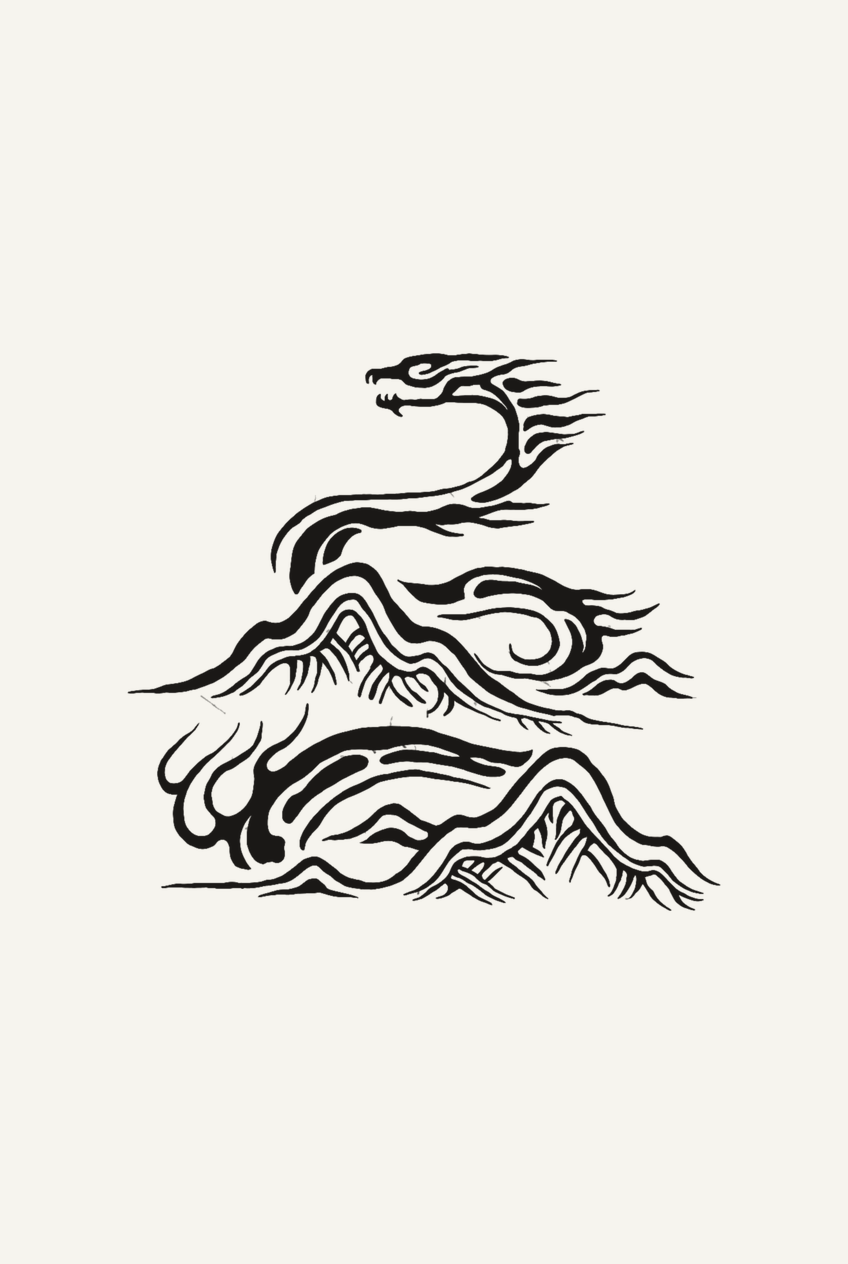
大蛇 · Dà Shé
The Mountain's Long Breath
系列: 神兽灵禽 · Design #23
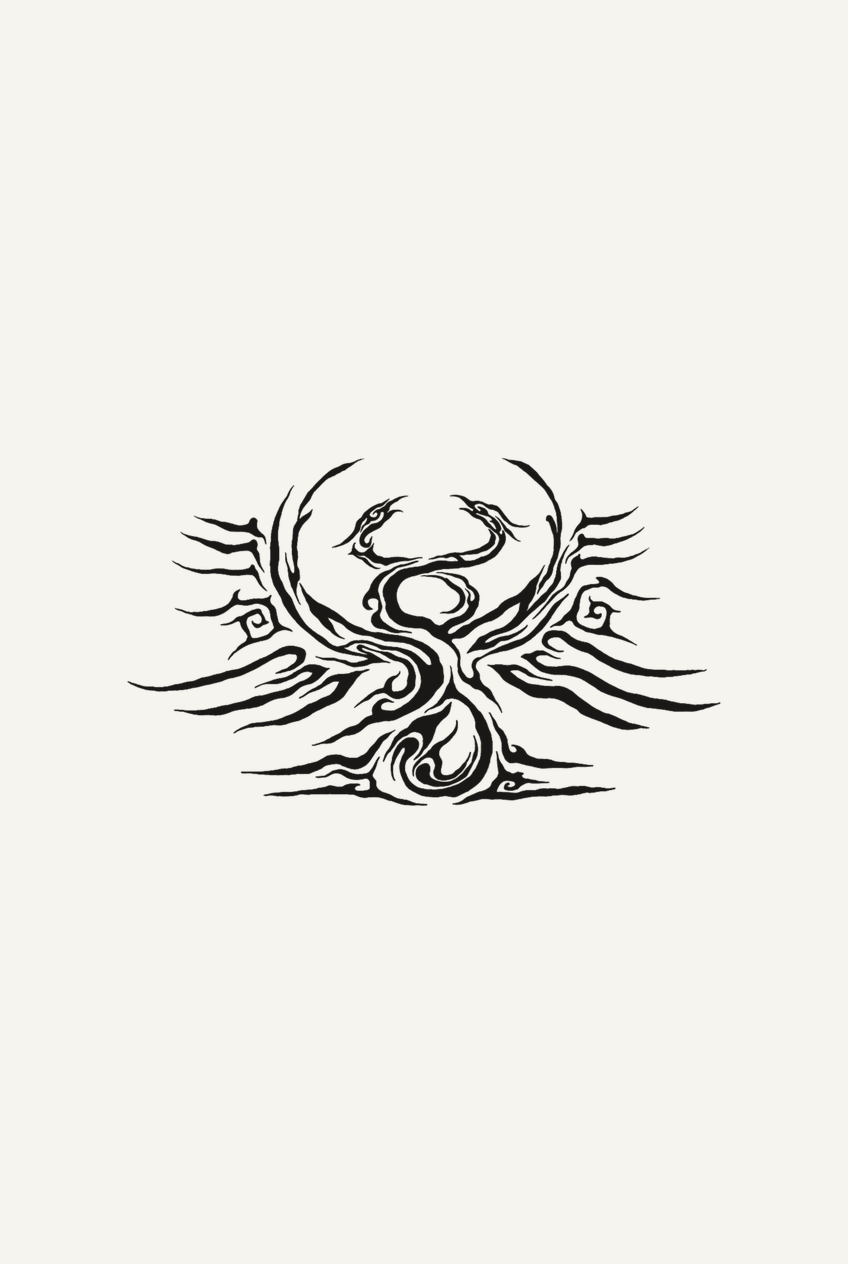
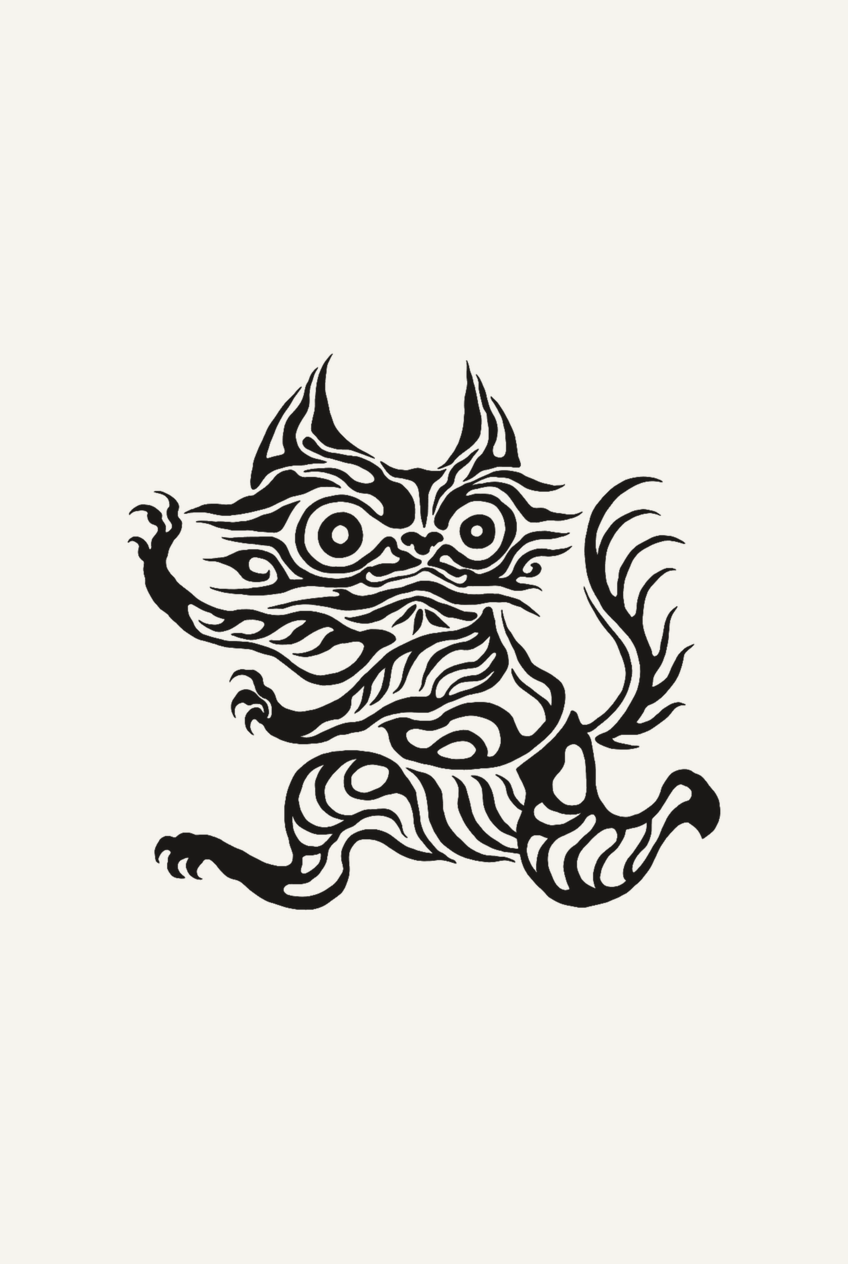
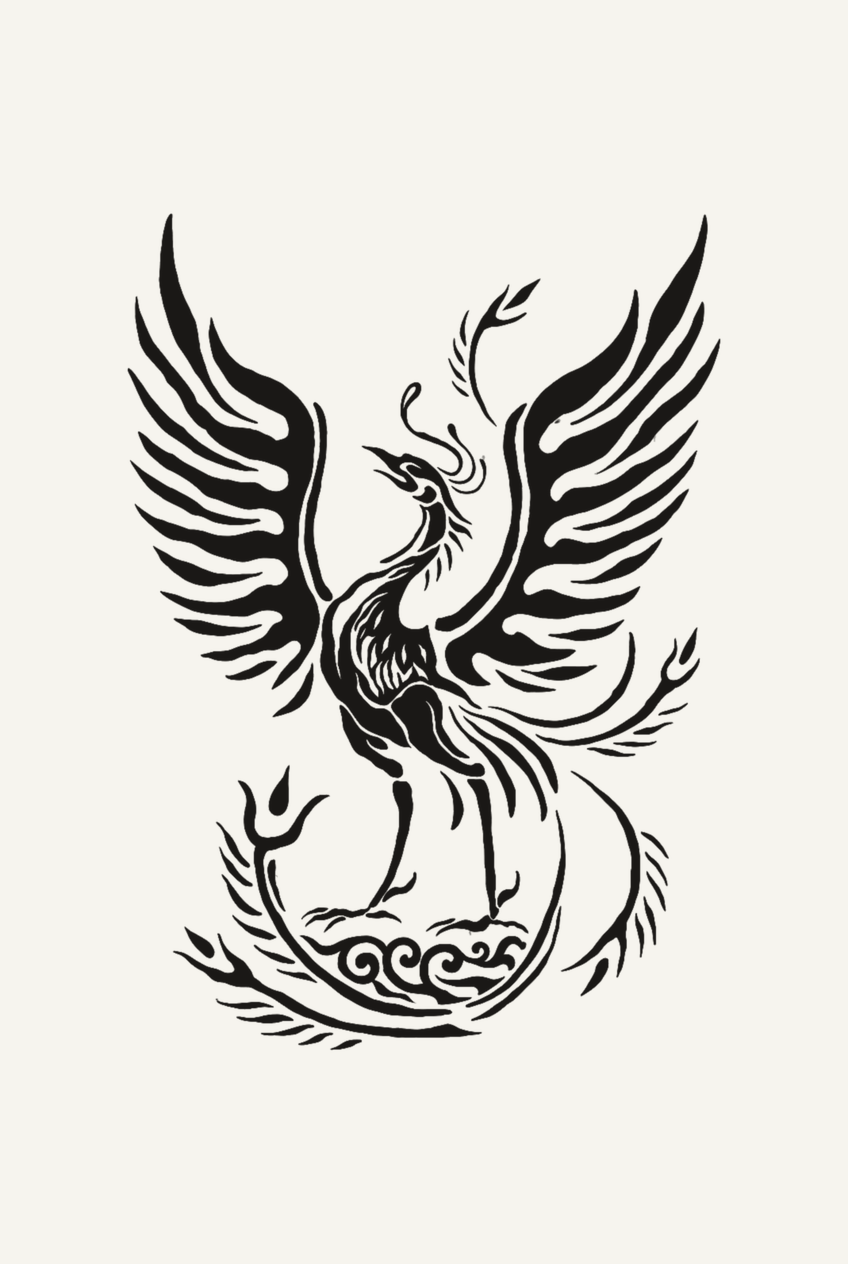
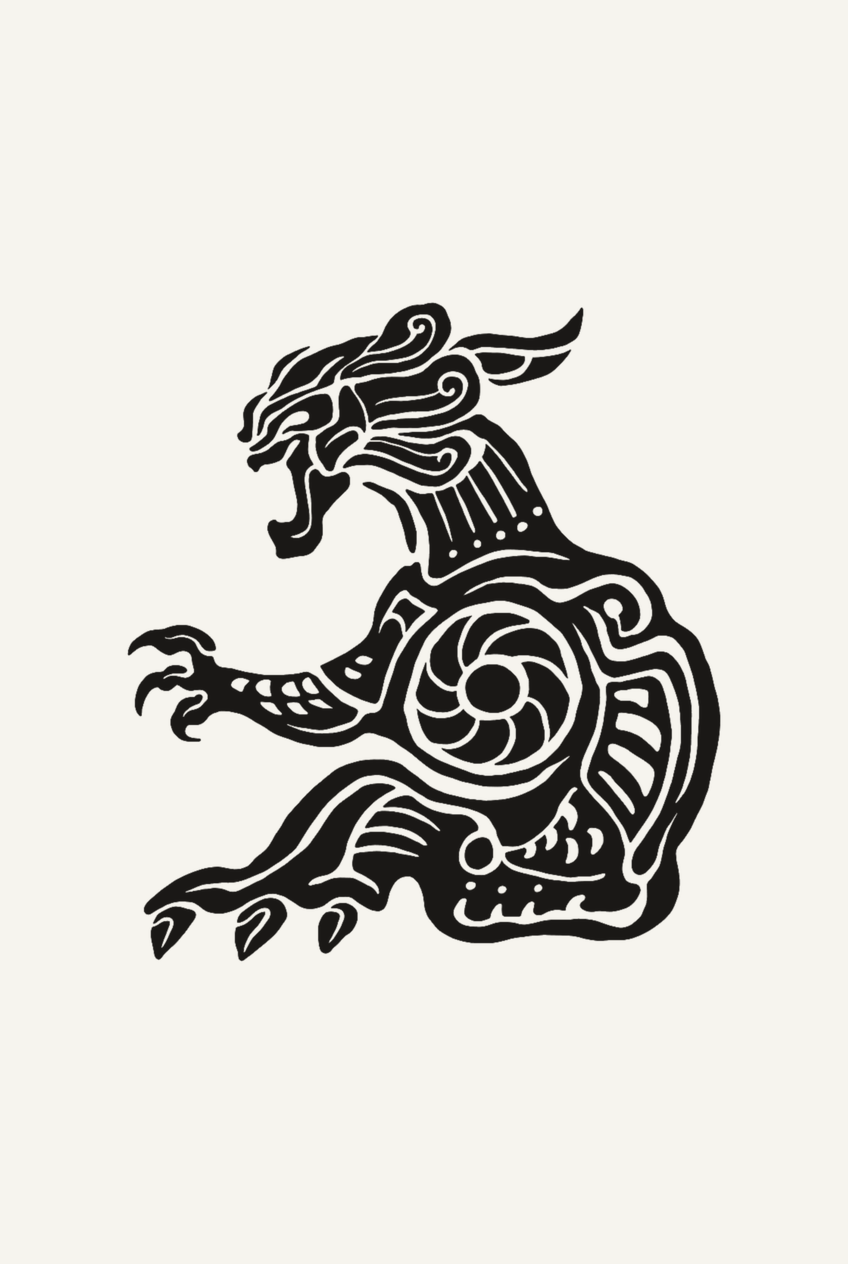
笔法: Horned serpent rearing through three layered mountain ridges, flame-plumed head high, ribbon body weaving in and out of the peaks · black-grey · near-square composition · scalable 14–18 cm
形态: 大蛇焰鬃昂首,长身穿插三层山脊盘绕,山脊内刻线,近方构图
名字
大蛇(dà shé)——就叫这个名字。经典里的它不止一条:大咸之山长蛇,身生彘毫、声如柝鼓;巴蛇吞象,三年才吐出骨头。本设计取的是最古老的那层读法——蛇不只是住在山里,蛇*就是*山的动态:山脊线画成身体,在群峰间穿行了三次。
*dà shé* — simply, the great serpent, and the classic knows several: the serpent of Daxian Mountain with boar-bristles and a drum-beat voice, the Ba snake that swallowed an elephant and took three years to pass the bones. This design takes the oldest reading of all — the serpent that does not merely live in the mountains but *is* the mountains' movement: the ridge line, drawn as a body, crossing the peaks three times.
出处
《山海经》(约成书于前 4—前 2 世纪)各章记了它几条:《北山经》大咸之山:「有蛇名曰长蛇,其毛如彘豪,其音如鼓柝」;《海内南经》:「巴蛇食象,三岁而出其骨。」在华夏地理观里,蛇从来不只是动物:它是水道,是山脊,是大地攥起的长肌。墨线转写:本设计以「大蛇」原型意象构图,转写为纹身墨线。
The *Shanhaijing* (compiled c. 4th–2nd century BC) records its great serpents in several chapters: *Bei Shan Jing*, Daxian Mountain: 「有蛇名曰长蛇,其毛如彘豪,其音如鼓柝」 — the Long Serpent, bristled like boar-hair, its voice like a watch-drum; and *Hai Nei Nan Jing*: 「巴蛇食象,三岁而出其骨」 — the Ba snake swallows an elephant and passes the bones after three years. The serpent in Chinese geography is never a mere animal: it is the waterway, the ridge, the long muscle of the land. Inking note: this design composes the great-serpent archetype and re-inks it as tattoo linework.
设计灵感
本版每一处形制决定都有出处可查,逐条对账。① 昂首戴焰的高扬蛇首——经典里的大蛇从不匍匐;蛇首画在构图顶端、焰鬃扬起、正在升起的中段:山最有姿态的那一瞬。② 穿行三层山脊的飘带之躯——蛇的穿越画成上下交织的编结,把经文里蛇穿行「洞穴与川谷」的习性转成几何咬合:身体把群峰缝在一起。③ 带内刻线的山脊——群山画成层叠的书法曲线加细腻的脊线皴,蛇鳞与山的岩层互为纹理:一种质感,两种读法。④ 近方框——盘曲的山河不需要地平线;构图像一碗叠好的山,自己合拢。
Every form decision on this design points to a recorded source, element by element. ① The horned head rearing high — the great serpents of the classic are never crawlers; the head is drawn at the composition's top, flame-plumed, mid-rise: the mountain at its proudest moment. ② The ribbon body weaving through three ridges — the snake's crossing drawn as over-under weave, the recorded serpents' habit of threading 洞穴与川谷 turned into interlaced geometry: the body ties the peaks together. ③ The ridge-lines with inner hatching — the mountains drawn as layered calligraphic curves with fine ridge strokes, the serpent's scales echoing the hills' strata: one texture, two readings. ④ The near-square frame — a coiled geography needs no horizon; the composition closes like a bowl of folded mountains.
来历
为什么最古老的华夏地理书一直在画蛇?因为蛇是唯一一种身体本身就长得像河、像墙、像路、像山径的动物——大地自己的草书。经典的蛇守山、吞象、在暗处击鼓;它们是被想象成生灵的基础设施。当一片山河需要用一根线条说完,那根线条就是蛇。
底下还有更老的一层:蛇会蜕皮。那条穿越三重山脊的大蛇,是把群山当鳞片在穿——而且会换。河道会改,山脊会蚀,大地很慢,但大地不是静止的。一条编进群峰的蛇,是地质学得到过的最诚实的肖像:慢到被当作永恒来崇拜的运动。
所以纹它,纹的是什么?这是给那种明白「真正的力量很少自报家门——它只会穿行」的人的设计。穿过工作,穿过年月,穿过别人的墙:地形一路争辩,长躯不改方向。昂起的蛇首说:方向从没变过。穿山者,不为山折。
Why did the oldest Chinese geography book keep drawing serpents? Because the serpent is the only animal whose body already looks like a river, a wall, a road, a mountain path — the land's own cursive script. The classic's serpents guard mountains, swallow elephants, drum on the dark; they are infrastructure imagined as creature. When a landscape needs saying in one line, the line is a snake.
There is also the older current underneath: the snake sheds. The great serpent crossing its three ridges is wearing the mountains the way a snake wears skin — and changes them. Rivers move; ridges erode; the land is slow but it is not still. A serpent woven through the peaks is the most honest portrait geology ever got: movement so slow it was worshipped as permanence.
So what does it mean to wear it? This is the design for the person who understands that real strength rarely announces itself — it threads. Through jobs, through years, through other people's walls: the long body keeping its direction while the terrain argues. The raised head says the direction never changed. 穿山者,不为山折。
释义
穿行而非击打的力量。一副把三重山脊缝在一起、却一座也不折断的身体——慢到被误认成石头,稳到被误认成命运。
The strength that threads rather than strikes. A body that ties three ridges together without breaking one — movement patient enough to be mistaken for stone, direction certain enough to be mistaken for fate.
位置
天生的方形建筑感构图:14—16 厘米收上臂或小腿,编结随肢体曲线走;或 16 厘米居中收后背。三次穿行是全图的骨架——三个都要可见;两次是蛇,三次才是山系。
Built square and architectural: 14–16 cm on the upper arm or calf, the weave following the limb's coils; or 16 cm centered on the back. The three crossings are the design's architecture — keep all three visible; two reads as a snake, three reads as a mountain system.
纹之前
此图只宜墨线。山脊的皴线是全图的地质——黑线让它读作凿刻,灰阶会把凿刻化成雾。最小尺寸 10 厘米:再小,上下交织的编结会闭合,穿行消失。避开肘窝与膝——屈曲区最先桥接编结的细缝,而缝一没,大地就不动了。
This design belongs to ink only. The ridge hatching is the design's geology — black line keeps it carved; greyscale would turn carved stone into fog. Minimum size 10 cm: below that the under-over weave closes up and the crossings disappear. Keep it off the elbow crease and the knee — flexion zones bridge the weave's fine gaps first, and once the crossings merge, the land stops moving.
本卡每一个汉字都由中文母语者选定并逐笔核对。