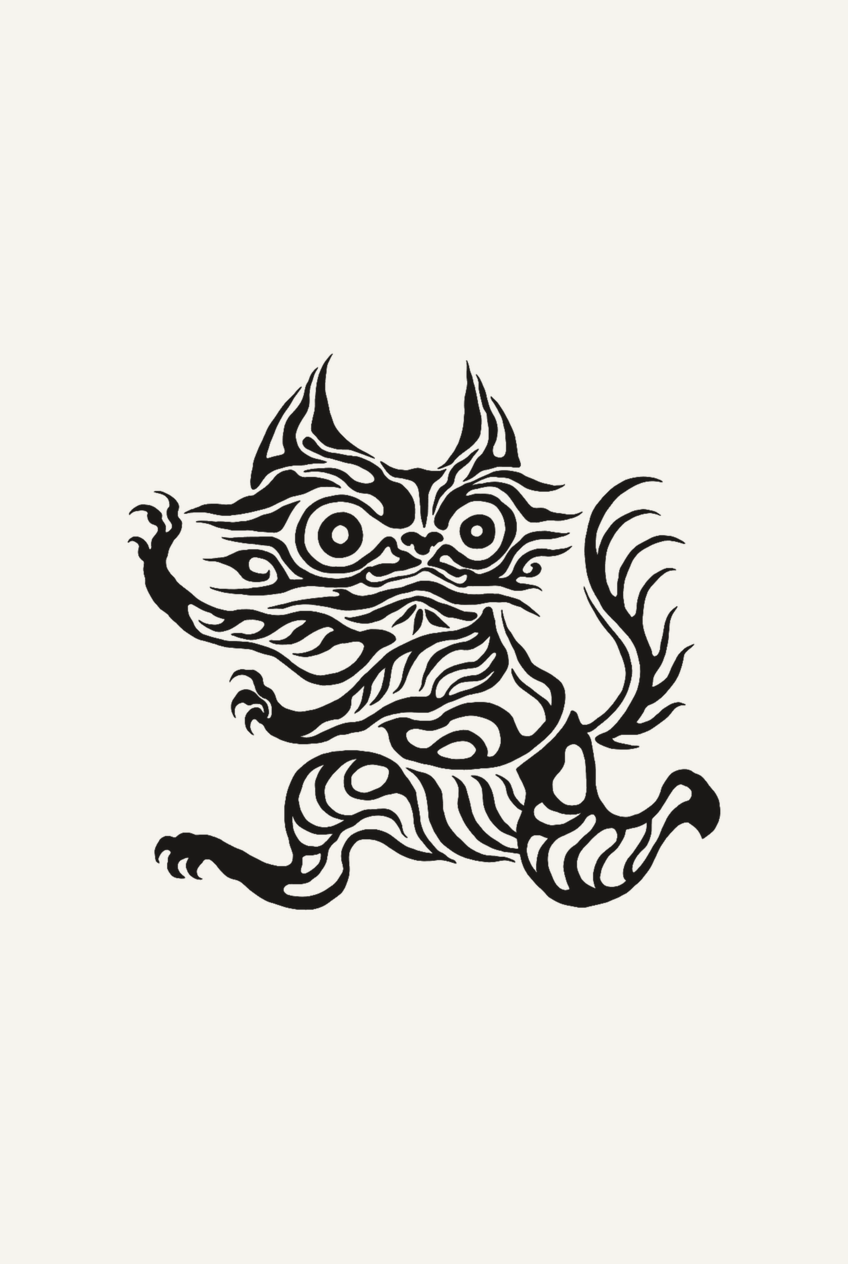
朏朏 · Fěi Fěi
The Sorrow-Eater
系列: 神兽灵禽 · Design #22
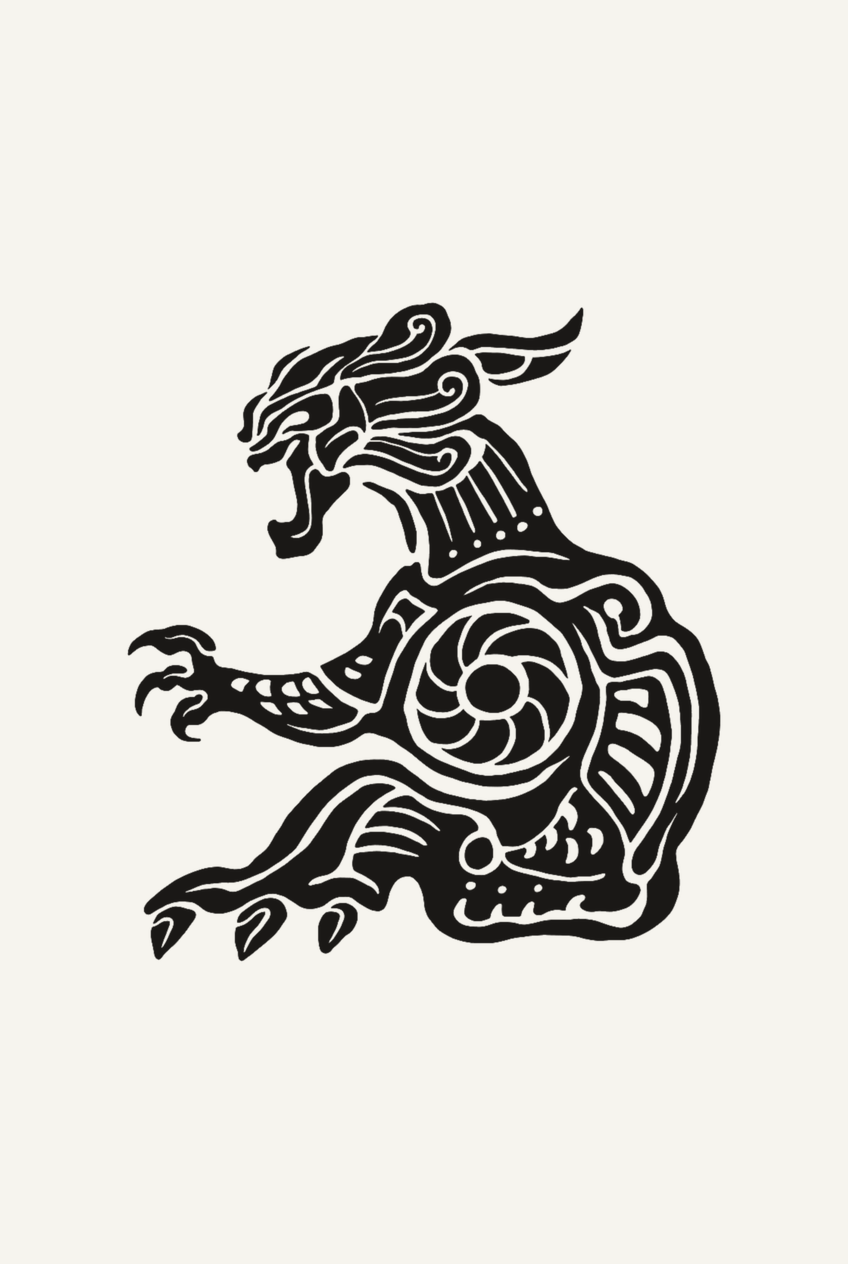
笔法: Wild-cat creature with big round eyes and tufted ears, flame-stripe patterns flowing through the body, one forepaw raised mid-step, curled plume tail · black-grey · vertical composition · scalable 8–12 cm
形态: 朏朏狸猫大圆眼,簇耳,焰纹条身,举爪踏步,羽状卷尾,竖构图
名字
朏朏(fěi fěi)——霍山的小狸兽,经典的方子简单到不能再简单:养之可以已忧——养一只,忧就停了。不是勇气,不是财富,不是智慧:是忧,已,终止。在一部满是征兆与食人兽的博物志里,这是唯一一只被记下来的全部使命就是「让抱着它的人好受一点」的生灵。《山海经》最温柔的功能,给了最小的身体。
*fěi fěi* — the small cat-beast of Huo Mountain, and the classic's prescription could not be simpler: 养之可以已忧 — keep one, and sorrow stops. Not courage, not wealth, not wisdom: sorrow, 已, terminated. In a bestiary full of omens and man-eaters, this is the one creature whose entire recorded purpose is to make the person holding it feel better. The gentlest function in the Shanhaijing, given to the smallest body.
出处
《山海经·中山经》(约成书于前 4—前 2 世纪)霍山条:「有兽焉,其状如狸,而白尾有鬣,名曰朏朏,养之可以已忧。」状如狸,白尾有鬣;名叫朏朏;养它可以解忧。那个动词是养——饲养、陪伴——不是捕,也不是食:经典开的是「相处」这味药,而药是互相的。墨线转写:本设计以狸兽经文里的灵气,转写为纹身墨线。
The *Shanhaijing*, *Zhong Shan Jing* chapter (compiled c. 4th–2nd century BC), Huo Mountain entry: 「有兽焉,其状如狸,而白尾有鬣,名曰朏朏,养之可以已忧。」 — shaped like a wild cat, white tail with a mane; named Feifei; keeping it cures sorrow. The verb is 养, to raise, to keep — not 捕, to catch, not 食, to eat: the classic prescribes companionship, and the cure is mutual. Inking note: this design adapts the cat creature's recorded charm and re-inks it as tattoo linework.
设计灵感
本版每一处形制决定都有出处可查,逐条对账。① 大圆眼——狸兽被记下的可亲,画成注视:又圆又直、毫不设防——一双从不需要怕你的眼睛。② 贯体的焰纹——野狸的皮毛画成流动的火带:山的野性留在纹样里,只有姿态被驯。③ 举爪踏步——「养之」,这个「养」的动词画成走近:一只爪朝养它的人抬起,正好走在向你来的半路上。④ 羽状卷尾——「白尾」,记载的白尾放大为全图最柔的一道线,卷起来像一声问候。
Every form decision on this design points to a recorded source, element by element. ① The big round eyes — the cat's recorded tameness drawn as gaze: wide, direct, unafraid — an animal that has never needed to fear you. ② The flame-stripe patterns through the body — the wild-cat 狸 coat rendered as flowing fire-bands: the mountain's wildness kept in the pattern, domesticated only in posture. ③ The raised forepaw mid-step — 养之, the keeping verb drawn as approach: one paw lifted toward the keeper, caught walking toward you. ④ The curled plume tail — 白尾, the recorded white tail enlarged into the design's softest line, curling up like a question or a greeting.
来历
品一品这条记载的经济学。经典里其他所有生灵都是「被消耗」才起效的——吃下去治病,穿戴上护身,惧怕它以求安。唯独朏朏是养——饲养、陪伴、共同生活。整部经里唯一一个关系型动词。药不是一剂,是一段时光:你养着它,忧便一日日停了。任何养过猫的人都心领神会——这可能是关于「陪伴动物究竟做什么」的最古老书面描述,比「治疗犬」这个词早了两千三百年。
再注意那份诚实藏在尺度里。《山海经》里体面更大的兽许的愿也更大——天下安宁,子孙绵延,无所畏惧。朏朏许的东西更小,说实话也更难得到:忧的终结。不是战胜敌人——是那种安静的、私人的重量的终结。经典似乎知道这才是更稀有的奇迹。守一扇门需要九首的巨兽,卸下一颗心只要一只小小的、温热的动物。
所以纹它,纹的是什么?这是给那种曾被一段难熬的日子「驮」过来的人的设计——被一个人,被一只动物,被某个又小又暖又倔的存在。焰纹说野性从未离开;抬起的爪说它还是一直朝你走过来。纹它,是一封你每天都能读到的感谢信。养之者,亦被养。
Sit with the economics of the entry. Every other creature in the classic is consumed to work — eaten to cure, worn to protect, feared to appease. Feifei alone is 养 — raised, kept, lived with. The classic's one relational verb. The cure is not a dose; it is duration: you keep the animal, and day by day the sorrow stops. Any cat owner implicitly understands this prescription — it may be the oldest written description of what a companion animal does, twenty-three centuries before the word "therapy" was ever attached to one.
And notice the honesty of the scale. The Shanhaijing's grander beasts promise grander things — peace upon the world, sons and grandsons, fearlessness. Feifei promises something smaller and, frankly, harder to obtain: the end of sorrow. Not victory over enemies — the end of the quiet private weight. The classic seems to know that this is the rarer miracle. It takes a nine-headed guardian to hold a gate, but it takes a small warm animal to unload a heart.
So what does it mean to wear it? This is the design for the person who has been carried through a hard season — by a person, by an animal, by something small and warm and stubborn. The flame stripes say the wildness never left; the lifted paw says it kept walking toward you anyway. As a tattoo it is a thank-you note you can read every day. 养之者,亦被养。
释义
以陪伴为药的疗愈。忧的终结不在凯旋里,而在日子里——被喂养、被守候、被一个小小的、回头选择了你的存在惦记。整部经典里最小的兽,驮着它最像当代的一张方子。
The cure that is company. Sorrow ending not in triumph but in days — fed, kept, waited on by something small that chose you back. The classic's smallest beast, carrying its most modern prescription.
位置
天生的小巧竖构图:8—10 厘米收小臂内侧或手腕——抬爪的姿态,戴在佩戴者自己看得见的地方读法最真;10—12 厘米变体收小腿或肩头。这是一只「同伴尺寸」的兽,不要放大成纪念碑——亲密才是立意。
Built small and upright: 8–10 cm on the inner forearm or wrist — the lifted paw reading best where the wearer can see it; a 10–12 cm variant sits on the calf or shoulder. This is a companion-sized design; do not scale it monumental — the intimacy is the point.
纹之前
此图只宜墨线。它的可爱在大圆眼与焰纹的对差——上色会变成卡通,黑线才守得住古意。最小尺寸 6 厘米:再小,圆眼不圆,脸就空了。避开小臂外缘——那个位置最先糊掉的是抬爪的细爪尖,而那只爪就是那声问候。
This design belongs to ink only. Its charm is the contrast of big round eyes against flame stripes — color would make it a cartoon; black line keeps it classic. Minimum size 6 cm: below that the eyes lose their roundness and the face goes vacant. Keep it off the outer forearm edge — that zone blurs the raised paw's fine claws first, and the paw is the greeting.
本卡每一个汉字都由中文母语者选定并逐笔核对。