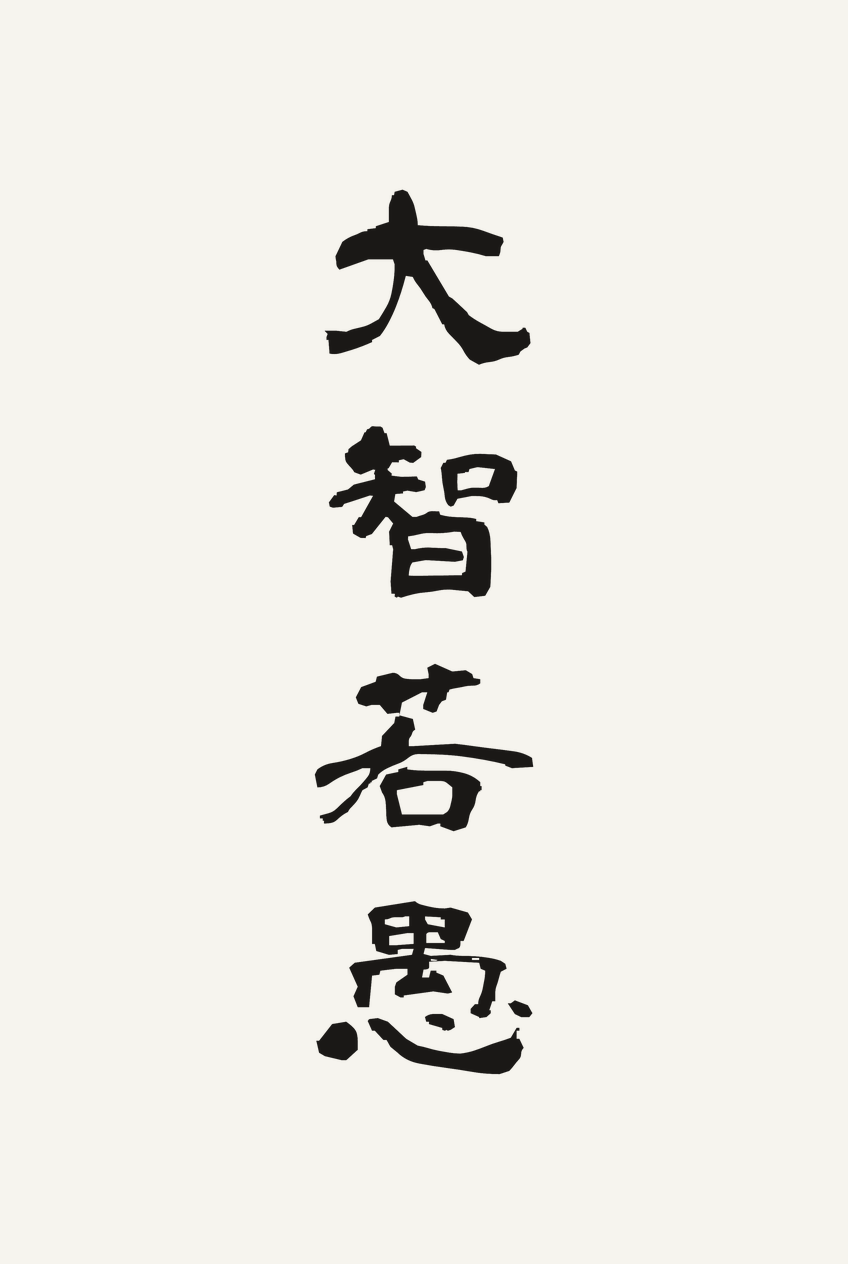
大智若愚 · Dà Zhì Ruò Yú
Great Wisdom Looks Like Foolishness
系列: 吉语成语 · Design #20
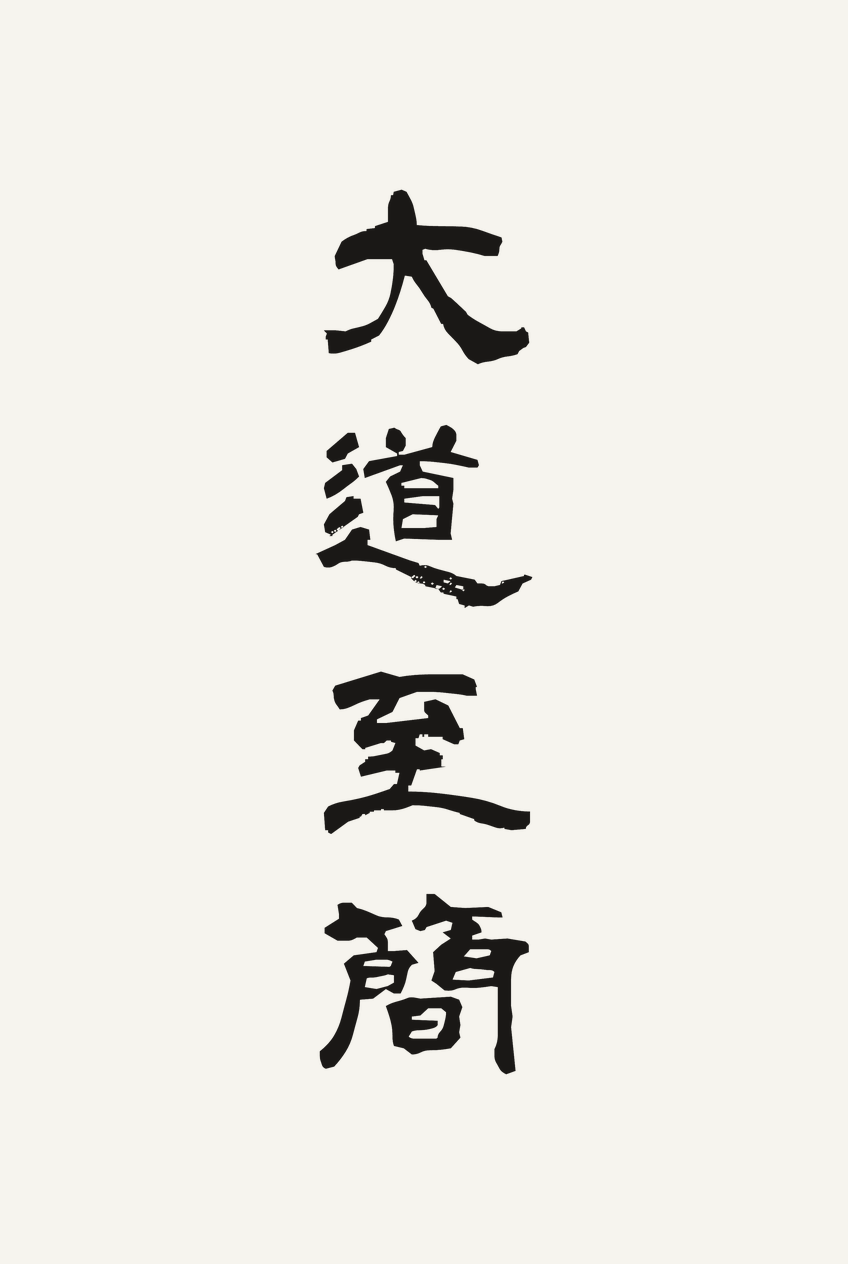
笔法: four characters, vertical column · clerical script (lishu) · same form 大智若愚 · medium-to-large
形态: 四字竖列大字,隶书
名字
大智若愚——大的智慧看起来像愚。不是把装傻当技术;是观察到「智慧大到一定程度就停止广告」。棋手放弃聪明的那步棋。满屋子里最年长的人问出那个所有人真正想问的天真问题。纹下它,是一个你保持诚实的掩护故事:迟钝是伪装,不是本体。
*Dà zhì ruò yú* — great wisdom resembles folly. Not the pretense of stupidity as a trick; the observation that intelligence at its largest stops advertising. The chess master declines the clever move. The elder in the room asks the naive question that was everyone's real question. As a tattoo, it is a cover story you keep honest: the dullness is the disguise, not the self.
出处
苏轼《贺欧阳少师致仕启》:大勇若怯,大智如愚——为欧阳修晚年风格的自敛而写。义理一路回溯到《道德经》第四十五章:大直若屈,大巧若拙,大辯若訥。四字成句是苏轼的手笔;引擎是老子的。出处按实分引,不混标。墨线转写:本设计以传统母题的经典线条造型为底,转写为纹身墨线。
Su Shi, 《贺欧阳少师致仕启》: 大勇若怯,大智如愚 — "great courage looks like timidity; great wisdom is like foolishness" — written to praise Ouyang Xiu's late-style restraint. The doctrine runs back to Daodejing 45: 大直若屈,大巧若拙,大辯若訥 — "great straightness seems bent; great skill seems clumsy; great eloquence seems inarticulate." The four-character form is Su Shi's; the engine is Laozi's. Both cited as found. Inking note: this design adapts the classic line construction of the traditional motif and re-inks it as tattoo linework.
设计灵感
本设计的每一处形制决定都有出处可查,逐条对账。① 四字竖列——悖论被按住不动:最大的那个字「大」坐在顶上,再无多言。② 隶书、同形「大智若愚」——「智」的知顶着日与月;「愚」的心压在屋宇下:上面是知道,下面是安静的心。③ 中到大尺寸——12–15 厘米;这层反讽需要均匀的笔画才绷得住面无表情。④ 只用墨——句子在表演朴素;墨不为它镀金。
Every form decision points to a recorded source, element by element. ① Four characters, one vertical column — the paradox held still: the largest word 大 sits at the top and says nothing more. ② Clerical script, same form 大智若愚 — 智's knowledge (知) riding a sun-and-moon; 愚's heart (心) under a room: knowing above, quiet heart below. ③ Medium-to-large scale — 12–15 cm; the irony needs even strokes to stay deadpan. ④ Black ink only — the sentence performs plainness; the ink does not gild it.
来历
短语背后的那封信:1071 年,苏轼祝贺老恩师欧阳修体面致仕。欧阳修当了几十年帝国最著名的文人——而他晚年的文章变得更安静、更平、更少防备。差一点的颂词会称之为衰退。苏轼称之为抵达:大勇如今看起来像怯,大智如今看起来像愚。老人停止了证明,而停止本身就是证明。
老子那行字是底下的引擎,而且与伪装无关——与尺度有关。大巧若拙:完整到不再需要可见用力的技艺。学徒亮出花活;师傅只给一刀。大辩若讷:稳固到可以保持安静的论点。四字成语从这些句子流浪进日常口语,它的诚实取决于保住原本的机械结构:若是「像」,不是「假装是」。智慧是真的,而且大;愚只是外面看见的部分。把它当师傅那一刀戴,别当停止学习的借口——句子里那个人可是先读完了所有的书。
The letter behind the phrase: 1071, Su Shi congratulating his old patron Ouyang Xiu on retiring with style. Ouyang had spent decades as the most famous intellectual in the empire — and his late prose had gone quieter, plainer, less armored. A lesser eulogy would have called it decline. Su Shi called it arrival: the great courage that now looks like timidity, the great wisdom that now looks like foolishness. The old man had stopped proving, and the stopping was the proof.
Laozi's line is the engine under it, and it is not about disguise — it is about scale. 大巧若拙: the skill so complete it no longer needs the visible effort. The apprentice shows the flourish; the master shows the cut. 大辩若讷: the argument so settled it can afford to be quiet. The four-character idiom wandered from these lines into common speech, and its honesty depends on keeping the original mechanics: 若 means "resembles," not "pretends to be." The wisdom is real, and large; the folly is only what the outside sees. Wear it as the master's cut, not as an excuse to stop learning — the man in the phrase read everything first.
释义
给胜任却厌倦表演胜任的人——资深的、静默优秀的、不再纠正满屋子的人。它不是无知的徽章;是佩戴者用墨给自己颁的退休礼。
For the competent who are tired of performing competence — the senior, the quietly excellent, the ones who have stopped correcting the room. It is not a badge for the ignorant; it is a retirement gift the wearer gives themselves, in ink.
位置
四字,一个平面:小臂内侧、脊柱、肋上。12–15 厘米;低于 10 厘米「智」的叠件会卡死。
Four characters, one plane: inner forearm, spine, over the ribs. 12–15 cm; below 10 cm 智's stacked components jam.
纹之前
四个字就是全部设计。 ② 同形「大智若愚」——简繁同形。③ 隶书保持面无表情。 每一笔均匀用力;笑话不能自己笑出声。④ 10 厘米起。 ⑤ 先挣到它。 原典里的师傅们是先成了师傅,才停止展示的。如果墨先于一万小时到账,它是笔贷款——用功力偿还。
Four characters are the whole design. ② Same form 大智若愚 — identical in traditional script. ③ Clerical script stays deadpan. Even pressure on every stroke; the joke must not laugh at itself. ④ Minimum 10 cm. ⑤ Earn it first. In the source texts the masters were masters before they stopped showing it. If the tattoo arrives before the ten thousand hours, it is a loan — repay it with work.
本卡每一个汉字都由中文母语者选定并逐笔核对。