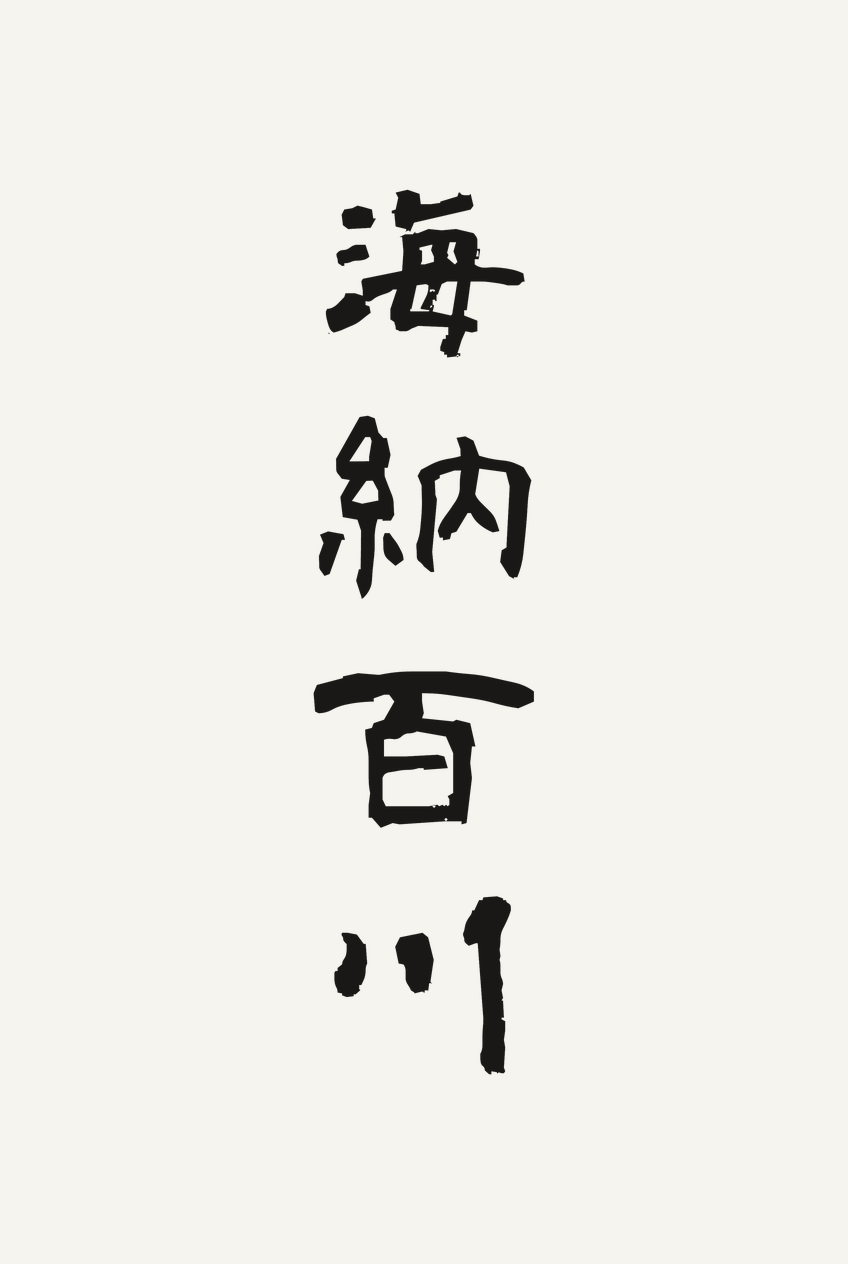
海纳百川 · Hǎi Nà Bǎi Chuān
The Sea Accepts a Hundred Rivers
系列: 吉语成语 · Design #06
笔法: four characters in a single vertical column · clerical script (lishu) · medium-to-large
形态: 四字竖列大字,隶书
名字
海纳百川——1839 年,林则徐挂在自家官署的那副对联的上半:海纳百川,有容乃大;壁立千仞,无欲则刚。写对联的人即将下令在虎门销毁两万箱英国鸦片,他要打一场武力赢不了的仗,于是先给自己写了一句关于「容量」的提醒。
*Hǎi nà bǎi chuān* — the sea accepts a hundred rivers. The first half of the couplet Lin Zexu hung in his own office in 1839, on the eve of his order to destroy 20,000 chests of British opium at Humen: 海纳百川,有容乃大;壁立千仞,无欲则刚 — "The sea accepts a hundred rivers; its capacity makes it great. The cliff stands a thousand fathoms; having no craving, it is hard." A man about to start a war he could not win by force wrote himself a reminder about capacity.
出处
对联作者林则徐(1785–1850),1839 年 6 月在虎门销毁英商鸦片、由此引燃第一次鸦片战争的钦差大臣——而他在灾难中的品行,使他成为近代中国官场的道德标尺。海的意象上承李斯《谏逐客书》与汉代政论(河海不择细流,故能就其深),林则徐把它凝成对联。墨线转写:本设计以传统母题的经典线条造型为底,转写为纹身墨线。
The couplet is by Lin Zexu (1785–1850), the Qing commissioner-general whose destruction of British opium stock at Humen in June 1839 triggered the First Opium War — and whose conduct through the catastrophe made him the moral benchmark of modern Chinese officialdom. The sea image descends from the Li Si memorial and Han-era statecraft prose (河海不择细流,故能就其深 — "rivers and seas refuse no trickle, and so they achieve depth"), which Lin condensed into the couplet. Inking note: this design adapts the classic line construction of the traditional motif and re-inks it as tattoo linework.
设计灵感
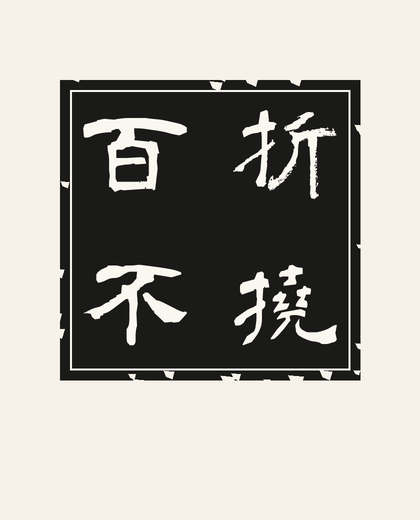
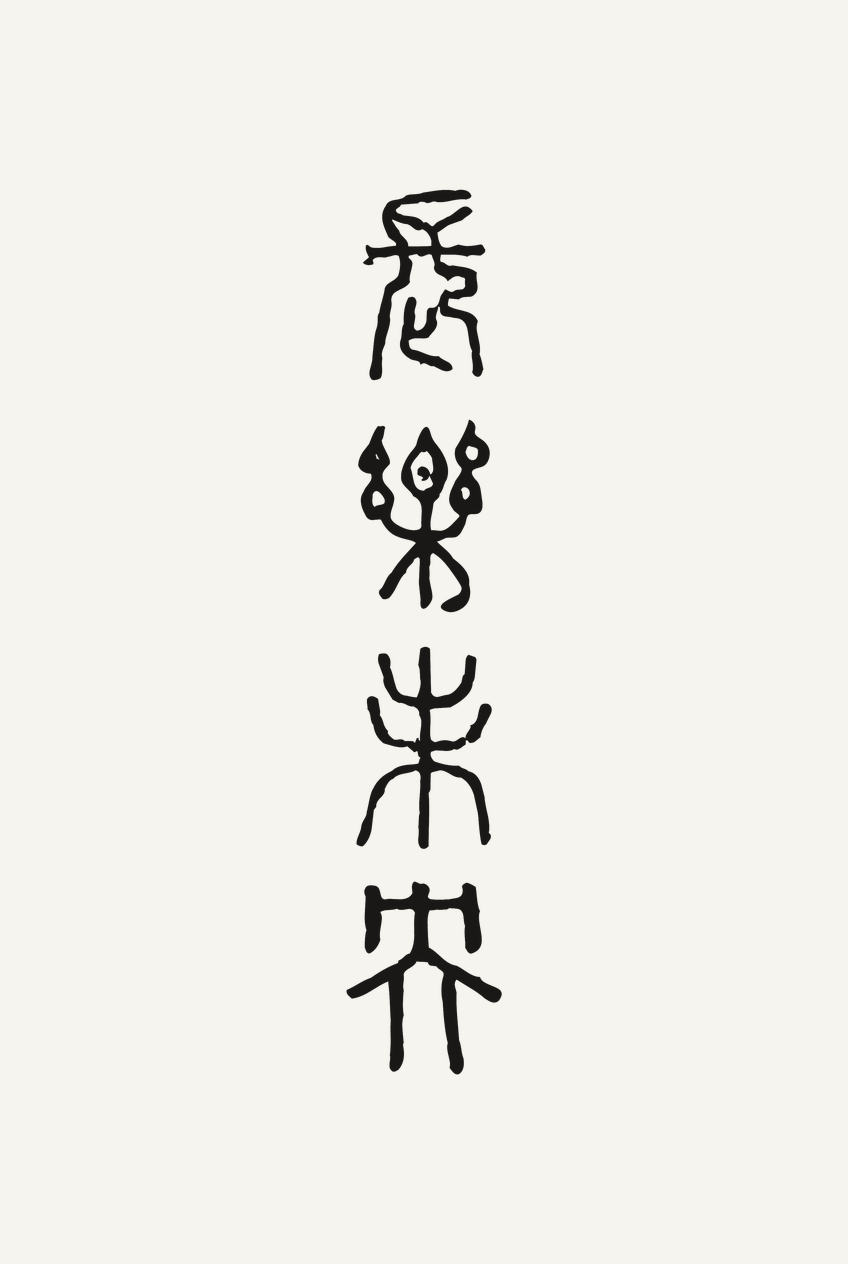
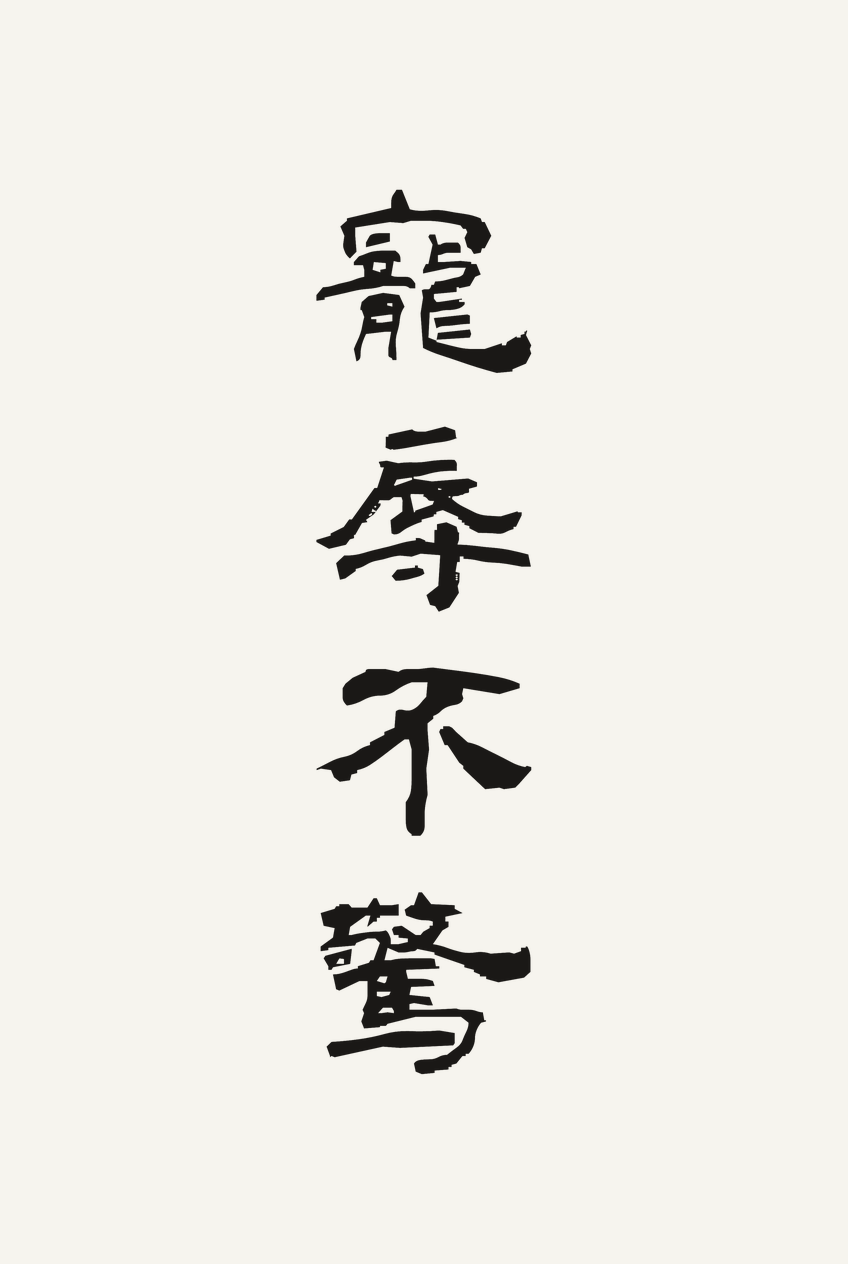
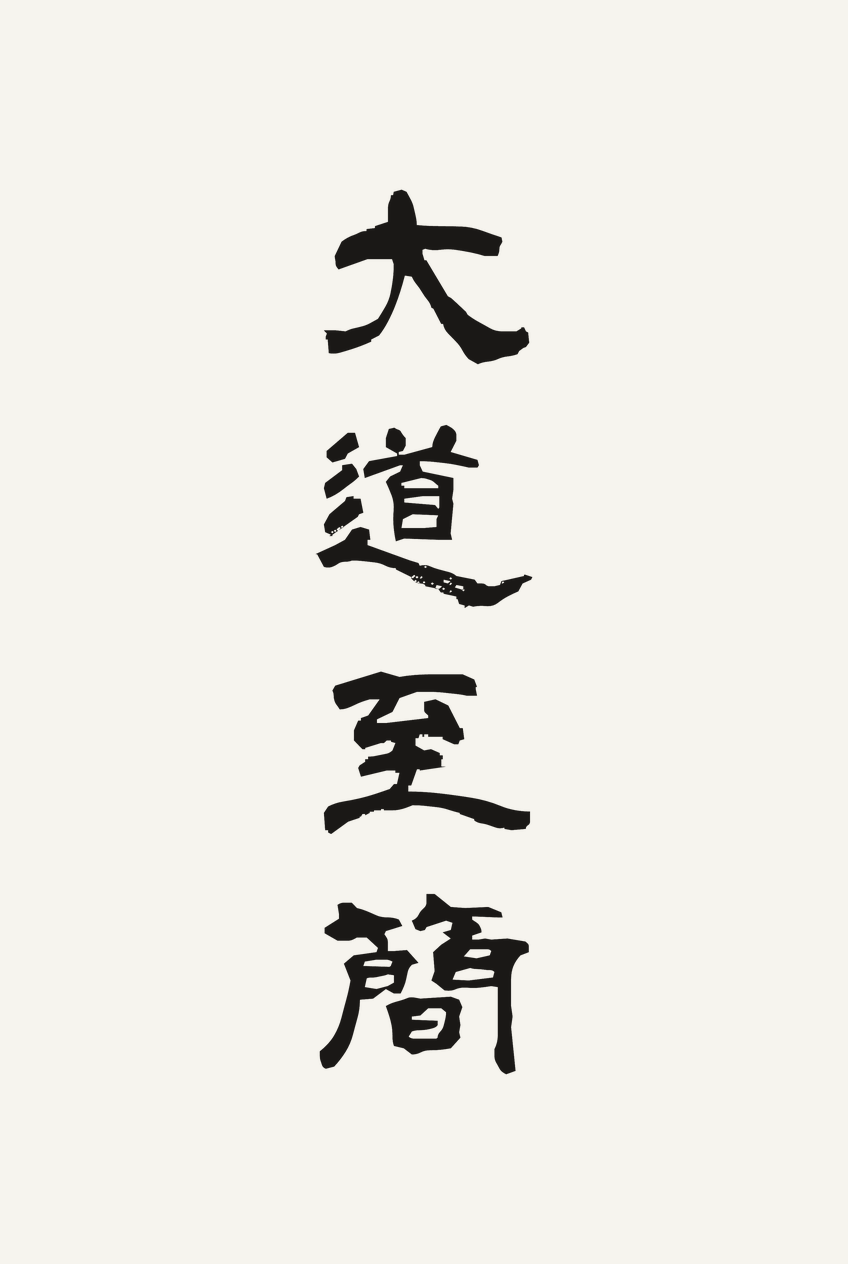
本设计的每一处形制决定都有出处可查,逐条对账。① 四字一竖列——林则徐亲手书写的条幅格式;这段文本天生就是悬挂的书法。② 隶书——汉代碑刻承重的横平笔画:把海写成一个装得下一切的水面。收笔的波磔,就是潮。③ 中到大尺寸——海是个大命题;四字挤紧了读成标语,读不出海。④ 只用墨——这副对联生来就是挂在官署里的纸上墨迹,不是画;素,才压得住它的道德分量。
Every form decision points to a recorded source, element by element. ① Four characters, one vertical column — the couplet-strip format Lin himself wrote in; the text was born as hanging calligraphy. ② Clerical script (lishu) — the level, weight-bearing strokes of Han steles: the sea written as a surface that holds everything. The wave-flourish at each stroke's end is the tide. ③ Medium-to-large scale — the sea is a large argument; four crowded characters make it a slogan, not a sea. ④ Black ink only — the couplet descends from ink on paper hung in an office, not from painting; the austerity keeps the moral weight.
来历
1839 年 6 月,林则徐下令在虎门销毁 1,181 吨英国鸦片——五百名工人往石灰池里冲销了二十三天,全程当着被他特意请来的外国观察员的面。这是那个世纪最挑衅的诚实:没有偷卖、没有暗账、没有遮掩——就是销毁,公开地,销掉那批用来毒害他国家的货。
他知道货背后的帝国更强。几个月前他给英国女王写过一封公开信,用冰冷的逻辑陈述鸦片贸易的种种不是——并恳请对方拿出基本的体面。对方的回答是炮舰。战争照这类战争的剧本走:帝国输了,林则徐成了替罪羊,五十七岁被流放到伊犁,俄国边境。
他在流放地做的事,才是这副对联的分量所在。他勘测边疆渠道、推广农垦、绘河图——并编出了中国第一部认真对待外部世界的方志,那本书在一代人之后滋养了自强派,也滋养了魏源那句名言:「师夷长技以制夷」。败局中的容量。海不会因为有些河是浑的就不收——一个输掉战争的人也没有停止做帝国最诚实的仆人。有容乃大:伟大,就是那个容量本身。
In June 1839, Lin Zexu ordered the destruction of 1,181 tons of British opium at Humen — flushed into lime pits by five hundred workers over twenty-three days, in full view of foreign observers he had deliberately invited. It was the most provocatively honest act of the century: no theft, no smuggled resale, no cover — just destruction, publicly, of the cargo a foreign trade was using to poison his country.
He knew the empire behind that cargo was stronger. Months earlier he had written the Queen of England an open letter arguing the case against the opium trade with icy logic — and asking, essentially, for decency. The answer was gunboats. The war went as such wars go: the empire lost, Lin was made the scapegoat, and he was exiled to Ili, on the Russian frontier, at fifty-seven.
What he did in exile is why the couplet matters. He surveyed the frontier's canals, promoted agriculture, mapped the rivers — and compiled the first serious Chinese gazetteer of the outside world, the book that a generation later would inform the self-strengtheners and Wei Yuan's famous injunction to "learn the superior techniques of the barbarians to control the barbarians." Capacity in defeat. The sea does not stop accepting rivers because some of them are muddy — and a man who lost a war did not stop being the empire's most honest servant. 有容乃大: the greatness is the capacity itself.
释义
一种来自「接纳」的力量——接纳想法、人、错误、乃至与你相左的整个传统。给管理者、给曾经笃定的人、给世界刚刚大过自己观点的人。对联的下半句就藏在里面:有容乃大,无欲则刚。海之所以大,是因为它对每条河都说可以,对自己不需要的东西说不。
The strength that comes from taking in — ideas, people, mistakes, whole traditions that disagree with you. This is a design for leaders, for the formerly certain, for anyone whose world just got bigger than their opinions. The couplet's second half is built in: capacity makes great, and wanting nothing makes hard. The sea is great because it says yes to every river and no to nothing it needs.
位置
这一列走长的平面:小臂内侧、脊柱、小腿外侧。隶书承重的水面需要一条有长度的肢体——14 厘米列高才是舒服的下限。胸口正中适合缩小版。
The column rides the long planes: inner forearm, spine, outer calf. The clerical script's level, weighted strokes suit a limb with some length — 14 cm column height is the comfortable floor for four characters of this stature. The chest, centered, takes a smaller cut well.
纹之前
自上而下,不许重排。 对联的语法就是列的顺序。② 隶书的水平面就是海。 隶书托着水线——笔画横平有分量;改成草写,海就成了浪花。③ 只用墨。 这是官署墙上的书法,不是画。④ 列高 14 厘米起。 ⑤ 容量是双向的。 对联既赞「纳」也赞「无欲则刚」——只要海的大、不要崖的硬,你只纹了半句话。
Top to bottom, no reshuffle. The couplet's grammar is the column's order. ② The level surface is the sea. Clerical script holds the water-line — keep the strokes level and weighted; a cursive rewrite turns the sea into spray. ③ Black ink only. This text is a government office's wall calligraphy, not a painting. ④ Column height 14 cm minimum. ⑤ Capacity cuts both ways. The couplet praises taking in *and* standing without craving — if you only want the sea's largeness and not the cliff's hardness, you have half a sentence.
本卡每一个汉字都由中文母语者选定并逐笔核对。