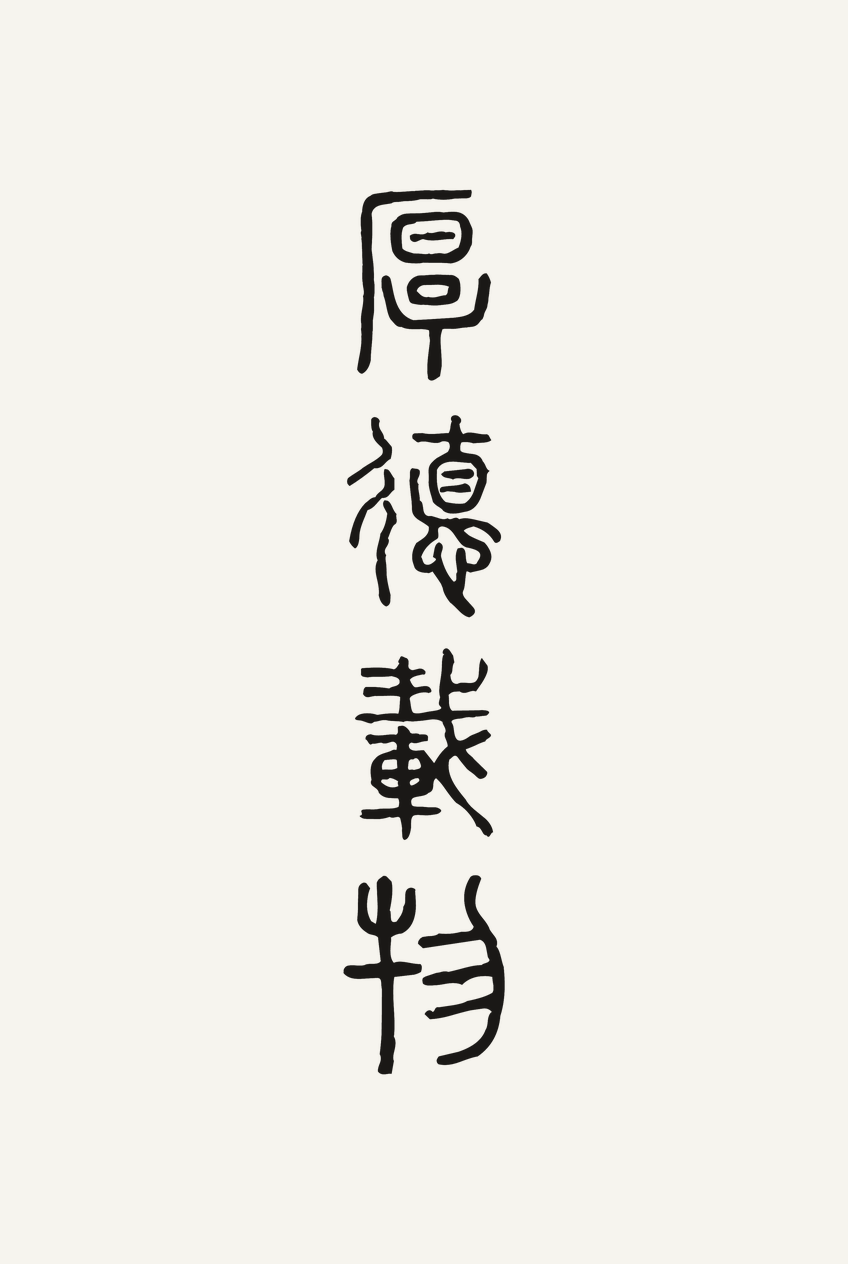
厚德载物 · Hòu Dé Zài Wù
Great Virtue Carries All Things
系列: 吉语成语 · Design #07
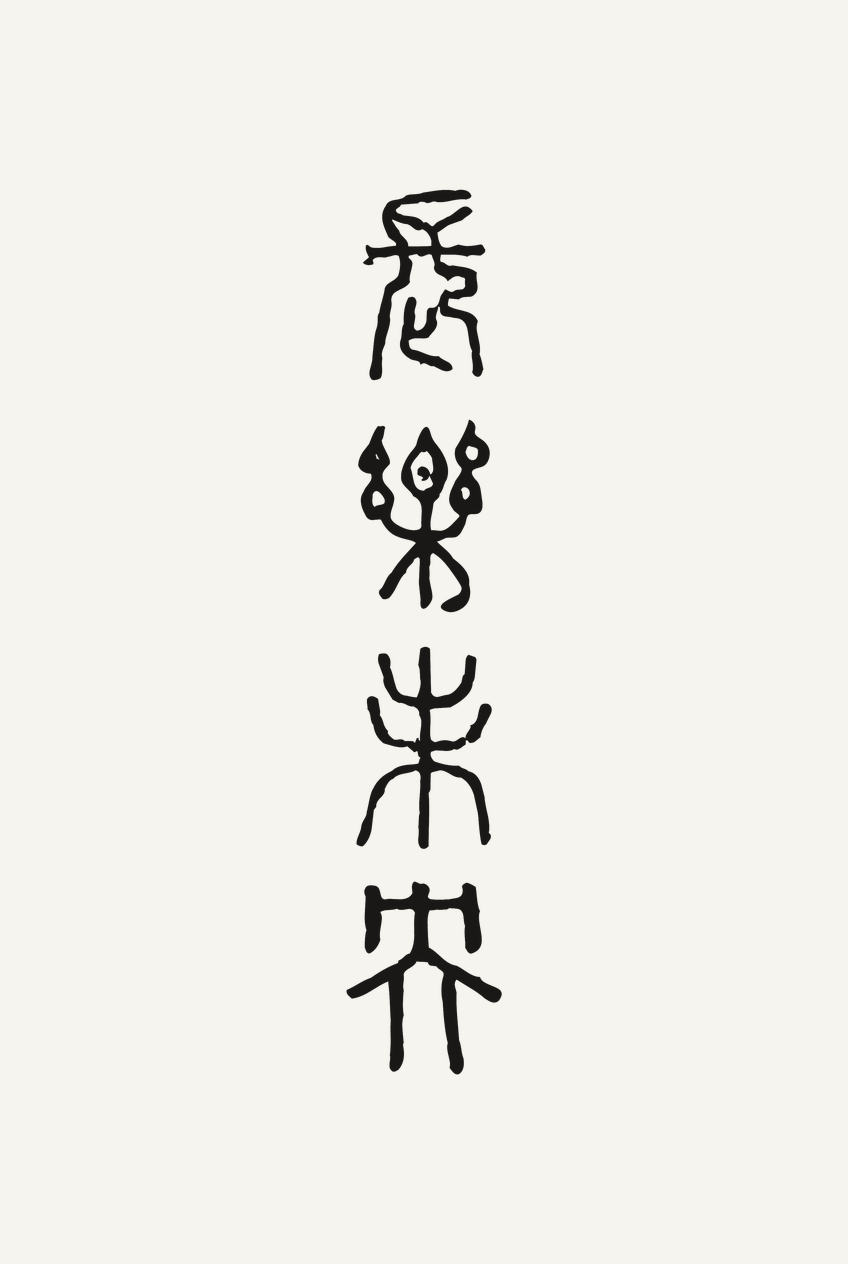
笔法: four characters, vertical column · seal script (zhuanshu) · traditional form 厚德載物 · medium-to-large
形态: 四字竖列大字,篆书
名字
厚德载物——「载」是承重的动词:大地承载——河流、城市、死者、收成——并且不筛选它承载的东西。这个主张是关于容量的定义:人格的量度,不是看你能认可什么,而是看你能承住多少重量而不裂。纹下这四个字,是一面承重墙的座右铭。
*Hòu dé zài wù* — thick virtue carries things. 载 is the load-bearing verb: earth carries — rivers, cities, corpses, harvests — without grading what it carries. The claim is a definition of capacity: your character is measured not by what you approve but by how much weight you can hold without cracking. As a tattoo, it is a load-bearing wall's motto.
出处
《周易》坤卦《象传》原文:「地勢坤,君子以厚德載物。」它与乾卦的「自強不息」互为对联的上下半:天之运转,地之承载。1914 年梁启超演讲后,清华大学以这四个字为校训。墨线转写:本设计以传统母题的经典线条造型为底,转写为纹身墨线。
Verbatim from the Zhouyi, Hexagram Kun (Earth), the Image: 地勢坤,君子以厚德載物 — "Earth's condition is receptive devotion; the noble person, with thick virtue, carries the things of the world." It pairs with Hexagram Qian's 自強不息 as the two half-couplets of a complete character: heaven's spin and earth's carry. Tsinghua University took these four characters as its motto in 1914, in Liang Qichao's lecture. Inking note: this design adapts the classic line construction of the traditional motif and re-inks it as tattoo linework.
设计灵感
本设计的每一处形制决定都有出处可查,逐条对账。① 四字竖列——座右铭联挂在书房与大学礼堂的经典版式。② 篆书、繁形「厚德載物」——馆藏里最古老的书体:《周易》的年代早于隶书,篆书竖列读起来是这句经文在自己时代的手迹。③ 中到大尺寸——这个密度的四字,列高 14 厘米起。④ 只用墨——大地的配色:一种颜色,承载所有。
Every form decision points to a recorded source, element by element. ① Four characters, one vertical column — the classic layout of motto couplets hung in studies and university halls. ② Seal script, traditional form 厚德載物 — the oldest script in the shop's library: the Zhouyi predates clerical script, and the seal column reads as the verse in its own era's hand. ③ Medium-to-large scale — 14 cm column height minimum for four characters of this density. ④ Black ink only — earth's palette: one color, carrying all.
来历
坤是最纯粹的阴卦——不是弱,而是力量的接收半边。《象传》把地质学转成了伦理学:大地不挑选它的载荷。同一片土地托着祖坟也托着战场,接受洪水也接受旱年,并且全程保持承重。君子以模仿定义:容量——足够厚的德——才是让你承载那些不是你选的人与事的东西。
1914 年梁启超在清华演讲,把这一半与乾卦的「自強不息」配成对,让两个卦变成一张两行的性格考卷:像天一样运转,像地一样承载。一百年的毕业生从那副对联下走出来。这个纹身只留下地的那一半:对多数佩戴者而言,两种纪律里更难的那种。欣赏一场暴风雨谁都做得到;把它扛上多年,才是更稀有的艺术。
Kun is the purest yin hexagram — not weakness but the receiving half of strength. Its Image commentary turns geology into ethics: earth does not select its loads. The same ground holds the ancestral tomb and the battlefield, accepts the flood and the drought, and stays load-bearing through all of it. The 君子 (noble person) is defined by imitation: capacity — 德 thick enough — is what lets you carry people and events you did not choose.
Liang Qichao, lecturing at Tsinghua in 1914, paired this half with Qian's 自強不息 — unceasing self-strengthening — and made the two hexagrams a two-line character exam: spin like heaven, carry like earth. A century of graduates has walked out under that couplet. The tattoo keeps only the earth half: for many wearers, the harder of the two disciplines. Anyone can admire a storm; carrying it for years is the rarer art.
释义
给真正在承重的人:托住全家情绪的那位家长、扛着工资表的那位创始人、所有人第一个打电话去的那位朋友。这一列是结构意义上的脊柱——建筑里干着看不见的活的那个部分。
For the ones actually carrying: the parent holding a family's mood, the founder holding payroll, the friend everyone calls first. The column is a spine in the structural sense — the part of the building doing the invisible work.
位置
竖列走长的平面:小臂内侧、脊柱、胸口。四个致密的篆字,列高 14 厘米起;背部沿脊柱居中,是这个设计最字面的位置。
The column rides long planes: inner forearm, spine, chest. 14 cm column height is the comfortable floor for four dense seal characters; the back, centered along the spine, is the design's most literal address.
纹之前
自上而下,不可倒置。 ② 篆书是刻意的。 用《周易》自己时代的手迹写「厚德載物」——古意是论点,不是装饰。③ 只用墨。 ④ 列高 14 厘米起——篆书致密,给它空间。⑤ 「载」是动词。 这个纹身标记的是角色,不是情绪:纹了它,你的一周里就该有一件东西因为你选择承住而更稳。
Top to bottom, no reshuffle. ② Seal script is deliberate. 厚德載物 in the Zhouyi's own era's hand — the antiquity is the point, not decoration. ③ Black ink only. ④ Column height 14 cm minimum — seal script is dense; give it room. ⑤ Carry is a verb. The tattoo marks the role, not the mood: if you wear it, something in your week should be heavier because you chose to hold it.
本卡每一个汉字都由中文母语者选定并逐笔核对。