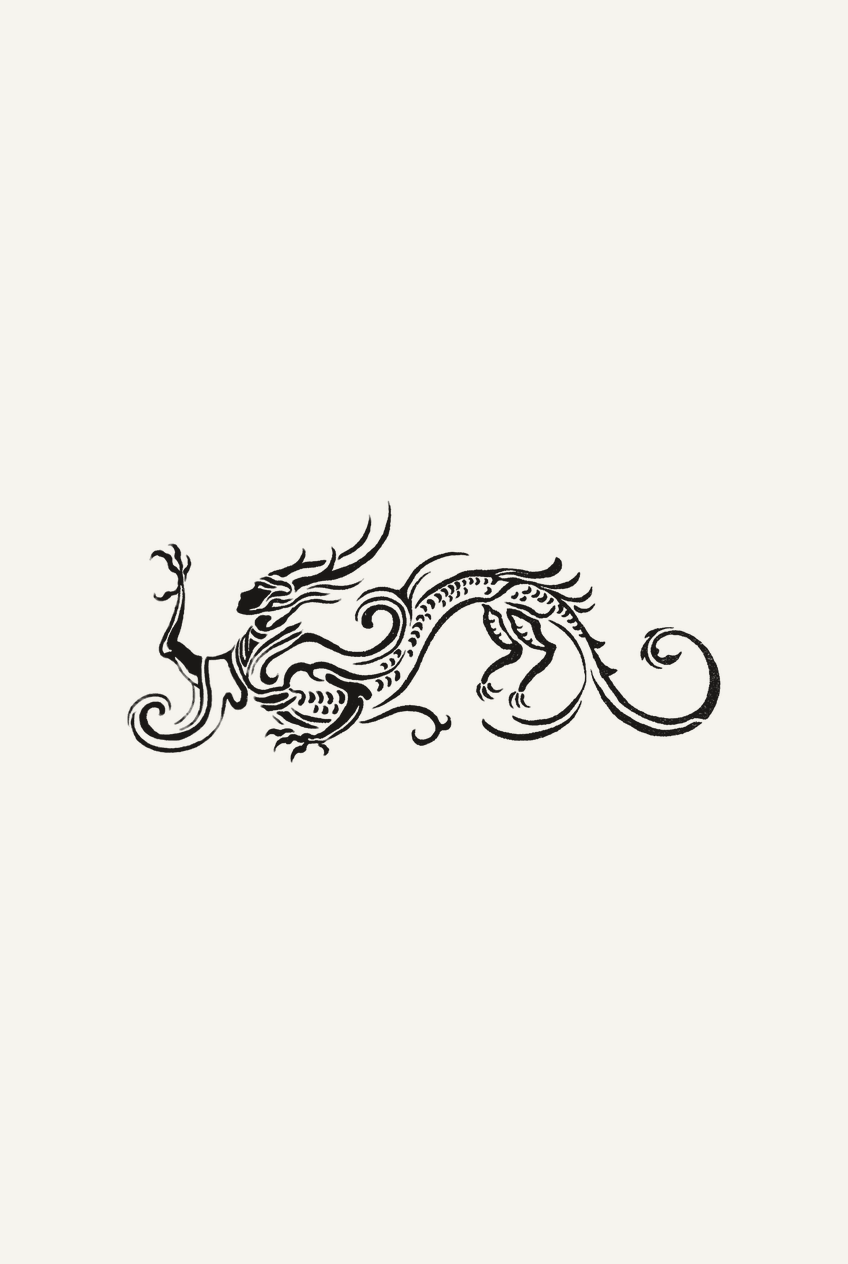
雷神 · Léi Shén
The Drum-Bellied Thunderer
系列: 神兽灵禽 · Design #35
笔法: Dragon-bodied, human-headed thunder god mid-beat · bold brushwork · horizontal composition · scalable 14–18 cm
形态: 龙身人头雷神,鼓腹作雷,横向构图
名字
雷神(léi shén)——《山海经》给了他全书最精简的发明:龙的身躯,人的头颅,而雷,是他擂响自己肚子的声音。没有锤,没有斧,没有战车。风暴是打击乐,而鼓就是他本身。
*léi shén* — the Thunder God, and the *Shanhaijing* gives him the most economical invention in the whole book: a dragon's body and a man's head, and thunder is made by drumming on his own belly. No hammer, no axe, no chariot. The storm is percussion, and the drum is him.
出处
《山海经·海内东经》(约成书于前 4—前 2 世纪):「雷泽中有雷神,龙身而人头,鼓其腹。在吴西。」形制参考:《山海经》文本记载;汉代画像石中的雷神出行图。墨线转写:本设计以传统母题的经典线条造型为底,转写为纹身墨线。
The *Shanhaijing*, *Hainei Dong Jing* chapter (compiled c. 4th–2nd century BC): 「雷泽中有雷神,龙身而人头,鼓其腹。在吴西。」 — in the Thunder Marsh dwells the Thunder God, dragon-bodied and human-headed; he drums his belly. It lies west of Wu. Historical form reference: the *Shanhaijing* textual record; Han-dynasty stone reliefs of the thunder procession. Inking note: this design adapts the classic line construction of the traditional motif and re-inks it as tattoo linework.
设计灵感
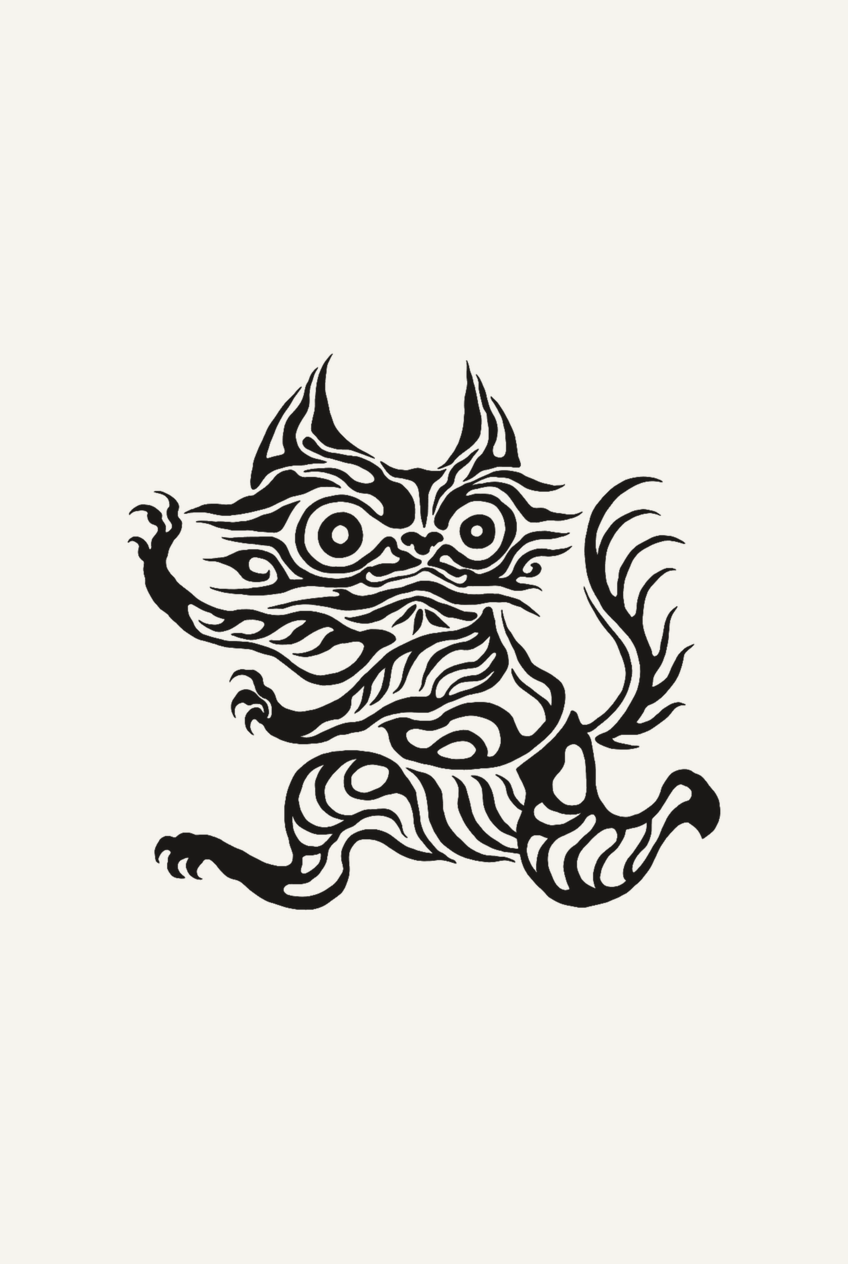
本版每一处形制决定都有出处可查,逐条对账。① 龙身——「龙身」,有鳞、盘曲,风暴自己的脊椎。② 人头——「人头」,平正、从容,风暴内部的那个击鼓者。③ 擂腹——「鼓其腹」,一只利爪绷在肋下,定格在轰鸣前一瞬。④ 泽下水流——「雷泽」,把他锚在故土的水线。
Every form decision on this design points to a recorded source, element by element. ① The dragon body — 龙身, scaled and coiling, the storm's own spine. ② The human head — 人头, level and deliberate, the percussionist inside the storm. ③ The drummed belly — 鼓其腹, one claw-hand drawn taut against the ribs, caught at the instant before the boom. ④ The marsh current beneath — 雷泽, the waterline that anchors him to his home ground.
来历
整个神话,《山海经》是这么讲的:吴地以西有一片泽。泽里有一位神。龙身,人头。他擂自己的肚子。完了——却又莫名完整。没有起源故事,没有恩怨,没有道德训诫。只有雷的机制,被想象成一个既是鼓手又是鼓的存在。
体会一下,与人类画过的所有其他风暴之神相比,这个构图有多极简。宙斯掷出为他锻造的雷霆。因陀罗驾驶战车。托尔需要一把矮人打造的锤子。中国的雷神什么都不拿,因为他就是乐器本身。利爪绷住赤裸的腹部,皮肤绷紧——天空随即应答。经文让你听见了雷,方法是给你看那个蓄势的动作。
人头这个细节让它免于沦为单纯的怪兽。兽的吻部会让这只是一场天气。人的脸意味着意图:风暴是被演奏的,出于故意,出自某位演奏者。古代中国的宗教从不对随机灾祸感兴趣——上天是一个有日程的官署。所以雷神获得了一张平静的脸和一个乐手的姿态:不是暴怒,是节拍。
作为纹身,它落在所有「不用抬高嗓门、就能让世界听见声响」的人身上——一切意义上的鼓手:制作人、教练、那个一句话就能让整个房间重新归位的朋友。以身为器。平静的脸,盘曲的力,轰鸣在路上。
Here is the entire myth, as the *Shanhaijing* tells it: there is a marsh west of Wu. In the marsh there is a god. Dragon body, human head. He drums his belly. That's it — and it is somehow complete. No origin story, no feud, no moral. Just the mechanism of thunder, imagined as a being who is both the drummer and the drum.
Feel how radically minimal that is beside every other storm god humanity has drawn. Zeus hurls bolts forged for him. Indra rides a chariot. Thor needs a hammer given by dwarves. The Chinese thunderer carries nothing, because he is the instrument. The claw tightens on the bare belly, the skin goes taut — and the sky answers. The book lets you hear the thunder by showing you the wind-up.
The human head is the detail that keeps it from being just a monster. A beast's snout would make this mere weather. A human face means intention: the storm is *performed*, on purpose, by someone. Ancient Chinese religion was never much interested in random catastrophe — heaven was a bureaucracy with a schedule. So the thunder gets a calm face and a musician's posture: not rage, but timing.
For a tattoo, this lands on anyone who makes noise the world can feel without ever raising their voice — drummers of every kind: producers, coaches, the friend whose one word re-centres a whole room. The body as instrument. The calm face, the coiled power, the boom on the way.
释义
自足的风暴:无需武器的力量,因为身体本身就是乐器。适合那些「出场先于开口」的人——他们的时机一旦落地,就能改变一个房间的天气。
The self-contained storm: power that needs no weapon because the body itself is the instrument. For people whose presence precedes their speech — and whose timing, when it lands, changes the weather of a room.
位置
盘曲的身躯需要一个能让它舒展的画框:14–18 厘米横贯上背或侧肋,头朝向肩,击鼓的手靠近脊柱。在小臂外侧以 12–14 厘米呈现,身躯随肌肉轻微环抱。让设计鼓腹的一侧朝外——那是打雷的地方。
The coil wants a frame that lets it flex: 14–18 cm across the upper back or the ribs, head leading toward the shoulder, the drumming hand near the spine. On the outer forearm it reads at 12–14 cm with the body wrapping slightly around the muscle. Keep the belly-side of the design facing outward — that is where the thunder happens.
纹之前
头必须是人头——「人头」在经文里;换成龙的吻部,整件设计就失去了意义。要一张五官克制、平静的脸。② 身是龙不是蛇:鳞片应按正形画出、排列规整。③ 擂腹的瞬间——爪与腹——是这件设计的引擎;让纹身师保住那个空隙的锐度,别磨平。④ 只宜墨线:想要轰鸣感,可请纹身师在腹后补一片柔和的灰面晕染。⑤ 不小于 12 厘米;侧肋位置效果极佳,但腰头摩擦比背部位置多。
The head must be human — 人头 is in the record; a dragon's snout erases the whole point. Ask for a calm, small-featured face. ② The body is dragon, not serpent: scales should be drawn and regular, per the canon. ③ The drumming moment — claw on belly — is the design's engine; make sure your artist keeps that gap crisp, not smoothed over. ④ Ink-only by design: if you want the boom, a soft greywash burst behind the belly is a welcome at-the-needle addition. ⑤ Minimum 12 cm; rib placement will read beautifully but see more friction from waistbands than back placements do.
本卡每一个汉字都由中文母语者选定并逐笔核对。