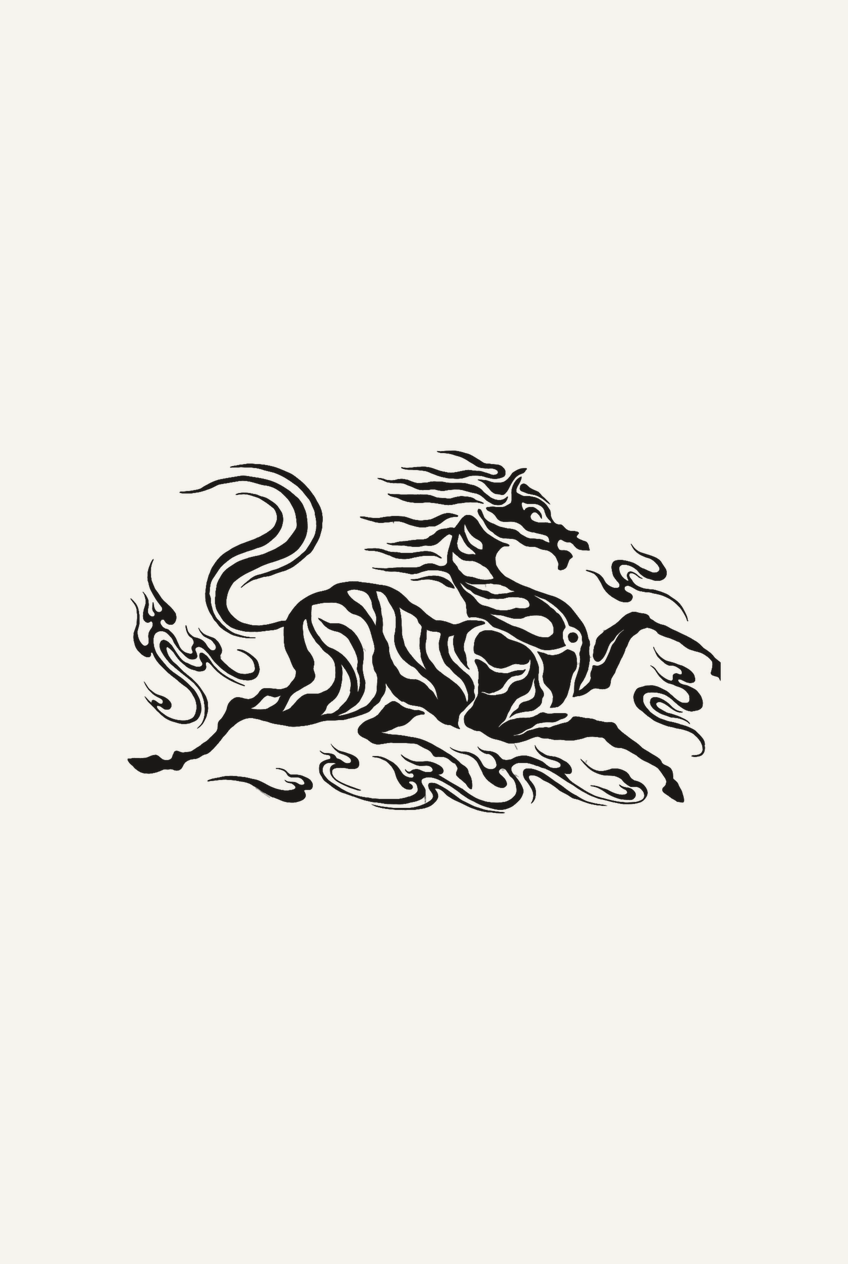
鹿蜀 · Lù Shǔ
Worn for the Children
系列: 神兽灵禽 · Design #19
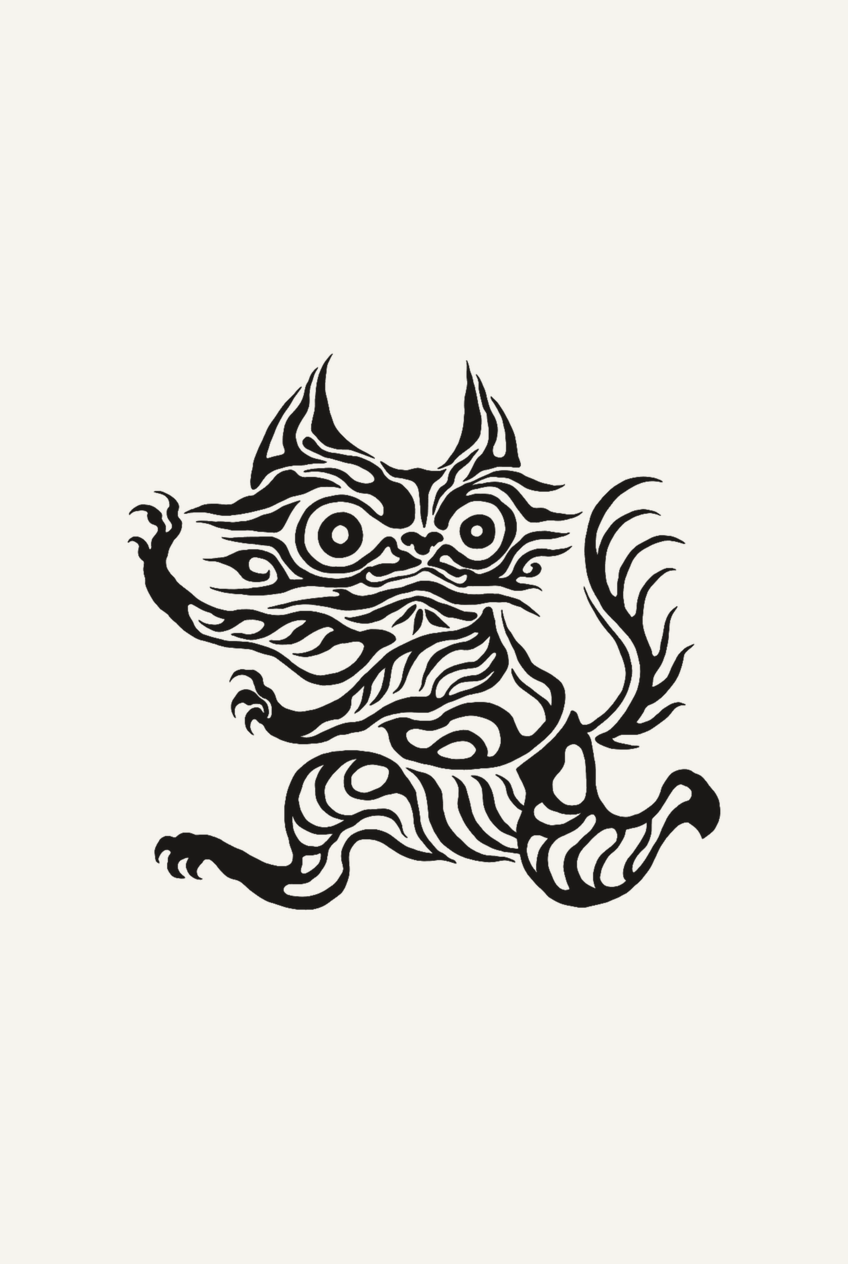
笔法: Galloping horse-beast with tiger stripes and streaming flame mane, tail in a grand high curl, cloud flames swirling beneath · black-grey · landscape composition · scalable 14–18 cm
形态: 鹿蜀奔姿,白首虎纹赤尾,长尾高卷,火焰鬃后掠,四周云焰,横构图
名字
鹿蜀(lù shù)——杻阳之山的鹿马,整部经典里唯一一位祝福指向下一代的生灵:佩之宜子孙——佩戴它的皮毛或图像,庇佑的是你的孩子,和孩子的孩子。不是财,不是胜,甚至不是你自己的长寿:是子孙。《山海经》许下的所有愿里,这一条最温柔,也最人间。
*lù shù* — the deer-horse of Chuyang Mountain, and the only creature in the entire classic whose blessing is about the next generation: 佩之宜子孙 — wear its hide or its image, and it benefits your children and your children's children. Not wealth, not victory, not long life for yourself: descendants. Of every promise the Shanhaijing makes, this is the gentlest and the most human.
出处
《山海经·南山经》(约成书于前 4—前 2 世纪)杻阳之山条:「有兽焉,其状如马而白首,其文如虎而赤尾,其音如谣,其名曰鹿蜀,佩之宜子孙。」状如马,白首,虎纹赤尾,叫声像人唱歌;佩戴它,子子孙孙都得庇佑。这一条没有凶兆、没有危险——整部经里少有的、被纯粹当作祝福记下来的生灵。墨线转写:本设计以传统母题的奔姿剪影为底,转写为纹身墨线。
The *Shanhaijing*, *Nan Shan Jing* chapter (compiled c. 4th–2nd century BC), Chuyang Mountain entry: 「有兽焉,其状如马而白首,其文如虎而赤尾,其音如谣,其名曰鹿蜀,佩之宜子孙。」 — shaped like a horse with a white head, striped like a tiger with a red tail, its voice like singing; named Lushu; wear it and your line will flourish. The entry adds no omen and no danger — the rare creature recorded purely as a blessing. Inking note: this design adapts the galloping silhouette of the traditional motif and re-inks it as tattoo linework.
设计灵感
本版每一处形制决定都有出处可查,逐条对账。① 四蹄腾空的全奔——「其状如马」,马身取最快的瞬间,四蹄离地:祝福画成动势,一件已经在路上的事。② 贯体的虎纹——「其文如虎」,经文记的花色画成粗放的流线条带,全图最强的纹理。③ 后掠的火焰鬃与高卷长尾——「赤尾」,记载里的红尾放大为全图最高的那道弧线,颜色转译为姿态:经文给的是颜料,墨线给的是动势。④ 蹄下云焰——「其音如谣」,那副歌喉画成托着奔姿的云卷,把歌声画在它脚下。
Every form decision on this design points to a recorded source, element by element. ① The full gallop — 其状如马, the horse-body taken at its fastest, all four hooves off the ground: a blessing drawn as momentum, something already on its way. ② The tiger stripes through the body — 其文如虎, the recorded pattern rendered as bold flowing bands, the strongest texture in the composition. ③ The streaming flame mane and grand curled tail — 赤尾, the recorded red tail enlarged into the design's highest arc, color translated as gesture: what the text gives as pigment, the ink gives as motion. ④ The cloud flames beneath the hooves — 其音如谣, the singing voice drawn as the swirls that carry the run, the song made visible under its feet.
来历
注意经典没有向你索要什么。《山海经》里几乎每样东西都附带交易——吃这个病就好了,见那个洪水就来了,怕那个。鹿蜀什么都不索要、也什么都不威胁。它出现在记载里像一件已经送出的礼物:有这么一只鹿马,它会唱歌,佩戴它,家的香火就绵延。佩之宜子孙——值得停下来想想这话说得多具体。不是宜王。不是宜寿。这份祝福刻意跳过佩戴者本人,落在孩子身上——古人早就承认:一个人身上最贵重的东西不是自己的命运,是延续。
那个动词里还有一层安静的大胆。佩——佩戴。经典默认这只会兽是被穿在身上的——皮毛、图像、护符——一个从一开始就为「戴在身上」设计的祝福。在一部满是「要观望的征兆」与「要躲避的凶兽」的文本里,鹿蜀是时尚。汉语书面里第一只以「希望的配饰」为全部使命的生灵。
所以纹它,纹的是什么?这是给那些用不止一代来丈量人生的人的设计——给父母,给种自己乘不到凉的树的人,给真正抱负写在别人未来里的任何人。奔姿说祝福正在路上;虎纹说祝福是穿过佩戴者自己那些虎虎生风的日子来的。一身虎纹,驮的是子孙。
Notice what the classic does not ask of you. Almost every creature in the Shanhaijing comes with a transaction — eat this and your illness goes, see this and the flood comes, fear this. Lushu asks for nothing and threatens nothing. It appears in the record like a gift already given: here is a horse-deer, it sings, wear it and the family line runs on. 佩之宜子孙 — and it is worth sitting with how specific that is. Not 宜王, good for kings. Not 宜寿, good for your own years. The blessing deliberately skips the wearer and lands on the children — an ancient acknowledgement that the bravest thing a person carries is not their own fate but their continuity.
There is also something quietly radical in the verb. 佩, to wear. The classic presumes the beast will be worn — hide, image, amulet — a blessing designed from the start to be carried on the body. In a text of omens to be watched and beasts to be avoided, Lushu is fashion. The first creature in Chinese writing whose entire purpose is to be an accessory of hope.
So what does it mean to wear it? This is a design for people who measure their life in more than one generation — for parents, for the ones who plant trees they will not sit under, for anyone whose real ambition is written in other people's futures. The gallop says the blessing is in motion; the stripes say it comes through the wearers' own fierce texture of days. 一身虎纹,驮的是子孙。
释义
一份越过你、落在延续之上的祝福。动势、纹理、歌——愿你最猛的那些年月,驮着后来的人。整部经典里唯一一份刻意隔代的礼物。
A blessing aimed past you, at the line that continues. Momentum, texture, song — the wish that your fiercest years carry the ones who come after. The classic's only gift that skips a generation on purpose.
位置
天生的横奔构图:16—18 厘米横贯大腿外侧或上臂,头部朝心口方向引;12 厘米变体顺小臂奔行。高卷的长尾是全图的冠——避开关节,别让那道弧断掉。
Built horizontal and running: 16–18 cm across the outer thigh or upper arm, head leading toward the heart; a 12 cm variant runs along the forearm. The curled tail is the design's crown — keep it clear of joints so the arc never breaks.
纹之前
此图只宜墨线。它的温度来自纯黑画出的动势——灰阶的柔软会让祝福显得疲惫;虎纹要的是活皮毛的脆。最小尺寸 10 厘米:再小,虎纹条带会焊死,奔姿成了一块实心。避开下背与胫前——高摩擦区最先糊掉的是条纹内部的细缝,而那些缝是奔姿还活着的原因。
This design belongs to ink only. Its warmth comes from motion drawn in pure black — greyscale softness would make the blessing look tired; the stripes want the crispness of a living hide. Minimum size 10 cm: below that the tiger bands weld shut and the gallop reads as a solid block. Keep it off the lower back and the shin — high-friction zones blur the fine gaps inside the stripes first, and the gaps are what keep the body running.
本卡每一个汉字都由中文母语者选定并逐笔核对。