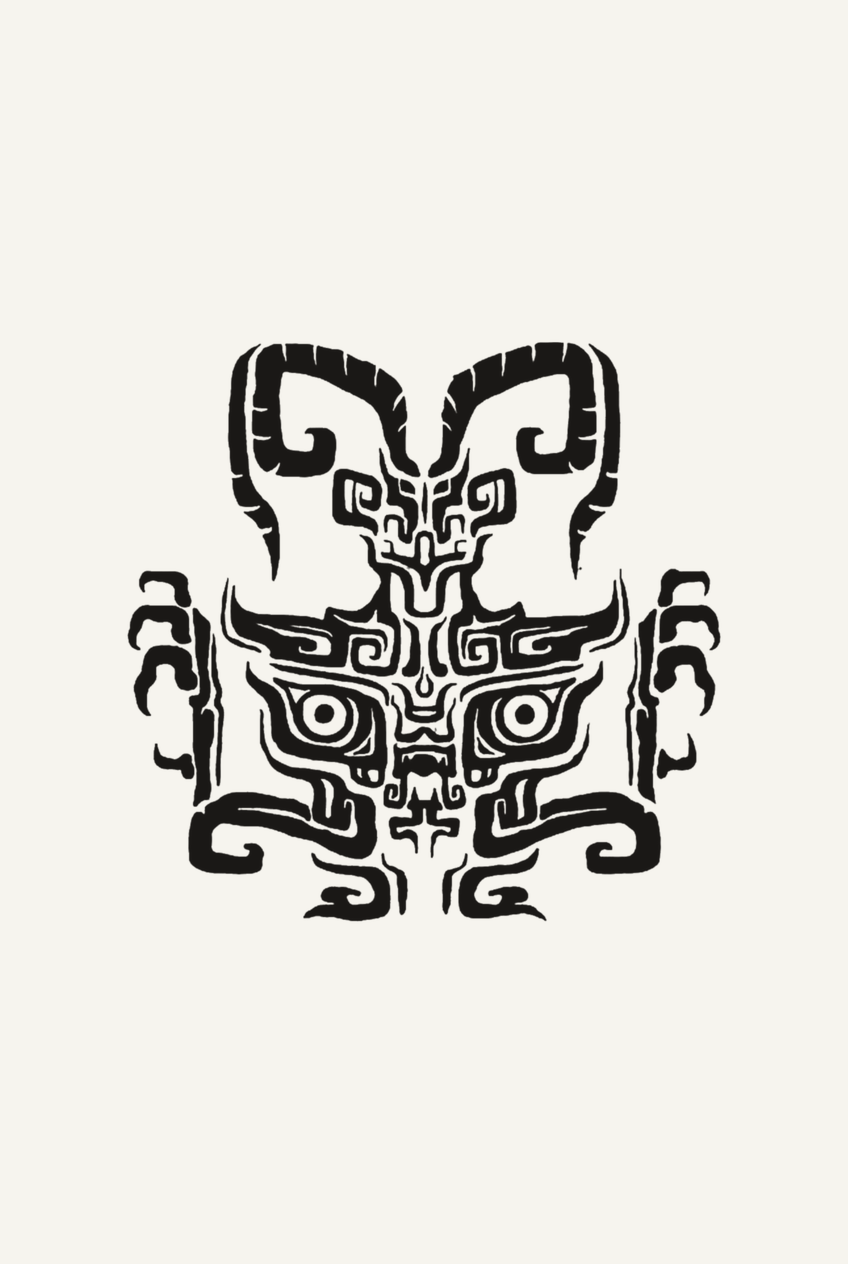
狍鸮 · Páo Xiāo
The Original Glutton
系列: 神兽灵禽 · Design #21
笔法: Ram-bodied beast with a human face, eyes set under its forelegs, tiger teeth and human claws, low prowling pounce · black-grey · landscape composition · scalable 14–18 cm
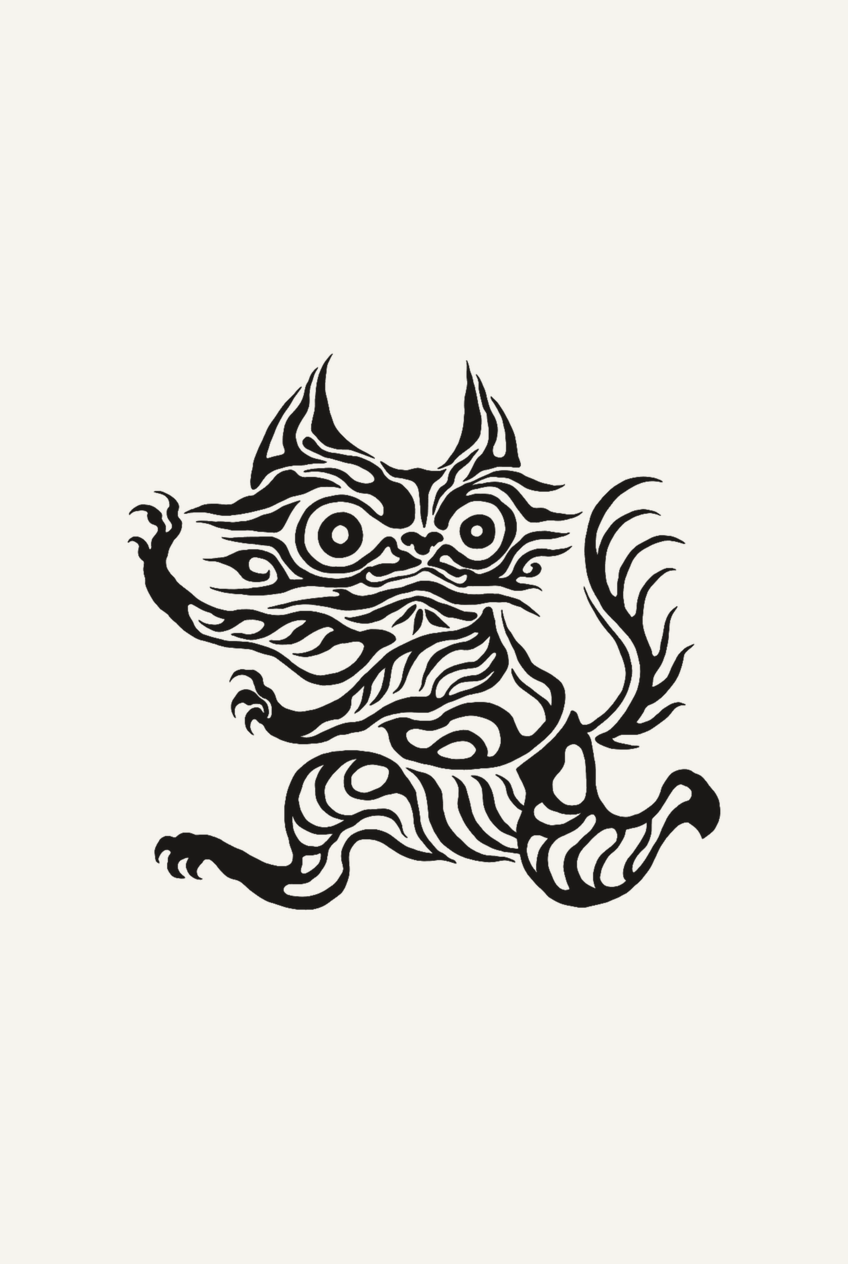
形态: 狍鸮羊身人面,目在腋下,虎齿人爪,伏行扑势,横构图
名字
狍鸮(páo xiāo)——钩吾之山的食人兽,经文用一副「欲望的解剖图」记它:羊的身体,人的脸,眼睛藏在腋下,虎的齿,人的手。后世注家给它一个更响的名字:郭璞注称它即饕餮——吞噬一切、连自己一起吞掉的那个「贪」。本设计画的正是原型,是青铜传说之前的那份田野记录:长着人脸的贪,正望着你。
*páo xiāo* — the man-eater of Gouwu Mountain, recorded with an anatomy of appetite: a ram's body, a human face, eyes hidden under its forelegs, tiger's teeth, human hands. Later commentators named it as something better known: Guo Pu's note calls it 饕餮 — taotie, the greed that devours everything including itself. This design is the original, the field record before the bronze-cast legend: greed with a human face, looking out at you.
出处
《山海经·北次二经》(约成书于前 4—前 2 世纪)钩吾之山条:「有兽焉,其状如羊身人面,其目在腋下,虎齿人爪,其音如婴儿,名曰狍鸮,是食人。」郭璞注(3—4 世纪)直接把它认作青铜器上的饕餮:「为物贪惏,食人未尽……故曰饕餮。」墨线转写:本设计以经文所记的解剖图,转写为纹身墨线。
The *Shanhaijing*, *Bei Ci Er Jing* chapter (compiled c. 4th–2nd century BC), Gouwu Mountain entry: 「有兽焉,其状如羊身人面,其目在腋下,虎齿人爪,其音如婴儿,名曰狍鸮,是食人。」 — ram's body, human face, eyes under the forelegs, tiger teeth, human claws, crying like an infant; named Paoxiao; it eats people. Guo Pu's commentary (3rd–4th century AD) identifies it with the taotie of the bronzes: 「为物贪惏,食人未尽……故曰饕餮。」 Inking note: this design adapts the recorded anatomy and re-inks it as tattoo linework.
设计灵感
本版每一处形制决定都有出处可查,逐条对账。① 羊身——「羊身」,记载的羊形画得低伏盘曲,一副为扑击而非奔跑造的身体:贪是耐心的。② 人面——「人面」,平静、正对观者——全图最不安的一处决定严格照经文执行:欲望长着一张和你一样的脸。③ 腋下之目——「其目在腋下」,被前爪遮蔽的视线照字直画:贪想要的东西,它从不公开地看。④ 虎齿人爪——「虎齿人爪」,野兽的咬合由一双你的手操作——天生的武器,人式的抓握。
Every form decision on this design points to a recorded source, element by element. ① The ram's body — 羊身, the recorded ram-form drawn low and coiled, a body built for the pounce rather than the chase: greed is patient. ② The human face — 人面, calm and frontally drawn — the design's most disturbing decision kept exactly as the text orders: appetite wears a face like yours. ③ The eyes under the forelegs — 其目在腋下, the hidden gaze rendered literally, shaded by the raised forepaw: what greed wants, it does not look at openly. ④ The tiger teeth and human claws — 虎齿人爪, the bite of a beast operated by hands like yours — nature's weapon, human grip.
来历
商周的青铜器上铸着一只没有身体的怪物——一颗巨大的面具般的头,没有躯壳的饥饿。三千年间人们争论它是什么意思。而在这场争论之前四个世纪,经文里有这么一条:一具有完整身体的生灵,羊的躯干,每个危险部件都由「手工」收尾——虎的牙齿配着你的脸,你的手做抓握。注家郭璞把环扣上了:这就是饕餮,礼器上那颗面具头,那位吞到无穷处连自己身体一起吞掉的家伙。田野记录与青铜传说,是同一只兽。
看经典挑中的细节。眼睛在腋下——贪从不公开检视自己吞下的东西;它把自己的视线遮起来。叫声如婴儿——欲望用「需要」的声线说话,那是世上最让人卸下防备的音区。而那张脸是人的——因为经典描写的不是你会在山上遇到的兽。它描写的是发生在人身上的一种构型:戴着体面面孔的饥饿,配一双能干的手。
所以纹它,纹的是什么?说实话——这是一枚你故意佩戴的警告。它属于那种与自己的欲望打过照面、又拒绝撒谎的人:戒了的赌徒,数着清醒年头的人,任何清楚自己体内住着哪种饥饿、并坚持直呼其名的人。这张图不为兽翻案。它把兽按在记载按着它的地方——画出来,解剖开,盯着。知饕者,制饕。
The bronzes of the Shang and Zhou cast a monster with no body — a great masked head, hunger without a frame. For three thousand years people argued about what it meant. And then there is this entry, four centuries before the arguments: a creature with a complete body, a ram's frame, and every dangerous part finished by hand — tiger's teeth set in a face like yours, claws like yours doing the holding. The commentator Guo Pu closed the loop: this is the taotie, the masked head on the ritual vessels, the one that devours so endlessly it eats its own body. The field record and the bronze legend are the same animal.
Look at the details the classic chose. The eyes are under the forelegs — greed never examines what it consumes openly; it shades its own gaze. The cry is 如婴儿, like an infant — appetite speaks in the voice of need, the most disarming register there is. And the face is human — because the classic is not describing a beast you will meet on a mountain. It is describing a configuration that occurs in people: hunger wearing a reasonable face, with capable hands.
So what does it mean to wear it? Honestly — this is a warning you wear on purpose. It belongs on the person who has met their own appetite and declined to lie about it: the gambler who quit, the drunk counting sober years, anyone who knows exactly which hunger lives in them and keeps it named. The design does not glorify the beast. It keeps it where the record keeps it — drawn, anatomized, under watch. 知饕者,制饕。
释义
被点名看管的欲望。不是对饥饿的颂扬——是「看过自己的那份饥饿」之后的纪律。原初的饕餮,戴成一纸契约:它被画定在你的皮肤上,而你,做它的看守人。
Appetite, named and kept. Not the celebration of hunger — the discipline of having looked at yours. The original taotie, worn as a contract: it stays drawn on your skin, and you stay its keeper.
位置
天生的低伏盘曲构图:14—16 厘米收大腿外侧或上臂,扑势顺肢体流向朝下;12 厘米变体收肩头。那张人面是全图的封印——保持端正、完整可见;一斜一裁,警告就变成了装饰。
Built low and coiled: 14–16 cm on the outer thigh or upper arm, the pounce angled down the limb's flow; a 12 cm variant sits on the shoulder cap. The human face is the design's seal — keep it upright and fully visible; a tilted or cropped face turns the warning into a decoration.
纹之前
此图只宜墨线。它的不安来自盘曲身体的实黑与那张脸平静线条的对峙——灰阶会让兽显得病态而不是凶险。最小尺寸 10 厘米:再小,「腋下之目」会糊成一团。避开手腕与脚踝——小关节会把脸折散,而脸,不能折。
This design belongs to ink only. Its unease depends on the flat black of the coiled body against the calm line of the face — greyscale would make the beast look sick rather than sinister. Minimum size 10 cm: below that the eyes-under-forelegs read as a single blob. Keep it off the wrist and the ankle — small joints flex the face apart, and the face must not flex.
本卡每一个汉字都由中文母语者选定并逐笔核对。