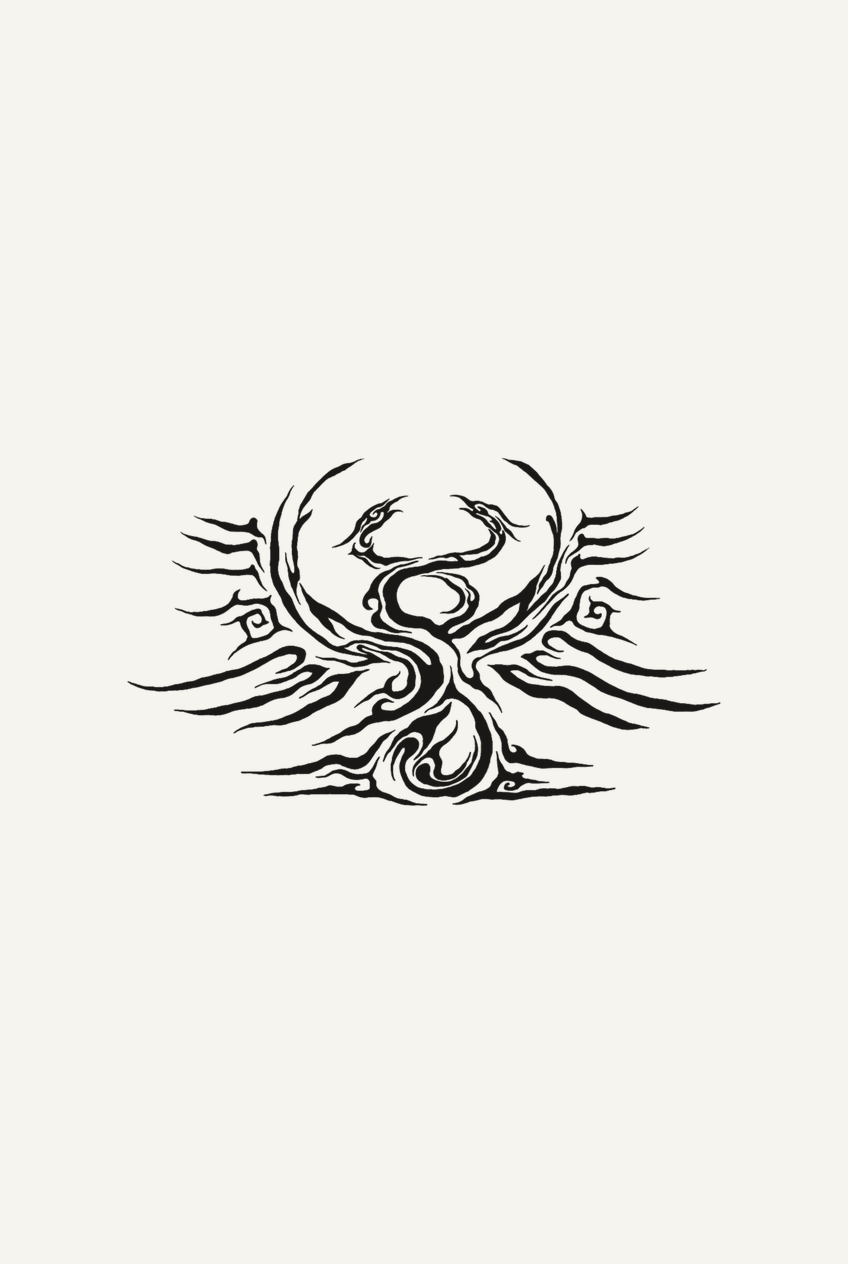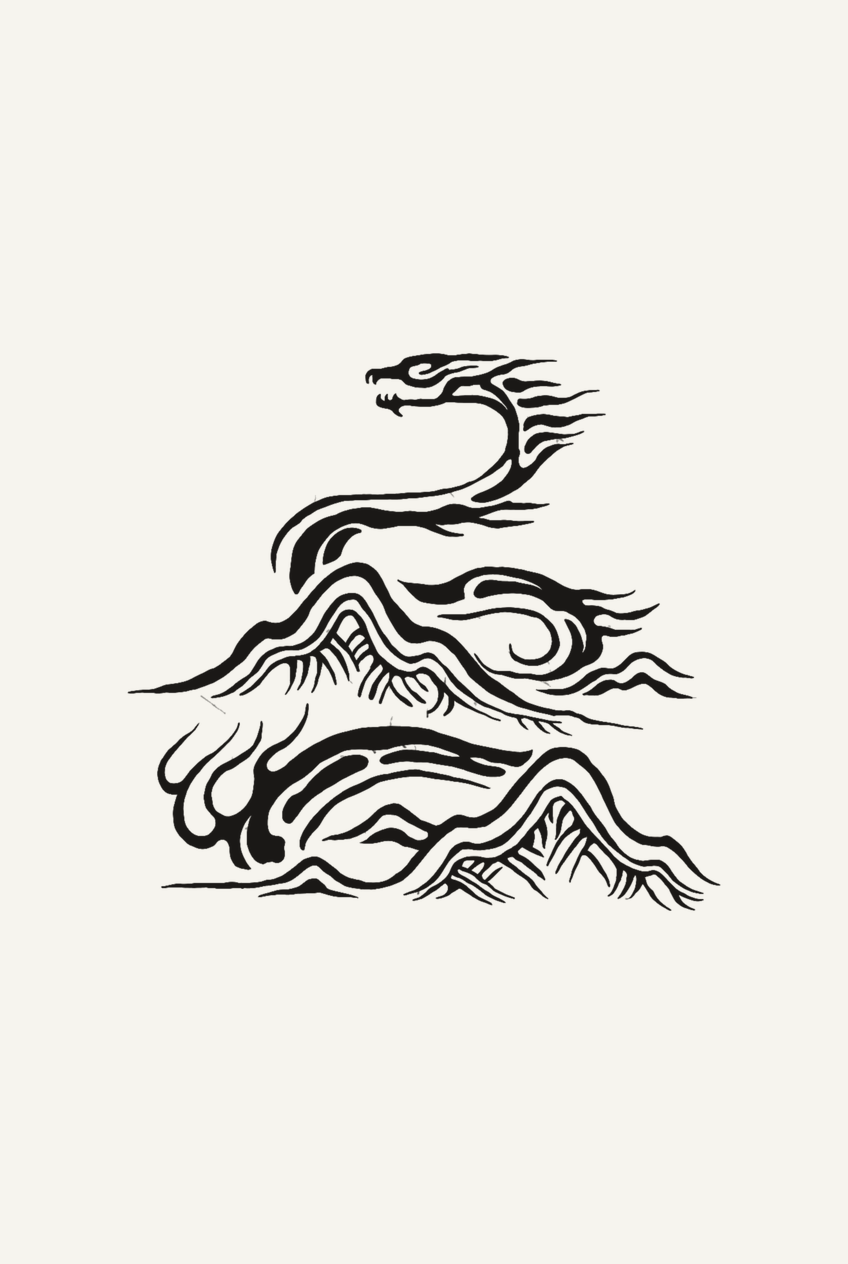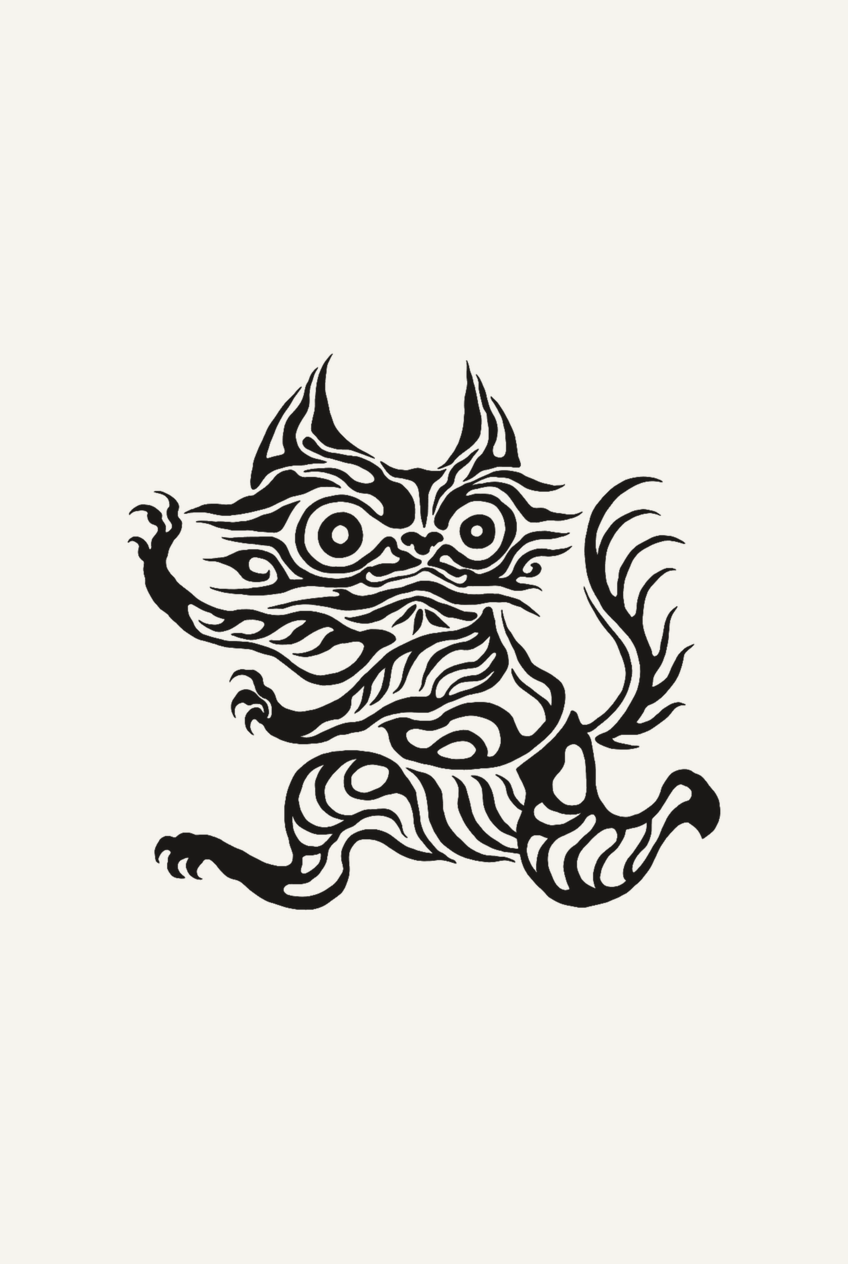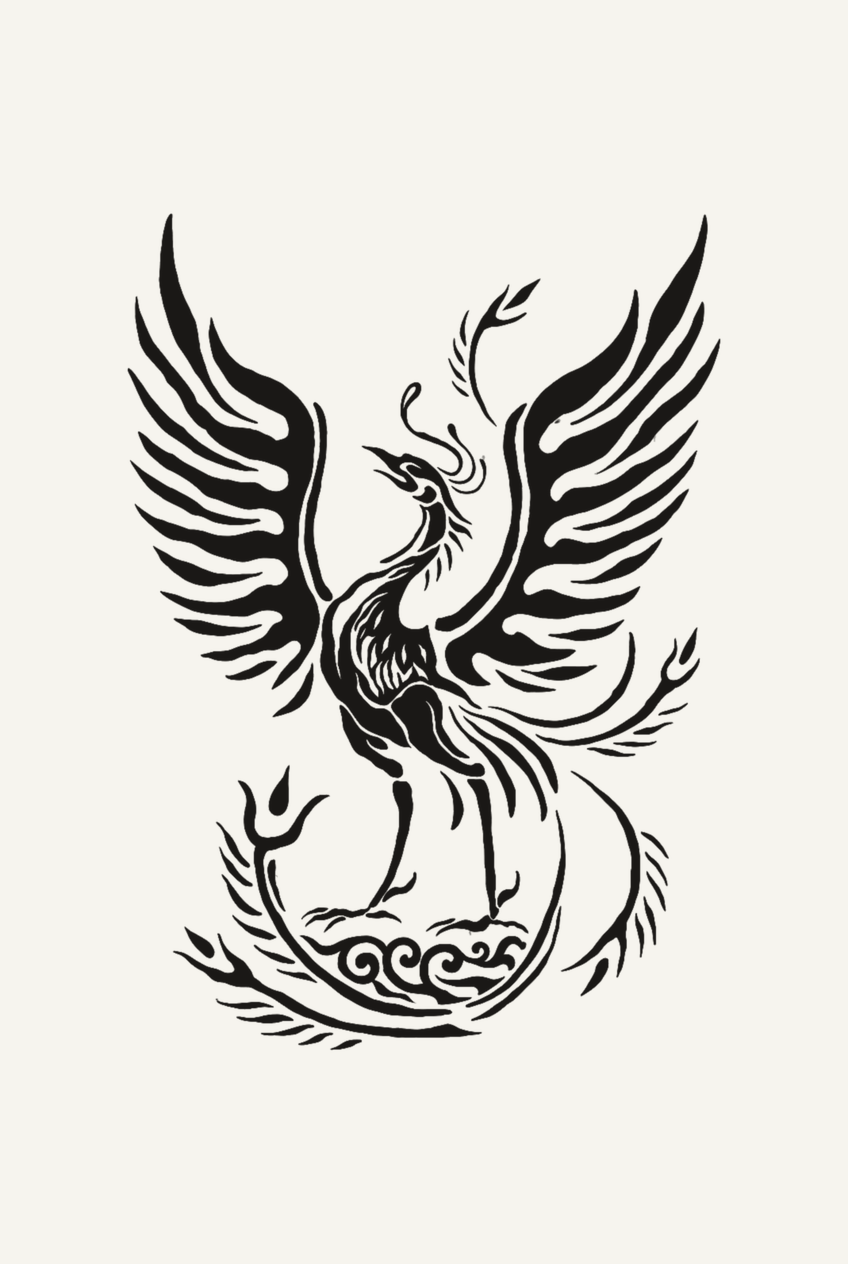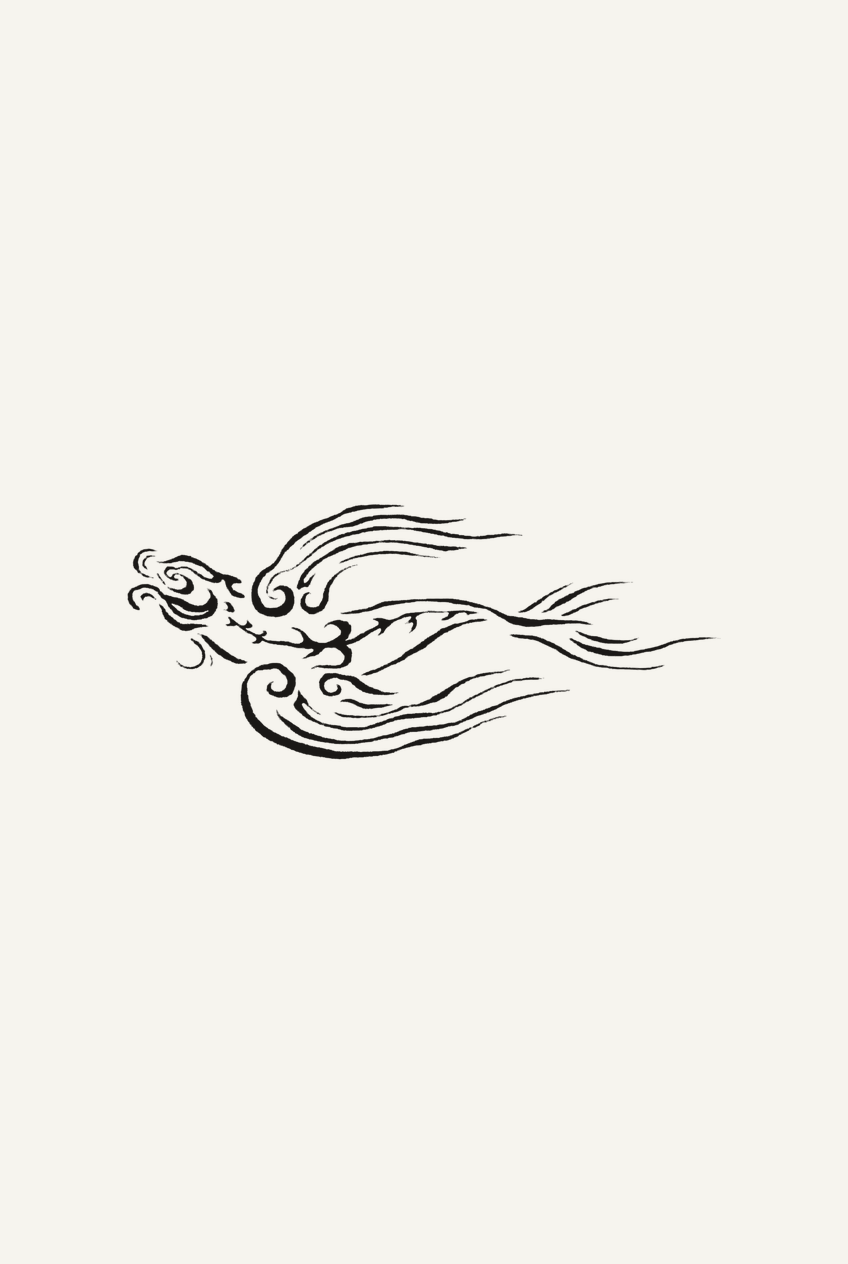
文鳐鱼 · Wén Yáo Yú
The Fish of Plenty
系列: 神兽灵禽 · Design #10
笔法: Winged fish in night flight over waves · fine-line · horizontal composition · scalable 8–14 cm
形态: 鱼身鸟翼飞跃主体,苍纹白首赤喙,横构图腾于浪上
名字
文鳐鱼(wén yáo yú)——《山海经》飞鱼里差事最好的一位:它只有一项职责,而这项职责是丰收。经文对它的长相记得一丝不苟——鱼身、鸟翼、苍纹、白首、赤喙——对它的寓意同样一丝不苟:见则天下大穰。它一出现,普天之下都是丰年。没有附加条件,没有考验,没有代价。见到这条鱼,粮仓就开始满。
*wén yáo yú* — the Wenyaoyu, the flying fish of the *Shanhaijing* with the best job in the bestiary: it has one duty, and the duty is abundance. The text is exact about its look — fish body, bird wings, blue-green markings, white head, red beak — and exact about its meaning: 见则天下大穰. When it appears, the whole world has a bumper harvest. There is no catch, no quest, no price. You see the fish; the granaries fill.
出处
《山海经·西山经》(约成书于前 4—前 2 世纪)泰器之山观水条:「有鱼焉,其状如鲤鱼,鱼身而鸟翼,苍文而白首赤喙,常行西海,游于东海,以夜飞。其音如鸾鸡……见则天下大穰。」形制参考:《山海经》文本记载;战国与汉代图像艺术中的鱼鸟复合造型。墨线转写:本设计以传统母题的经典线条造型为底,转写为纹身墨线。
The *Shanhaijing*, *Xici Jing* chapter (compiled c. 4th–2nd century BC), at Mount Taiqi on the river Guan: 「有鱼焉,其状如鲤鱼,鱼身而鸟翼,苍文而白首赤喙,常行西海,游于东海,以夜飞。其音如鸾鸡……见则天下大穰。」 — fish-bodied and bird-winged, marked in blue-green with white head and red beak; it runs the western sea and roams the eastern sea, flying by night; its cry is like the luan-bird's; its appearance heralds a great harvest for all under heaven. Historical form reference: the *Shanhaijing* textual record; fish-and-bird composites of Warring States and Han pictorial art. Inking note: this design adapts the classic line construction of the traditional motif and re-inks it as tattoo linework.
设计灵感
本版每一处形制决定都有出处可查,逐条对账。① 弧线鱼身——「鱼身如鲤」,腾跃凝固在弧顶的瞬间。② 张开的鸟翼——「鸟翼」,全幅展开,水面松手的刹那。③ 足下浪线——「常行西海,游于东海」,它通勤的两片海,画成一道低浪。④ 喙部——鲤式尖喙,向前收尖,接住整条弧线的动势,把视线送出画面。
Every form decision on this design points to a recorded source, element by element. ① The fish body in arc — 鱼身如鲤鱼, the leap frozen at the top of the curve. ② The bird wings spread — 鸟翼, open at full span, the moment water lets go. ③ The wave line below — 常行西海,游于东海, the two seas it commutes between, drawn as one low swell. ④ The beak — the carp's pointed beak, tipped forward to catch the arc's momentum and lead the eye out of the frame.
来历
旧籍里大多数的瑞兽都附带一堆手续:这里要祭祀,那里要守规矩,美德明码标价。文鳐鱼什么都没有。《山海经》介绍了一条白天按班次巡于西海、夜里振翅飞向东海的鱼,翅膀掠过水面,叫声如鸾——然后交出那个让它名传两千年的句子:见则天下大穰。它一出现,普天之下的收成压弯秤杆。
细品神话的机械感,因为它很美。这是一位「通勤者」:西海到东海,夜航,一条固定的环线,像渡工的航班。古中国人对丰收的想象不是金币雨——是一张运转良好的时刻表。鱼跑完它的环线,鱼被看见,谷子进仓。这里的好运不戏剧化,它准点。再注意这条鱼本身:属于两个世界的身体,鳃与翼,游与飞,哪儿都困不住它。中国符号学里鱼本就驮着盈余——「年年有余」,每张年夜饭桌上都要说的那个谐音。文鳐鱼是长了翅膀的那句谐音:会移动的余,会来找你的丰收。
它还悄悄是本系列的「夜班祝词」。经文说「以夜飞」。全谱系里最富足的征兆,在黑暗里干活,趁着田野熟睡,不求观众。对最好时光都在午夜之后的人——读书的人、值班的人、做东西的人、凌晨两点往家里汇未来的人——古书碰巧派了一位主保:白首赤喙的鱼,在两海之间飞它的航线,唯一的货物是一整座满仓。
小巧、横构图、为动而生:这是放在小臂上就会出发的那张图。它的全部寓意就是行进——好事已经在路上,飞着夜航,而且从没误过一个汛期。
Most of the lucky beasts in the old records come with paperwork: sacrifice here, behavior there, a price list of virtue. The Wenyaoyu has none. The *Shanhaijing* introduces a fish that swims the western sea by day-schedule and flies to the eastern sea by night, wings spread over the water, crying like a luan-bird — and then hands down the sentence that made it famous for two thousand years: 见则天下大穰. When it appears, the world over, the harvest comes in heavy.
Read the mechanics of the myth, because they are lovely. This is a creature of the commute: west sea to east sea, night flight, a regular round like a ferryman's route. Ancient China's idea of abundance was not a rain of gold — it was a well-run schedule. The fish does its rounds, the fish is seen, the grain comes in. Fortune here is not dramatic; it is punctual. And notice what the fish itself is: a body that belongs to two worlds, gills and wings, swimming and flying, never stranded in either. In Chinese symbolism the fish already carries surplus — 年年有余, "every year has surplus," is a fish pun spoken at every New Year's table. The Wenyaoyu is that pun given wings: the surplus that can move, the harvest that travels to find you.
It is also, quietly, the night-shift blessing of this collection. The text says 以夜飞 — it flies by night. The most abundant omen in the bestiary does its work in the dark, while the fields sleep, asking no audience. For the people whose good hours are after midnight — the studiers, the nurses, the makers, the ones wiring their futures home at 2 a.m. — the old book happened to assign a patron: a white-headed, red-beaked fish, flying its route between two seas, carrying a full granary as its only cargo.
Small, horizontal, and made for movement: this is the design that goes on a forearm and leaves. Its whole meaning is motion — the good thing is already on its way, flying the night route, and it has never once missed the season.
释义
无需焦虑的抵达。飞鱼是准点的富足——会通勤的盈余,按表运行的好运。适合新的开始、一切形式的丰收、以及熬夜做梦的人;它也是本系列里最轻、最好戴的好兆头。
Arrival without anxiety. The flying fish is punctual abundance — surplus that commutes, luck that runs on schedule. For new ventures, harvests of every kind, and night-shift dreamers; also the collection's lightest, most wearable good omen.
位置
横幅飞行体,8–14 厘米,天生属于小臂外侧——头朝手的方向,像替你向前飞。也可沿侧腰作飞行线,或缩至 6–8 厘米放脚踝。浪线要低、要单——鱼是头条,海不是。
A horizontal flyer, 8–14 cm, made for the outer forearm — head toward the hand, like it is leaving you forward. It also sits along the side waist in flight line, or small (6–8 cm) at the ankle. Keep the wave line low and single; the fish is the headline, not the sea.
纹之前
鲤身,不要锦鲤纹:经文说「状如鲤鱼」——斑纹以细墨线呈现,不要重彩的橙黑锦鲤。② 翼是鸟的结构,不是蝶——羽列、单关节、果断的展幅。③ 只宜墨线。 ④ 留够尺寸。 鱼身不小于 6 厘米,否则头与喙糊成一片;小臂持线良好,脚踝是全系列补色最早的位置。
Carp body, not koi pattern: the text says 状如鲤鱼 — keep the markings as fine ink linework, not the heavy koi orange-and-black. ② Wings are bird-structure, not butterfly — feather rows, one joint, decisive span. ③ Ink-only by design. ④ Respect the scale. Minimum 6 cm body length or the face and beak merge; forearm placement holds lines well, ankle rings need the earliest touch-ups of the whole collection.
本卡每一个汉字都由中文母语者选定并逐笔核对。