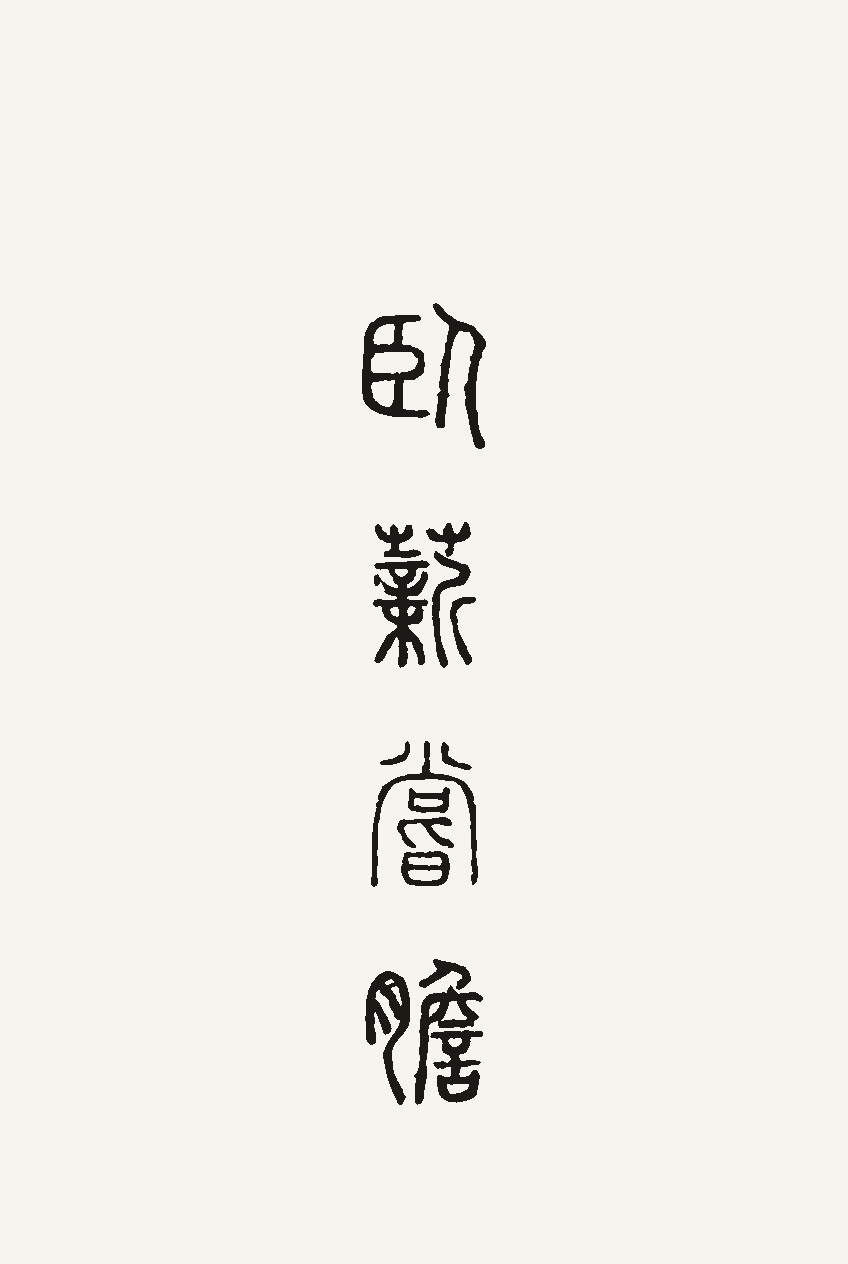
臥薪嘗膽 · Wò Xīn Cháng Dǎn
Sleep on Brushwood and Taste Gall
系列: 吉语成语 · Design #02
笔法: 4-character idiom · small-seal script · single vertical column
名字
这个名字命名的是一套动作,不是一种情绪。卧薪——睡在柴草捆上,草茎夜夜刺着脊背;尝胆——把苦胆悬在门边,饭前舔一口。四个字合起来,是越王勾践每日执行的功课,一做十年。它不是「忍耐」的比喻,是「复仇」的处方。
The name names an action, not a feeling. 卧薪 — to sleep on bundled brushwood, the stalks pricking through every night. 尝胆 — to hang a gallbladder by the door and taste bile before meals. The four characters together name the specific regimen of King Goujian of Yue, performed daily for ten years. It is not a metaphor for patience. It is a prescription for revenge.
出处
成语定型于两处文献:《史记·越王勾践世家》(西汉,前 1 世纪)记「卧薪」「尝胆」为勾践受辱期间的分别事迹;《左传·哀公》(春秋末期,约前 5–4 世纪)存吴越争霸的政治背景。四字格连用至东汉方入俗语。严格来说,并无先秦两汉典籍以「卧薪尝胆」四字固定成句——该成语是后世对史事的凝练概括。
The idiom crystallizes from two classical sources: *Records of the Grand Historian, Hereditary House of Wu and Yue* (Shiji 41, 1st century BC), which records the brushwood sleeping and gallbladder tasting as separate acts of Goujian's humiliation years; and *Zuo Zhuan, Duke Ai* (Spring and Autumn Annals, c. 5th–4th century BC), which preserves the political context of Yue's submission to Wu. The four-character form entered common usage by the Eastern Han. No single classical text presents the exact phrasing 卧薪尝胆 as a set phrase — the idiom is a later crystallization of the historical account.
设计灵感
本设计以小篆呈现四字:字形如铸铜镇纸——粗直笔画,对称围合,「尝」之食部上盖严守古法平衡。适合希望这四个字像一件承传之物的人。篆书稿依书体传统使用繁体字形(臥薪嘗膽),这是书艺本身的记录——字如经典所传。
This design presents the four characters in small-seal script (篆书): the glyphs hold their ground like cast bronze — thick vertical strokes, symmetrical enclosures, the 尝 with its food-cover radical rendered in classical balance. This is for those who want the phrase to feel like an inherited object. The seal form uses traditional glyph structures per classical calligraphy convention (臥薪嘗膽), a feature of the craft that records the characters as the classical texts transmit them.
来历
公元前 494 年,越王勾践伐吴,大败。吴王夫差没有杀他,让他养马,后来又准他跪地称臣、回到越国。勾践归国,面对残破的江山,开始了他的功课。床头梁上悬一枚苦胆,晨起目视,饭前舔尝。以柴草为席,不卧布褥。亲自下田耕作,身穿粗布。十年生聚,十年教训。公元前 473 年,越军灭吴。夫差求当年自己施过的那种慈悲,勾践没有给。故事以一位死去的吴王和一道活着的警告作结。
In 494 BC, King Goujian of Yue led his army against Wu and lost everything. The victor, King Fuchai, did not kill him. Instead he made Goujian a stable-hand, and later — when Goujian begged on his knees — allowed him to return to Yue as a vassal. Goujian went home to a ruined kingdom and began his regimen. He hung a gallbladder from the beam of his bed. Every morning he looked at it; every meal he tasted it. He slept on brushwood instead of mats. He plowed his own fields. He wore coarse cloth. Ten years of gathering strength, ten years of teaching his people. In 473 BC his army destroyed Wu. Fuchai begged for the same mercy he had once shown. Goujian refused. The story ends with a dead king and a live warning.
释义
这个设计标记的是一种特定的忍耐:有目标、有账本、有结算日期的那种。不是泛泛的耐心,不是被动的等待。适合此刻正在吃苦、且精确计算过这笔苦能换来什么的人。苦胆不是为了受苦而悬——是每日提醒有一笔账要清。柴草不是为了苦行而卧——是保持身体的备战状态。选择它的人,分得清「等待」与「准备」的区别。
The design marks a specific kind of endurance: the kind that has a target, a ledger, a date of settlement. It is not for general patience or passive waiting. It is for the person who is eating bitterness now because they have calculated exactly what they are buying with it. The gallbladder is not suffering for its own sake — it is a daily reminder of the score to be settled. The brushwood is not asceticism — it is keeping the body ready. The wearer who chooses this knows the difference between waiting and preparing.
位置
竖排从上至下阅读——小臂内侧或外侧,或沿背部单列而下。篆书粗笔在单字 5 厘米以上才能保持结构;四个字笔画密集,需要这个空间才不糊。方向顺手臂自然走向:内侧纯竖,外侧可略斜以贴合曲面。列阵避开腕关节屈伸处与肘窝褶皱,两端各留 2 厘米边距,以成干净的收边。
Vertical column reading top-to-bottom — inner or outer forearm, or a single column down the back. The seal script's thick strokes hold their structure at 5 cm character height and above; four dense characters need that room to stay crisp. Orientation follows the arm's natural line: purely vertical on the inner forearm, slightly angled to follow the outer forearm's curve if placed there. Keep the column clear of the wrist flexion point and the elbow crease — allow 2 cm of margin at each end for clean framing.
纹之前
这四个字暗示的是长期的隐忍与耐心——想清楚你理解它象征的承诺有多重:这是有结算日期的忍耐,不是一时情绪。② 篆书版依书体传统用繁体字形「臥薪嘗膽」;想要当代简体形态,行书稿是它的姊妹选择。③ 篆书四字笔画密集,单字小于 5 厘米粗笔最先糊掉——宁可放大,不要缩小。④ 只宜墨线:书法即画面本身。⑤ 锁定排版。 逐字转印定字距,列沿身体线取直(小臂缘、脊柱),腕横纹与肘窝各留 2 厘米——排布不靠徒手。
The phrase implies long-term suffering and patience — make sure you understand the depth of commitment it symbolizes: this is endurance with a settlement date, not a mood. ② The seal version sets the traditional glyph forms 臥薪嘗膽, per classical calligraphy convention; if you want simplified contemporary forms, the running-script treatment is the companion choice. ③ Four dense seal characters need room — below ~5 cm per character the thick strokes blur first, so size up rather than down. ④ Ink-only by design: the calligraphy is the drawing. ⑤ Lock the layout. Transfer per-character stencils to set the spacing, align the column to a body line (forearm edge, spine), and keep 2 cm clear of wrist and elbow creases — never freehand the arrangement.
本卡每一个汉字都由中文母语者选定并逐笔核对。