猼訑 · Bó Yí
The Eye on Your Back
系列: 神兽灵禽 · Design #20
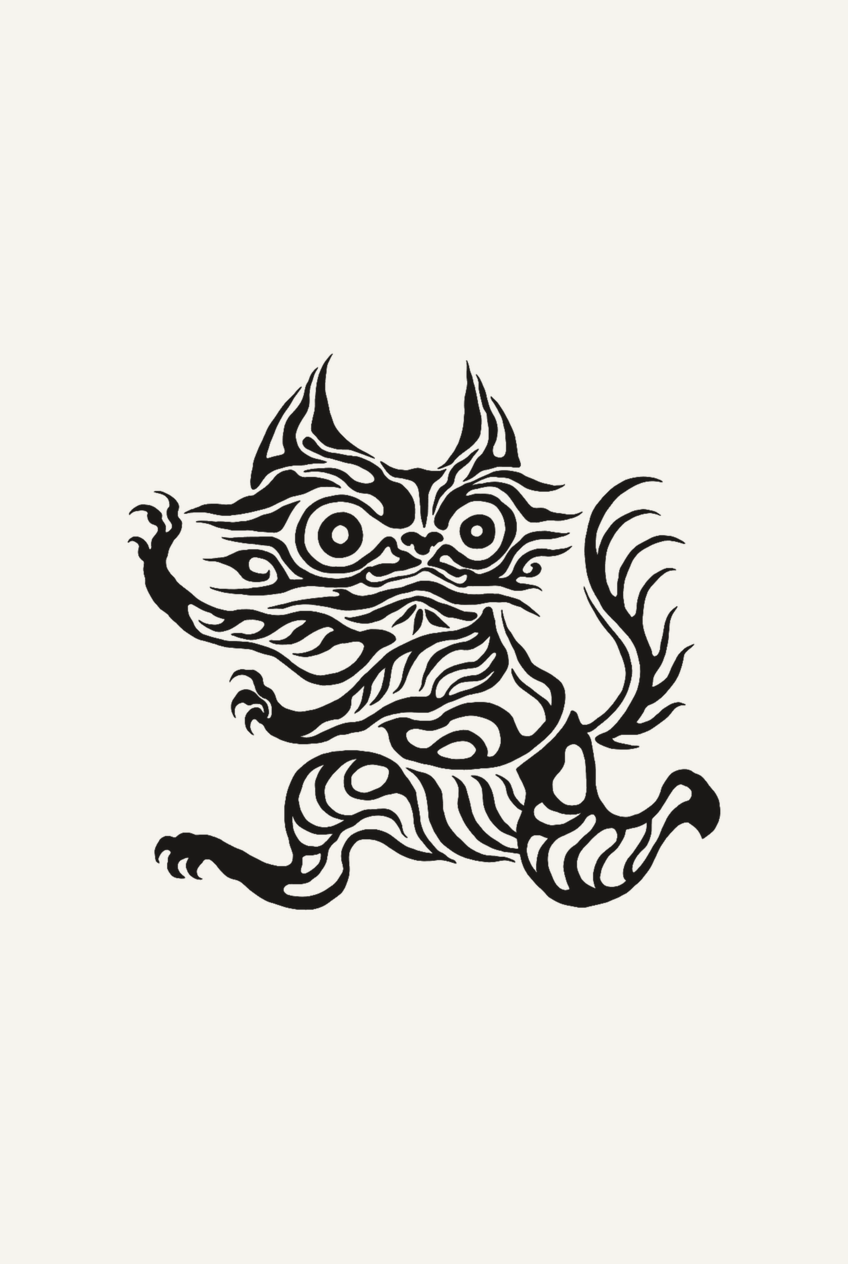
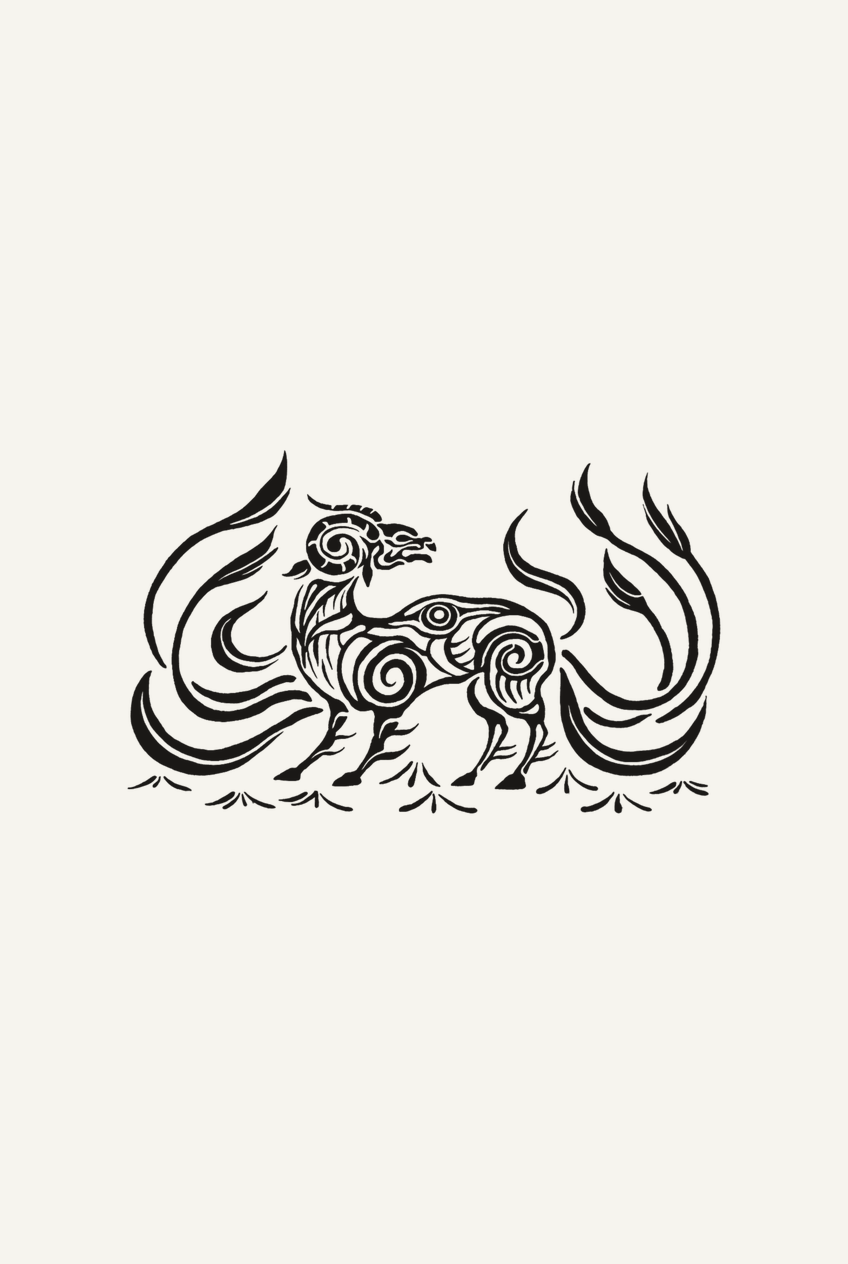
笔法: Goat-headed beast with spiral horn, coiled scroll patterns across the body, a single round eye on its flank, nine flame-tails in two grand arcs · black-grey · landscape composition · scalable 14–18 cm
形态: 猼訑羊首螺角,体覆旋纹,背侧一目,九尾左右双弧展开,足下草点,横构图
名字
猼訑(bó yí)——基山的羊形异兽,故意长反了的身体:九条尾,四只耳,眼睛不长在脸上,长在背上。它的赠礼是整部经典里最直接的一句话:佩之不畏——佩它,畏就没有了。无条件,无献祭,无需躲避。恐惧本身,注销。
*bó yí* — the sheep-beast of Ji Mountain, built inside-out on purpose: nine tails, four ears, and its eyes not on its face but on its back. Its gift is the most direct sentence in the whole classic: 佩之不畏 — wear it, and fear stops. No conditions, no offerings, no avoidance required. Fear itself, cancelled.
出处
《山海经·南山经》(约成书于前 4—前 2 世纪)基山条:「有兽焉,其状如羊,九尾四耳,其目在背,其名曰猼訑,佩之不畏。」状如羊,九尾四耳,目在背上;名叫猼訑;佩它,无所畏惧。这副身体构造本身就是寓意:守着你的东西,不需要面对你。墨线转写:本设计以经文所记的身体蓝图,转写为纹身墨线。
The *Shanhaijing*, *Nan Shan Jing* chapter (compiled c. 4th–2nd century BC), Ji Mountain entry: 「有兽焉,其状如羊,九尾四耳,其目在背,其名曰猼訑,佩之不畏。」 — shaped like a sheep, nine tails, four ears, eyes set in its back; named Boyi; wear it and know no fear. The anatomy is the moral: what guards you does not need to face you. Inking note: this design adapts the creature's recorded body-plan and re-inks it as tattoo linework.
设计灵感
本版每一处形制决定都有出处可查,逐条对账。① 螺角羊首——「其状如羊」,经文的羊形保持昂首向前的姿态,是全身唯一「看路」的部位。② 体覆旋纹——羊的卷毛转译为青铜卷钩纹理,毛即是甲。③ 背侧的大圆眼——「其目在背」,记载里那只眼画在后方体侧,睁得又圆又静:全图唯一的一次注视,替你看你看不见的方向。④ 双弧九尾——「九尾」,记载的九条尾扇成左右两道大弧,四与五,九拍的节奏扛住整个构图。
Every form decision on this design points to a recorded source, element by element. ① The spiral horn and alert goat head — 其状如羊, the recorded sheep-form kept proud and forward, the only part of the body that looks where it is going. ② The coiled scroll patterns across the body — the sheep's wool transposed into bronze scroll-hook texture, wool as armor. ③ The single round eye on the flank — 其目在背, the recorded eye drawn large and open on the rear flank: the design's one calm gaze, watching what you cannot see. ④ The nine flame-tails in two arcs — 九尾, the recorded tails fanned into twin sweeping arcs that carry the whole composition's rhythm, four and five, a drumbeat of nine.
来历
把那副身体读成一个论证。世界上所有为安全而生的生灵——龟、猬、犰狳——都把甲穿在外面、眼睛放在前面。猼訑把图反着画:柔软的羊脸朝前,全部防御朝后。九条尾乱敌耳目,四只耳听遍八方,眼睛挪到背上——因为经典在安静地暗示:真正要紧的危险,是身后的那一种。背叛,悔恨,过去。汉语里的「畏」,怕的正是已经发生的、或正从盲区扑过来的东西。这只兽的眼睛,就长在正那里。
然后是赠礼条款,语法很要紧:佩之不畏。不是佩之无祸——没许诺安全。不是佩之胜之——没许诺胜利。那个词是不畏——一种内在状态,不是外部结果。经典没有说世界会善待你;它说的是你会在世界里变得不同。这是更诚实的许诺,也是更难许的那一种。
所以纹它,纹的是什么?这是给那种不想再把生活绕着「躲避」来安排的人的设计——把眼睛挪到恐惧真正住着的地方。不是作为情绪的勇气,是作为身体构造的勇气:穿戴在身上的、结构性的、你睡着时仍在执勤的东西。九条尾说这份警觉绰绰有余;那张羊脸说它从不需要摆出凶相。目在背,故无畏。
Read the anatomy as an argument. Every creature built for safety in this world — the tortoise, the hedgehog, the armadillo — puts armor on the outside and eyes on the front. Boyi inverts the diagram: soft sheep's face forward, all defenses aft. Nine tails to confuse, four ears to listen in every direction, and the eyes moved to the back because — the classic quietly implies — the dangers that matter are the ones behind you. Betrayal, regret, the past: 畏 in Chinese is fear of what has already happened or is coming at your blind side. The beast carries an eye exactly there.
Then the gift clause, and its grammar matters: 佩之不畏. Not 佩之无祸 — no promise of safety. Not 佩之胜之 — no promise of victory. The word is 不畏, fearlessness — an inner state, not an outer outcome. The classic does not claim the world will treat you better; it claims you will be different in the world. Which is the more honest promise, and the harder one to make.
So what does it mean to wear it? This is the design for the person who is done arranging their life around avoidance — who wants the eye moved to where the fear actually lives. Not courage as a mood; courage as anatomy: something worn, structural, on duty even while you sleep. The nine tails say the vigilance is abundant; the sheep's face says it never has to look aggressive. 目在背,故无畏。
释义
畏惧成为一件穿戴的器官。眼睛挪到盲区,警觉从你肩上卸下、装进一副结构里。整部经典里最直接的一桩交易:带着它,恐惧就不再归你背。
Fearlessness as a worn organ. The eye moved to the blind side, the vigilance moved off your shoulders onto something structural. The classic's most direct transaction: carry this, and the fear is no longer yours to carry.
位置
天生的横向韵律构图:14—16 厘米横贯后背——「目在背」放佩戴者自己的背上,读法最真——或大腿外侧。10—12 厘米变体收进小臂。体侧那枚眼是全图的心:永远别让关节线穿过它。
Built horizontal and rhythmic: 14–16 cm across the upper back — the eye-on-the-back reading at its truest when placed on the wearer's own back — or on the outer thigh. A 10–12 cm variant sits on the forearm. The flank eye is the design's heart: never let a joint line cross it.
纹之前
此图只宜墨线。旋纹是羊的铠甲——黑线让它读作金属,灰阶会把铠甲软化成羊毛。最小尺寸 10 厘米:再小,体侧卷纹桥接,九尾黏成一块。避开侧腰与臂内——这两个区域最先糊掉的是体侧眼的圆环,而那只眼就是全部立意。
This design belongs to ink only. The scroll-texture is the sheep's armor — black line keeps it metallic; greyscale would turn armor into wool. Minimum size 10 cm: below that the coil patterns bridge and the nine tails merge into one mass. Keep it off the side waist and the inner arm — those zones blur the flank eye's ring first, and the eye is the whole point.
本卡每一个汉字都由中文母语者选定并逐笔核对。