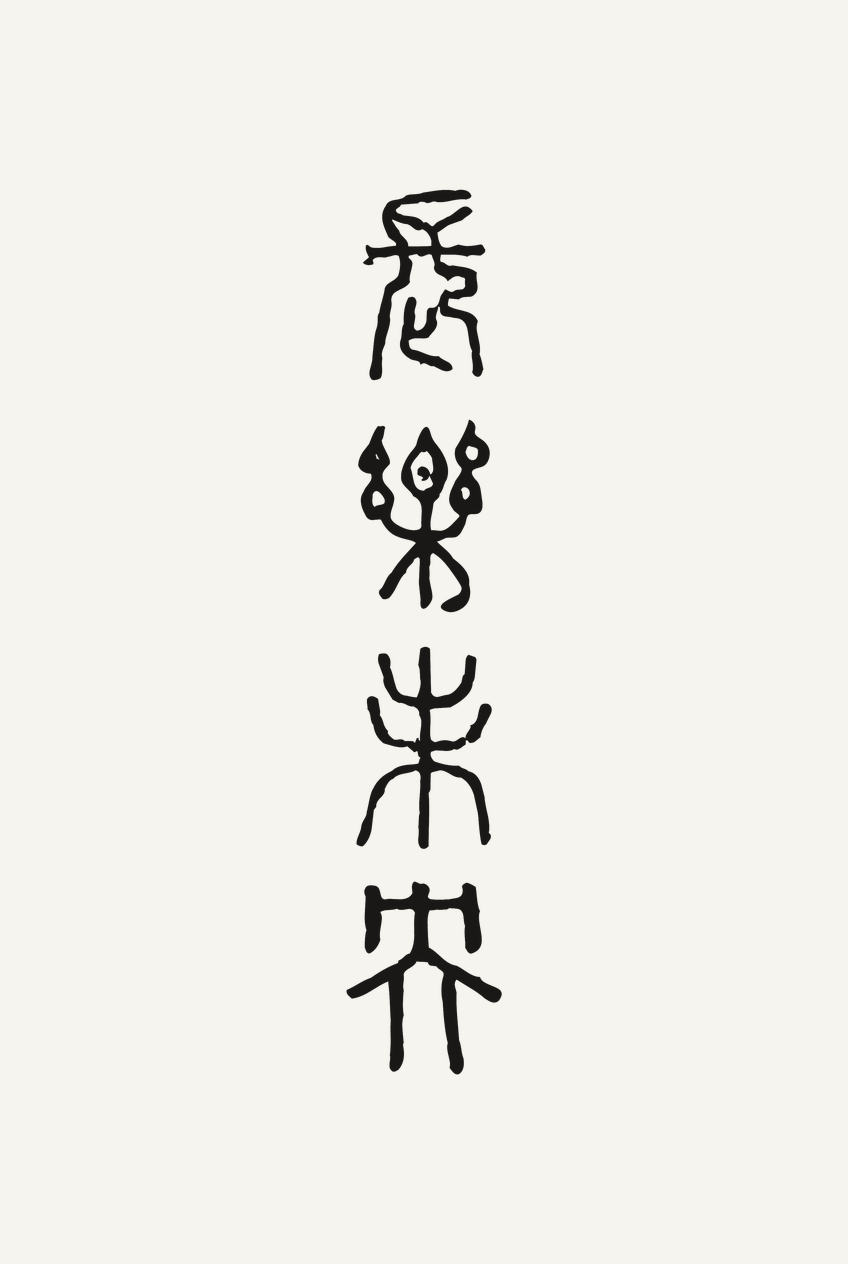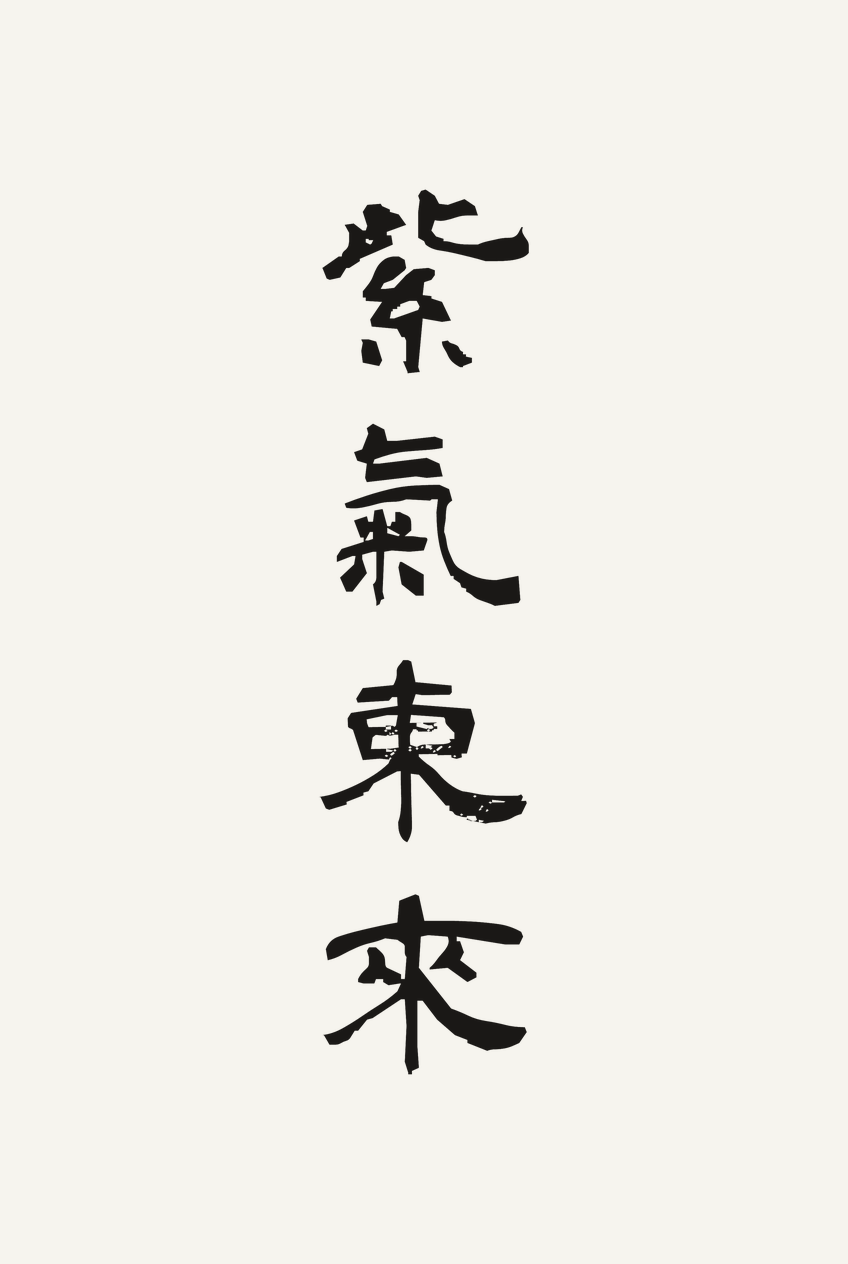
紫气东来 · Zǐ Qì Dōng Lái
Purple Air Comes from the East
系列: 吉语成语 · Design #07
笔法: four characters, vertical column · clerical script (lishu) · same form 紫氣東來 · medium-to-large
形态: 四字竖列大字,隶书
名字
紫气东来——在中国的宇宙观里,紫是最尊贵的颜色,是圣人、是北极星宫廷的气;在这里,它是只有关隘上一个警醒的人才能看见的气,先于史上最贵重的一批行货抵达。纹下这四个字,是一枚警醒的符:非凡之物已经在朝你而来的路上。把关口保持干净。
*Zǐ qì dōng lái* — purple air comes from the east. In Chinese cosmology 紫 is the noblest color, the aura of sages and the pole star's court; here it is visible only to a watchful man at a border gate, arriving ahead of the greatest cargo ever to pass through it. As a tattoo, it is a vigilance charm: something extraordinary is already on the road toward you. Keep the gate clean.
出处
刘向《列仙传》(汉代)记下这个场景:「老子西遊,關令尹喜望見有紫氣浮關」——圣人随即抵达,被扣在关前,写满五千字的《道德经》才放行。杜甫以诗定格:「東來紫氣滿函關」。墨线转写:本设计以传统母题的经典线条造型为底,转写为纹身墨线。
Liu Xiang's *Garden of Immortals* (《列仙傳》, Han dynasty) records the scene: 老子西遊,關令尹喜望見有紫氣浮關 — "Laozi traveled west; the gatekeeper Yin Xi saw purple air floating over the pass" — and the sage promptly arrived, forced to write the five thousand characters of the Daodejing before he was allowed through. Du Fu sealed the image in verse: 東來紫氣滿函關 — "purple air from the east fills the Hangu Pass." Inking note: this design adapts the classic line construction of the traditional motif and re-inks it as tattoo linework.
设计灵感
本设计的每一处形制决定都有出处可查,逐条对账。① 四字竖列——这句话挂在朝东的门楣与关口上:它的原生栖息地里就是一块门匾。② 隶书、横平承重——杜甫用它时已很老的那句话,配汉代碑刻的语域。③ 中到大尺寸——列高 14 厘米起。④ 只用墨——紫由阅读携带,不由颜料:一种颜色,等一场到访。
Every form decision points to a recorded source, element by element. ① Four characters, one vertical column — the phrase hangs over gates and doorways eastward-facing: it is literally a door sign in its native habitat. ② Clerical script, level and weighted — the Han stele register of a phrase already old when Du Fu used it. ③ Medium-to-large scale — 14 cm column height minimum. ④ Black ink only — the purple is carried by the reading, not the pigment: one color, expecting a visit.
来历
关令尹喜是史上最伟大的证词,证明注意力是一种仪器。每天,车辆通过函谷关;每天,他望着地平线。某个早晨,尘土里有了颜色——紫,留给圣王的气——他做了一个警醒的人该做的事:扣下关前的通行,直到货物现身。抵达的是一位骑着青牛的老人,正离开一座正在塌陷的文明,脑子里带着唯一一本会让这座关隘青史留名的书。尹喜把他留了下来——礼貌地、绝对地——直到《道德经》诞生。
东,是太阳与河流来的方向;朝东的关口比内陆先看见来者。于是这句话成了门楣上标准的吉语:愿你到来的东西是非凡的,愿你就是那个注意到的人。紫气东来是一份附有岗位职责的好运——运气只落在望得见地平线的人头上。
The gatekeeper Yin Xi is history's great proof that attention is an instrument. Every day, carts passed the Hangu Pass; every day he watched the horizon. One morning the dust had a color in it — 紫, the aura reserved for sage-kings — and he did what an attentive man does: he refused the traffic until the cargo showed itself. What arrived was an old man with an ox, leaving a collapsing civilization, carrying in his head the only book the gate would ever matter to. Yin Xi detained him — courteously, absolutely — until the Daodejing existed.
The east is where the sun and the rivers come from; a gate facing east sees what is coming before the interior does. Hence the phrase became the standard blessing over doors: may what approaches you be extraordinary, and may you be the one who notices. 紫气东来 is luck with a job description — the fortune that only lands on people watching the horizon.
释义
一句有脊梁的候场吉语。给正处在「靠近期」的人——一次启动、一次搬家、一场恢复、一次重逢——并且打算配得上那次抵达。它戴起来像未来向你做出的承诺,而不是你向未来许的愿。
A waiting-room blessing with a spine. For people in a season of approach — a launch, a move, a recovery, a reunion — and who intend to be worth the arrival. It wears as a promise the future made you, not a wish you made it.
位置
竖列走长的平面:小臂内侧、脊柱、肩外侧。14 厘米列高是舒服下限;这句话沿小腿内侧竖排也好,像一根门柱。
The column rides long planes: inner forearm, spine, outer shoulder. 14 cm column height is the comfortable floor; the phrase also sits well vertically along the calf's inner ridge, like a gatepost.
纹之前
自上而下,不可倒置。 紫、氣、東、來——这一列是从关口望出去的视野,自上而下读到地平线。② 隶书保持平。 ③ 只用墨。 ④ 列高 14 厘米起。 ⑤ 继续看着。 尹喜的那一份工作是注意力;这个纹身是那个行当的制服,不是行当本身。
Top to bottom, no reshuffle. Purple, air, east, coming — the column is the view from the gate, read top to horizon. ② Clerical script stays level. ③ Black ink only. ④ Column height 14 cm minimum. ⑤ Keep watching. The gatekeeper's part is attention; the tattoo is the uniform of that trade, not the trade itself.
本卡每一个汉字都由中文母语者选定并逐笔核对。