飞雀 · Fēi Què
The Sparrow on the Emperor's Neck
Series: Inked in History · Design #02
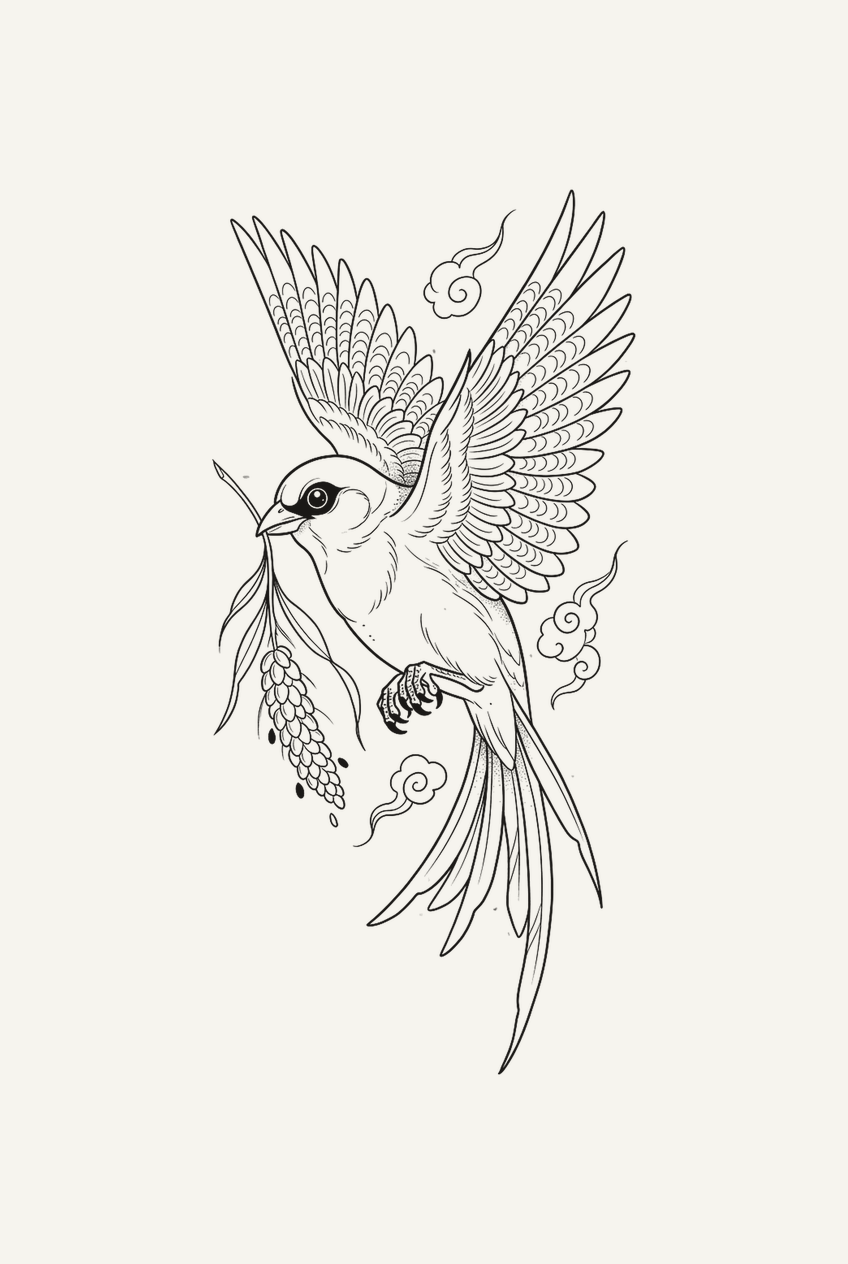
Style: single bird in flight with grain stalk · fine-line black · small-to-medium
Form: 图案
The Name
*Fēi què* — the flying sparrow, the only tattoo ever worn by a founding emperor of China that the official history names. Guo Wei (904–954), dog-blooded orphan turned soldier turned emperor, carried a sparrow inked on his neck since his penniless army days, and the empire called him by it: 郭雀儿 — "Sparrow Guo." A kingmaker's insult that became a crown. This design is that bird, drawn the way a neck tattoo would have carried it — one small creature with the largest possible story.
飞雀——正史点名的、中国开国皇帝身上唯一一处刺青。郭威(904–954),孤儿出身、行伍起家、终成开国之后,脖子上那只雀从当兵吃不饱饭的日子就跟着他,连帝国都跟着叫:郭雀儿。一句政敌口中的浑话,最后成了冠冕。本设计就是那只雀,按颈上纹身的尺寸来画——一只小兽,驮着最大的故事。
Source & Provenance
The tattoo is official history: the *New History of the Five Dynasties* (新五代史, compiled 1060), in the annals of the Northern Han — "The Zhou Taizu was of low birth in his youth; his neck was tattooed with a flying sparrow, and the world called him Guo Que'er." The scene that made it immortal is the same chapter: parading a puppet heir before Liu Min's envoys, Guo Wei pointed at his own neck — "Since antiquity, when was there ever a tattooed Son of Heaven?" (自古岂有雕青天子). The details are in a Song notebook: Zhang Shunmin's *Huaman Lu* (画墁录) records a itinerant tattooist's prophecy — sparrow on the right of his neck, grain stalk on the left, "when your sparrow pecks the grain, you rise." Inking note: this design adapts the classic line construction of the traditional motif and re-inks it as tattoo linework.
刺青载于正史:《新五代史》(1060 年成书)东汉世家——「周太祖少贱,黥其颈上为飞雀,世谓之郭雀儿」。让它不朽的那一幕就在同卷:郭威对着刘旻的使者自指其颈——「自古岂有雕青天子?」细节出自宋人笔记:张舜民《画墁录》记一名游方刺青匠的谶语——颈右刺雀、颈左刺谷粟,「雀衔谷之日,就是你发迹之时」。墨线转写:本设计以传统母题的经典线条造型为底,转写为纹身墨线。
Design Inspiration
Every form decision points to a recorded source, element by element. ① The sparrow in flight — the historical subject itself: 飞雀, not a phoenix or any noble bird — the joke and the point. ② The grain stalk in the beak — the *Huaman Lu* prophecy detail (颈左谷粟): the sparrow and the grain belong to one tattoo story. ③ Small-to-medium scale — a neck tattoo of a penniless soldier, not a back piece; the design keeps that modesty. ④ Fine-line black — the mark was a military-registration 黥, made with army tools, not art tools.
本设计的每一处形制决定都有出处可查,逐条对账。① 飞行中的雀——历史本体就是飞雀,不是凤凰不是任何高贵的鸟——这既是笑点也是要点。② 衔穗——《画墁录》谶语细节(颈左谷粟):雀与穗同属一个刺青故事。③ 小中尺寸——那是穷大兵的颈上刺青,不是满背大件;设计保留这份朴素。④ 细线黑灰——原迹是军籍黥记,用的是行伍的针,不是画师的笔。
The Story
He was born with nothing in a dynasty where nothing meant death. Orphaned young, tall and violent, Guo Wei drifted into the army the way orphans did — and the army of the Five Dynasties marked its men. Tattooing soldiers was administration, not art: a 黥 on the face or neck fixed a man to his unit the way brands fix cattle. His sparrow was that kind of mark — a conscript's ink on the neck of a man the world had already counted out.
The sparrow turned out to be the most valuable object in tenth-century China. Guo Wei rose — solider, commander, kingmaker — until in 950 he stood at the door of the throne with the Liu clan's army watching. He was not yet strong enough to take it. So he sent the Liu envoys home with a performance for the ages: an heir is being installed, trust me — and, pointing at the bird on his own neck: 自古岂有雕青天子? *Since antiquity, when was there ever a tattooed Son of Heaven?* The envoys laughed. Liu Min stood down his army. Two years later Guo Wei took the throne anyway, and the man who lost everything on that sentence lost it permanently.
The Song notebook adds the detail history's authors wouldn't: the tattooist who worked on young Guo Wei also inked a grain stalk on the left of his neck, and prophesied — *when the sparrow reaches the grain, you rise*. When Guo Wei became emperor, the *Huaman Lu* records it as fulfilled: the sparrow had reached its grain. Perhaps. What is certain is the historical thunder of the moment itself — a man used his own criminal's tattoo as a credential of trust, and the oldest line in the dossier of Chinese tattoos (自古岂有雕青天子) is his. He was the tattooed Son of Heaven. It was the pointing at the bird that made him emperor.
他生下来一无所有,而那是个「一无所有」等于死的年代。幼年失怙,人高力猛,郭威像所有孤儿一样流进军队——而五代的军队给士兵做记号。给军人刺青是行政,不是艺术:脸上或颈上一枚黥记,把人钉在编制上,就像烙印钉住牛。他那只雀就是这类记号——一枚征夫的墨,刺在一个已被世界除名的人的颈上。
后来,那只雀成了十世纪中国最值钱的东西。郭威一路上升——士兵、统帅、定策之人——直到 950 年,他站在御座门前,刘氏的军队在看着。他还没强到可以硬取。于是他把刘家的使者礼送回境,顺路留下一场千古表演:迎立嗣君,请勿见疑——并且,指着自己颈上的雀说:自古岂有雕青天子?使者笑了。刘旻按兵不动。两年后郭威照样坐上了御座,而把全部筹码押在那句话上的人,输得再也翻不了身。
宋人笔记补上了正史作者不要的细节:给青年郭威下针的刺青匠,还在他颈左刺了一枝谷粟,并留了谶语——*雀衔谷之日,你发迹之时*。郭威登位,《画墁录》记谶语应验:雀,够着谷了。也许吧。可以确定的是那一刻本身的历史雷声——一个人把自己罪行般的刺青当成了信用的凭证,而中国刺青档案里最古老的传世名言(自古岂有雕青天子)正是他的。他是那位雕青天子。让他当上皇帝的,正是指着那只雀的动作。
What It Means
The mark they gave you as an insult, worn as a credential. The sparrow is small on purpose: low birth, unglamorous animal, army ink — and it sat on the neck of an emperor and answered for his honesty. This is a design for people whose beginning is still held against them: the record, the résumé gap, the accent, the ink. Wear the bird. Point at it when it matters.
他们当侮辱给你的记号,你把它戴成凭证。雀是故意小的:低微出身、不起眼的鸟、行伍的墨——而它坐在皇帝的颈上,替他的诚实作答。给起点仍被人拿来说事的人:那份档案、那段履历空白、那口口音、那处纹身。把雀戴上。关键时刻,指着它。
Where It Sits
The original was on the neck — you can honor that directly: a 4–6 cm sparrow on the side of the neck or behind the ear reads instantly to anyone who knows the story. More comfortable equivalents: the inner wrist, the collarbone, or high on the forearm — small enough to point at, exactly the design's gesture. The grain stalk can trail toward the shoulder if you want the full prophecy on one limb.
原位在颈侧——想致敬也可以直接来:颈侧或耳后一只 4–6 厘米的飞雀,知情的人一眼便懂。更舒适的等位:手腕内侧、锁骨、或前臂上段——小到可以指着它,这正是设计的动作。想要完整的谶语,谷穗可以朝肩头延伸,把预言收进同一条手臂。
Before You Ink
It's a sparrow, not a phoenix. Resist every upgrade to a noble bird; the poverty is the story. ② The grain matters. Sparrow plus stalk is the complete prophecy — a bare bird is half the tattoo. ③ Only ink. The original was military 黥 — black-grey only, fine line. ④ Minimum size. 4 cm wingspan; below that the feather detail clogs. The neck placement is real but unforgiving — fine lines on throat skin age fast; wrist and forearm age better. ⑤ This is a biography, not a blessing. It reads as "they counted me out; the count was wrong." Make sure that sentence is yours to wear.
是雀,不是凤。 拒绝一切升格为高贵鸟类的提议;穷,才是故事。② 穗不能省。 雀加穗才是完整的谶语——一只裸雀只是半个刺青。③ 只用墨。 原迹是军籍黥记——只宜黑灰细线。④ 最小尺寸。 翼展 4 厘米起;再小,羽部的细节会糊。颈侧是原位但对皮肤不宽容——喉部细线老得快;腕与臂耐久得多。⑤ 纹的是传记,不是吉利话。 它在说:「他们把我除名,而除名除错了。」这句话是不是你的,想清楚再落针。
Every character on this card was selected and checked stroke by stroke by a native reader of Chinese.