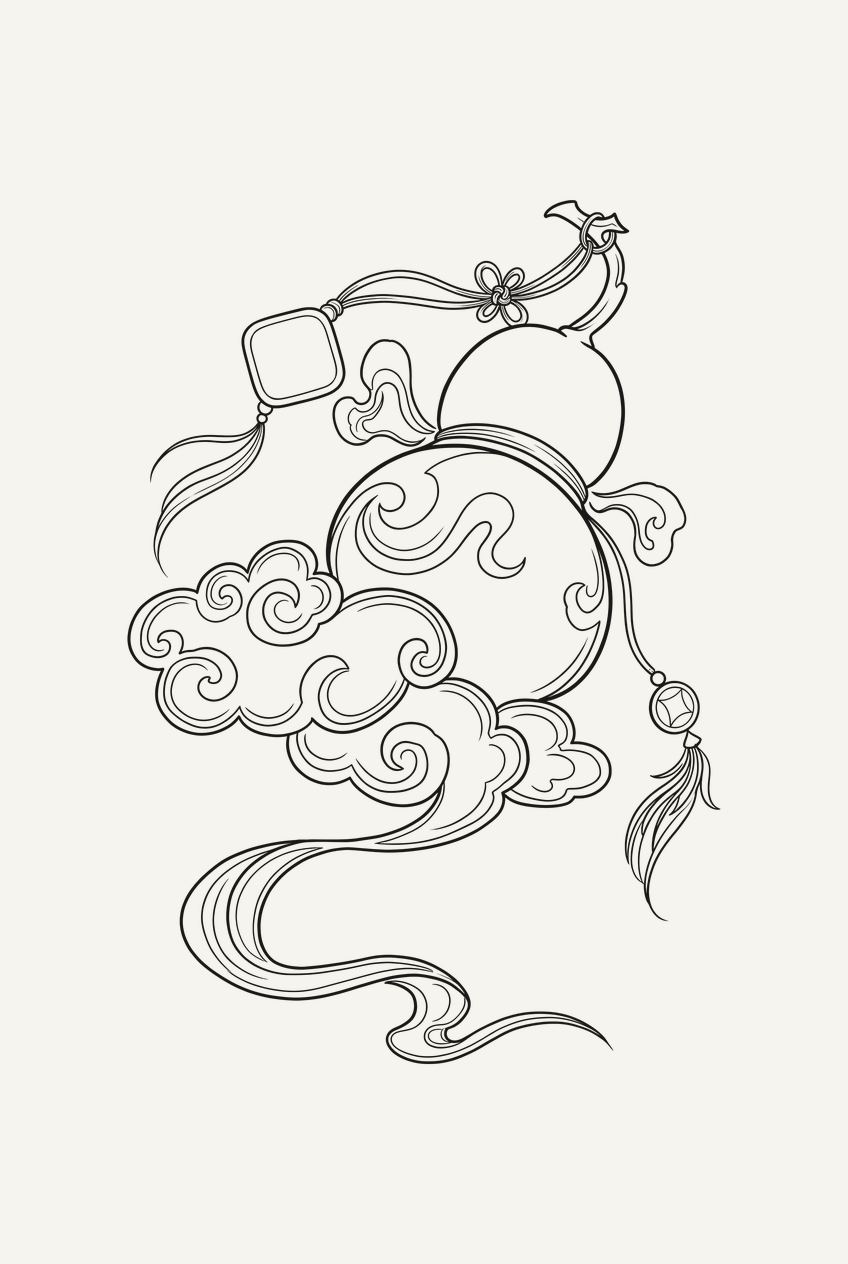
葫芦 · Hú Lu
The Gourd of Fú-Lù
Series: Feng Shui Charms · Design #07
Style: auspicious gourd with cloud scroll and coin tassel · mixed line weight · medium
Form: 图案
The Name
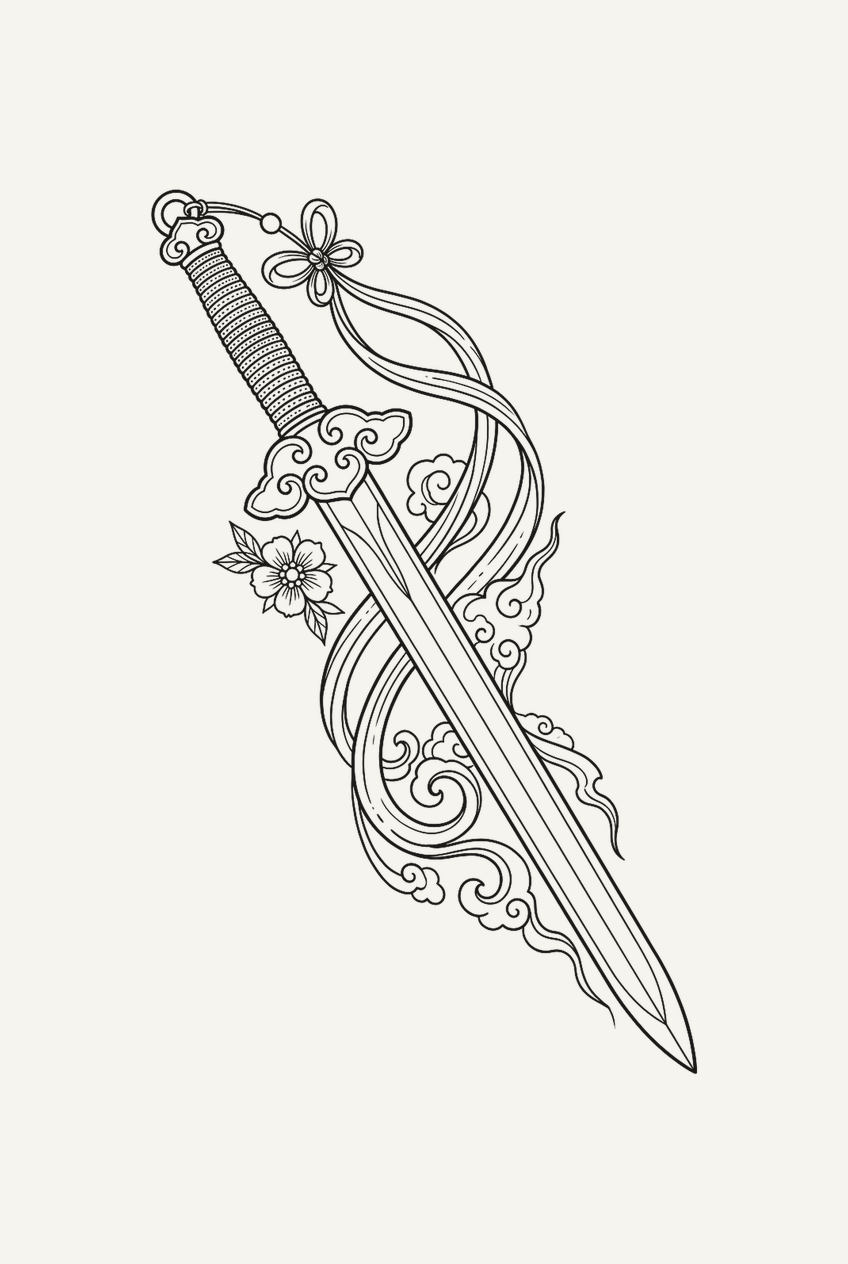
Hú lu sounds like fú lù — blessing and salary, the two wishes people stopped being shy about wanting. That pun alone carried the gourd through a thousand years of Chinese decoration: on porcelain, on New Year prints, on the embroidery of children's hats. This design adds the rest of the sentence — a small blank rounded-square plaque hung from the cord at its shoulder, auspicious clouds beneath it, a plain coin and knotted tassel swinging at its side, a silk ribbon trailing behind.
「葫芦」谐音「福禄」——福气和俸禄,中国人最不好意思直说、又最放不下的两个愿望。这一个谐音,就让葫芦在千年装饰里走了一路:瓷器上有它,年画上有它,孩童的虎头帽上也有它。这个设计把后半句话补齐——肩头的绳上挂一块不刻字的素牌,脚下托着祥云,腰间坠一枚素面铜钱和编结流苏,身后飘着一条绸带。
Source & Provenance
葫芦入纹的实录极厚:《后汉书·方术列传》记壶公悬壶市中、跳入壶内,费长房随之学道——「悬壶」从此既是医家的招牌,也是「壶中别有天地」的出处;葫芦口小腹大,道教认它收邪纳福,八仙里铁拐李就背一只。明清两代,青花瓷上的葫芦纹与葫芦瓶是常见器形,葫芦配祥云、缀流苏的组合在民窑瓷器与年画中屡见不鲜。本设计以传统祥云葫芦纹的经典线条造型为底,转写为纹身墨线。
口小、腹大、有盖、系绳——葫芦的形状本身就是一句吉祥话:进得少,装得多,扣得住。加上谐音的「福禄」,它成了不需要解释的纹样:看见就知道是好话。
Design Inspiration
Every form decision points to a recorded source, element by element. ① The double-sphere body — the classic gourd silhouette as fired in Ming–Qing gourd-shaped vases: small shoulder, large belly, waist pinched. ② Cloud scroll inside the belly — the same 青花 convention that fills porcelain gourds with curling cloud-work. ③ The blank plaque and the blank coin — a rounded-square plaque hung empty and a cash-coin left plain, the way jade tablets and festival coins are worn: the carrier supplies the meaning. ⑤ Clouds below, ribbon trailing — the gourd does not float free; auspicious cloud bears it and a silk band streams behind, as in New Year print composition.
本设计的每一处形制决定都有出处可查,逐条对账。① 双球器身——明清葫芦瓶定下的经典轮廓:小肩、大腹、束腰。② 腹内卷云纹——青花瓷把云纹填进葫芦腹的同一惯例。③ 素牌与素钱——空牌不刻字、钱面不铸字,玉牌与吉钱就这么戴:内容由佩戴的人自己给。⑤ 云托飘带——葫芦不是悬空的:祥云在下托着,绸带在身后扬起,年画的构图法。
The Story
The gourd is the one lucky object that earns its luck twice. First the pun: hú lu, fú lù — say it out loud and the wish is made. Then the shape: a narrow mouth that keeps what enters, a wide belly that never runs out. Physicians hung empty gourds at their doors; the immortal Li Tieguai carried his on a crutch; temple fairs sold them filled with medicine or with nothing at all — the shape was the medicine.
葫芦是唯一一个把好运挣了两遍的吉祥物。第一遍靠谐音:葫芦,福禄——念出声,愿望就算许了。第二遍靠形状:口窄,进去的扣得住;腹宽,装下的掏不空。郎中在门口挂干葫芦;铁拐李的拐上背一只;庙会上有人卖装药的葫芦,也有人卖空葫芦——形状本身就是药。
What It Means
To wear the gourd is to carry both halves of the wish — the fortune you are given and the livelihood you earn — in one closed container. It does not chase. It collects: health into the belly, blessing into the belly, and the little coin at its side reminds you the world pays in both directions.
戴葫芦,是把愿望的两半——天给的福和挣来的禄——装进同一只扣紧的容器。它不追,只收:健康收进腹里,福气收进腹里;腰边那一枚小钱提醒你,这个世界是双向付账的。
Where It Sits
The composition runs tall: forearm, calf, upper arm, or along the spine. Medium size — below 6 cm the cloud scroll and the plaque's 福 fuse into texture. It pairs naturally with the roundel set of the same series, hung beside rather than over.
构图是竖走的:小臂、小腿、大臂外侧,或者顺着脊柱。中尺寸起——6 厘米以下,云纹会和小牌里的福字糊成一片质感。与同系列团字可以自然成组,挂着排,不要叠着排。
Before You Ink
The waist pinches. The two spheres must stay unequal — shoulder small, belly large; an even figure-eight reads wrong. ② Plaque and coin stay blank. No characters on either — an empty plaque is a promise left open; a written one starts an argument about which word. ③ Clouds support, never cover. The scroll stays inside the belly and under the base. ④ The tassel hangs free. Do not anchor it to the ribbon. ⑤ Black ink only — the reference tradition is blue-and-white porcelain; on skin, one color keeps the line hierarchy honest.
腰要束。 两球必须不等大——肩小腹大;等大的八字不是葫芦。② 牌与钱都留素。 都不刻字——空牌是留白的许诺;刻了字,就要开始争论该刻哪个。③ 云只托不盖。 卷云留在腹内和器底。④ 流苏要垂着走。 别把它系回飘带。⑤ 只用墨——参考的传统是青花瓷;上皮肤,一种颜色才保得住线条层次。
Every character on this card was selected and checked stroke by stroke by a native reader of Chinese.