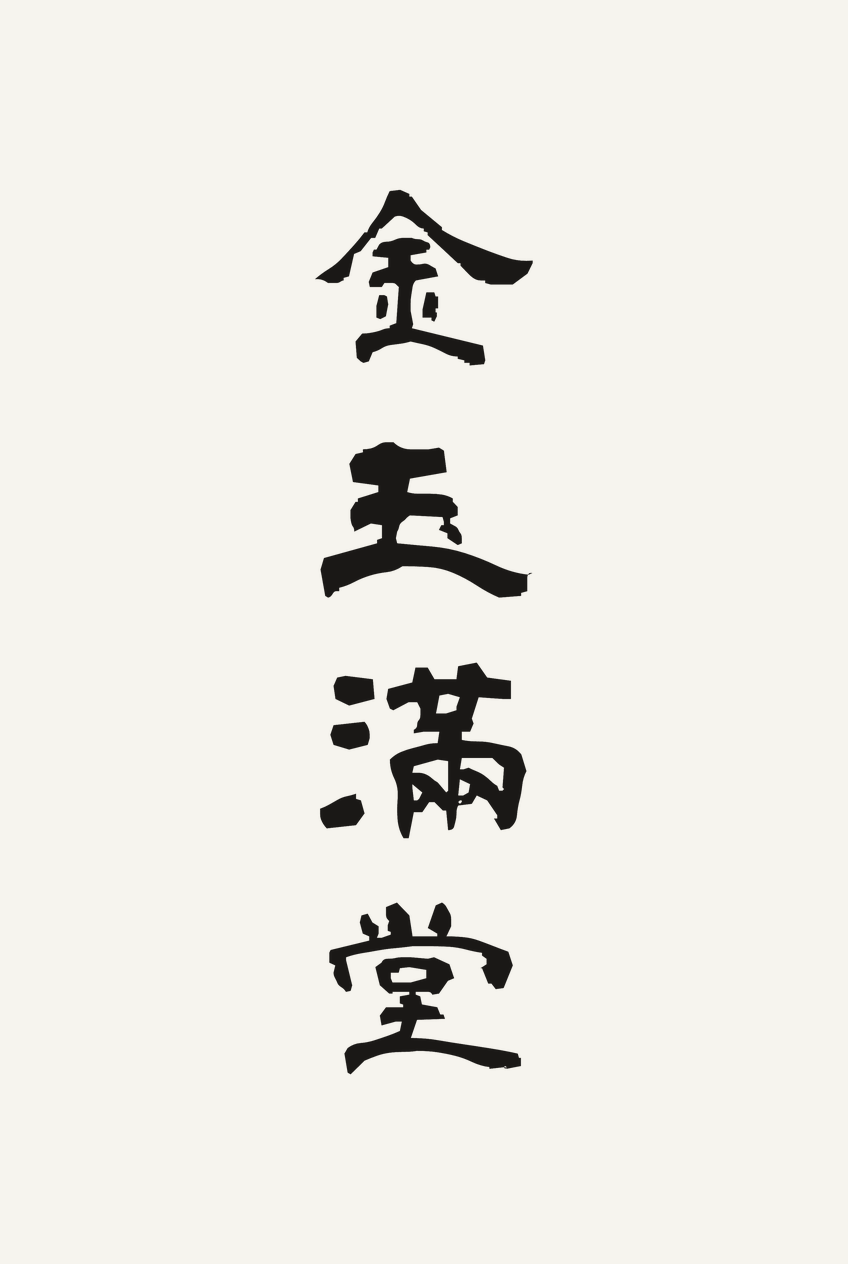
金玉满堂 · Jīn Yù Mǎn Táng
Gold and Jade Fill the Hall
Series: Auspicious Idioms · Design #32
Style: four characters, vertical column · clerical script (lishu, traditional form 金玉滿堂) · medium
Form: 文字
The Name
Here is the strangest blessing in the shop: its source sentence is a warning. Daodejing, chapter 9, lists the things that cannot last, and opens with 金玉滿堂,莫之能守 — gold and jade fill the hall; no one can keep them. Folk usage then did what folk usage does: it kept the image and flipped the verdict, and for two thousand years the four characters have blessed halls, ledgers and newborns. The tattoo carries both readings — the charm on its face, the warning in its bones.
店里最奇怪的一个祝福:它的出处是一句警告。《道德经》第九章列举不能长久的东西,第一句就是金玉滿堂,莫之能守——金玉堆满堂,没人守得住。然后民俗做了民俗一直在做的事:留下画面,翻转判决。两千年里,这四个字祝福了厅堂、账本和新生儿。这个纹身两层都带——面上是祝语,骨头里是警告。
Source & Provenance
Daodejing, chapter 9: 金玉滿堂,莫之能守 — original scripture; the blessing reading is a folk inversion of the original warning, and both layers are stated here rather than smoothed over. Inking note: this design adapts the classic line construction of the traditional motif and re-inks it as tattoo linework.
《道德经》第九章「金玉滿堂,莫之能守」——经文原文;祝语读法是民俗对原句警告的反用,两层在此如实并陈、不做抹平。墨线转写:本设计以传统母题的经典线条造型为底,转写为纹身墨线。
Design Inspiration
Every form decision points to a recorded source, element by element. ① Four characters, one vertical column — a hall drawn as a column; 满 sits dead center, the fullness itself. ② Clerical script, traditional form 金玉滿堂 — 玉 and 金 flank the top: wealth named first, kept second. ③ Medium scale — 12–14 cm. ④ Black ink only — gold and jade are named, never depicted; the material world stays typographic.
本设计的每一处形制决定都有出处可查,逐条对账。① 四字竖列——厅堂画成竖列;「滿」端坐正中,就是那个满字本身。② 隶书、繁形「金玉滿堂」——玉与金在顶部两翼:财富先被命名,其次才谈守。③ 中等尺寸——12–14 厘米。④ 只用墨——金玉只被命名,不被描绘;物质世界保持排版形态。
The Story
The chapter 9 list is Laozi at his most pragmatic: hold a cup brimming and it spills; sharpen a blade too fine and it dulls; fill the hall with gold and you have built a guard problem. Then the exit clause: 功遂身退,天之道也 — finish the work, then step back; that is heaven's way. So the honest tattoo is not "get rich." It is: wealth is a season, not an address. The folk blessing is real — and it rhymes better after you have read the small print.
第九章的清单是老子最务实的一面:杯子满到边沿会洒;刀磨得太锋会钝;金玉堆满堂,你就给自己造了个保安问题。然后是出口条款:功遂身退,天之道也——把事办完,然后退场;这是天道。所以这个纹身诚实的读法不是「发财」。是:财富是季节,不是地址。民俗的祝语是真的——而读过小字条款之后,它押韵押得更好。
What It Means
For the new hall: the shop you opened, the child you had, the year the ledger turned. It blesses — and it quietly schedules the exit.
给新的厅堂:你开的店、你生的孩子、账本翻身的那一年。它祝福——也悄悄排好了退场的时间。
Where It Sits
Four characters, one column: inner forearm best, spine, chest; 12–14 cm; below 9 cm the 滿 density clogs.
四字竖列:小臂内侧最佳,脊柱、胸;12–14 厘米;低于 9 厘米「滿」的密度会糊。
Before You Ink
Four characters are the whole design. ② Traditional form 金玉滿堂. ③ Minimum 9 cm. ④ Both readings stay — if you only want the charm, the source will keep visiting your dreams. ⑤ It blesses halls, not vaults — the line has always worked better on people who share the hall.
四个字就是全部设计。 ② 繁形「金玉滿堂」。 ③ 9 厘米起。 ④ 两层读法都留着——只想要祝语的话,出处会夜夜来访。⑤ 它祝福的是厅堂,不是金库——这句话在愿意分享厅堂的人身上,一向更灵。
Every character on this card was selected and checked stroke by stroke by a native reader of Chinese.