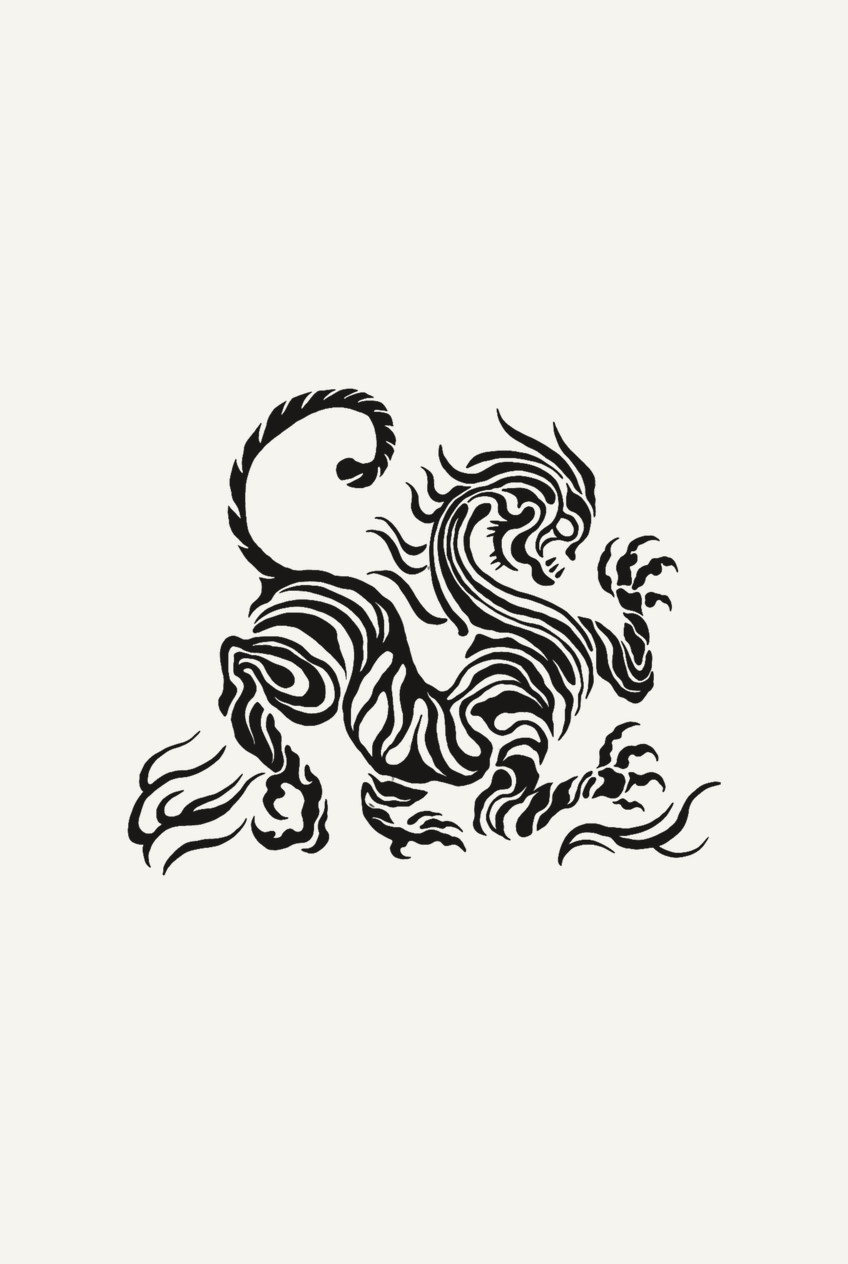
马腹 · Mǎ Fù
The Cry You Mistook for a Child
Series: Mythical Beasts & Sacred Animals · Design #26
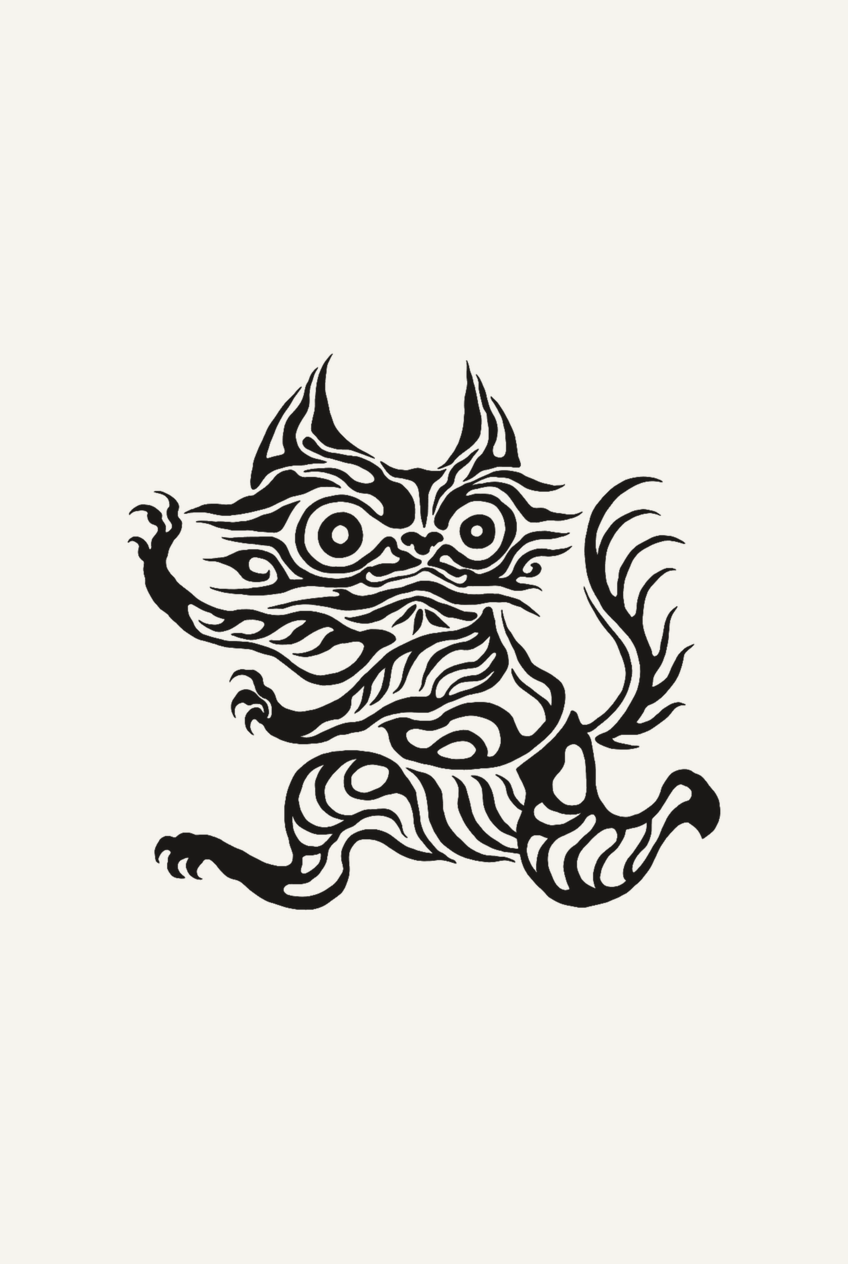
Style: Leaping tiger beast with a calm human face, flame-plume mane, flowing striped body, tail curled in a high spiral hook · black-grey · near-square composition · scalable 14–18 cm
Form: 图案
The Name
*mǎ fù* — the tiger-bodied, human-faced beast of Manqu Mountain, whose recorded voice is the cruelest detail in the whole classic: 其音如婴儿 — it cries like a baby. The mountain man hears a child in distress and walks toward it; the record notes, with terrible economy, 是食人 — it eats people. The design keeps the leap mid-air: the moment between hearing and knowing.
马腹(mǎ fù)——蔓渠之山人面虎身的兽,经典记它的嗓音是整部书里最狠的细节:其音如婴儿——它哭得像个孩子。山中人听见婴啼,循声走去;记载用可怕的简洁补了一句:是食人。本设计把腾跃停在半空——停在「听见」与「明白」之间的那一瞬。
Source & Provenance
The *Shanhaijing*, *Zhong Ci Er Jing* chapter (compiled c. 4th–2nd century BC), Manqu Mountain entry: 「有兽焉,其名曰马腹,其状人面虎身,其音如婴儿,是食人。」 — human face, tiger body, an infant's cry; named Mafu; it eats people. The entry gives no omen and no rite — this one is not weather or war, only a predator that borrows the voice of the most vulnerable thing you know. Inking note: this design adapts the recorded leap and re-inks it as tattoo linework.
《山海经·中次二经》(约成书于前 4—前 2 世纪)蔓渠之山条:「有兽焉,其名曰马腹,其状人面虎身,其音如婴儿,是食人。」人面虎身,啼声如婴;名叫马腹;食人。这一条没有征兆也没有祭法——它不是天气也不是战争,只是一头会借用「你最心疼的声音」的捕食者。墨线转写:本设计以经文所记的腾跃,转写为纹身墨线。
Design Inspiration
Every form decision on this design points to a recorded source, element by element. ① The leaping tiger body — 虎身, the recorded frame caught at full extension: all four paws off the ground, the pounce suspended mid-air, power drawn as the instant before contact. ② The calm human face — 人面, drawn serene, almost gentle: the trap the text describes, the face that lets you believe the cry. ③ The flame-plume mane and spiral-hook tail — the tiger's wildness exaggerated into ceremonial fire, the tail wound into a high hook: the energy of the leap stored and coiled. ④ The flowing stripes with ground flames — the recorded hide rendered as calligraphic bands, and small flame tufts below marking the scorch the leap leaves behind.
本版每一处形制决定都有出处可查,逐条对账。① 腾跃的虎身——「虎身」,记载的躯干抓在完全舒展的一瞬:四爪离地,扑击悬在半空,力量画成接触之前的那一瞬。② 平静的人面——「人面」,画得安详、近乎温柔:正是经文描述的那个陷阱——让你相信那声啼哭的脸。③ 焰形鬃毛与螺旋钩尾——虎的野性放大成仪式性的火,尾巴卷成高高的钩:整场腾跃的能量被盘起来、存着。④ 流线虎纹与地面火苗——记载的皮毛画成书法条带,脚下小火苗标出腾跃留下的灼痕。
The Story
Why would a classic of mountains give its scariest predator a human face and an infant's cry? Because it is not describing a tiger. The Shanhaijing's man-eaters divide into types — the ones that overpower you, the ones that deceive you, the ones that lure you — and Mafu is the patron of the luring kind: danger that arrives wearing the voice of what you are hardwired to protect. The text's audience knew this predator intimately, but not from the woods. The cry-like-a-baby is the flatterer's tone, the swindle's opening line, the request you cannot refuse because it sounds small.
And yet the design does something the text does not: it freezes the leap. In the record, the story ends the way such stories end. In the image, the beast hangs mid-air forever — jaws shut, face calm, claws not yet landed. Suspended appetite is appetite under observation. This is the oldest trick in the book turned back on the book: you cannot be lured by what you have pinned to your own skin, mid-pounce, forever.
So what does it mean to wear it? This is a design for survivors of the soothing voice — people who have walked toward a cry that was not a child, in any of its modern registers, and lived to understand the mechanism. Wearing it is not fear; it is the permanent exhibit: this is the face, this is the cry, this is the pause where I get to choose. 闻啼而止者,生。
为什么一部写山的经典要给它最可怕的捕食者一张人脸、一声婴啼?因为它写的不是老虎。《山海经》的食人兽分类型——以力压你的,以伪装骗你的,以诱饵引你的——而马腹是「引诱型」的祖师:危险穿着「你天性要保护的声音」走来。经文的读者对这种捕食者再熟悉不过,但不是在林子里认识的。如婴儿啼,是奉承者的语调,是骗局的开场白,是那句因为听起来弱小而让你无法拒绝的请求。
然而这张图做了一件经文没做的事:它把腾跃冻住了。在记载里,故事照常收尾。在图像里,这头兽永远悬在半空——颌闭着,脸平静,爪未落地。被悬置的欲望,是被观察着的欲望。这是把书里最老的把戏反过来用在书上:一件永远停在被钉在自己皮肤上、停在扑击半途的东西,没法再引诱你。
所以纹它,纹的是什么?这是给「温柔声音的幸存者」的设计——曾在任何一种现代语域里朝一声「不是孩子的啼哭」走过去、又活着搞懂了机制的人。纹它不是出于怕;是常设展:这是那张脸,这是那声啼,这是我来得及做选择的那一停。闻啼而止者,生。
What It Means
The leap, suspended at the moment of recognition. Not the fear of the luring voice — the studied knowledge of it: face, cry, and the pause that belongs to you. The classic's most dangerous predator, kept permanently mid-air.
被停在「认出」那一刻的腾跃。不是对诱饵之声的恐惧——是对它的研读:脸,啼,和那一段属于你的停顿。整部经典最危险的捕食者,被永久悬在半空。
Where It Sits
Built square and coiled: 14–16 cm on the shoulder cap or outer thigh, the leap following the muscle's sweep; a 12 cm variant sits on the calf. The human face is the design's hook — keep it level; a tilted face reads as rage instead of calm, and the calm is the trap.
天生的方形盘曲构图:14—16 厘米收肩头或大腿外侧,腾跃随肌肉的走向;12 厘米变体收小腿。那张人面是全图之钩——保持水平;一斜,平静就读成暴怒,而平静才是陷阱。
Before You Ink
This design belongs to ink only. The stripes' calligraphic flow needs hard edges — black keeps the leap athletic; greyscale makes it sluggish. Minimum size 10 cm: below that the face loses its serenity and the spiral tail welds shut. Keep it off the elbow back and the knee — flexion zones crack the calm face first, and the face must hold.
此图只宜墨线。虎纹的书法流动需要硬边——黑让腾跃保持爆发力,灰阶会把它拖懒。最小尺寸 10 厘米:再小,人面失去安详,螺旋尾焊死。避开肘背与膝——屈曲区最先皲裂的是那张平静的脸,而脸必须撑住。
Every character on this card was selected and checked stroke by stroke by a native reader of Chinese.