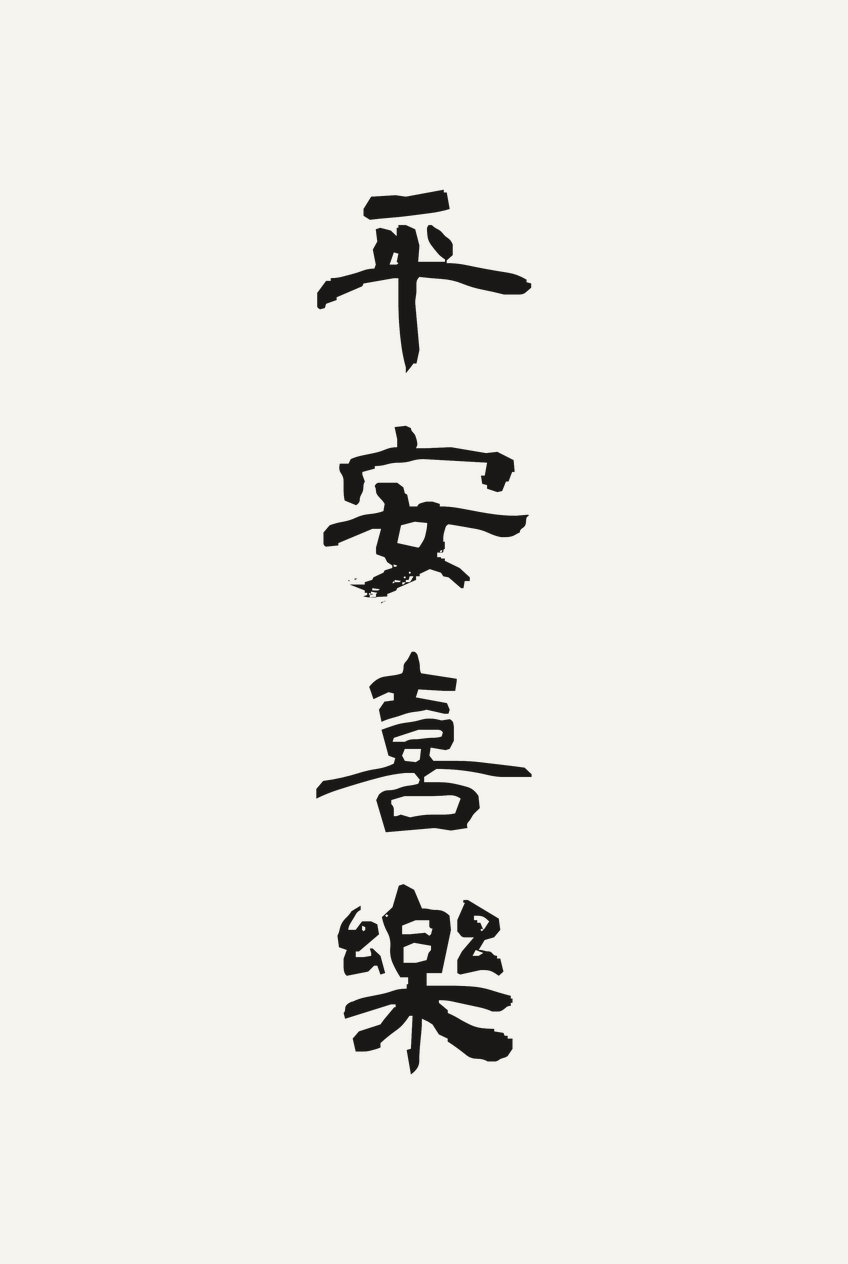
平安喜樂 · Píng Ān Xǐ Lè
Peace & Joy
Series: Auspicious Idioms · Design #35
Style: four characters, vertical column · clerical script (lishu, traditional form 平安喜樂) · medium
Form: 文字
The Name
Four words, each older than the phrase: 平 — level, at rest; 安 — settled, a home at peace; 喜 — joy; 樂 — delight. Joined, they are the blessing every Chinese household has written on its New Year scrolls: safety first, then happiness — peace is the floor, joy is what you build on it. The four-character phrase itself is folk blessing, matured in the printing traditions of New Year pictures and door scrolls; it belongs to no single book, and every book's reader knows it.
四个字,每一个都比这个词组古老:平——平正,安顿;安——安定,家宅平安;喜——欢喜;樂——快乐。连起来,就是中国人家家户户写在春联上的那句祝福:先求平安,再讨欢喜——平安是底,喜乐是盖在上面的。四字连用本身是民间吉语,在年画与春联的印刷传统里长成;它不属于哪一部书,而每部书的读者都认得它。
Source & Provenance
Folk blessing idiom; the four-character form matured in the modern New Year picture and spring scroll tradition, with no single first attestation — stated as such. Single-character glosses per *Shuowen Jiezi* (c. 100 AD): 平,语平舒也;安,静也;喜,乐也;樂,五声八音总名. Inking note: this design adapts the classic line construction of the traditional motif and re-inks it as tattoo linework.
民间吉语;四字定型于近代年画与春联传统,无单一文献首证——如实标注。单字训诂依《说文解字》(约公元 100 年):平,语平舒也;安,静也;喜,乐也;樂,五声八音总名。墨线转写:本设计以传统母题的经典线条造型为底,转写为纹身墨线。
Design Inspiration
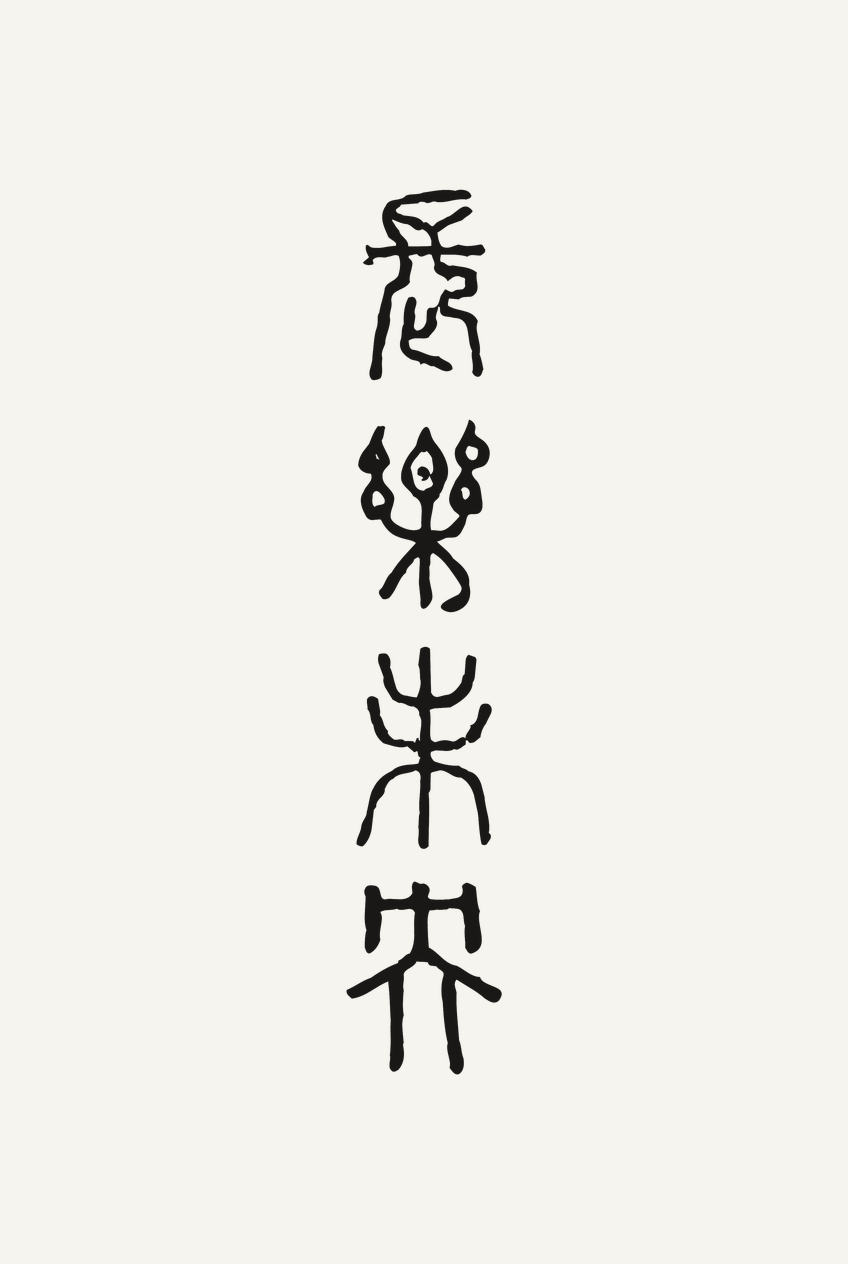
Every form decision points to a recorded source, element by element. ① Four characters, one vertical column — read top to bottom: calm arrives before celebration, in that order. ② Clerical script, traditional form 平安喜樂 — the wide level strokes of 隶书 keep the blessing level; nothing tilts, nothing hurries. ③ Medium scale — 10–13 cm. ④ Black ink only — a blessing does not need decoration.
本设计的每一处形制决定都有出处可查,逐条对账。① 四字竖列——自上而下读:先平安,后欢喜,次序即祝福。② 隶书、繁形「平安喜樂」——隶书宽平的横画让祝福保持水平;不倾斜,不着急。③ 中等尺寸——10–13 厘米。④ 只用墨——祝福不需要装饰。
The Story
There is a grammar to Chinese blessings, and this is its cleanest sentence: ask for peace first, ask for joy second. Not because joy matters less — because joy needs somewhere to stand. The phrase has survived every century that tried to improve it, printed on door frames and New Year pictures, whispered over departing travelers and newborns alike. Worn as a tattoo, it is the whole household grammar in four characters: may the ground hold, and may you laugh on it.
中国人的祝福有自己的语法,这是其中最干净的一句:先求平安,再求欢喜。不是欢喜不重要——是欢喜需要有地方站。这句话熬过了每一个想改进它的世纪,印在门框上、年画上,送给远行的人,也送给刚出生的人。纹在身上,它就是四字之内的全部家庭语法:愿大地承住你,愿你在上面笑出声。
What It Means
For anyone whose wish list has quietly shortened with age. Two things, in the right order.
给愿望清单随年纪悄悄变短的人。两件事,按正确的次序。
Where It Sits
Inner forearm, spine, outer calf; 10–13 cm; below 8 cm the 樂 density clogs.
小臂内侧、脊柱、小腿外侧;10–13 厘米;低于 8 厘米「樂」的密度会糊。
Before You Ink
Four characters are the whole design. ② Traditional form 平安喜樂. ③ Minimum 8 cm. ④ The order is the meaning — peace above, joy below; reversing the column is a different sentence. ⑤ It reads top-down — make sure your artist mounts the stencil vertically, characters unbroken.
四个字就是全部设计。 ② 繁形「平安喜樂」。 ③ 8 厘米起。 ④ 次序就是含义——平安在上,喜乐在下;调转列序是另一句话。⑤ 自上而下读——确认纹身师竖向贴转印,字序不乱。
Every character on this card was selected and checked stroke by stroke by a native reader of Chinese.