穷奇 · Qióng Qí
The Monster They Hired
Series: Mythical Beasts & Sacred Animals · Design #28
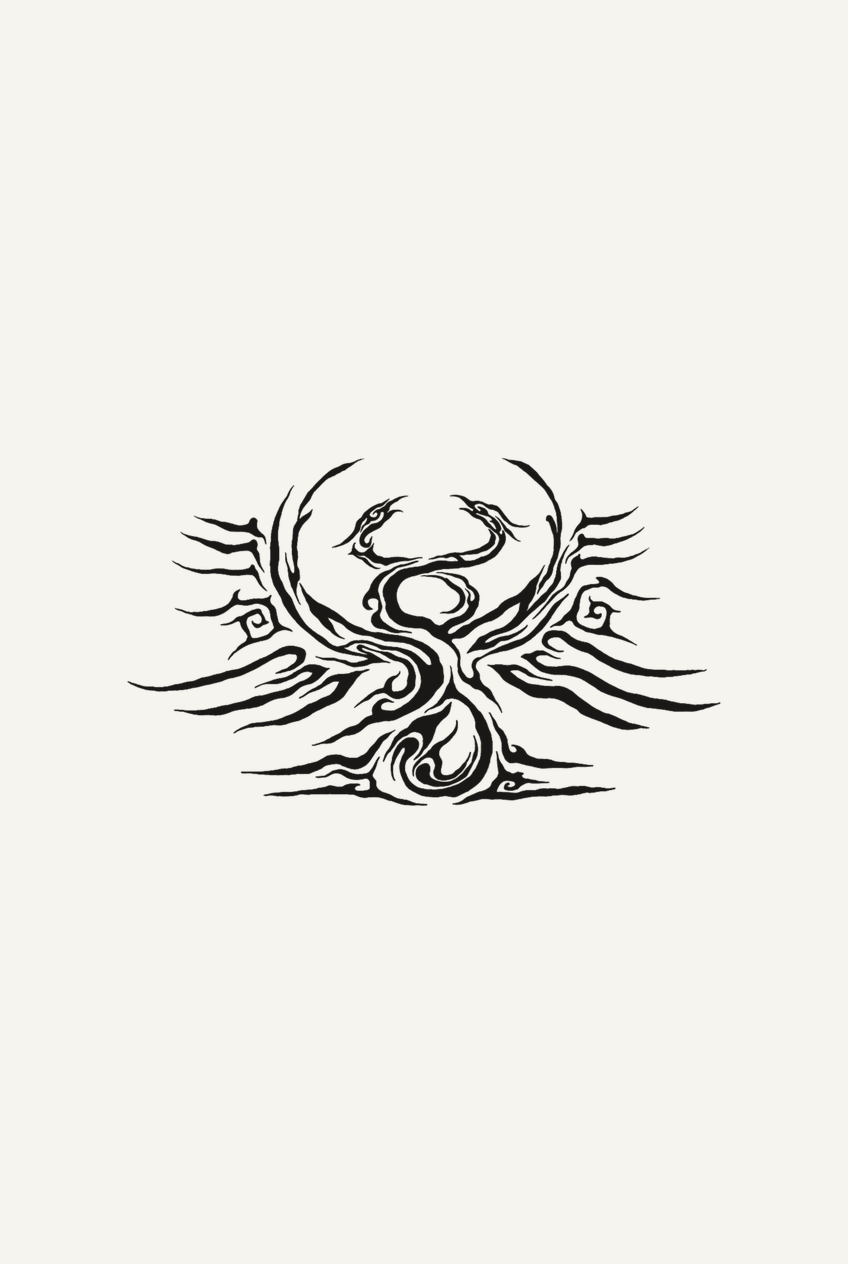
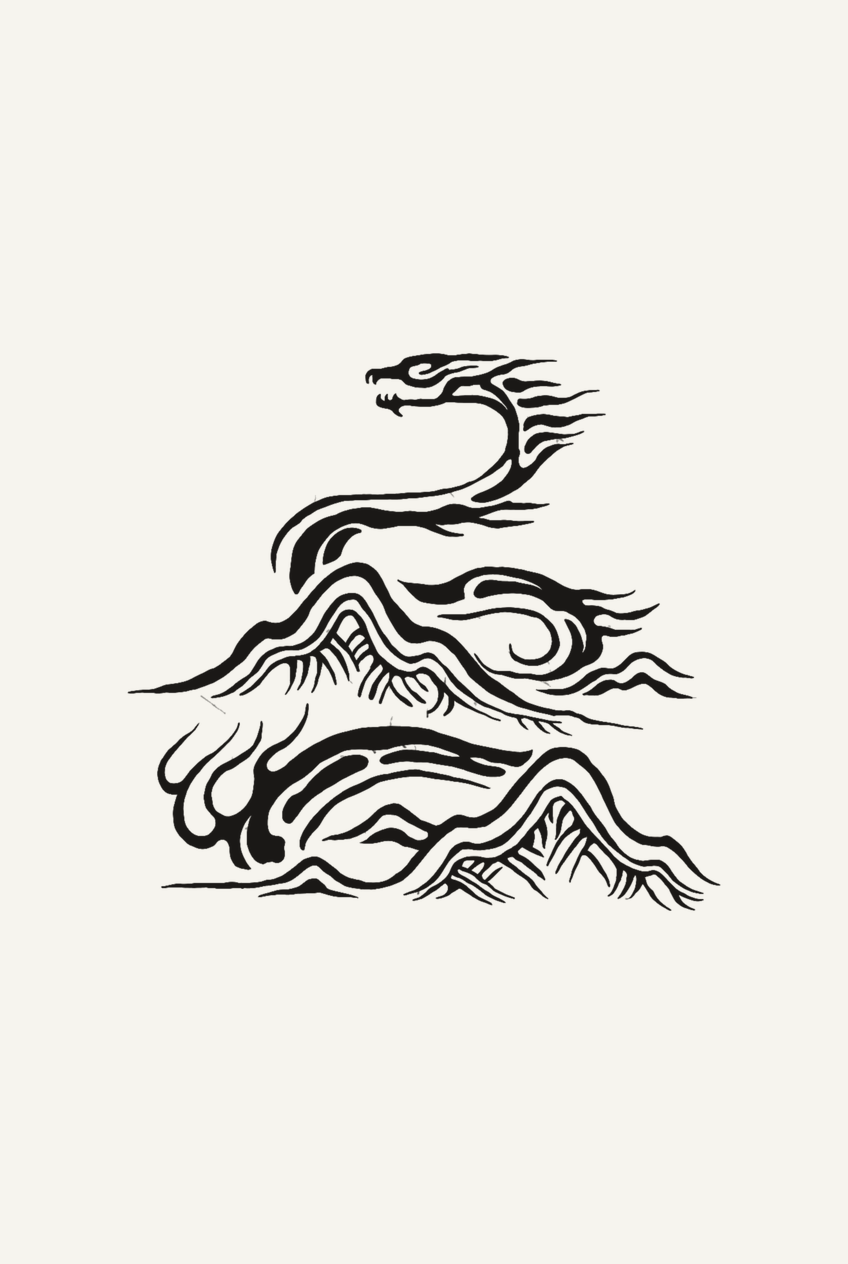
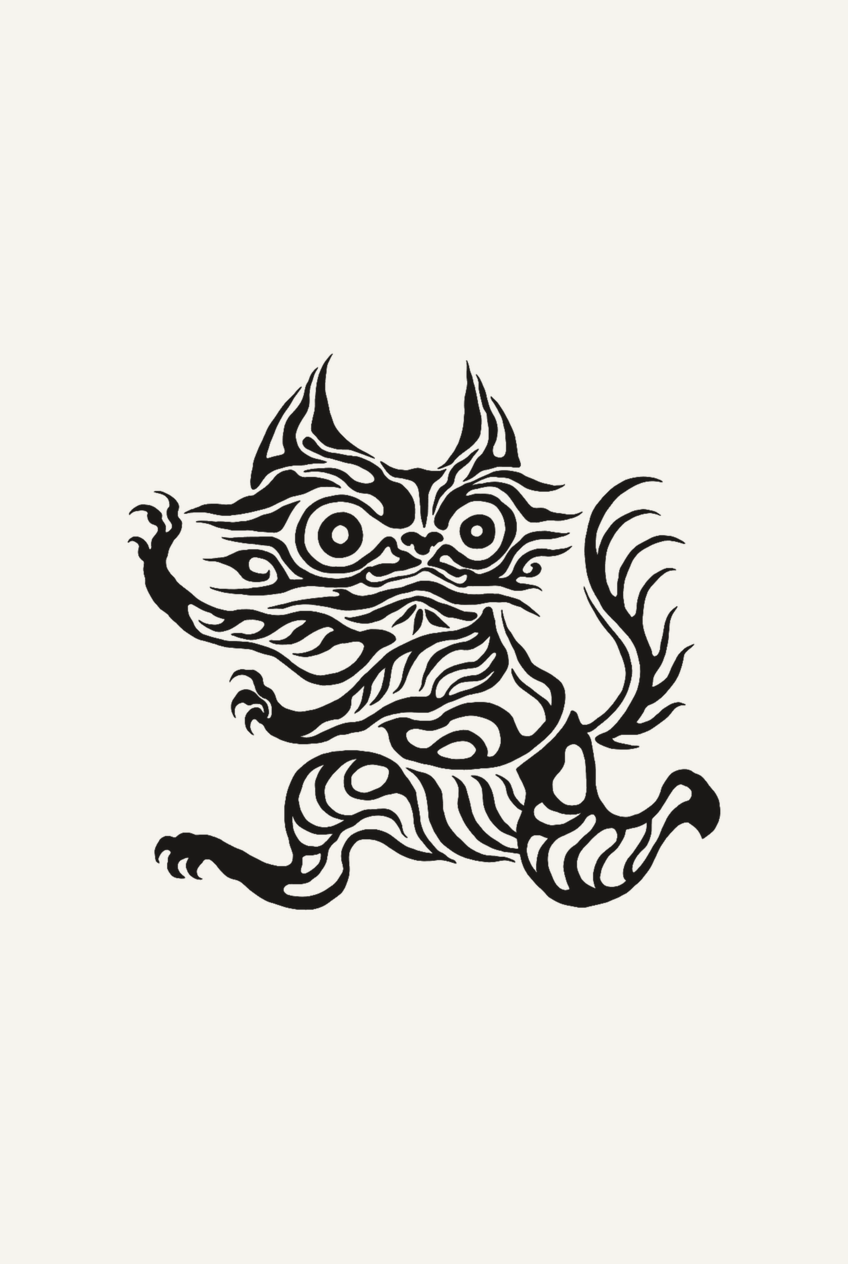
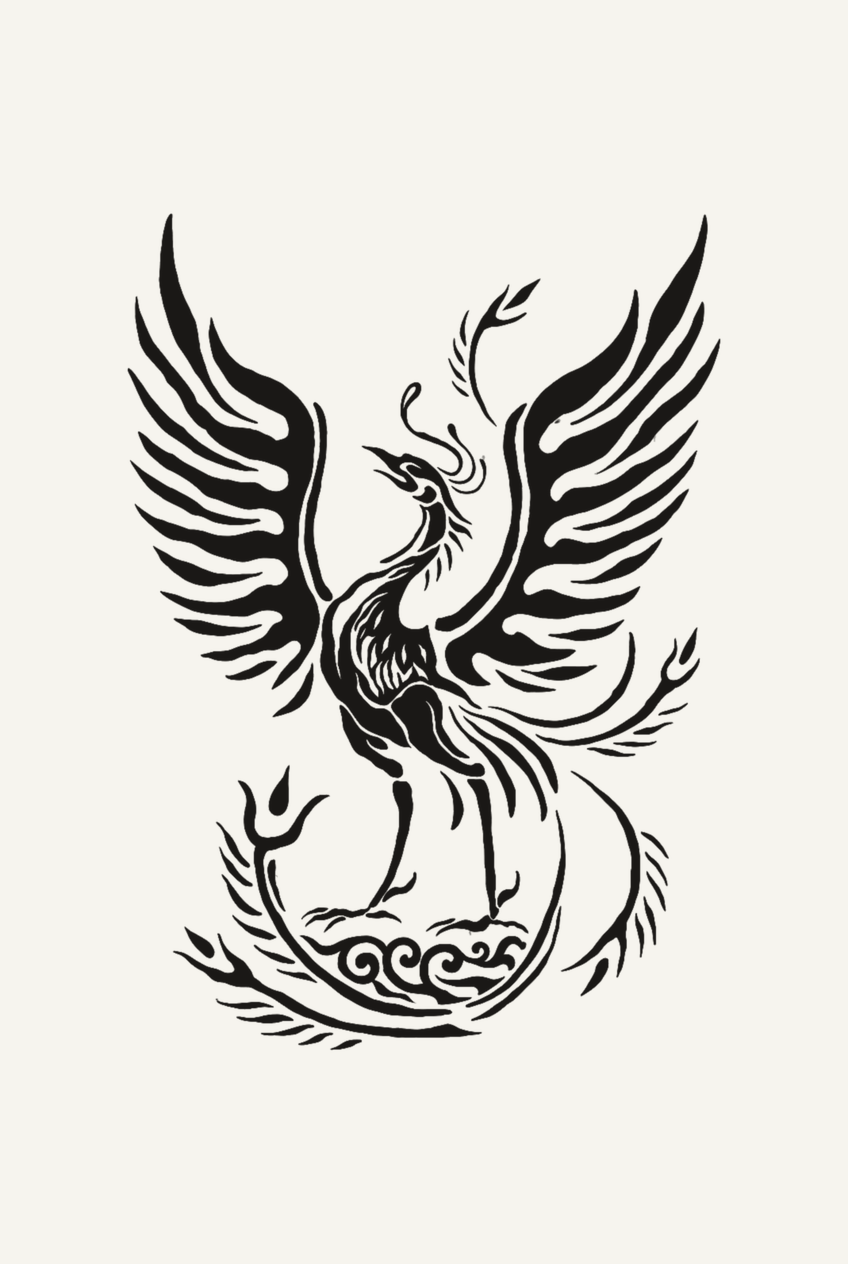
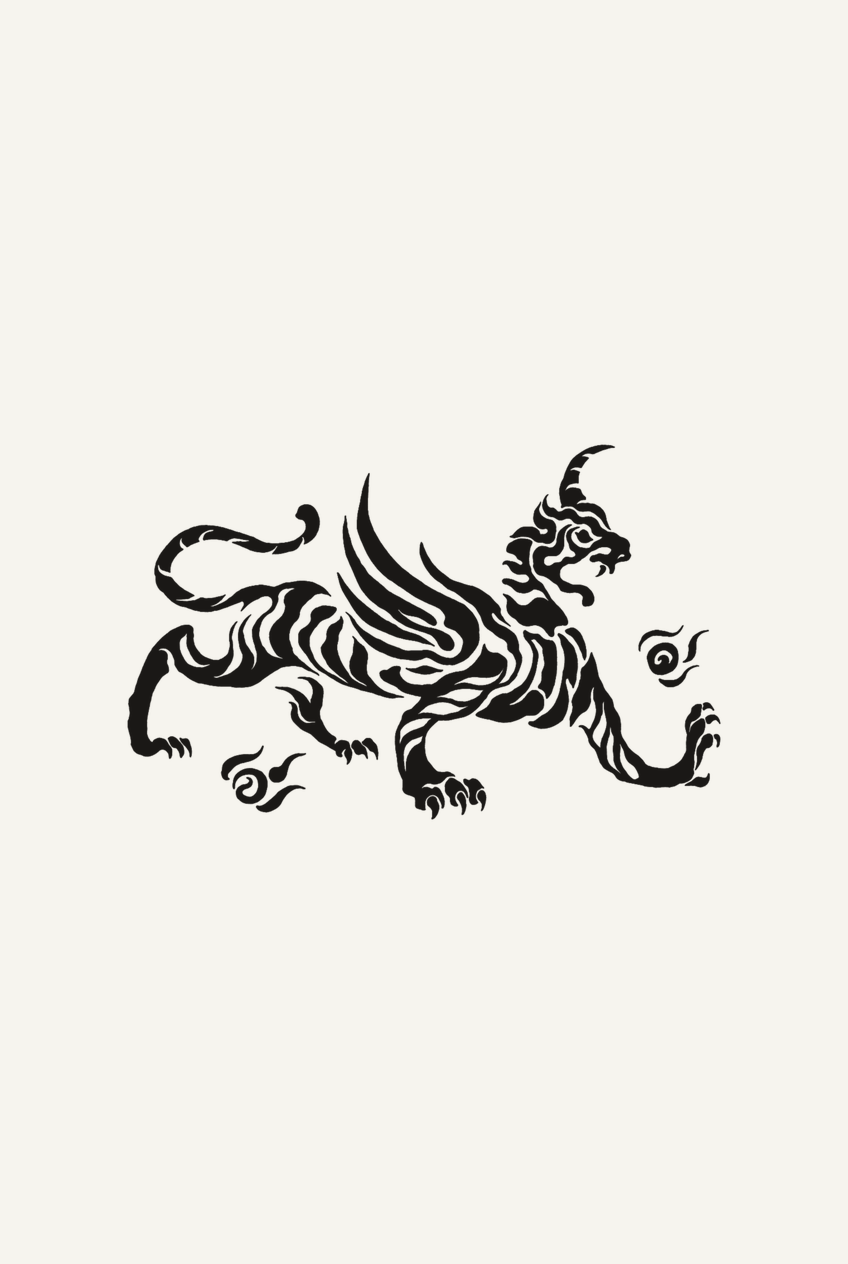
Style: Winged tiger with a single horn, both wings spread from the shoulders, bold striped bands through the body, tail swept high, prowling low with two whorl-flames beside it · black-grey · landscape composition · scalable 16–20 cm
Form: 图案
The Name
*qióng qí* — one of the Four Perils, and the only one with two jobs. In one record it punishes the good: it hears an honest man and eats him, hears loyalty and bites off his nose, hears wickedness and sends gifts. In another record the same beast is drafted into the state's own ceremony — the great exorcism where twelve beast-gods eat the plagues, and Qiongqi is the one assigned to devour the gu-poisons. The classic's coldest lesson in statecraft: the monster you cannot kill, you hire.
穷奇(qióng qí)——四凶之一,也是唯一有第二份工作的那个。一份记载里它专罚好人:听见谁正直就吃掉谁,听见谁忠信就咬掉他的鼻子,听见谁作恶反倒送猎物上门。另一份记载里,同一头兽被征进了国家的仪式——大傩十二神兽吞食瘟疫,分派给穷奇的差事正是吃蛊。整部经典里最冷的一课权术:杀不掉的怪物,就雇它。
Source & Provenance
The *Shanhaijing*, *Hai Nei Bei Jing* chapter (compiled c. 4th–2nd century BC): 「穷奇状如虎,有翼,食人从首始,所食被发。」 — shaped like a tiger with wings, eating its victims head-first. The *Xi Ci Si Jing* gives a second body: ox-shaped with hedgehog quills, howling like a dog. The *Shenyi Jing* (c. 4th century AD) supplies the moral inversion: 「闻人斗,辄食直者;闻人忠信,辄食其鼻;闻人恶逆不善,辄杀兽往馈之」 — it eats the party in the right, and rewards the wicked. Yet the *Hou Han Shu*'s record of the great Nuo rite lists twelve plague-eating gods, 「穷奇、腾根共食蛊」 — Qiongqi among them, eating poison. Guo Pu's inscription (4th century AD) keeps both faces: 「穷奇之兽,厥形甚丑,驰逐妖邪,莫不奔走」 — at its approach, no demon stands its ground. Inking note: the single horn follows the classical picture tradition; the written record mentions none.
《山海经·海内北经》(约成书于前 4—前 2 世纪):「穷奇状如虎,有翼,食人从首始,所食被发。」形如虎而生翼,食人从头开始。《西次四经》给了第二副身体:牛形猬毛,音如嗥狗。《神异经》(约公元 4 世纪)补上道德的倒错:「闻人斗,辄食直者;闻人忠信,辄食其鼻;闻人恶逆不善,辄杀兽往馈之」——吃掉占理的一方,反而犒赏作恶的。然而《后汉书》所记大傩仪典里,十二神兽吞食瘟疫,「穷奇、腾根共食蛊」——穷奇名列其中,负责吃毒。郭璞铭文(公元 4 世纪)保留了两副面孔:「穷奇之兽,厥形甚丑,驰逐妖邪,莫不奔走」——它所到之处,妖邪没有敢站住的。墨线转写:独角采图谱传统,文字记载未记角。
Design Inspiration
Every form decision on this design points to a recorded source, element by element. ① The tiger body, prowling low — 状如虎, the recorded frame drawn at hunt-height: shoulders rolled, head level, the gait of something that never needs to rush. ② The wings spread from both shoulders — 有翼, the recorded flight drawn wide open rather than folded: speed held in reserve, the reason it arrives where it is not invited. ③ The bold striped bands — the tiger's recorded hide rendered as hard calligraphic ribbons, the strongest texture in the composition, running the full length of the body. ④ The single horn and the two whorl-flames — the horn from the picture tradition (the record is silent), and the paired spirals reading as wind kicked up by a thing that, in one lifetime of stories, worked both sides: pest and pest-control.
本版每一处形制决定都有出处可查,逐条对账。① 低伏潜行的虎身——「状如虎」,记载的躯干画在猎杀高度:肩胛内收,头部水平,一种从不需要着急的步态。② 双肩张开的翼——「有翼」,记载的飞行画成全开而不是收拢:蓄而不发的速度,是它总能出现在不请自来之处的原因。③ 粗放的虎纹条带——记载的皮毛画成硬朗的书法条带,全图最强的纹理,贯体而行。④ 独角与两处涡焰——独角采图谱传统(经文未记角),那对螺旋读作被踢起的风——一头在记载里两头上过班的兽:灾祸,与治灾祸的。
The Story
Sit with the strangest fact in the file: the same name appears on the demon's ledger and on the exorcist's payroll. The *Shenyi Jing*'s Qiongqi is the patron saint of every rigged system — it hears two men argue and eats the one who is right; it smells honesty and goes for the nose, the organ of the face you cannot hide. This is not random predation. It is policy. A beast that enforces the world's unfairness, faithfully, is the nightmare image of injustice itself — the ancients gave the principle a body and wings.
And then the second record, and the reversal nobody explains: the *Hou Han Shu*'s great New Year exorcism marches twelve beast-gods through the palace to eat the plagues, and there it is — Qiongqi, on the list, assigned poison duty. Guo Pu's inscription says demons flee at its approach. Nothing in the text says it changed. The ancients simply did the arithmetic every hard householder eventually does: the thing that punishes the good and rewards the wicked is exactly the thing you want standing between your family and a plague, because it has no principles to conflict with. You do not reform a monster. You give it a contract and point it at worse.
So what does it mean to wear it? This is a design for people who have seen which side the world's rewards actually land on — and stopped pretending the referee is neutral. Wearing Qiongqi is not praising injustice; it is keeping its portrait where you can see it, and keeping its methods on your side of the door: 以凶镇凶 — set a ferocity against the ferocity coming for you. 恶名在外,门内得安。
把卷宗里最怪的事实摆平了看:同一个名字,出现在妖魔的账本上,也出现在驱邪人的名册上。《神异经》的穷奇是所有不公体制的主保圣徒——它听见两人争执,吃掉占理的那个;它嗅到忠信,就下口咬鼻子,那张你藏不住的脸上的器官。这不是随机的捕食。这是政策。一头忠实地执行世界之不公的兽,就是「不义」本身的噩梦具象——古人给了这个原理一具身体和一对翅膀。
然后是第二份记载,没人解释的翻转:《后汉书》的岁末大傩,十二神兽列队入宫吞食瘟疫,名单上赫然是它——穷奇,领的正是吃蛊的差。郭璞的铭文说妖邪见之奔逃。经文没有说它变好了。古人只是算清了每个硬骨头人家迟早要算的那笔账:赏恶罚善的东西,恰恰是你想让它站在家人与瘟疫之间的东西——因为它没有会碍事的原则。你改造不了怪物。你给它签合同,把它指向更坏的。
所以纹它,纹的是什么?这是给「看清了世界的赏赐实际落在哪一边」的人的设计——并且不再假装裁判中立。纹穷奇不是赞美不公;是把它的肖像挂在你看得见的地方,把它的方法留在你门的这一侧:以凶镇凶——用一场凶,镇住奔你而来的那场凶。恶名在外,门内得安。
What It Means
The two-faced beast, kept honest by being kept visible: the eater of the righteous, and the same jaws hired to eat plagues. Not a charm for luck — a working arrangement with the world's worst employee, now on your payroll.
两副面孔的兽,靠「始终可见」而始终被盯防:吃掉正直者的那副颌,也正是被雇来吞瘟疫的同一副。不是求福的护符——是与世上最坏的雇员达成的一纸工作协议,如今它领你的薪水。
Where It Sits
Built long and low: 16–20 cm across the outer thigh or along the forearm, the prowl following the limb; a 15 cm variant sits on the shoulder, wings breaking over the cap. The spread wings are the design's span — keep both tips clear of joints so neither gets cropped.
天生的长幅低伏构图:16—20 厘米横贯大腿外侧或顺小臂,潜行随肢体走;15 厘米变体收肩头,双翼翻过肩帽。张开的翼是全图的跨度——两个翼尖都避开关节,别让任何一个被裁掉。
Before You Ink
This design belongs to ink only. The striped bands need hard, even edges — black keeps the prowl predatory; greyscale makes it soggy. Minimum size 12 cm: below that the wing feathers weld and the horn reads as a scratch. Keep it off the elbow back and the knee — flexion cracks the stripes first, and the stripes are the tiger.
此图只宜墨线。虎纹条带要硬而匀的边——黑让潜行保持捕食性,灰阶会把它泡软。最小尺寸 12 厘米:再小,翼羽焊死,独角读成一道划痕。避开肘背与膝——屈曲区最先皲裂的是条带,而条带就是这只虎。
Every character on this card was selected and checked stroke by stroke by a native reader of Chinese.