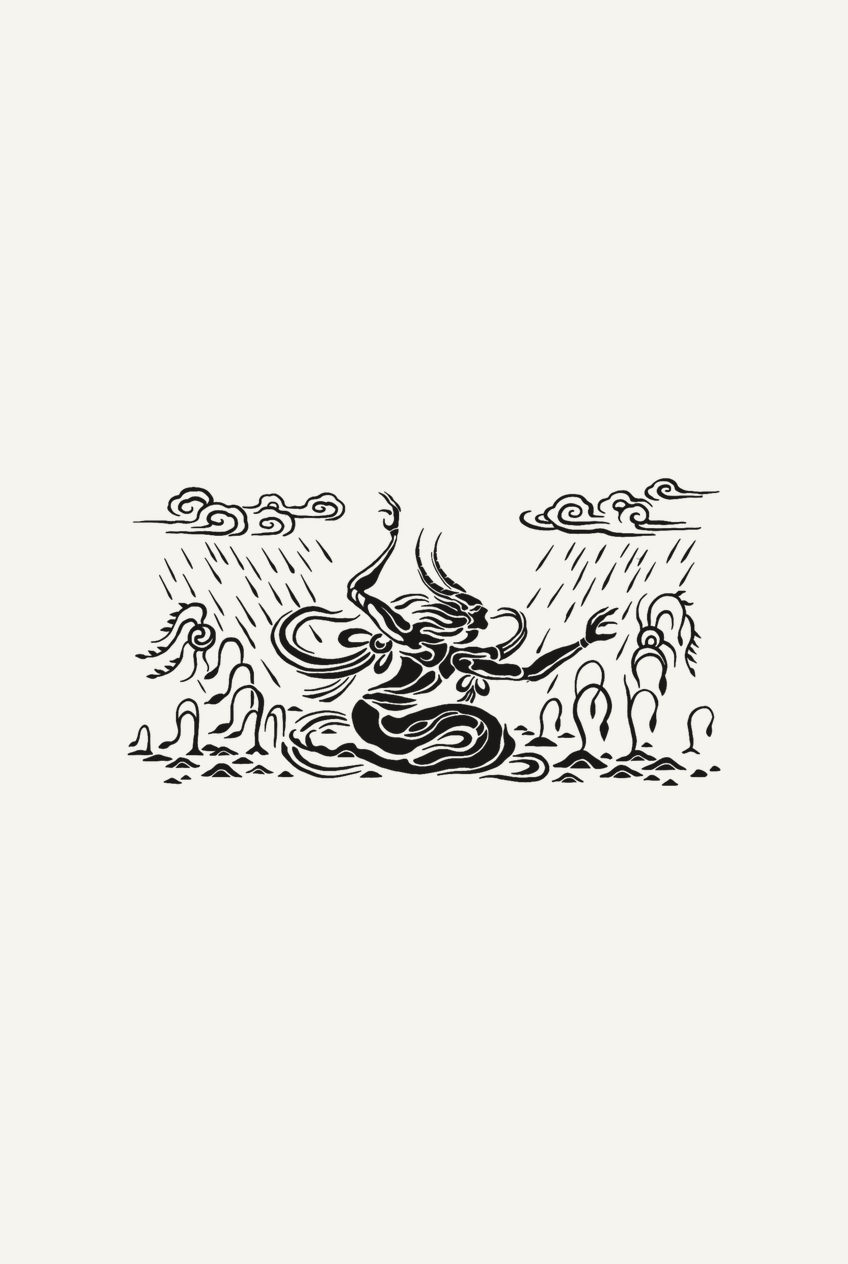
人身羊角神 · Rén Shēn Yáng Jiǎo
The Storm Shepherds
Series: Mythical Beasts & Sacred Animals · Design #24
Style: Horned human deity dancing amid slanting rain strokes, arms raised, cloud scrolls above, plume plants rising at both sides, hill mounds below · black-grey · landscape composition · scalable 14–18 cm
Form: 图案
The Name
*rén shēn yáng jiǎo shén* — the nine gods of the eastern coast: human bodies, goat horns, and a job description that made farmers worship and dread them in the same breath. The classic records nine mountains' worth of them, six thousand nine hundred li of coastline, and one clause of consequence: 是神也,见则风雨水为败 — when they show, wind, rain and flood ruin the crops. The storm is their procession; this design draws them mid-procession, dancing the weather down.
人身羊角神(rén shēn yáng jiǎo shén)——东海之滨的九位山神:人的身体,羊的角,以及一份让农人又拜又怕的职务。经典记了整整九座山、六千九百里海岸线,和一句后果:「是神也,见则风雨水为败」——他们一现身,风雨大水毁坏庄稼。风暴是他们的巡行;本设计画的正是巡行之中——他们在把天气舞下来。
Source & Provenance
The *Shanhaijing*, *Dong Ci San Jing* chapter (compiled c. 4th–2nd century BC), closing summary: 「凡东次三经之首,自尸胡之山至于无皋之山,凡九山,六千九百里。其神状皆人身而羊角。其祠:用一牡羊,米用黍。是神也,见则风雨水为败。」 — nine mountains, all their gods human-bodied and goat-horned; the rite for each, one ram and millet; and their arrival reads in the weather. Inking note: this design adapts the collective storm-god figure and re-inks it as tattoo linework.
《山海经·东次三经》(约成书于前 4—前 2 世纪)卷末总述:「凡东次三经之首,自尸胡之山至于无皋之山,凡九山,六千九百里。其神状皆人身而羊角。其祠:用一牡羊,米用黍。是神也,见则风雨水为败。」九山之神皆人身羊角;祭法一律:牡羊一只、黍米为供;而他们的行踪写在天气里。墨线转写:本设计以这幅风暴之神的集体肖像,转写为纹身墨线。
Design Inspiration
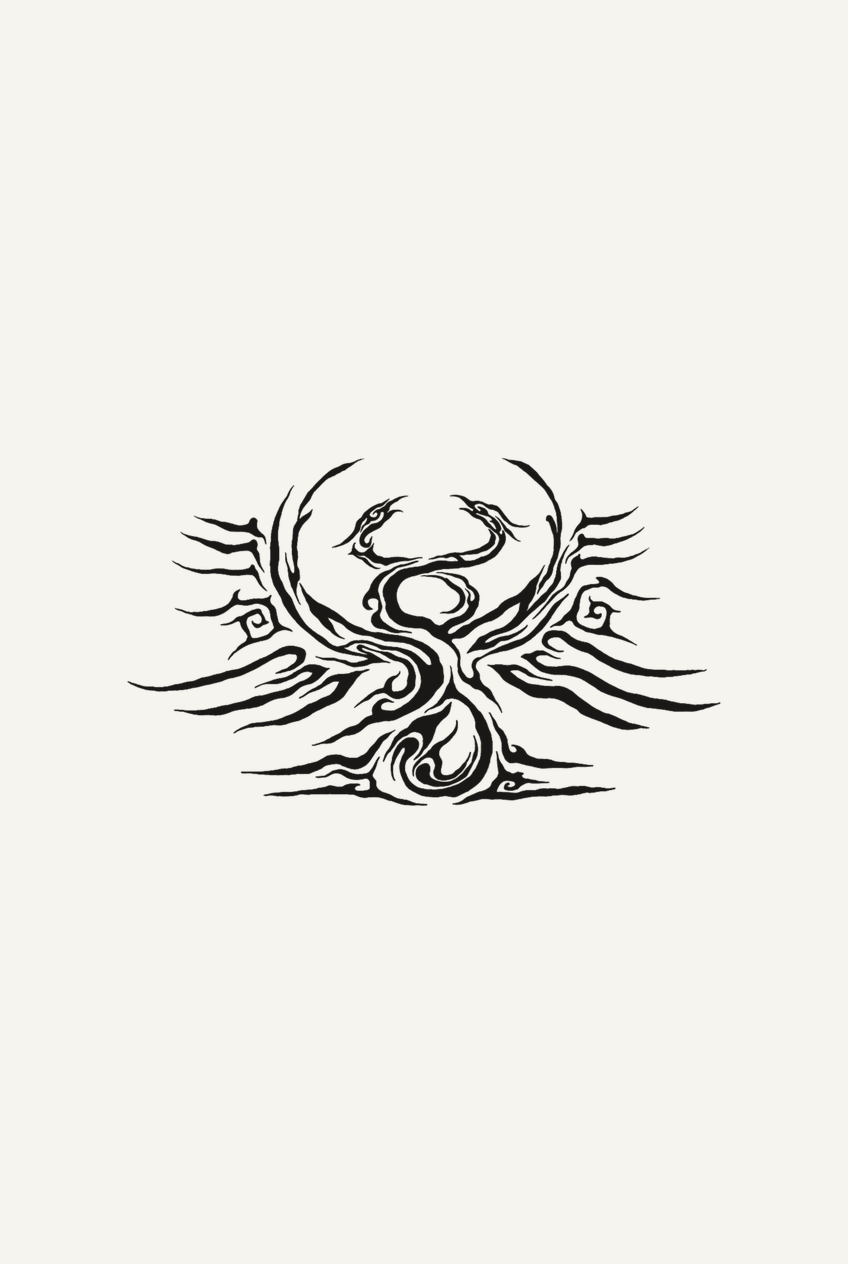
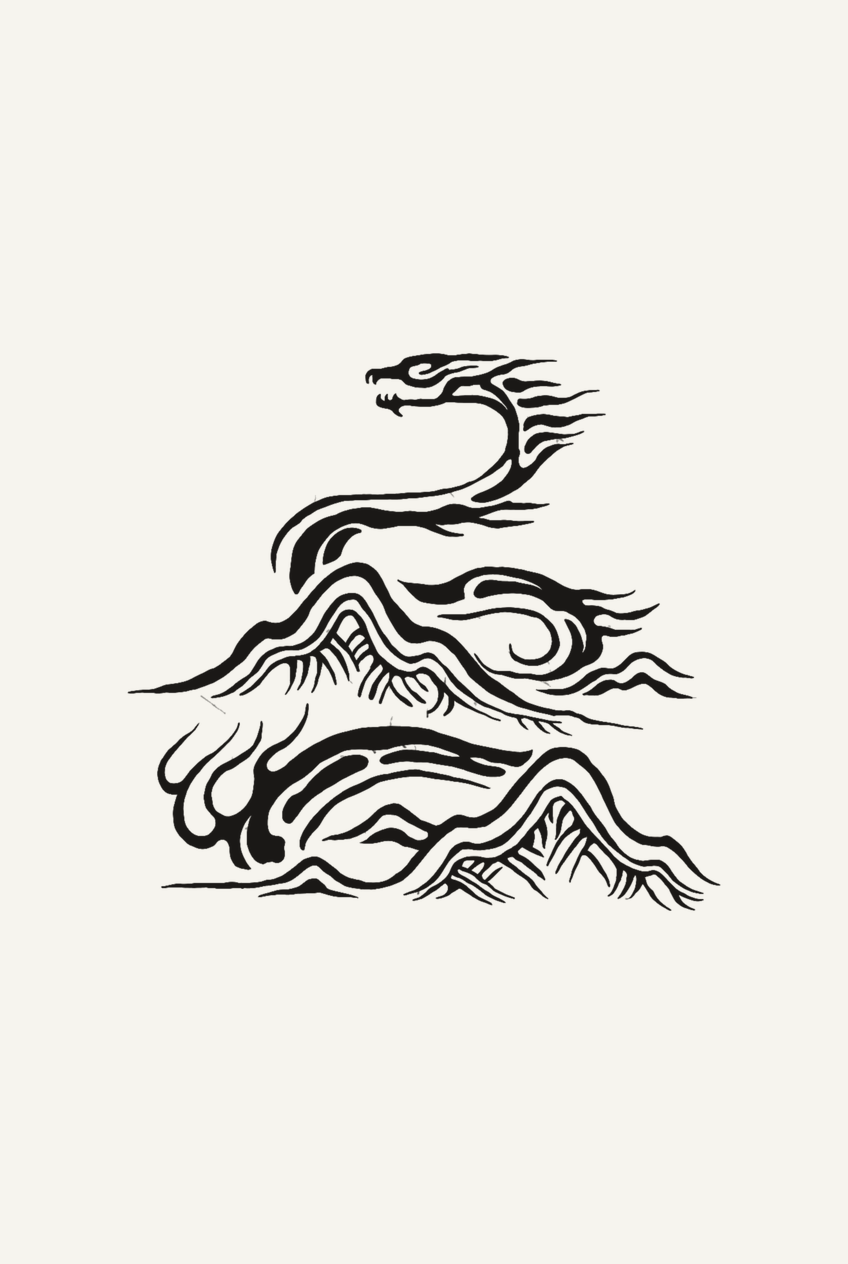
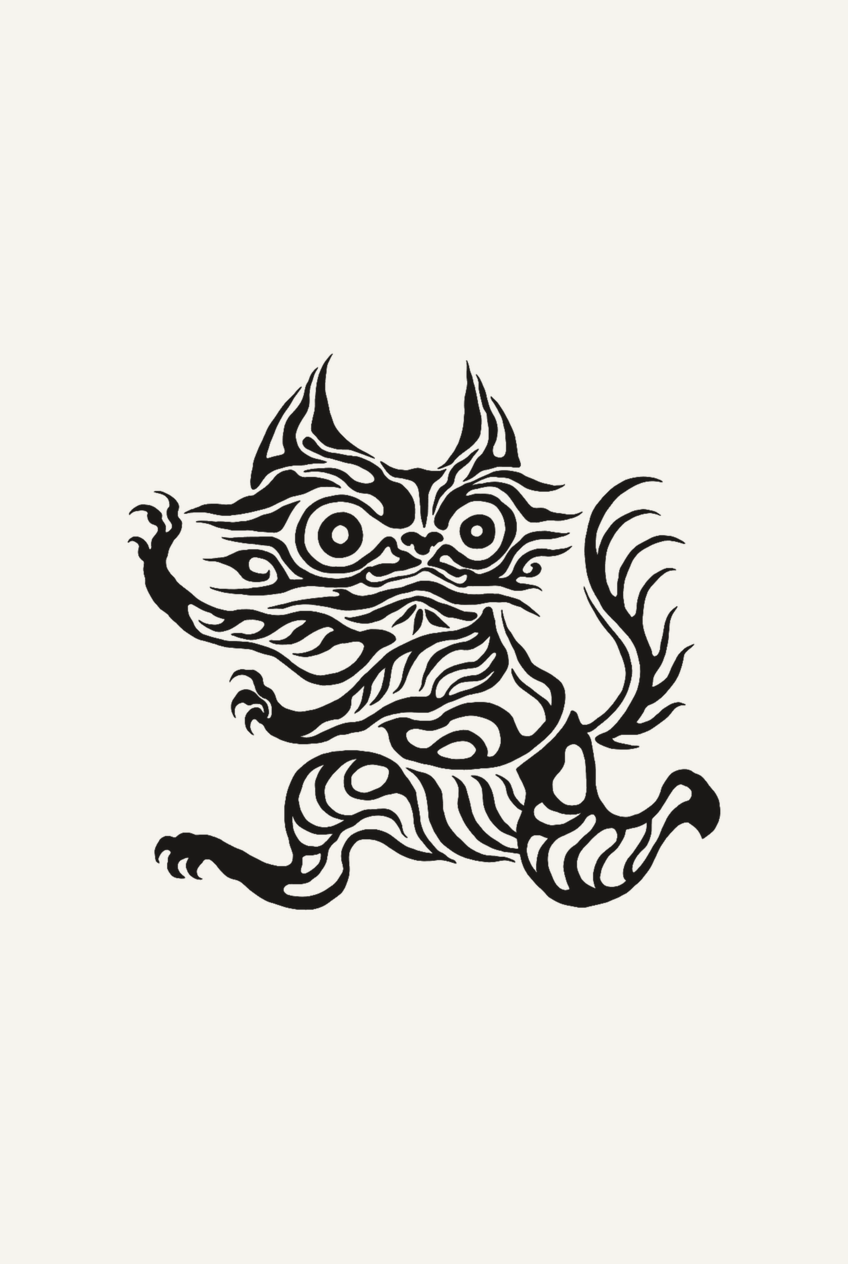
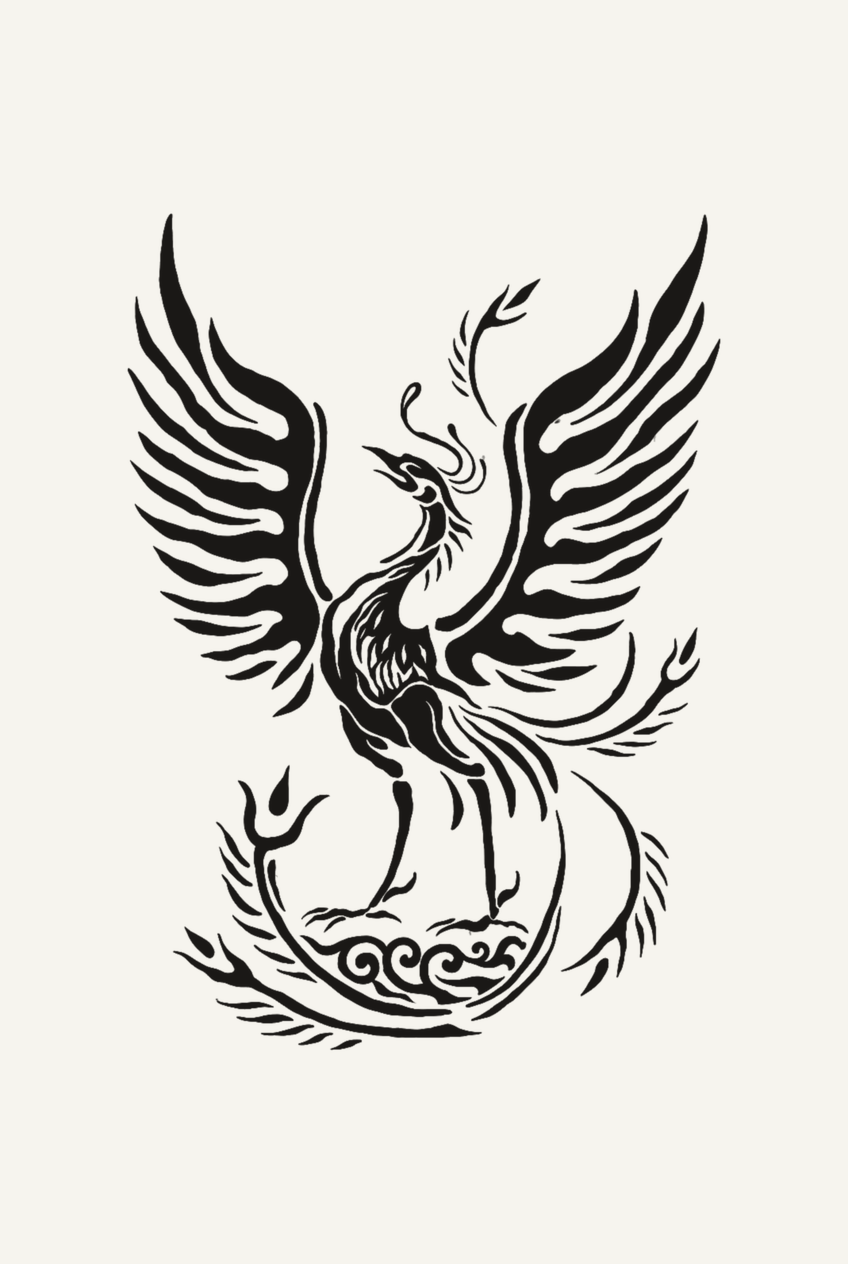
Every form decision on this design points to a recorded source, element by element. ① The horned human figure in a dancing crouch — 其神状皆人身而羊角, the recorded form caught mid-motion: gods whose arrival is weather would not stand still. ② The slanting rain strokes — 见则风雨水为败, the recorded consequence drawn as the design's very texture: rain lines cutting diagonally through the whole frame. ③ The cloud scrolls above and hill mounds below — the storm's architecture: sky folded into spirals, earth folded into mounds, the god dancing in the layer between. ④ The plume plants rising at both sides — the crops the storm both threatens and feeds, drawn as flame-shaped growths leaning in from the edges.
本版每一处形制决定都有出处可查,逐条对账。① 曲身而舞的羊角人身——「其神状皆人身而羊角」,记载的形制抓在动态中:现身即天气的神,不会站着不动。② 斜切的雨丝——「见则风雨水为败」,记载的后果画成全图的肌理:雨线斜切过整个画框。③ 上角的云卷与底部的丘峦——风暴的建筑学:天折成螺旋,地折成圆丘,神在两层之间起舞。④ 两侧升起的火苗草木——风暴既威胁又喂养的庄稼,画成从两边探进来的焰形生长。
The Story
Here is a strange thing about these gods: the classic tells you how to sacrifice to them — one ram, millet — before it tells you anything else. The rite precedes the record; worship of the goat-horned ones was already old when the text was compiled. Because the eastern coast needed them. Wind, rain, flood: the same sea air that killed the crops also fed them, and the nine gods were the personification of that single ambiguous fact. The farmers did not pray for the storm to stay away. They prayed for it to arrive on time.
That is why the design dances. Nothing in the entry suggests malice — 见则风雨水为败 is weather, not war. The gods are drawn here mid-step, arms raised, working the sky the way a shepherd works a flock: the storm is theirs to bring and theirs to time. Calamity and irrigation were, for the coastal villages, the same event wearing two names.
So what does it mean to wear it? This is a design about the powers you cannot negotiate with — only honor, time yourself to, and occasionally dance with. It belongs on the person who has made peace with the fact that the same force in their life is both the flood and the harvest: a talent, a temper, a tide. The goat horns say it was never tame. The raised arms say it was never malicious either. 风雨为败,风雨为生。
这些神有一处奇怪:经典先告诉你怎么祭他们——牡羊一只、黍米一捧——然后才说别的。仪式先于记载;羊角神的崇拜在成书时就已古老。因为东海之滨需要他们。风、雨、大水:同一口海上来的气,既毁庄稼也养庄稼,而那九位神就是这件暧昧事实的人格化。农人祈祷的从来不是风暴别来。他们祈祷的是它准时来。
所以这张图在舞。记载里没有一个字暗示恶意——「见则风雨水为败」是天气,不是战争。图中的神正在途中:扬臂、迈步,像牧人调度羊群那样调度天空——风暴由他们带来,也由他们掐着钟点。灾殃与灌溉,对海岸的村落来说,是同一件事的两个名字。
所以纹它,纹的是什么?这是一张关于「无法谈判之力」的图——只能敬,只能掐着自己的钟点去对,偶尔还得跟它共舞。它属于那种已经与自己生命里「同一股力既是洪水又是收成」达成和解的人:一种天赋,一副脾气,一场潮汐。羊角说它从不温顺;扬起的双臂说它也从不怀恶意。风雨为败,风雨为生。
What It Means
The honor paid to uncontrollable weather — outer or inner. Not defiance of the storm, not surrender to it: the shepherd's contract, renewed each season, danced rather than signed.
献给无法掌控之天气的敬意——身外的,或身内的。不是对抗风暴,不是向风暴投降:是牧人式的那纸契约,每一季重签一次,以舞代笔。
Where It Sits
Built horizontal and weather-wide: 14–16 cm across the chest or upper back, rain strokes running with the shoulder line; a 10–12 cm variant wraps the forearm. The dancing figure is the design's eye — keep it clear of the joints; the dance must not bend.
天生的横幅天气构图:14—16 厘米横贯胸口或上背,雨丝顺肩线走;10—12 厘米变体绕小臂。起舞的神是全图之眼——避开关节;舞,不能弯。
Before You Ink
This design belongs to ink only. The rain strokes need a razor line to read as weather rather than scratches — black keeps the storm cold; greyscale would make it misty. Minimum size 10 cm: below that the rain lines weld into grey noise. Keep it off the wrist and the neck — high-mobility zones shake the fine rain apart first, and the rain is the whole climate of the piece.
此图只宜墨线。雨丝需要极利的线条才能读作天气而非划痕——黑让风暴冷着;灰阶会把它化成雾。最小尺寸 10 厘米:再小,雨线焊成灰噪。避开手腕与颈部——高活动区最先抖散细雨线,而雨就是这张图的全部气候。
Every character on this card was selected and checked stroke by stroke by a native reader of Chinese.