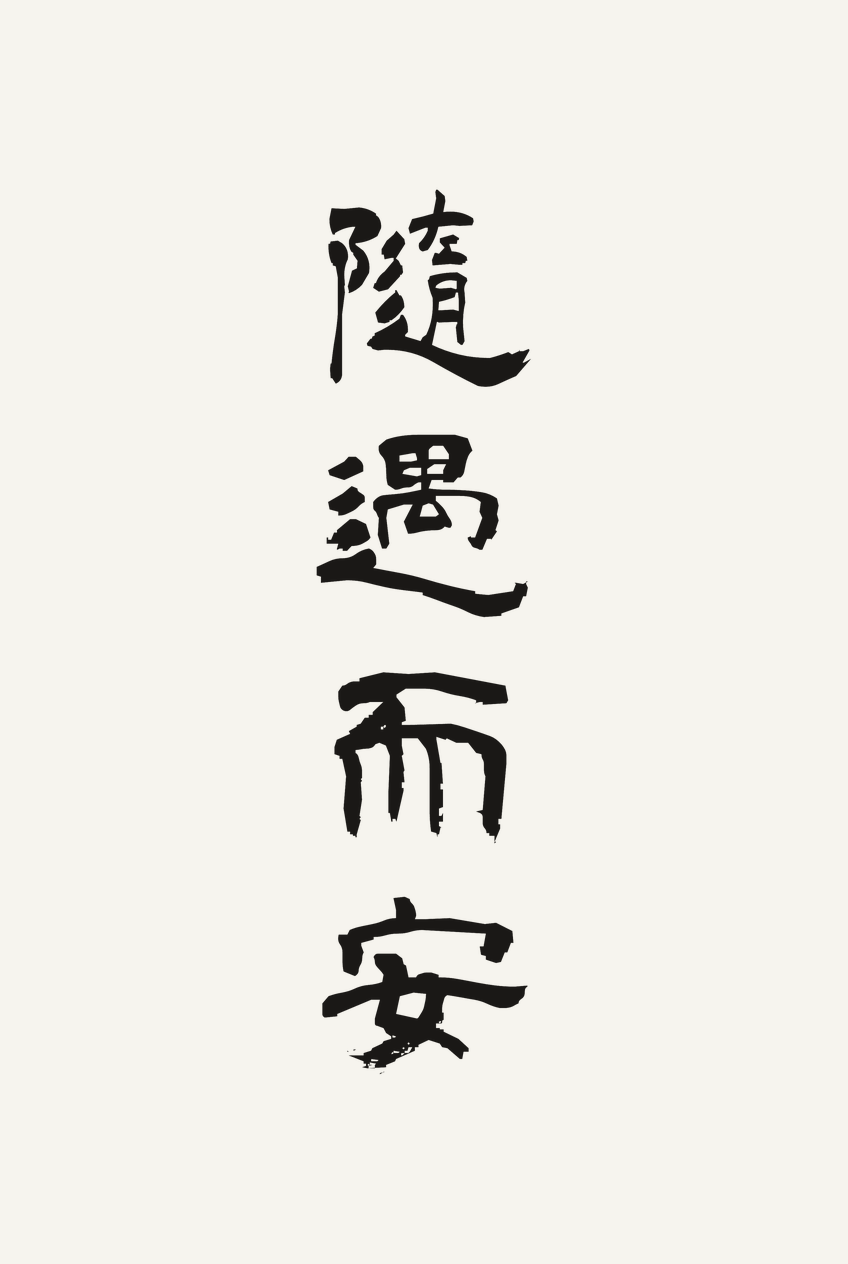
随遇而安 · Suí Yù Ér Ān
At Peace Wherever You Land
Series: Auspicious Idioms · Design #07
Style: four characters, vertical column · clerical script (lishu) · same form 隨遇而安 · medium-to-large
Form: 文字
The Name
*Suí yù ér ān* — meet what you meet, and be well. The grammar is the teaching: 随 (follow) 遇 (what is encountered) 而 (and so) 安 (rest). Peace is not negotiated with circumstances; it is the native state of a mind that stopped demanding exceptions. As a tattoo, it is for people whose address keeps changing — chosen or not.
随遇而安——语法就是教义:随(跟随)遇(所遇)而(于是)安(安顿)。安宁不是与环境谈判谈出来的;它是一颗不再要求例外的心本来就在的状态。纹下这四个字,是给那些住址总在变的人——不管是自己选的,还是被动的。
Source & Provenance
The four-character form settles in Song-dynasty prose and Chan monastic records, but the root is Zhuangzi's: 安時而處順,哀樂不能入也 — "rest in the season and move with the smooth; grief and joy cannot break in" (*Zhuangzi*, Master of Nourishing Life). Su Shi, twice exiled and cheerful in both wastelands, is the phrase's most famous practitioner. Inking note: this design adapts the classic line construction of the traditional motif and re-inks it as tattoo linework.
四字格在宋代文章与禅门语录里定型,根在庄子:「安時而處順,哀樂不能入也」(〈养生主〉)。两度被贬、在两片荒地里都过得兴致勃勃的苏轼,是这句话最有名的践行者。墨线转写:本设计以传统母题的经典线条造型为底,转写为纹身墨线。
Design Inspiration
Every form decision points to a recorded source, element by element. ① Four characters, one vertical column — the phrase lived on travelers' belongings and tea-house walls: it belongs to the portable. ② Clerical script, level and weighted — the strokes do not lean; leaning is what the phrase refuses. ③ Medium-to-large scale — 14 cm column height minimum. ④ Black ink only — nothing in the design asks for better weather.
本设计的每一处形制决定都有出处可查,逐条对账。① 四字竖列——这句话曾活在行旅人的随身物与茶舍墙上:它属于可以带走的东西。② 隶书、横平承重——笔画不倾斜;倾斜正是这句话所拒绝的东西。③ 中到大尺寸——列高 14 厘米起。④ 只用墨——设计里没有任何一笔在要求更好的天气。
The Story
Zhuangzi's butcher-cook does not choose which ox he gets; he works the blade into the joints that are actually there. That is the whole discipline: 隨 is not surrender, it is precision — seeing the actual shape of the day instead of the shape you prefaded. The mind that demands its preferred circumstances spends its strength on the demand; the mind that follows the encounter has all its strength for the road.
Su Shi is the proof case. Demoted to Huangzhou, he farmed a muddy slope and renamed himself after it — the Farmhouse Elder of the Eastern Slope. Demoted further to Danzhou — an island, then the end of the map — he taught locals to brew good ink and wrote cheerfully about the tide. Neither exile was softened; both were met. 随遇而安 is not the duckweed's philosophy of having no roots; it is the tree's trick of growing where the seed fell.
庄子那位庖丁并不挑选今天这头牛;他把刀锋送进今天这头牛实际长出来的关节缝里。这就是全部功夫:随不是投降,是精度——看见这一天本来的形状,而不是你预设的形状。要求世界按喜好出牌的心,力气都花在了要求上;跟随所遇的心,力气全在路上。
苏轼是判例。贬到黄州,他种一片泥坡,并以此自号——东坡居士。再贬到儋州——一座岛,当时地图的尽头——他教当地人做好墨,兴致勃勃地写潮水。两次贬谪都没有被软化;两次都被迎面接住。随遇而安不是浮萍那种没有根的哲学;它是树的本事——种子落在哪里,就在哪里生长。
What It Means
For the relocating, the reassigned, the migrant and the expat, the newly single and the suddenly ill — anyone whose life was rerouted. It does not celebrate the rerouting; it refuses to make peace conditional on the route. Rest, here, travels with you.
给搬家的、被调岗的、移民与旅居的、新近单身的、忽然生病的——所有被改道的人。它不歌颂改道;它拒绝把安宁设置成「取决于走哪条路」。安,在这里,是随身携带的。
Where It Sits
The column rides long planes: inner forearm, spine, outer calf. 14 cm column height is the comfortable floor; the ankle, vertical, suits the phrase's traveler's spirit.
竖列走长的平面:小臂内侧、脊柱、小腿外侧。14 厘米列高是舒服下限;踝部竖排正合这句话的行旅气质。
Before You Ink
Top to bottom, no reshuffle. Follow, meet, and so, rest — the sequence is a staircase down into calm. ② Clerical script stays level. Not one leaning stroke: composure that does not require cooperation from the world. ③ Black ink only. ④ Column height 14 cm minimum. ⑤ It is not passivity. The phrase follows circumstances; it does not endorse them. If your situation needs changing, 随遇而安 funds the energy for that too — 安 is the base camp, not the grave.
自上而下,不可倒置。 随、遇、而、安——顺序就是一段向下走进平静的阶梯。② 隶书保持平。 没有一笔倾斜:这份从容不需要世界配合。③ 只用墨。 ④ 列高 14 厘米起。 ⑤ 它不是消极。 这句话跟随处境,不背书处境。如果你的处境需要改变,随遇而安同样为这个改变供给力气——安是大本营,不是坟墓。
Every character on this card was selected and checked stroke by stroke by a native reader of Chinese.