刑天 · Xíng Tiān
The Headless Will Not Yield
Series: Mythical Beasts & Sacred Animals · Design #13
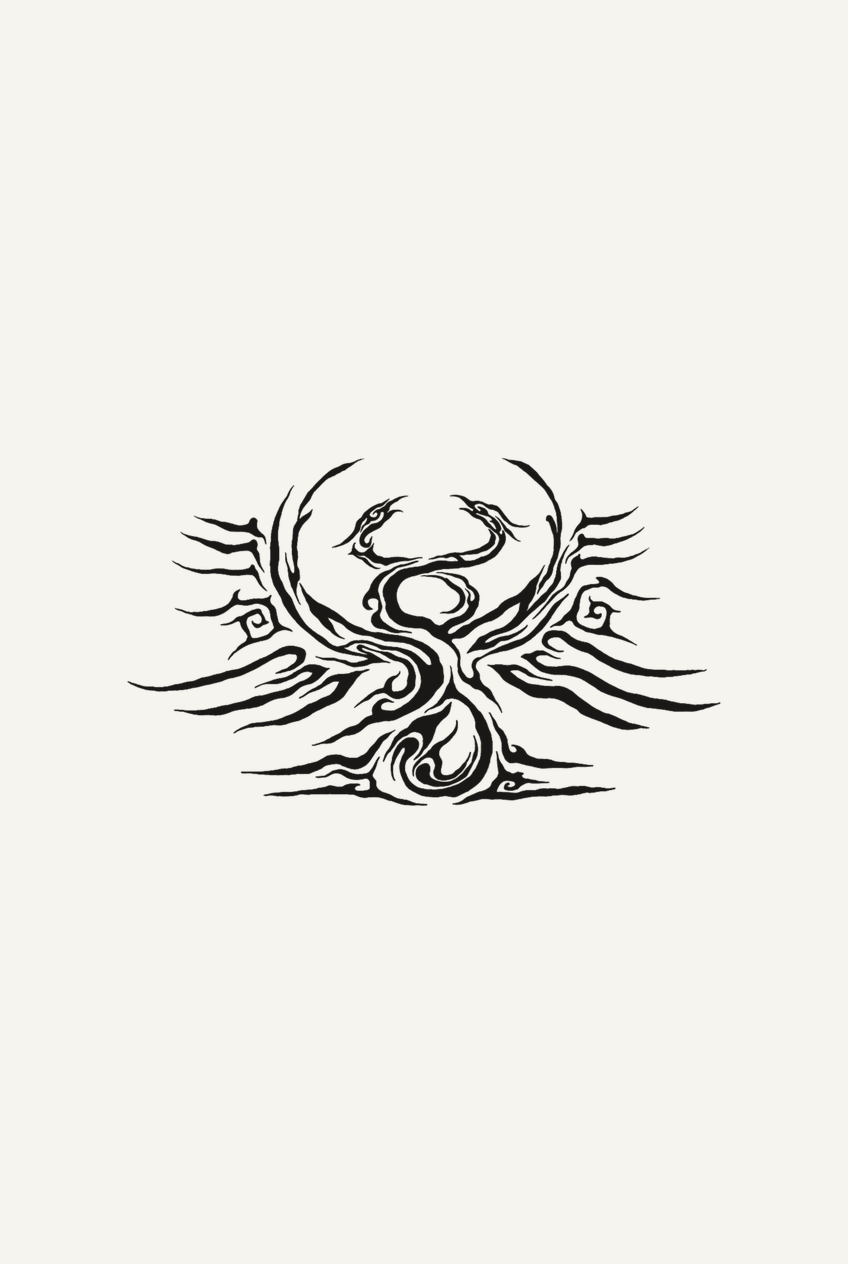
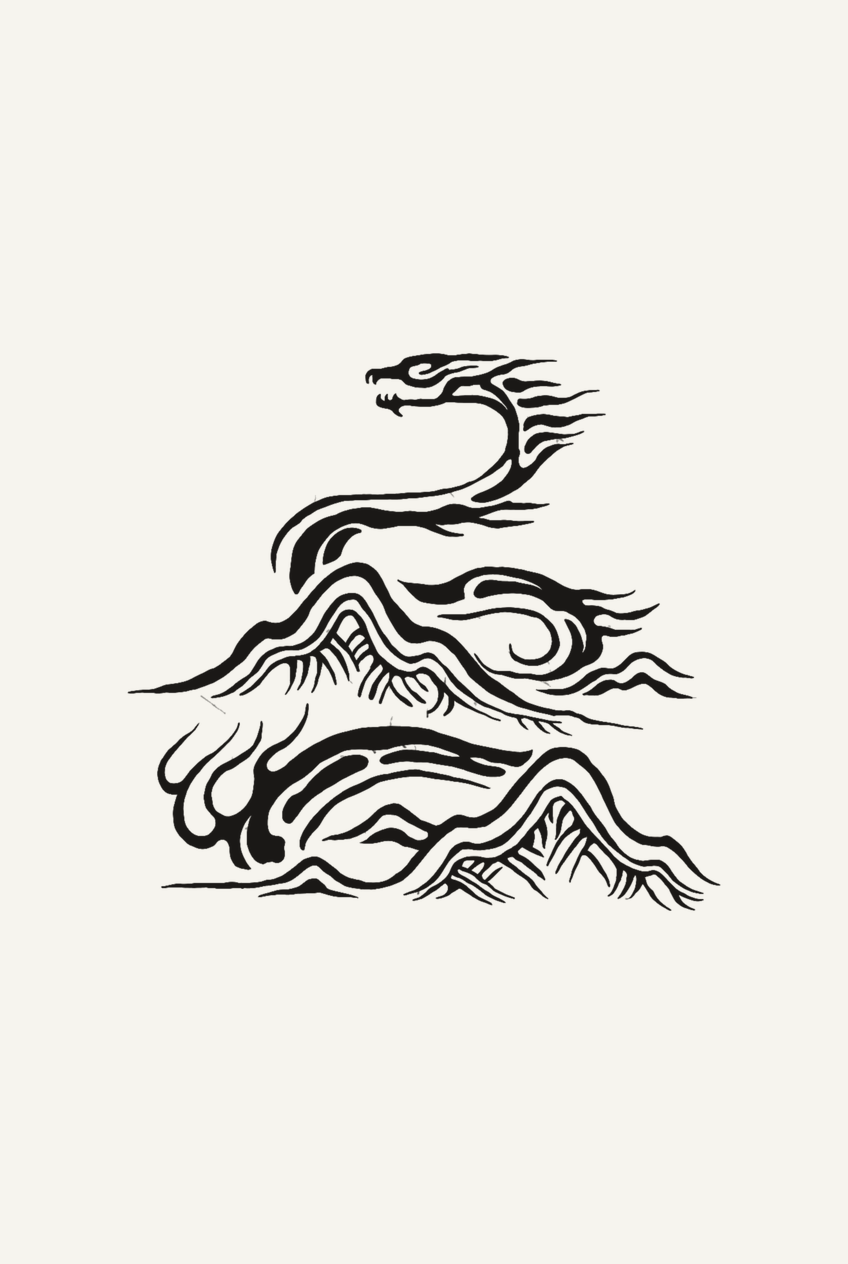
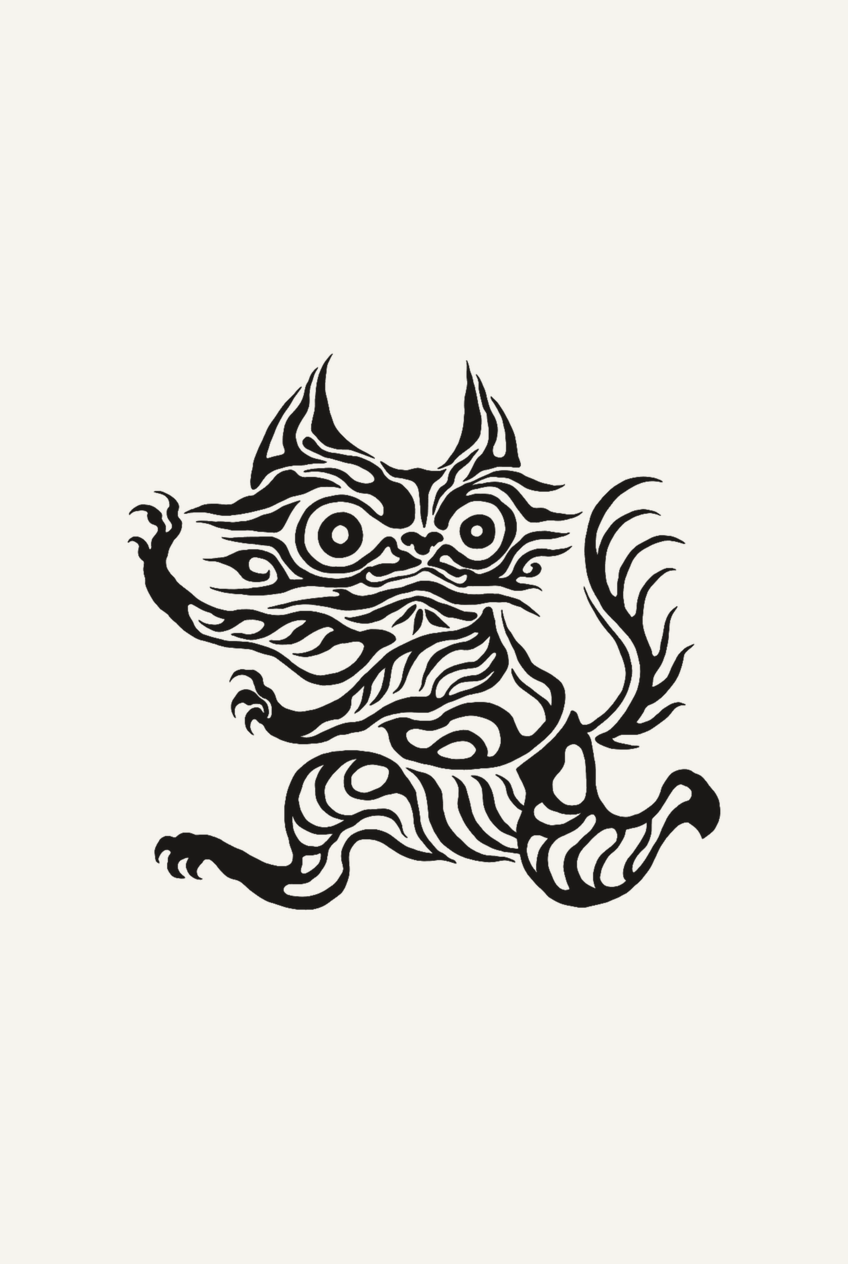
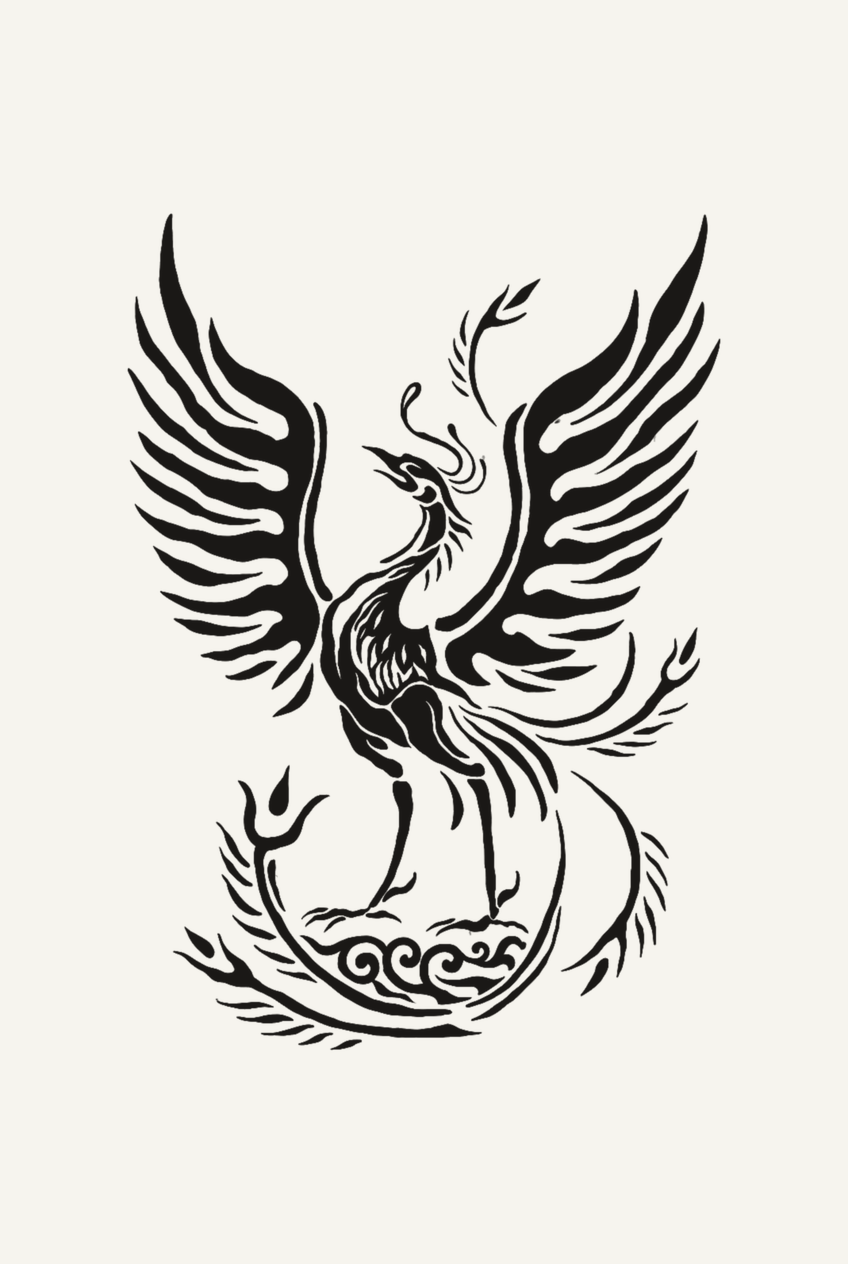
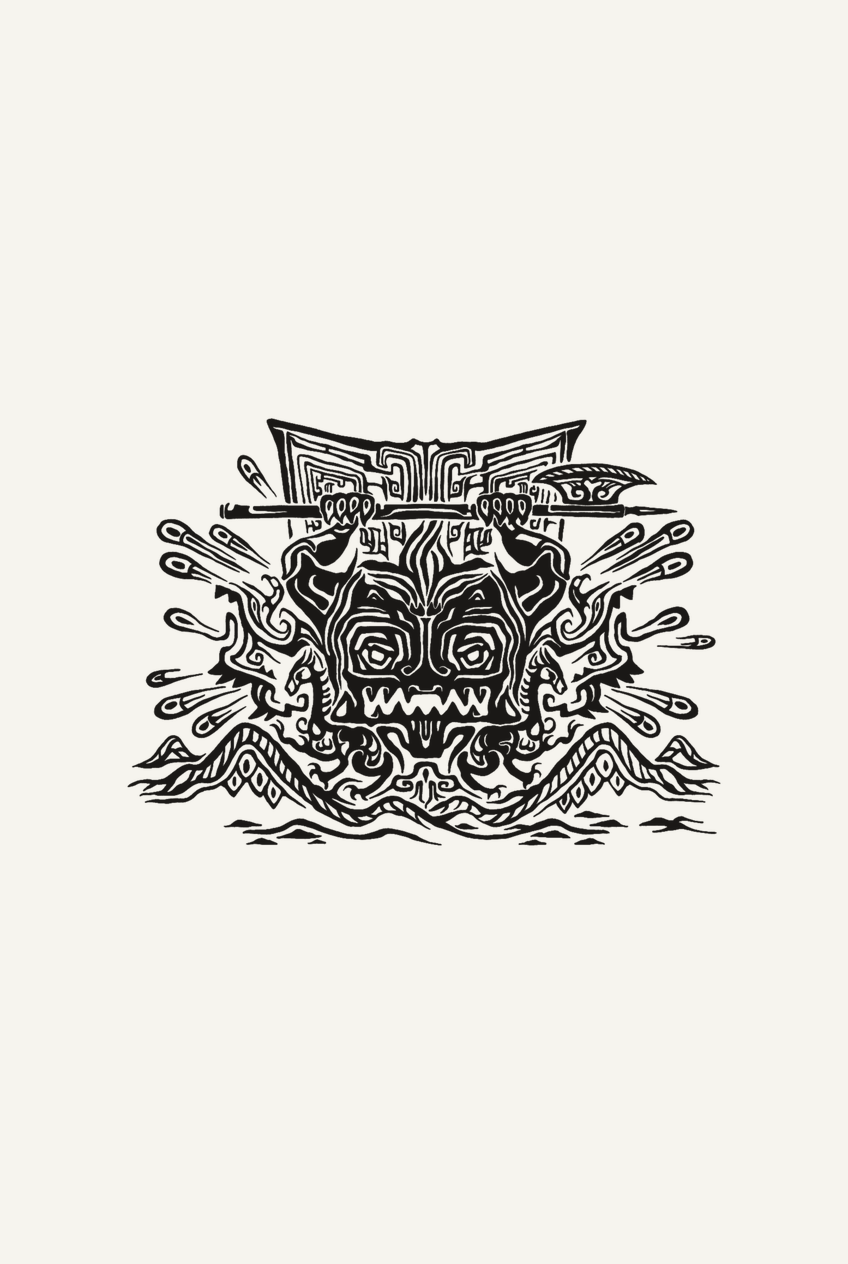
Style: Headless warrior with a face on the torso, both arms raising a horizontal battle-axe, horn-shaped flame plumes, radiating dagger strokes · black-grey · landscape composition · scalable 16–20 cm
Form: 图案
The Name
*xíng tiān* — the name is a sentence, not a word. 刑, to punish, to cut; 天, the head, the sovereign. Punished-by-beheading: the name is the wound. When the Supreme Divinity severed his head and buried it under Changyang Mountain, the warrior did not die and did not surrender — he turned his nipples into eyes and his navel into a mouth, and kept dancing with his axe and shield. A god who lost his head and kept fighting is the oldest image in this language of defiance without victory.
刑天(xíng tiān)——这个名字本身就是一句话。刑,斩杀;天,首级。被斩首者:名字即伤口。天帝斩了他的头,埋在常羊山下,而这位战神没有死、也没有降——他以乳为目,以脐为口,操干戚而舞不止。一个丢了头还在战斗的神,是这门语言里「不屈」最古老的图像。
Source & Provenance
The *Shanhaijing*, *Hai Wai Xi Jing* chapter (compiled c. 4th–2nd century BC): 「刑天与帝至此争神,帝断其首,葬之常羊之山。乃以乳为目,以脐为口,操干戚以舞。」 — Xingtian fought the Supreme Divinity for godhood; his head was cut and buried at Changyang; with nipples for eyes and navel for a mouth, he dances on with axe and shield. The reading was fixed fifteen centuries later by Tao Yuanming (365–427 AD) in his *Reading the Classic of Mountains and Seas*: 「刑天舞干戚,猛志固常在」 — the fierce will never dies. Inking note: this design adapts the classical iconography of the headless dancer and re-inks it as tattoo linework.
《山海经·海外西经》(约成书于前 4—前 2 世纪):「刑天与帝至此争神,帝断其首,葬之常羊之山。乃以乳为目,以脐为口,操干戚以舞。」一千五百年后,陶渊明(365—427)在《读山海经》里给这读法定了音:「刑天舞干戚,猛志固常在。」墨线转写:本设计以断首舞者的古典图像为底,转写为纹身墨线。
Design Inspiration
Every form decision on this design points to a recorded source, element by element. ① The face on the torso — 乃以乳为目,以脐为口, drawn exactly as the text instructs: two calm eyes where the chest is, the mouth low in the belly; nothing on the shoulders where a head should be. ② The raised horizontal axe — 操干戚以舞, the 干 the shield and 戚 the axe held aloft mid-dance, arms at full stretch, the blade crossing the whole width of the composition. ③ The horn-shaped flame plumes at the shoulders — the head that was cut grows back as fire, fury taking a shape the blade cannot sever again. ④ The radiating strokes and mountain waves — the shock of the contest still breaking outward, and the buried head's mountain, 常羊之山, rolling along the base line.
本版每一处形制决定都有出处可查,逐条对账。① 胸面上的脸——「乃以乳为目,以脐为口」,严格照经文画:胸前两点安静的眼,腹上低处一张口,肩上留空——那里本该有头。② 高举的横斧——「操干戚以舞」,干是盾、戚是斧,正舞到高举处,双臂拉满,斧刃横贯整个构图。③ 肩后角状焰羽——被斩去的头以火的形式长回来,怒意长成利刃再也斩不断的形状。④ 放射刺纹与山浪——争神之战的余震仍在向外炸开;而被埋之首的那座常羊山,正沿底线层层起伏。
The Story
Read the four clauses slowly, because the entire mythology of the underdog is inside them. Xingtian fought the Supreme Divinity — not for territory, not for revenge, but 争神, for godhood itself, the audacity of it. He lost, and the loss was total: decapitated, the head buried under a mountain so that return would be impossible. And then the text does something almost no ancient text does — it refuses to end. 乃以乳为目,以脐为口: he reassembles himself from what remains. The dance that follows is not despair and not madness; 干戚 are ritual weapons, and the pose is a dance — order, discipline, a body that has redrawn its own map and resumed practice.
Fifteen centuries later, Tao Yuanming — a poet who himself had walked away from office rather than bow — read those clauses and pulled out the line that fixed the figure forever: 猛志固常在. The fierce will is permanently present. Not 犹在, still remains, after all this time; 固常在, by its very nature never absent. The will is not what survived the beheading; the beheading is what revealed the will was structural.
So what does it mean to wear him? Not anger — anger needs an audience. Xingtian lost so completely that no one bothers to punish him anymore, and precisely there he becomes free: the dance is for no one, the practice is the point, the defeat is already priced in. As a tattoo he belongs on the person who has already lost the thing they feared losing most — and discovered the part of themselves that was never located in the lost thing. 断其首,不断其志。
把那四句读慢一点,因为关于「不屈者」的全部神话都在里面。刑天与天帝争神——不为领地,不为复仇,而是争「神」本身,争的是那份胆魄。他输了,而且输得彻底:身首异处,头被埋进山下,叫你连回来的路都没有。然后经文做了一件几乎没有任何古代文本会做的事——它拒绝收尾。乃以乳为目,以脐为口:他用剩下的部分把自己重新组装起来。随之而起的那场舞不是绝望也不是癫狂;干戚是礼仪之器,那个姿势是舞——有序,有法度,一副重新绘制了自己地图的身体,继续操练。
一千五百年后,陶渊明——一位宁可挂冠归去也不肯折腰的诗人——读出那四句里的一句,从此定死了这个形象:猛志固常在。不是「犹在」——不是过了这么多年居然还在;是「固常在」——天性如此,从未缺席。那意志不是断首之后幸存下来的东西;恰恰是断首,暴露了意志是结构性的。
所以纹他,纹的是什么?不是愤怒——愤怒需要观众。刑天输得彻底到没有人再费心惩罚他,也正是在那里他自由了:这支舞跳给谁也不看,操练本身即目的,败局早已计入成本。他属于那种已经失去了最怕失去之物的人——并且发现,自己身上有一部分从来不曾在失去的东西里。断其首,不断其志。
What It Means
Defiance after the verdict. Not the fight to win — the fight that continues when winning is no longer on the table, conducted with ritual precision, on a body that has rebuilt itself from what the enemy left behind. For the ones who have been cut down and kept their practice: the head was never where the will lived.
判决之后的抗争。不是为赢而战——是当「赢」已经不在牌桌上之后,依然以仪式般的精确继续的那场战,由一副用敌人留下的零件重新组装起来的身体来执行。给被斩倒过、却没有丢掉操练的人:意志从来不住在头颅里。
Where It Sits
Built horizontal and heavy: 18–20 cm across the upper back, the axe line level with the shoulders, or 16 cm on the chest with the torso-face centered over the heart. The raised arms and radiating strokes need breathing room — keep 3 cm of clear paper on both sides. A 12 cm forearm variant keeps the torso-face and axe, dropping the mountain waves.
天生的横重构图:18—20 厘米横贯上背,斧刃线与肩齐;或 16 厘米收进胸口,胸面正对心口。高举的双臂与放射刺纹需要呼吸空间——两侧各留 3 厘米空白。12 厘米小臂变体保留胸面与横斧,舍去底部山浪。
Before You Ink
This design belongs to ink only. The torso-face is the whole argument of the piece — dot-work or greyscale shading would soften the stare that is supposed to be calm; pure black line keeps it ceremonial. Minimum size 10 cm: below that the navel-mouth closes up and the face goes unreadable. Keep it off the outer thigh and the wrist — high-friction zones will blur the fine gaps inside the torso-face first, and that is the one detail you cannot afford to lose.
此图只宜墨线。胸面是整张图的论点——点刺或灰阶会把那双本该安静的眼睛磨软,纯黑线才守得住仪式感。最小尺寸 10 厘米:再小,脐口会闭拢,整张脸读不出来。避开大腿外侧与手腕——高摩擦区最先糊掉的会是胸面内部的细缝,而那是你最输不起的一处细节。
Every character on this card was selected and checked stroke by stroke by a native reader of Chinese.