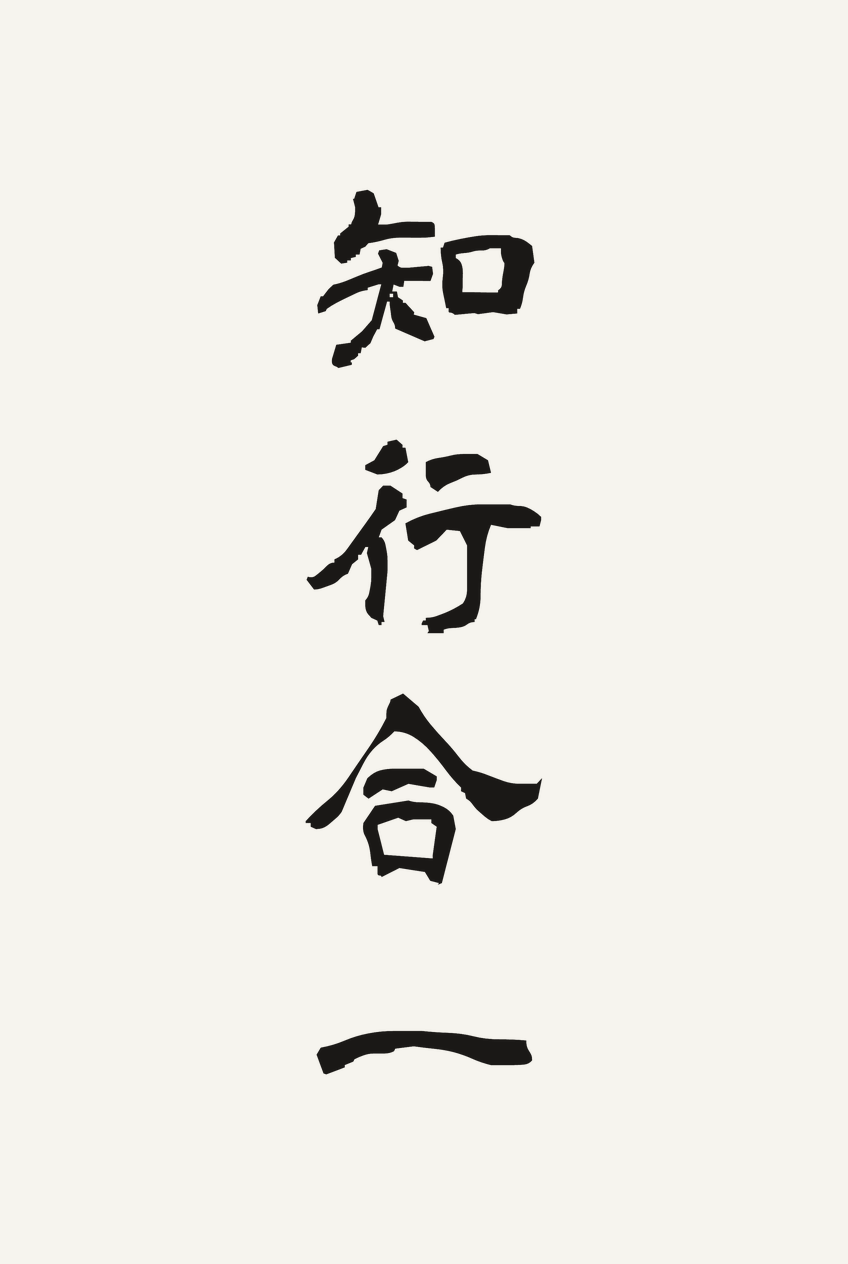
知行合一 · Zhī Xíng Hé Yī
Knowledge and Action Are One
Series: Auspicious Idioms · Design #07
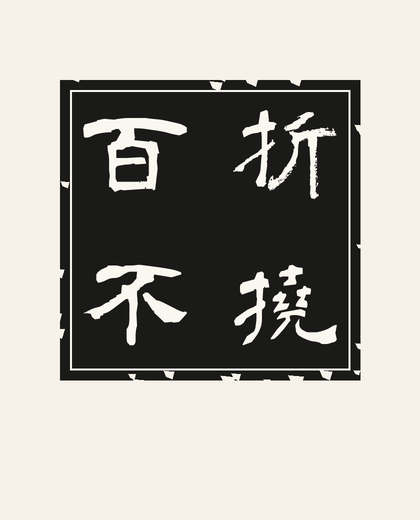
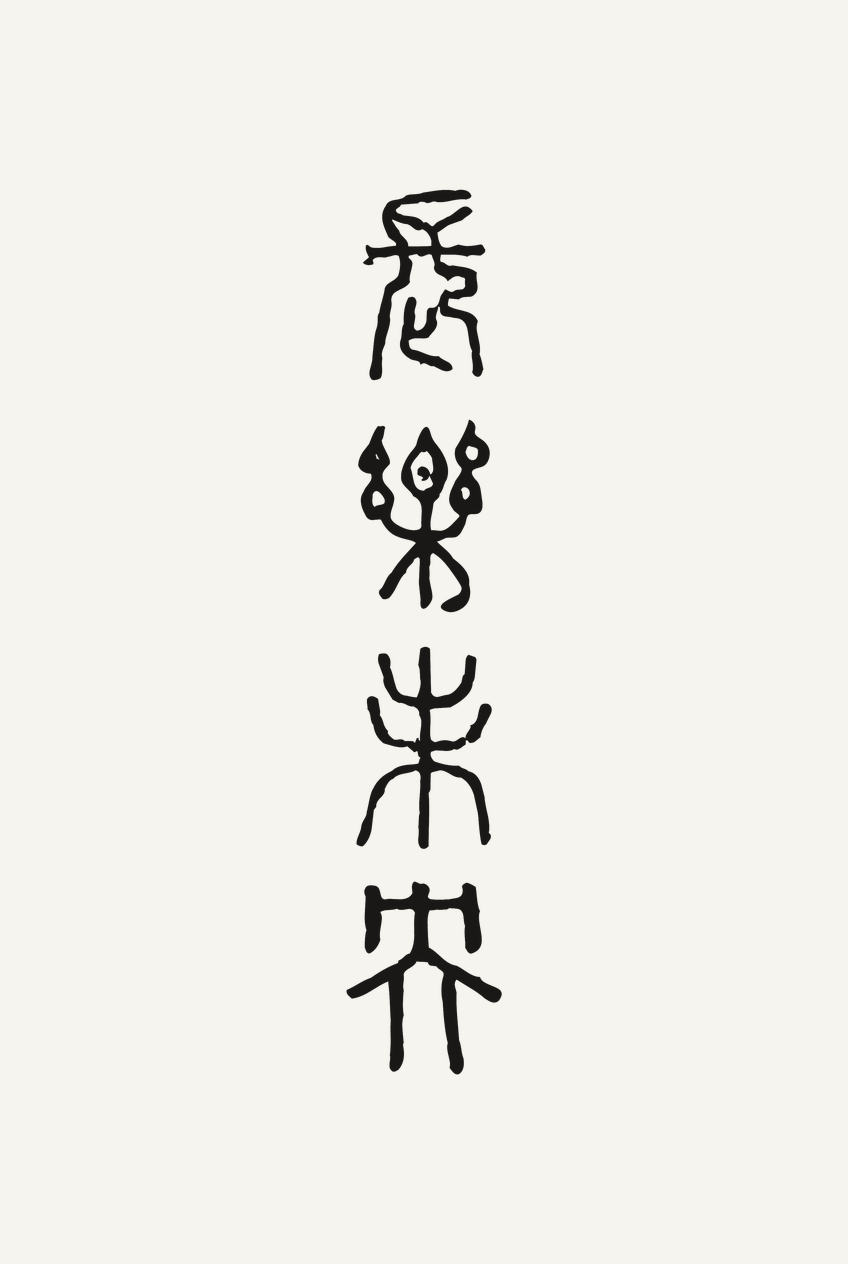
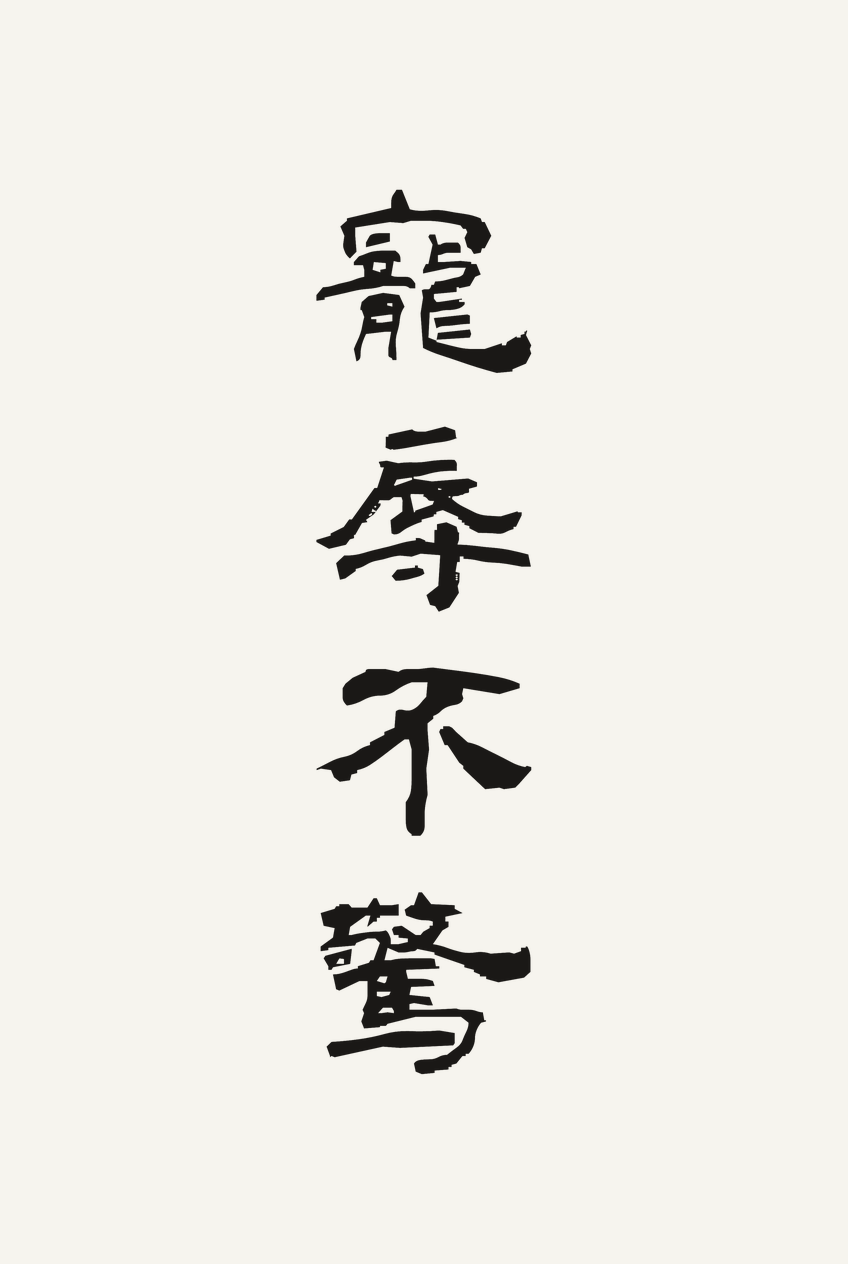
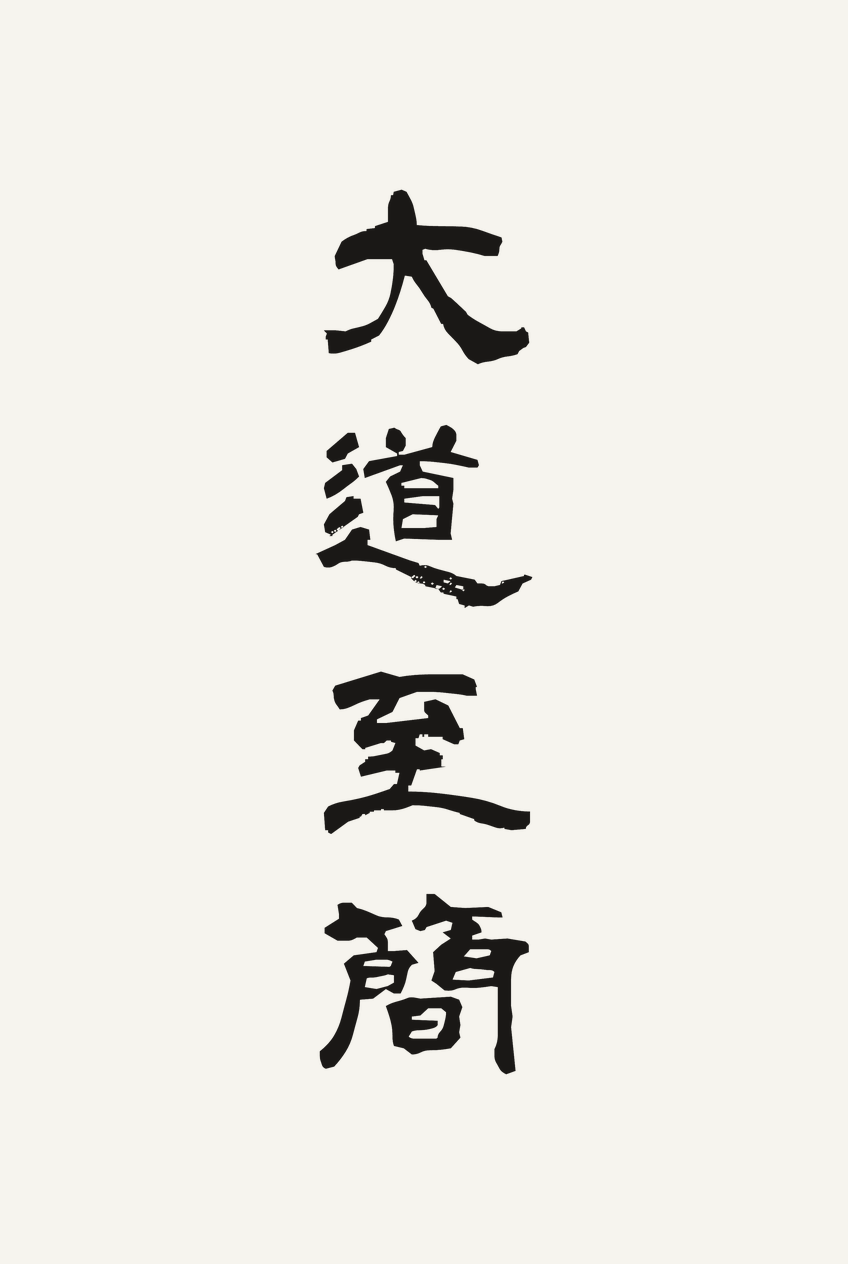
Style: four characters, vertical column · clerical script (lishu) · same form 知行合一 · medium-to-large
Form: 文字
The Name
*Zhī xíng hé yī* — knowledge and action are one. The claim is not that you should study and then act. The claim is stronger and stranger: knowing and doing are the front and back of one motion, the way inhaling and exhaling are one breath. You do not "understand" kindness and then practice it; the practicing is the understanding. As a tattoo, the four characters refuse a life divided into the part where you learn and the part where you live.
知行合一——不是说先学了再做。主张更硬也更奇:知与行是同一个动作的正反面,如同吸与呼是同一次呼吸。你不是「先懂得」善良再去行善;行本身就是懂。纹下这四个字,就是拒绝把人生切成「学习的部分」和「活的部分」。
Source & Provenance
Wang Yangming (王陽明, 1472–1529), the Ming dynasty's most original philosopher, coined the phrase in his *Instructions for Practical Living* (《傳習錄》): 知是行之始,行是知之成 — "knowledge is the beginning of action; action is the completion of knowledge." He was arguing against a scholar-official culture that could discuss virtue flawlessly and practice it never. Inking note: this design adapts the classic line construction of the traditional motif and re-inks it as tattoo linework.
王阳明(1472–1529),明代最有原创力的哲学家,在《传习录》里立下这四个字:知是行之始,行是知之成。他反对的,正是一个能把美德讲得头头是道、却从不实践的士大夫文化。墨线转写:本设计以传统母题的经典线条造型为底,转写为纹身墨线。
Design Inspiration
Every form decision points to a recorded source, element by element. ① Four characters, one vertical column, top to bottom — classical Chinese reads vertically; the column is the text's native architecture, not a stylistic choice. ② Clerical script, level and weighted — lishu is the script of Han dynasty stone steles: public, declarative, built to last. A philosophy of doing deserves the script of permanence. ③ Medium-to-large scale — four characters need column height (14 cm or more) for the strokes to carry weight. ④ Black ink only — Wang's philosophy is subtraction: fewer excuses, more practice.
本设计的每一处形制决定都有出处可查,逐条对账。① 四字竖列、自上而下——汉字古法竖读;竖列是文本的原生建筑,不是风格选项。② 隶书、横平承重——隶书是汉代碑刻的书体:公开、宣告、为耐久而生。讲「做」的哲学,配得上「耐久」的书体。③ 中到大尺寸——四字需要列高(14 厘米起)笔画才有分量。④ 只用墨——阳明心学做的是减法:少一些借口,多一些践行。
The Story
In 1508 Wang Yangming was exiled to Longchang — malarial, roadless, the end of the civilized world in Ming eyes. He had already been beaten at court for defending honest officials; his standing was gone, his future was gone. There, in a coffin he had made for himself to meditate in, he stopped waiting for the classics to tell him how to live and realized the thing he had been circling for years: the sage learning he had studied all his life was not information to accumulate. Every principle he could recite was already known to his own conscience; what was missing was not more knowing but the doing that completes the knowing.
The insight inverted the academy. Scholars who could quote the classics but cheat a neighbor had, in Wang's account, no real knowledge of what they quoted — knowledge that never becomes action is not yet knowledge. The phrase terrified the establishment precisely because it was democratic: it does not require a library, only a life. A farmer who acts on what he understands stands higher than a scholar who does not.
1508 年,王阳明被贬龙场——瘴气弥漫、道路不通,在明人眼里是文明的尽头。他已因替直言的官员辩护而遭廷杖,声名尽失,前途尽毁。就在那里,在他给自己做的一具石椁中静坐时,他不再等经典来告诉他怎么活,而是想通了他盘桓多年的那件事:他研习半生的圣贤之学,不是用来积累的信息。他能背诵的每一条道理,自己的良知本来就懂;缺的不是更多的知,而是把知完成的那一行。
这个洞见把整个学院翻了个面。能引经据典却欺骗邻人的学者,在王阳明的账上,对他所引用的东西并没有真知——从未变成行动的知识,还不算知识。这句话之所以让体制恐惧,正因为它民主:它不需要一座藏书楼,只需要一个人生。一个按他所知而行的农夫,站得比不行的儒生高。
What It Means
For people tired of the gap between what they believe and how they live. It works as a daily verdict and a daily permission: the standard is not perfection, it is motion — did the knowing become the doing today. Four characters that turn a tattoo into an appointment.
给厌倦了「所信」与「所行」之间那道缝的人。它既是每日的判决,也是每日的许可:标准不是完美,是动——今天的知,成为行了吗。四个字,把纹身变成一场赴约。
Where It Sits
A vertical column wants a long plane: inner forearm and spine are native, outer shoulder works. 14 cm column height is the comfortable floor for four characters of this weight; the chest, centered, takes a smaller cut well.
竖列要长的平面:小臂内侧与脊柱是原产地,肩外侧亦可。14 厘米列高才是这个分量四字的舒服下限;胸口正中适合缩小版。
Before You Ink
Top to bottom, no reshuffle. 知 leads 行 because in the phrase's logic, knowing births doing — the order is the argument. ② Clerical script stays level. The strokes' weighted calm is the point: philosophy of action written in the register of permanence. ③ Black ink only. ④ Column height 14 cm minimum. ⑤ It is a contract. 知行合一 is not a mood; inked, it obliges you to close the gap on something every month — or it becomes exactly the hypocrisy it was coined to end.
自上而下,不可倒置。 知在前、行在后——在这个短语的逻辑里,知生行;顺序本身就是论证。② 隶书保持平。 笔画沉稳的定力就是要点:用「耐久」的语域写「行动」的哲学。③ 只用墨。 ④ 列高 14 厘米起。 ⑤ 这是一纸契约。 知行合一不是情绪;纹上它,你就有义务每个月在某件事上把缝合上——否则它就沦为它诞生时所要终结的那种虚伪。
Every character on this card was selected and checked stroke by stroke by a native reader of Chinese.