鴸鸟 · Zhū Niǎo
Where the Straight Are Sent Away
Series: Mythical Beasts & Sacred Animals · Design #32
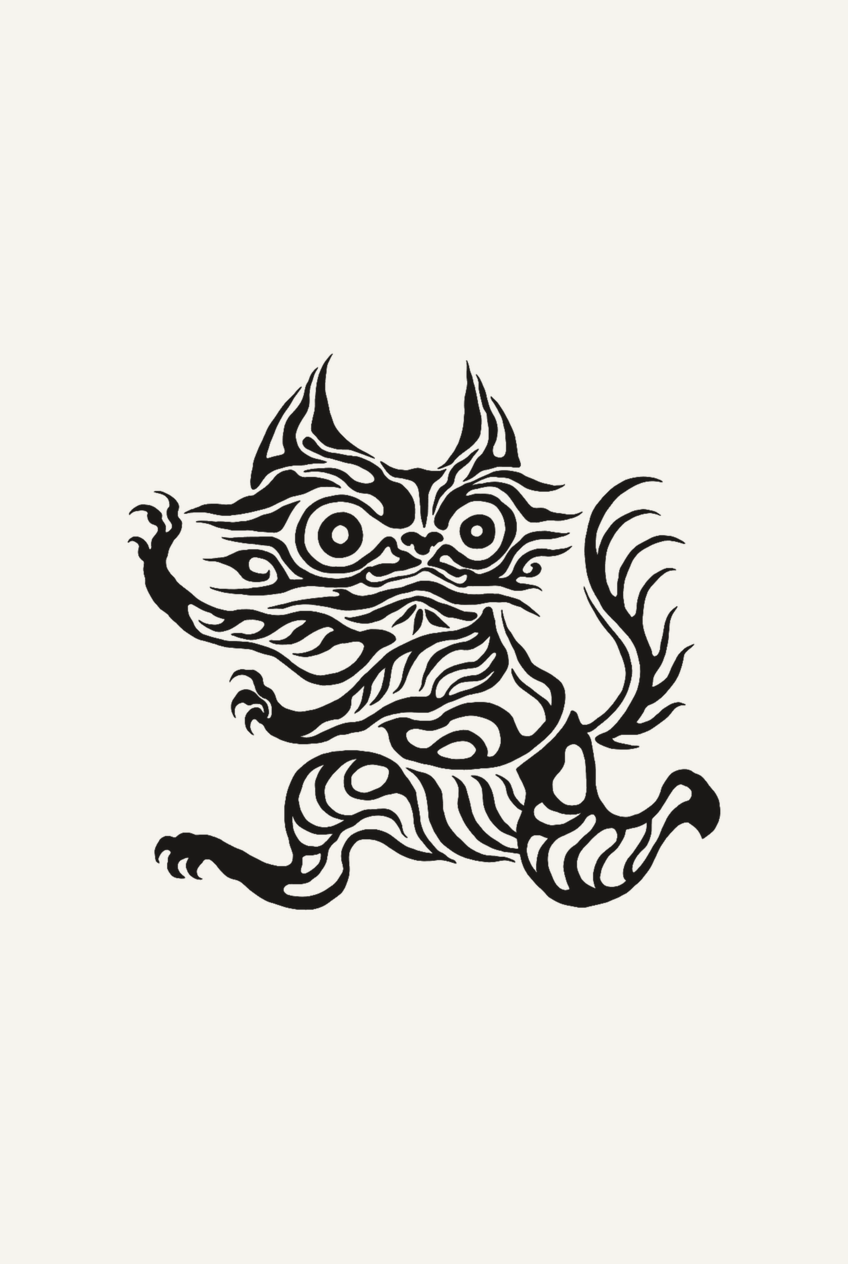
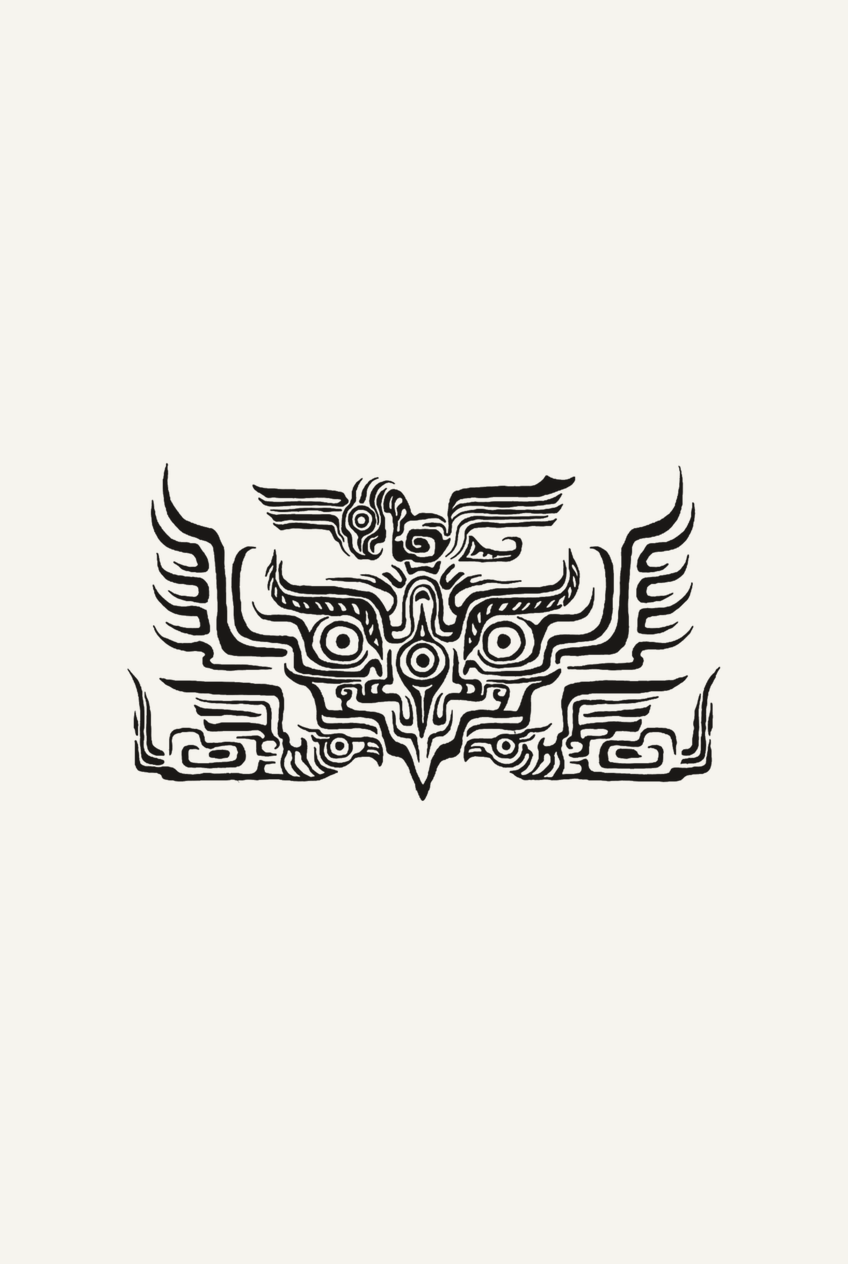
Style: Bronze-mask grammar, symmetric: a frontal bird face with a great eye on each side and a small third eye on the axis, banded wings spread wide, a small look-back unit above, cloud-scroll units below · black-grey · mirrored composition · scalable 12–16 cm
Form: 图案
The Name
*zhū niǎo* — the bird of Gui Mountain whose omen is civil, not natural: 见则其县多放士 — where it appears, the county's honest officials are sent away. It cries its own name — 朱,朱 — a sound later tradition heard as the name of a banished prince. This is the classic's only weather report about power: not drought, not flood — purges. The bird that forecasts which way the straight are about to be made to leave.
鴸鸟(zhū niǎo)——柜山之鸟,它的征兆是政务的,不是自然的:见则其县多放士——它出现的地方,县里的直臣就要被赶走。它叫自己的名字——朱,朱——后世传统听出了那个被放逐的王子的名字。这是整部经典里唯一一份关于权力的天气预报:不是旱,不是洪——是清洗。预报「正直者即将以哪种方式离开」的鸟。
Source & Provenance
The *Shanhaijing*, *Nan Ci Er Jing* chapter (compiled c. 4th–2nd century BC), Gui Mountain entry: 「有鸟焉,其状如鸱而人手,其音如痺,其名曰鴸,其名自号也,见则其县多放士。」 — kite-shaped with human hands, a quail-like cry, calling its own name; its appearance marks the banishment of upright scholars. Guo Pu's *Tuzan* (4th century AD) fixes the reading: 「鴸鸣于邑,贤士见放」 — the bird cries in the town; the worthy are dismissed. Tao Yuanming's *Reading the Shanhaijing* (5th century) ties it to King Huai's court: 「念彼怀王世,当时数来止」 — in King Huai's years, it kept arriving. The tradition of Prince Danzhu — Yao's son, banished after losing the succession, whose soul became this bird — gives the name its face. A later gazetteer-lore (the *Shiwu Ganzhu*) even records a three-eyed, child-handed Zhengchun Gate sighting, which the design's third eye honors. Inking note: this design adapts the recorded body-plan and re-inks it as tattoo linework.
《山海经·南次二经》(约成书于前 4—前 2 世纪)柜山条:「有鸟焉,其状如鸱而人手,其音如痺,其名曰鴸,其名自号也,见则其县多放士。」形如鸱而生人手,啼声如鹑,叫自己的名字;它一现身,县中直士将被放逐。郭璞《图赞》(公元 4 世纪)定读法:「鴸鸣于邑,贤士见放」——鸟在城里叫,贤士被罢退。陶渊明《读山海经》(5 世纪)把它系在怀王朝廷:「念彼怀王世,当时数来止」——怀王的那些年,它频频到来。丹朱的传说——尧之子,争位失败遭放逐,魂魄化为此鸟——给了这个名字一张脸。后世掌故(《事物绀珠》)甚至记有庆春门三目、足如小儿的目击传闻,本设计的中目即以此为据。墨线转写:本设计以经文所记的身体蓝图,转写为纹身墨线。
Design Inspiration
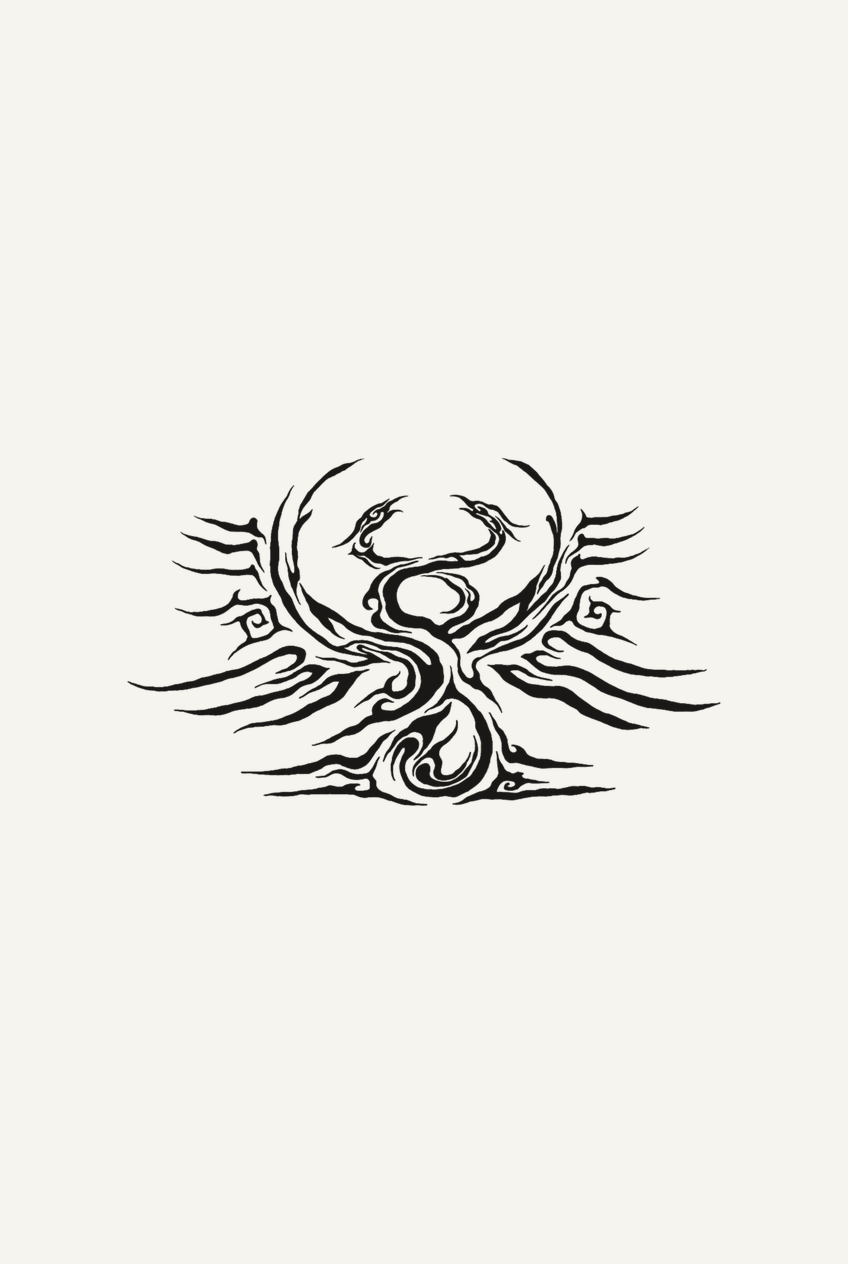
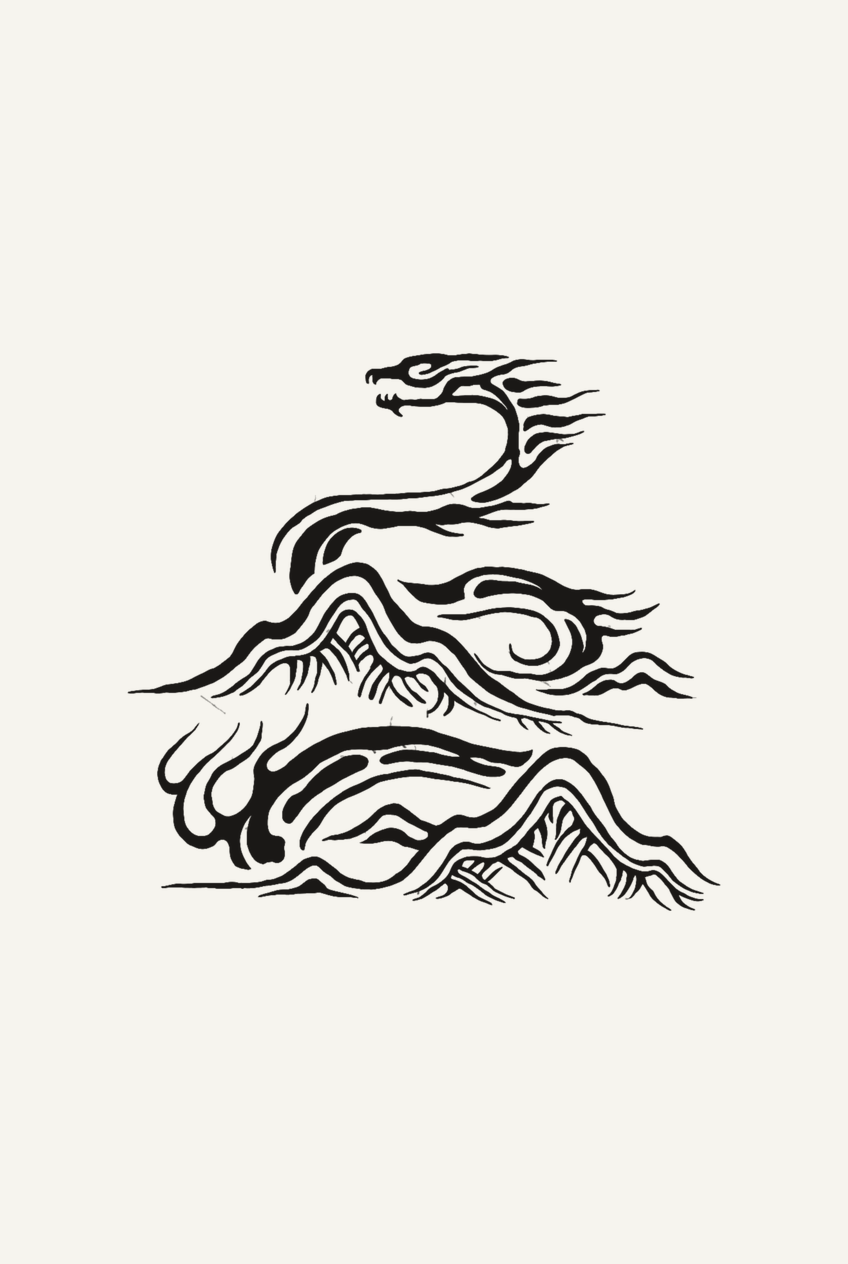
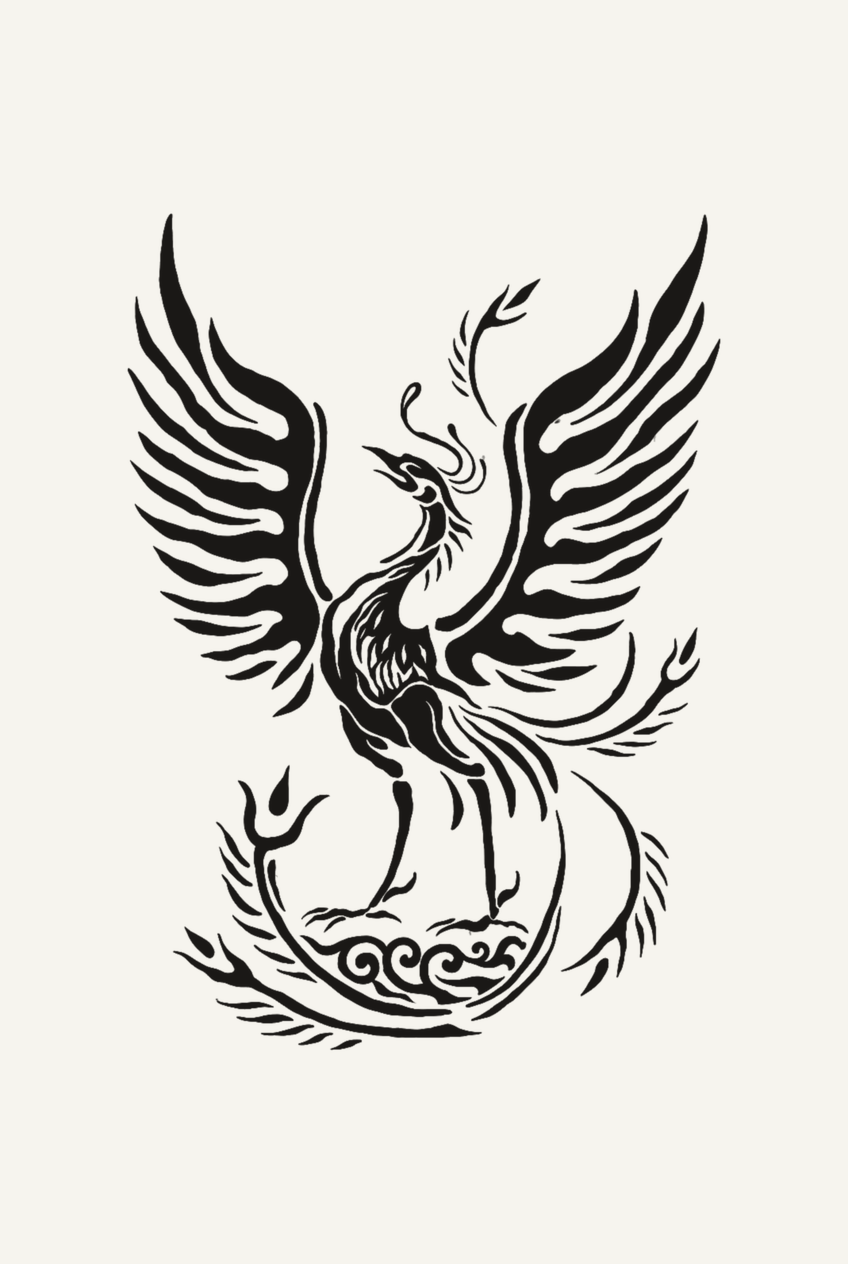
Every form decision on this design points to a recorded source, element by element. ① The frontal bird face in bronze-mask grammar — 其状如鸱, the kite's face drawn the way ritual bronzes draw the sacred and the dangerous: symmetric, frontal, unblinking — an omen that stares. ② The three eyes — two great eyes flanking one small eye on the axis, after the later sighting-lore: the omen watches three ways — left, right, and straight at whoever decides whom to banish. ③ The human-hand element above — 人手, the recorded human hands drawn as the small look-back unit: the one human feature, carried like a signature — the banished are human, and the bird remembers it. ④ The wide banded wings and cloud scrolls — the outspread flight of departure, and cloud-scroll units reading as the far county gates: distance, in the classic's own ornament language.
本版每一处形制决定都有出处可查,逐条对账。① 青铜兽面语法的正面鸟首——「其状如鸱」,鸱的脸按礼器画「神圣与危险之物」的方式画:对称、正面、不眨眼——一记逼视的征兆。② 三目——两侧巨目夹着中轴一枚小目,从后世目击传闻:这记征兆看三个方向——左、右,以及直直看着那个决定谁被放逐的人。③ 上方的人手元素——「人手」,所记的人手画成那枚回首小单元:唯一的人形部件,像签名一样带着——被放逐的是人,这鸟记得。④ 外展的羽带翼与卷云——离去的全开飞行,卷云单元读作远方的县城门:距离,用经典自己的纹饰语言写。
The Story
Read the omen list of the Shanhaijing side by side and a pattern appears: mountains forecast floods, droughts, locusts, war. Gui Mountain forecasts personnel decisions. 见则其县多放士 — when this bird shows up, the honest officials leave. Not "are killed" — the classic knows that omen too, elsewhere. Here the disaster is quieter and in some ways crueler: the straight are made to *go*. The place keeps its walls, its granaries, its rituals — it only loses the people who said what needed saying, one bird-cry ahead of the paperwork.
Why would the ancients give purges a herald bird? Because it makes the mechanism visible. A purge always looks, from inside, like coincidence: one resignation, one reassignment, one retirement for family reasons. The bird condenses the pattern into a single visible event — when it cries, count who is gone by autumn. And the name under it all: Danzhu, the son who lost to Shun, banished, his soul crying its own name from the trees — 朱,朱 — the banished prince turned forecaster of banishment. The one expelled became the one who announces expulsions. Only the banished ever see the pattern early enough to name it.
So what does it mean to wear it? This is a design for the ones who left — or the ones who stayed and counted who did. For those who know that the bird never cries for the wicked. Wearing it is not mourning; it is testimony: I heard the cry, I know what followed, I am still telling it straight. 鸟鸣之处,直士将行;闻鸣而不改其直,是谓不徙。
把《山海经》的征兆清单并排放着,一个模式浮出来:山预报洪水、旱、蝗、兵。柜山预报人事。见则其县多放士——这鸟一露面,直士离开。不是「被杀」——那种征兆经典另有记载。这里的灾难更安静,某种意义上也更残忍:直士被弄得*离开*。城墙还在,粮仓还在,礼还在——只是那些说了该说的话的人没了,比文书早到一声鸟啼。
古人为什么给清洗配一只通报鸟?因为它把机制变得可见。清洗从内部看永远像巧合:一次辞职,一次调任,一次因家事退休。这只鸟把模式压缩成单一可见事件——它一叫,到秋天数一数谁不在了。而压在底下的名字:丹朱,输给舜的儿子,被放逐,魂魄在树上叫自己的名字——朱,朱——被放逐的王子变成了放逐的预报员。被赶走的那个,成了最早看清模式、并叫出它名字的那个。从来只有被放逐者,才早到能把模式说出口。
所以纹它,纹的是什么?这是给「离开的人」的设计——或者「留下来、并且数清了谁走了」的人。给知道这鸟从不为恶人而叫的人。纹它不是哀悼;是证词:我听见了那声啼,我知道后来发生了什么,我还在照直说。鸟鸣之处,直士将行;闻鸣而不改其直,是谓不徙。
What It Means
Exile, forecast and memorialized. The third eye kept open for whoever counts the departed; the human hand kept in the design for whoever left. The classic's most civil omen — it never breaks a wall, it only empties a room.
被预报、被纪念的放逐。中目为清点离去者的人睁着;人手为离开的人留在图里。整部经典最政务的征兆——它从不推倒一堵墙,只清空一个房间。
Where It Sits
Built wide and mirrored: 12–16 cm across the chest or upper back, the mask reading best on a plane that faces the world; a 10 cm variant sits on the forearm. The three eyes must sit level — the design's stare is its function, and a tilted stare is merely decoration.
天生的宽幅镜像构图:12—16 厘米横贯胸口或后背上部,兽面在面向世界的平面上读法最真;10 厘米变体收小臂。三目务必放平——这记逼视就是它的功能,斜了的逼视只是装饰。
Before You Ink
This design belongs to ink only. The bronze bands need crisp even weight — black keeps the mask liturgical; greyscale turns it costume. Minimum size 10 cm: below that the third eye welds shut and the wings read as wallpaper. Keep it off the ribs side — breathing flexion cracks fine bands first, and the mask must hold its stare.
此图只宜墨线。青铜条带需要干净匀称的线宽——黑让兽面保持仪式感,灰阶会把它弄成戏服。最小尺寸 10 厘米:再小,中目焊死,双翼读成墙纸。避开肋侧——呼吸的屈曲最先皲裂细条带,而兽面必须撑住那记逼视。
Every character on this card was selected and checked stroke by stroke by a native reader of Chinese.