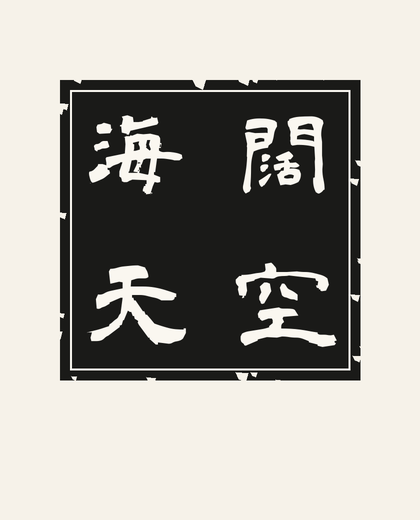
海阔天空 · Hǎi Kuò Tiān Kōng
Broad as the Sea, High as the Sky
Series: Auspicious Idioms · Design #66
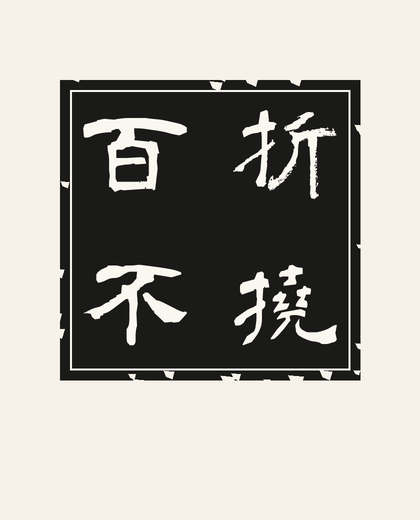
Style: Four characters in a 2×2 square, read left-to-right top row then bottom · Han-seal filled-white (bǎiwén) stamp — black ground, reversed white glyphs, weathered border · clerical script (lishu), traditional form 海闊天空 · medium-to-large scale
Form: 文字
The Name
*Hǎi kuò tiān kōng* — the sea broad, the sky high. 海 is sea; 闊 (阔) is broad; 天 is sky; 空 is empty / open. Four characters that picture an unbounded space — used for a mind set free, a dispute let go, a future with no wall in front of it. It is one of the few Chinese idioms whose literal image and figurative meaning are almost the same thing.
海阔天空(hǎi kuò tiān kōng)——海宽阔,天高远。海是海;闊(阔)是宽;天是天;空是空、开阔。四个字画出一片没有边界的空间——用来形容心被放开、争执被放下、前面没有墙的未来。这是少见的成语:字面图像和比喻意思几乎是同一件事。
Source & Provenance
Two lines are commonly cited, and both are given here rather than choosing one. The phrase is often traced to the Northern Zhou poet Yu Xin (庾信), *Dào Shì Bù Xū Cí* (道士步虚词): 麟洲一海阔,玄圃半天高 — "the isle of the qilin, a sea broad; the dark garden, half the sky high." Another attribution points to the Tang monk Xuanlan (玄览), who wrote on bamboo: 大海从鱼跃,长空任鸟飞 — "in the great sea, let the fish leap; in the long sky, let the birds fly" (quoted in *Shī Huà Zǒng Guī* 诗话总龟). The four-character form 海阔天空 crystallized later and is now thoroughly idiomatic. Inking note: this design adapts the classic line construction of the traditional motif and re-inks it as tattoo linework.
常见出处有两说,这里并列,不替你择一。一说本于北周庾信《道士步虚词》:麟洲一海阔,玄圃半天高。另一说出自唐代玄览题竹:大海从鱼跃,长空任鸟飞(见《诗话总龟》引)。四字成辞「海阔天空」是后来凝定的,今天已完全成语化。墨线转写:本设计以传统母题的经典线条造型为底,转写为纹身墨线。
Design Inspiration
Every form decision points to a recorded source, element by element. ① Four characters in a 2×2 square, read across — the modern left-to-right order, so an overseas reader can follow the phrase without the classical convention. ② Clerical script, traditional form 海闊天空 — the Han-stone register; the traditional 闊 keeps the full glyph rather than the simplified 阔. ③ The filled-white treatment — the characters cut from the dark field; the open space of the phrase is echoed by the space left visible in the ink. ④ Equal weight and generous spacing — the design should feel open, not compressed, because the word's whole meaning is room. ⑤ Weathered border — a hand-set seal, imperfect at the edge; even an open sky is seen through a human frame.
本设计每一处形制决定都有出处可查,逐条对账。① 四字 2×2 方阵、横着读——现代从左往右的次序,让海外读者不必懂古典惯例也能读顺。② 隶书、繁形「海闊天空」——汉石经的语域;繁体「闊」保留完整字形,不用简体「阔」。③ 满白文处理——字从黑地里刻出来;这句话讲的开阔,正好回响在墨里留下的空间中。④ 四字等重、间距舒展——设计要显得开,不能挤,因为这个词整个意思就是"有余地"。⑤ 残边——手工盖出的印,边缘不完美;再开阔的天,也是透过人的框看到的。
The Story
The image does all the work. A sea with no visible edge; a sky with nothing in it. Chinese writers kept returning to it because it is the shortest way to say what a person feels when a thing that has been closing in suddenly opens — an argument dropped, a job left, a forgiveness finally given.
The two candidate sources show how old the feeling is. In Yu Xin, the sea and sky are the surroundings of immortal islands — a literally larger world. In the Tang monk's bamboo, the same largeness becomes permission: the fish may leap, the bird may fly, each simply doing what its nature does in an element with room for it. The idiom inherits both: space, and the freedom to move inside it.
What it does not mean is "everything will be fine." 海阔天空 is usually said after a decision, not before — after you have let something go, and discovered that the world did not end at its edge. It is a description of the view from the other side.
To wear it is to keep that view: not a wish for a bigger life, but the record of a moment when the wall you thought was permanent turned out to be a door.
这幅图像自己把话说完了。一片看不到边的海;一个空着的天。中国作家一再回到它,因为要说"当一件一直逼近你的事突然松开"是什么感觉,这是最短的说法——一场争执放下、一份工作辞掉、一次终于给出的原谅。
两处候选出处都说明这种感觉有多老。在庾信那里,海天是神仙岛屿的环境——一个字面意义上更大的世界。在唐代僧人的竹上,同样的开阔变成了许可:鱼可以跃,鸟可以飞,各自在本性里、在一个容得下它的元素中做该做的事。这个成语把两者都继承了:空间,以及在空间里活动的自由。
它不是"一切都会好"的意思。「海阔天空」通常是决定之后说的,不是之前——在你放下一件事之后,发现世界并没有在它的边缘终止。它描述的是从另一边看到的景象。
纹这四个字,是留住那道景:不是想要更大的生活,是记下那一刻——你以为永远的墙,原来是一道门。
What It Means
Room after constriction — the sea broad, the sky open. The idiom carries both an unbounded view and the freedom to move within it; it is usually said after letting go, as a description of the view from the other side. For people who have discovered that a wall was a door.
逼仄之后的空间——海阔,天空。这个成语同时带着无边的景象和在其中活动的自由;它通常在放下之后说出,描述的是从另一边看到的景。给那些发现墙原来是门的人。
Where It Sits
A 2×2 square needs a broad, flat field. Upper back and outer thigh at 12–16 cm; shoulder blade at 12–14 cm; chest at 13–16 cm. Keep all four characters on one plane at equal size, with generous spacing — the design should feel as open as the word means. Minimum 12 cm.
2×2 方阵需要宽而平的面。上背与大腿外侧 12–16 厘米;肩胛 12–14 厘米;胸口 13–16 厘米。四字同面等大、间距舒展——设计要像这个词的意思一样开阔。最小 12 厘米。
Before You Ink
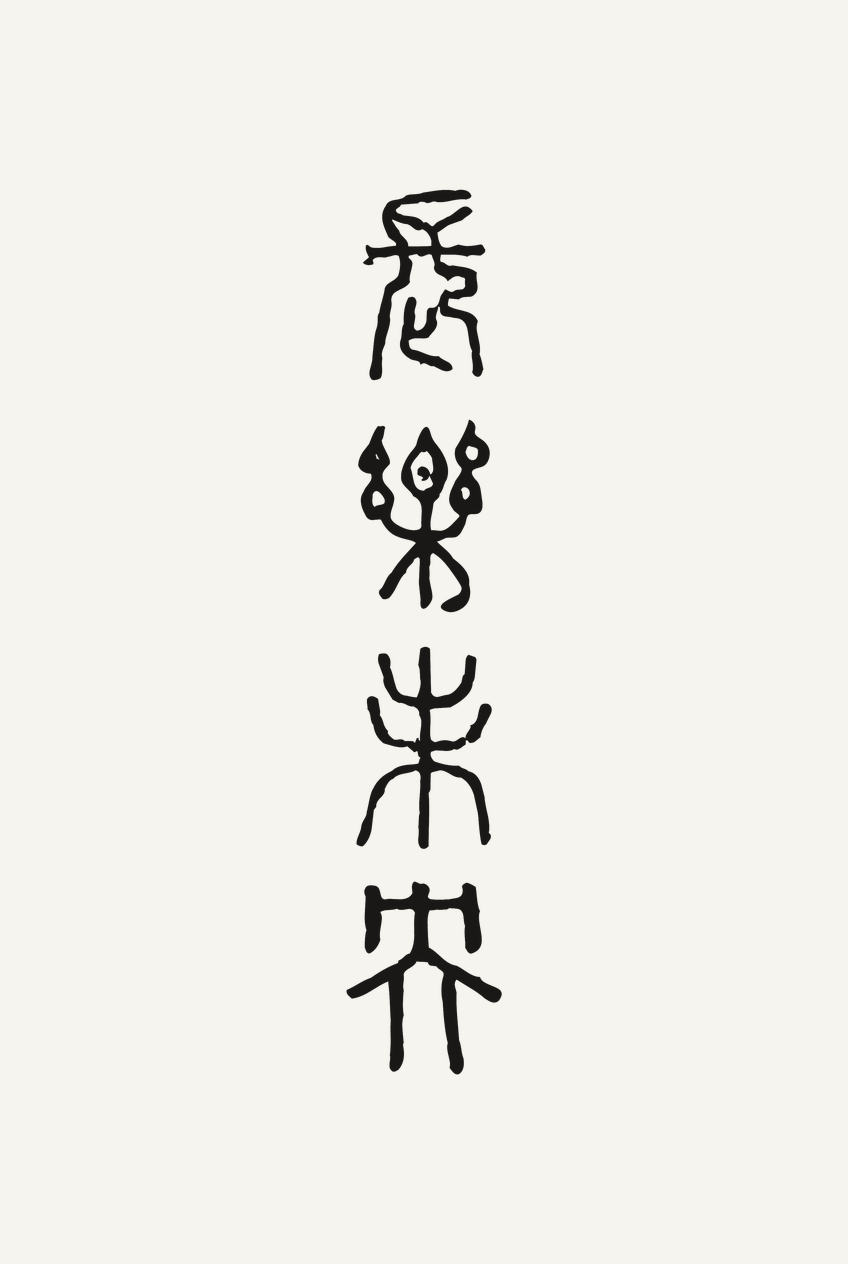
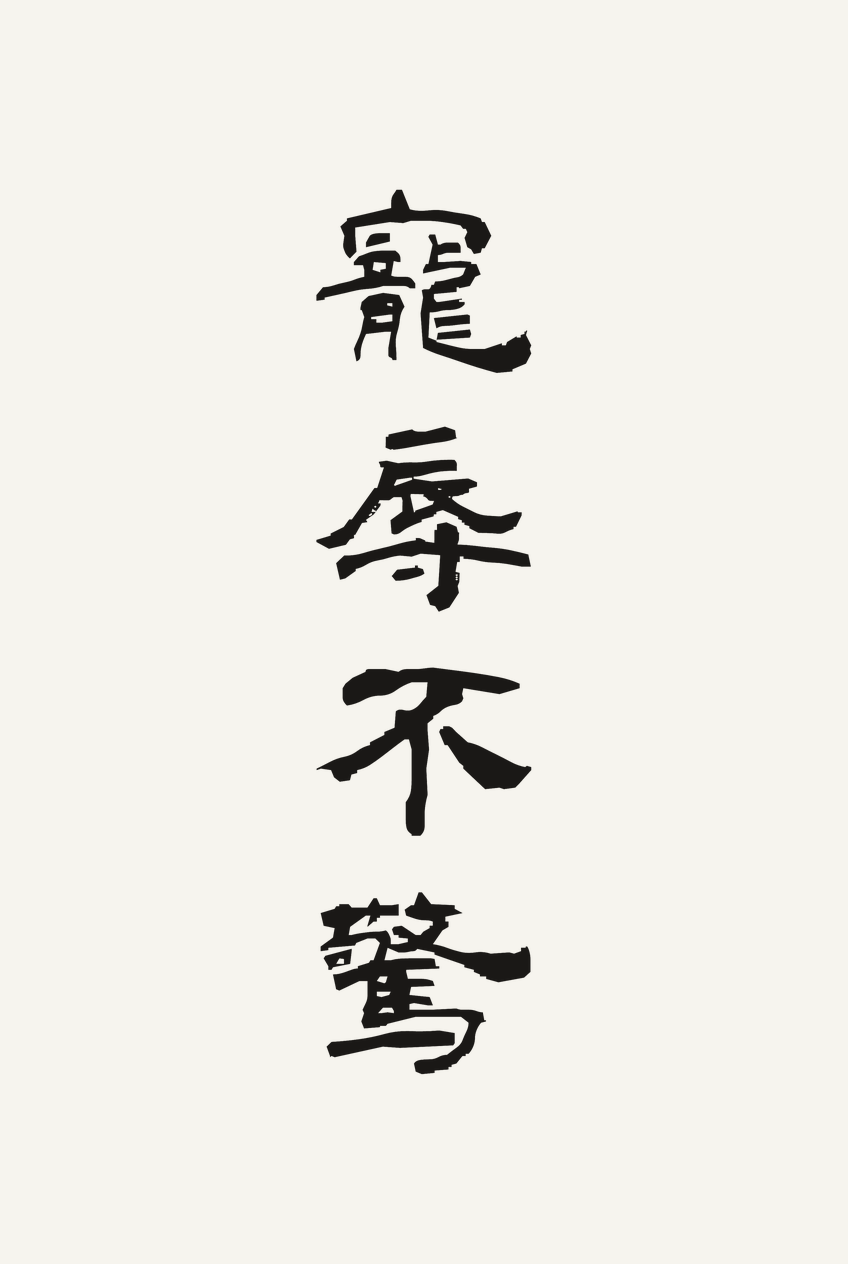
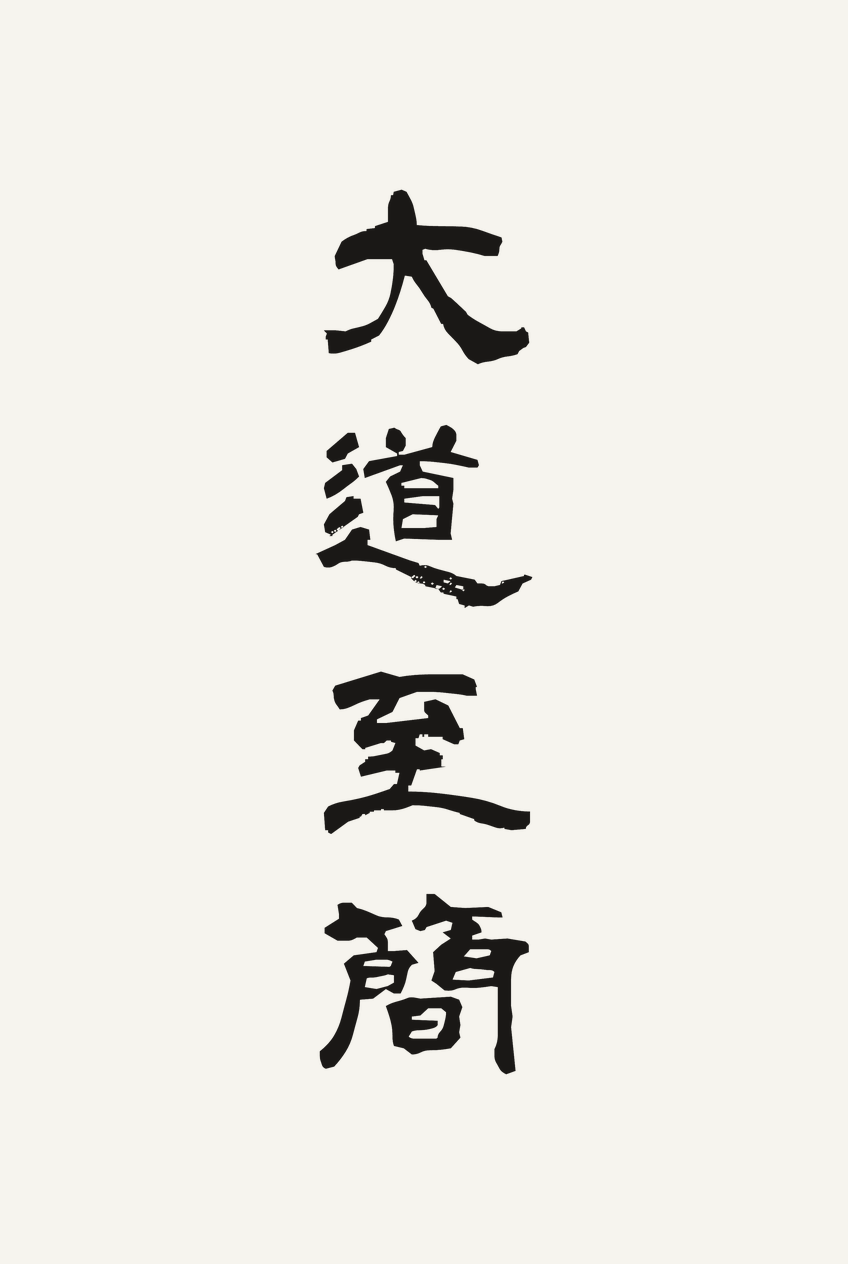
Negative-form seal — use the supplied white-ground black-line transfer sheet; the black cover is the finished stamp, not the stencil. ② Traditional form 海闊天空 — the simplified 阔 breaks the classical register. ③ Read order — this version reads left-to-right across each row; do not let a studio rearrange it right-to-left. ④ Keep the spacing generous — crowding the four characters contradicts the meaning. ⑤ Ink only. Minimum 12 cm. ⑥ One script only — clerical version; do not mix seal-script characters into the square.
负形印——用随卡附的白底黑线转印页;黑底封面是成品印,不是转印稿。② 繁体「海闊天空」——简体「阔」会切断古典语域。③ 读序——本版每行从左往右读,别让师傅改成从右往左。④ 间距要舒展——四字挤在一起,与词义相悖。⑤ 只用墨,最小 12 厘米。 ⑥ 只纹一体——本款隶书,勿在方阵里混入篆书字。
Every character on this card was selected and checked stroke by stroke by a native reader of Chinese.