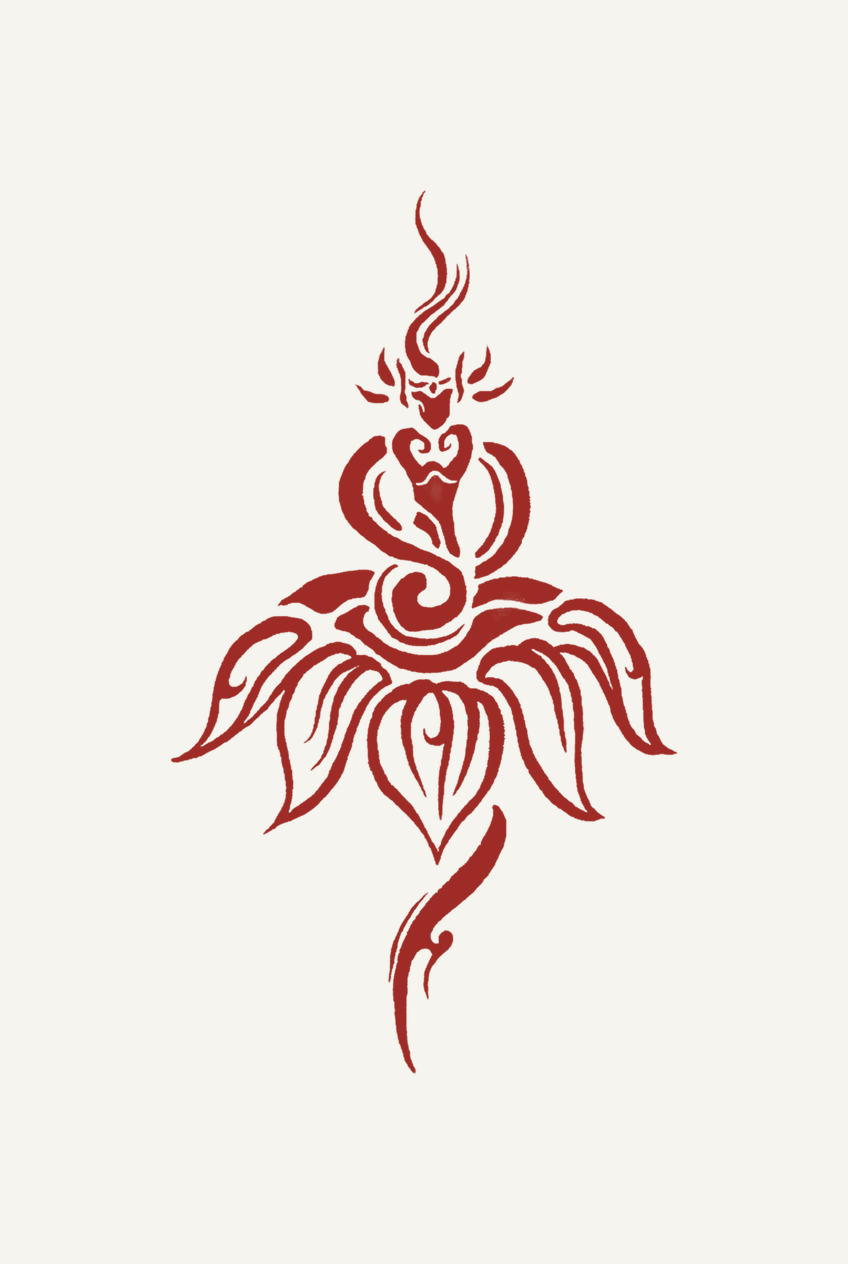
烛龙 · Zhú Lóng
The Dragon of Day and Night
Series: Dragons of China · Design #05
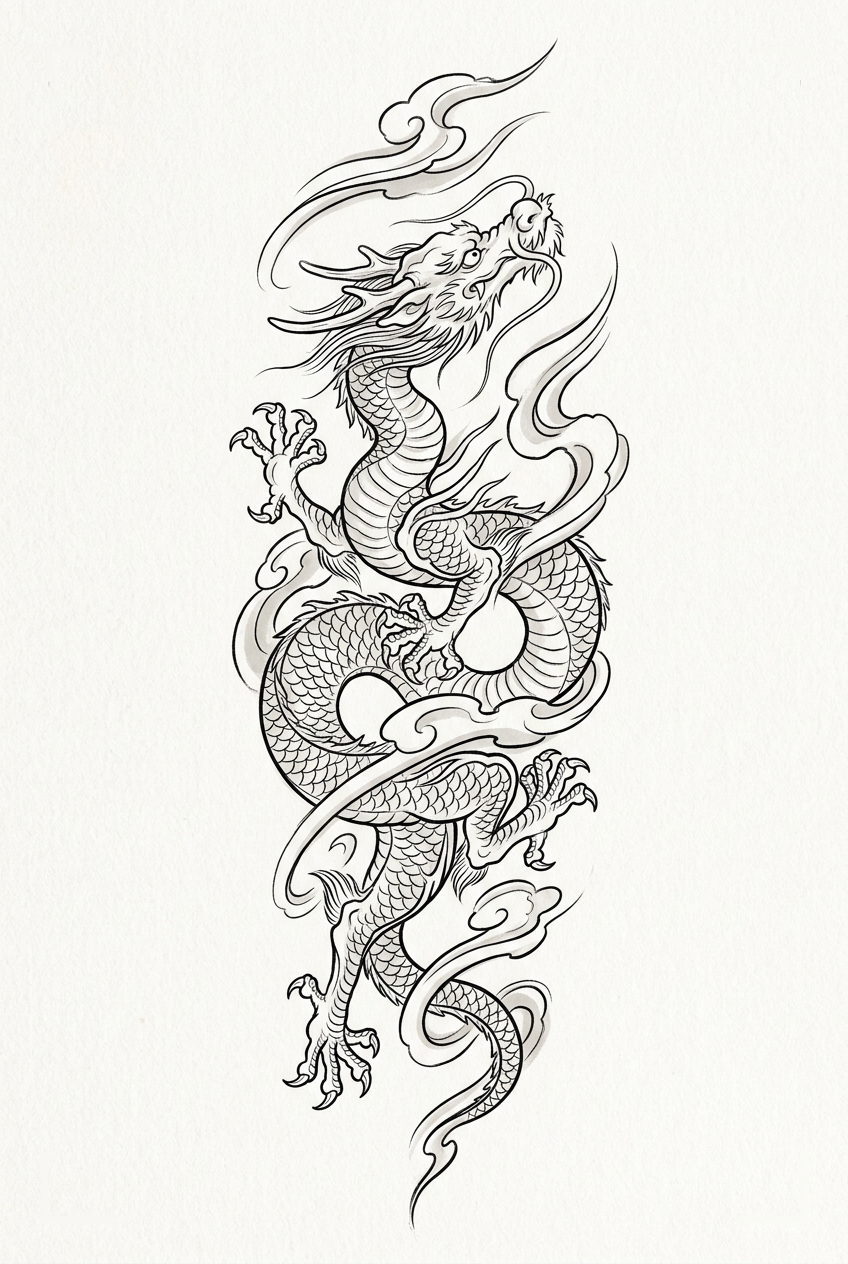
Style: Vermilion serpent-bodied dragon, vertical eyes, coiled ascent · bold brushwork · vertical composition · scalable 15–22 cm
Form: 图案
The Name
*zhú lóng* — the Torch Dragon, the being that runs the switchboard of day and night. When it opens its vertical eyes, the world wakes; when it closes them, the world sleeps. Its breath is the seasons — exhale winter, inhale summer. It does not eat, does not sleep, does not stop. Before there was a sun worth trusting, the far north was lit by its eyes.
烛龙(zhú lóng)——执掌昼夜开关的火烛之龙。竖目睁开,世界醒来;竖目闭上,世界睡去。它的呼吸就是四季——吹气为冬,呼气为夏。不食,不寝,不息。在太阳还不足够可信的岁月里,极北之地的光来自它的眼睛。
Source & Provenance
The *Shanhaijing* (Classic of Mountains and Seas, compiled c. 4th–2nd century BC) gives the full description twice. The *Dahuang Beijing* chapter: 「人面蛇身而赤,直目正乘……视为昼,瞑为夜,吹为冬,呼为夏……不食,不寝,不息」 — vermilion, human-faced, serpent-bodied, with vertical eyes; its open eyes are day and closed eyes night, blowing is winter and breathing summer. The *Hainei Beijing* chapter names it the god of Mount Zhong, 烛阴. Qu Yuan's *Tianwen* (Heavenly Questions, c. 4th–3rd century BC) asks: 「日安不到?烛龙何照?」 — "Where does sunlight never reach? What does the Torch Dragon shine on?" Historical form reference: the *Shanhaijing* textual record; serpent-bodied deities of Warring States and Han pictorial art. Inking note: this design adapts the classic line construction of the traditional motif and re-inks it as tattoo linework.
《山海经》(约成书于前 4—前 2 世纪)两度完整记载。《大荒北经》:「人面蛇身而赤,直目正乘……视为昼,瞑为夜,吹为冬,呼为夏……不食,不寝,不息。」《海外北经》称之为钟山之神,名烛阴。屈原《天问》(约前 4—前 3 世纪)问:「日安不到?烛龙何照?」——太阳照不到的地方,烛龙照亮什么?形制参考:《山海经》文本记载;战国与汉代图像艺术中的人面蛇身神祇。墨线转写:本设计以传统母题的经典线条造型为底,转写为纹身墨线。
Design Inspiration
Every form decision on this design points to a recorded source, element by element. ① The cinnabar body — the text's own color: 人面蛇身而赤, the whole serpent in cinnabar red — rendered here in full cinnabar ink, exactly as the record commands. ② The vertical eyes — 直目正乘, the straight vertical pupils that are the text's most distinctive detail. ③ The coil ascent — the serpent body wound upward, the geometry of a torch about to stand. ④ The breath lines — the exhaled winter and inhaled summer rendered as vapor streams from the jaws.
本版每一处形制决定都有出处可查,逐条对账。① 通体朱砂——文本自带的颜色:「人面蛇身而赤」,本图以朱砂色如实呈现,一色如经。② 竖目——「直目正乘」,文献里最独特的细节:竖立的眼瞳。③ 盘旋攀升——蛇身向上盘绕,一支火烛即将立起的几何。④ 吐息线——吹为冬、呼为夏的呼吸,化作颌边的水汽流。
The Story
Ancient China did not only imagine gods in palaces. Its strangest and oldest god is on duty at the edge of the map, in the north where the sun's contract runs out. There, the *Shanhaijing* says, lives the Torch Dragon: human face, serpent body, the color of cinnabar. It has the strangest eyes in the whole bestiary — not horizontal, but vertical, 直目正乘, pupils set upright like slitted gates. And those eyes are the clock of the world. Open: day. Closed: night. No chariot, no rooster, no schedule — one being, blinking, and time itself follows its eyelids.
The text does not stop at light. Its exhale is winter; its inhale is summer. The seasons are the dragon's breathing, measured across a year. It does not eat. It does not sleep. It does not rest — 不食,不寝,不息, six characters that read like a description of eternity written by someone who respected it. Qu Yuan, staring at the sky in the *Tianwen*, asked the question that keeps the myth alive: where does the sun never reach? What lights the dark up there? The answer every Han reader knew: the Torch Dragon does.
Now — a native would tell you the thing that makes this tattoo yours: the Torch Dragon is the Chinese dark-work god. Every tradition has its light-deities; the Chinese gave the far north a keeper whose *eyes are the flashlight*. When the yellow river valley slept, somewhere the dragon was awake, holding the switch. It is the deity of people who work through the night — the late shift, the new parent, the student, the migrant burning midnight oil in a new country — a divine counterpart who has been keeping the lights on since before the calendar.
Wear it and you carry the switch yourself. The cinnabar coil climbs the body like a torch standing up. Its vertical eyes do not judge; they illuminate. For night workers, night thinkers, anyone whose best hours happen after the sun clocks out — the Torch Dragon is the patron you already earned.
古代中国人想象的神并不都住在宫殿里。它最古老最奇的神驻守在地图边缘——北方,太阳的契约到期的地方。《山海经》说,那里住着烛龙:人面,蛇身,朱砂之色。它有整个神兽志里最奇怪的眼睛——不是横的,是竖的,「直目正乘」,瞳孔竖立如两道闸门。而那双眼睛就是世界的时钟:睁开是昼,闭上为夜。没有车驾,没有雄鸡,没有时刻表——一位存在,一眨眼,时间跟着它的眼皮走。
文本没有止步于光。它吹气为冬,呼气为夏。四季就是这条龙的呼吸,以年为单位计量。不食。不寝。不息——「不食,不寝,不息」六个字,像一份出自敬畏之人的、关于永恒的描述。屈原在《天问》里仰望天空,问出了让神话一直活着的问题:太阳哪里照不到?极北的黑暗由谁来点亮?每个汉代读者都知道答案:烛龙。
现在告诉你让它成为「你的」纹身的那一点:烛龙是中国人的值夜之神。每个传统都有自己的光明神,而中国人给极北派了一位眼睛就是手电筒的守护者。黄河谷地熟睡时,某处烛龙醒着,握着开关。它是所有夜里干活的人的神——晚班的人、新生儿父母、学生、异国他乡焚膏继晷的游子——一位从历法诞生之前就把灯留着的那位存在。
纹上它,开关就长在你身上。朱红的盘身沿身体攀升,像一支正在立起的火烛。它的竖目不评判,只照亮。对夜行者、夜想者、以及最好的时光都发生在日落的太阳下班之后的人——烛龙是你早已挣得的守护神。
What It Means
The one who keeps the lights on. Day and night, winter and summer, held in one being's breath and blink — the Torch Dragon is mastery of the dark hours, endurance without rest, and the dignity of night work. A patron for night owls, caregivers, and anyone building their life in hours the sun never sees.
把灯留着的那一位。昼与夜、冬与夏,收在同一个存在的呼吸与眨眼里——烛龙是暗时段的掌控者,是不休息的耐力,是夜间劳动的尊严。夜猫子、照顾者、以及一切在太阳看不见的钟点里建造生活的人,都有这位主保。
Where It Sits
The coil wants length: a 15–22 cm vertical climb up the spine or the outer forearm, head at the top with the eyes highest. A horizontal variant, 15 cm, wraps the thigh with the body circling once. The vertical eyes must stay the highest point of the design — the design is a torch, and torches point up.
盘身要的是长度:15–22 厘米沿脊柱或小臂外侧垂直攀升,头在最上、竖目居全场最高。横变体 15 厘米环绕大腿一周,蛇身绕一圈收头。竖目必须是整幅设计的最高点——这是一支火烛,火烛向上。
Before You Ink
The human face is not an error — 人面蛇身 is the text; a plain dragon head takes it out of the record. Keep the face subtle and the serpent obvious. ② The vertical eyes are the one non-negotiable detail — at print scale the face is kept subtle, so carry 直目正乘 to the needle: if your artist rounds them horizontal, it becomes a generic snake. ③ Red spot rule: this print already carries the text's vermilion in full; if you would rather wear it all-ink, ask your artist to translate it to black-grey — full-body red is a color piece, decide before inking. ④ A touch of greywash in the coil is a welcome option for depth. ⑤ Respect the scale. Spine version minimum 15 cm, forearm minimum 12 cm — below that the face loses its features and the eyes their authority.
人面不是错误——「人面蛇身」是文献原文;换成普通龙头就出了记载。脸要克制,蛇身要明确。② 竖目是唯一不可让步的细节——本图人脸刻意克制、竖目未作夸张呈现,落针时请把「直目正乘」带上去:纹身师若画成横瞳,它就成了一条普通蛇。③ 红点规则:本图已按经文通体朱砂呈现;若想改纯黑灰版本,请纹身师转译——通体红是彩色件,落针前定好。④ 盘身内做一点灰面晕染是可选的深度处理。⑤ 留够尺寸。 脊柱版不小于 15 厘米,小臂不小于 12 厘米——再小五官就没了,竖目也不再有威仪。
Every character on this card was selected and checked stroke by stroke by a native reader of Chinese.