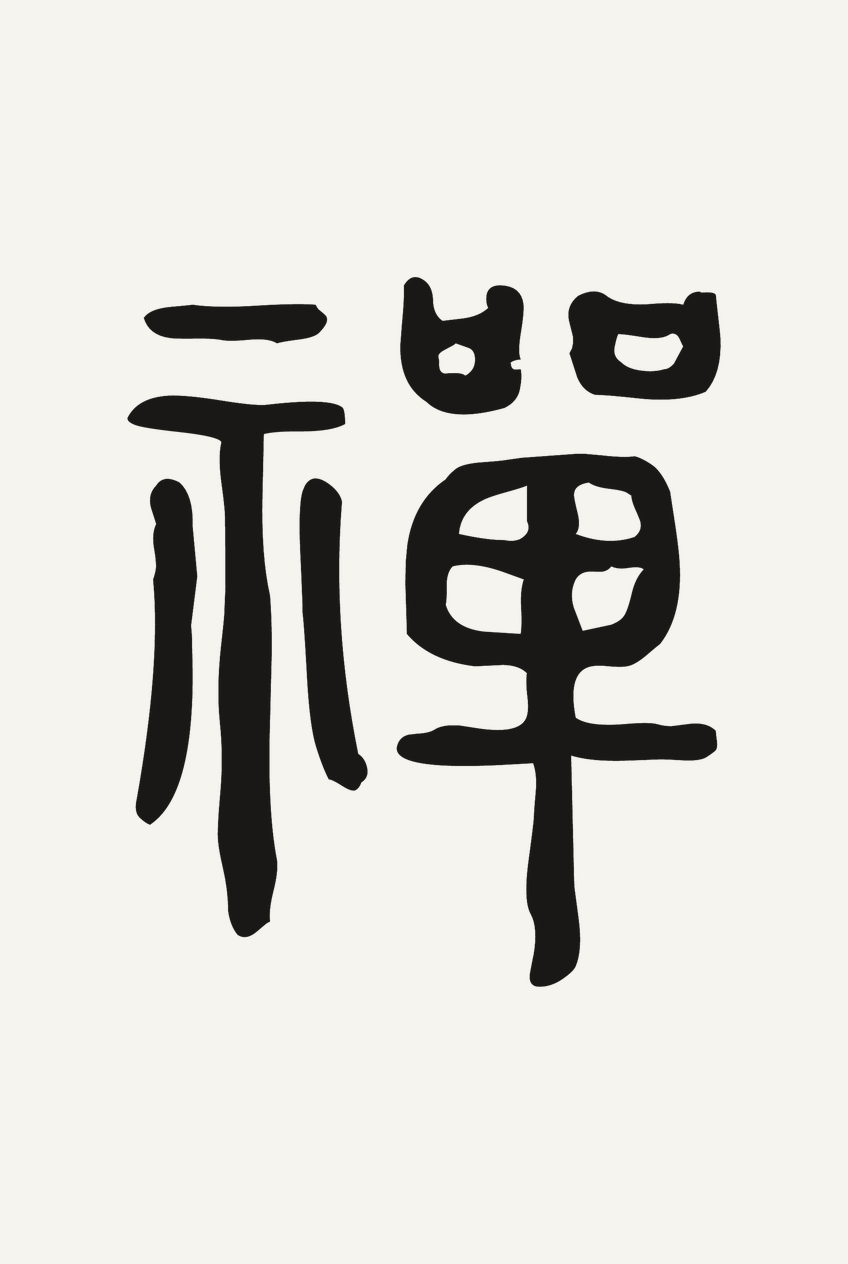
安 · Ān
Peace / Safety
Series: Single-Character Zen · Design #14
Style: single character, large · clerical script (lishu) · same form 安 · small-to-medium
Form: 文字
The Name
*Ān* — peace, safety, home at rest. The glyph is a roof (宀) over a woman (女): the oldest engineering definition of safety — a shelter, and the person who makes it a home, inside it. Every Chinese word for settled life runs through this character: 安家 (settle a home), 安心 (a heart at rest), 平安 (unbroken safety). As a tattoo, it is the roof you carry — the quietest large word in the language.
安——平安,家宅安顿。字形是一座屋顶(宀)下有一个女子(女):关于安全最古老的工程学定义——一处庇护,和那个把它变成家的人,都在里面。汉语里所有关于安定生活的词都从这个字里过:安家、安心、平安。纹下它,是你随身携带的那座屋顶——这门语言里最安静的大字。
Source & Provenance
《說文》: 安,靜也 — "peace: stillness." The Analects makes it a virtue's floor: 仁者安仁 — "the humane rest in humanity itself" (4.2); the *Great Learning* builds the mind's staircase on it: 靜而後能安 — "only after stillness comes rest" — and places rest as the precondition of every considered act. Inking note: this design adapts the classic line construction of the traditional motif and re-inks it as tattoo linework.
《说文》:「安,靜也。」《论语》把它设为德性的地基:「仁者安仁」;《大学》在它上面盖心的阶梯:「靜而後能安」——并把「安」立为一切深思熟虑之行动的前置条件。墨线转写:本设计以传统母题的经典线条造型为底,转写为纹身墨线。
Design Inspiration
Every form decision points to a recorded source, element by element. ① One character, alone, large — a roof wants to be read whole; the single hanging character is the door-glyph's native format. ② Clerical script, same form 安 — the roof's wide beam suits lishu's level beam-strokes: architecture matching architecture. ③ Small-to-medium scale — 8 cm wrist; 12 cm forearm. ④ Black ink only — peace has no mood lighting.
本设计的每一处形制决定都有出处可查,逐条对账。① 一字、独处、够大——屋顶要被完整地读;单字悬挂是门字的原生格式。② 隶书、同形「安」——屋顶的宽梁正合隶书水平的横笔:建筑配建筑。③ 小到中尺寸——腕上 8 厘米;小臂 12 厘米。④ 只用墨——平安不需要氛围灯。
The Story
The glyph's engineering is the sermon. A roof, and under it a person at rest: the word refuses to define safety as walls alone (a fortress is not 安) or persons alone (a wanderer is not 安) — safety is the relation: shelter meeting someone who can rest in it. The women under roofs in the oracle bones were not decoration; they were the definition of the word working. Every later use — 安民 (settle a people), 安邦 (settle a state) — keeps the equation: whatever you govern, the job is roof-people fit, not control.
The Great Learning builds its staircase and ends where 安 begins: 知止而後有定,定而後能靜,靜而後能安 — know where to stop, and stillness follows; stillness, and rest; rest — and only from rest — 而後能慮,慮而後能得 — can thought work, and attainment follow. 安 is load-bearing in the sequence: every good decision in Chinese statecraft is described as resting on it. The tattoo borrows the beam. Whatever is coming, the instruction stays: roof first, then everything else.
字形的工程学就是布道。一座屋顶,下面一个安顿的人:这个字拒绝把安全定义成只有墙(堡垒不是安),或只有人(漂泊者不是安)——安全是一种关系:庇护遇上了能在其中歇下来的人。甲骨文里屋顶下的女子不是装饰;她们是「这个词正在工作」的定义。后世所有用法——安民、安邦——都保留这条等式:无论治理什么,工作是让屋顶与人合上,不是控制。
《大学》搭好它的阶梯,终点正是安的起点:知止而后有定,定而后能静,静而后能安——安——而后能虑,虑而后能得。安在这条序列里承重:中国治术里每一个好决策,都被描述成「安」在下面托着。这个纹身借走了那根梁。无论什么要来,指令不变:先有屋顶,然后才有别的。
What It Means
For the uprooted rebuilding, the new parents, the anxious who are tired of performing calm. 安 does not promise the storm stops; it promises a relation you can build anywhere: shelter plus rest, portable, one character wide.
给连根拔起后重建的人、新父母、厌倦了表演「我没事」的焦虑者。安不承诺暴风雨停止;它承诺一种在任何地方都能搭建的关系:庇护加上安歇,可携带,一个字宽。
Where It Sits
One character, one plane: the nape (the design's most literal site — the roof over the spine), the inner wrist, over the sternum. 6–8 cm reads as a private roof; 10–12 cm, a household beam.
一个字,一个平面:后颈(这个设计最字面的位置——脊柱上方的屋顶)、腕内侧、胸骨正上方。6–8 厘米读作私人的屋顶;10–12 厘米读作一户人家的房梁。
Before You Ink
One character is the whole design. ② Same form 安. ③ Clerical script stays level. The roof beam must be the straightest stroke in the design — it is the one holding everything. ④ Minimum 5 cm. ⑤ It is a relation, not a status. 安 tattoos the fit between shelter and rest. If one of the two is missing from your life — walls without rest, rest without walls — the character is a blueprint, not a boast. Build.
一个字就是全部设计。 ② 同形「安」。 ③ 隶书保持平。 屋顶那道横必须全是设计里最直的一笔——托着一切的是它。④ 5 厘米起。 ⑤ 它是一种关系,不是一种身份。 安纹的是庇护与安歇的合缝。如果你的生活里两者缺一——有墙没有歇,有歇没有墙——这个字是一张图纸,不是一句自夸。去搭。
Every character on this card was selected and checked stroke by stroke by a native reader of Chinese.