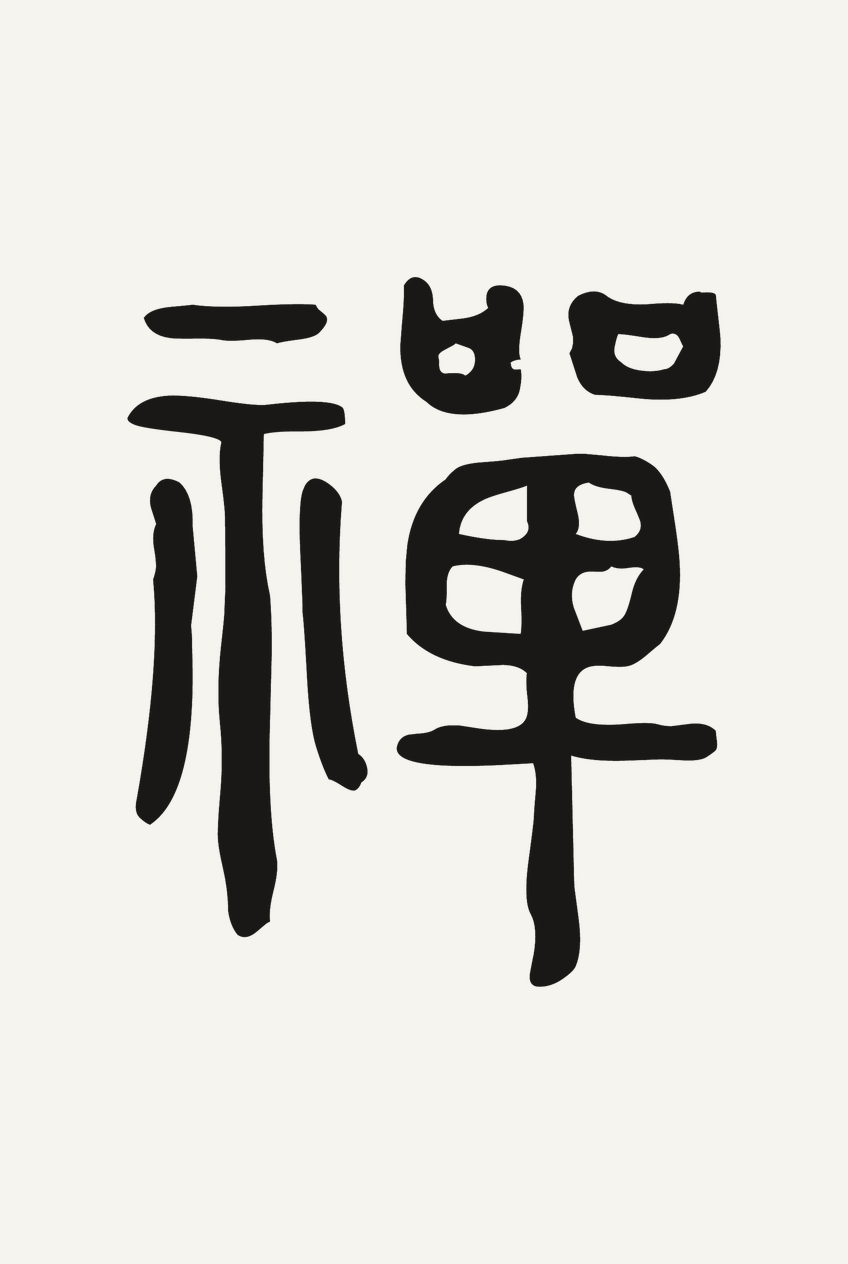
茶 · Chá
Tea
Series: Single-Character Zen · Design #35
Style: single character · clerical script (lishu) · traditional form 茶 · small-to-medium
Form: 文字
The Name
Tea. One character carrying a whole civilization's aesthetics: 艹 (grass, the leaf) over 人 (person) over 木 (tree) — a person under a tree with a leaf: the entire ceremony compressed into nine strokes. Tea in China is philosophy's drink: 禅茶一味, "Chan and tea, one taste." The monk drinks to stay awake for meditation; the meditation teaches that the tea is the teaching. As a tattoo, 茶 is a commitment to smallness done perfectly.
茶。一个字装着一整个文明的审美:艹(草,叶)下人,人下木——一个人在树下拿着一片叶:整场仪式压进九画。茶在中国是哲学的饮料:禅茶一味。僧人为坐禅清醒而饮;坐禅又教人「茶本身就是教法」。纹上茶,是对「把小事做到极好」的承诺。
Source & Provenance
Lu Yu's Classic of Tea (《茶經》, c. 760-780), the world's first monograph on tea: 茶者,南方之嘉木也 — "tea is the fine tree of the south." The character itself is a Tang-era stabilization (before Lu Yu, 荼 covered tea among its meanings). The Chan pairing 禪茶一味 comes from the Song-era tea-temple tradition. Inking note: this design adapts the classic line construction of the traditional motif and re-inks it as tattoo linework.
陆羽《茶经》(约 760-780 年),世上第一部茶学专著:茶者,南方之嘉木也——「茶,是南方的嘉木。」字本身是唐代定形(陆羽之前,「荼」字兼职指茶)。「禅茶一味」的并称出自宋代茶寺传统。墨线转写:本设计以传统母题的经典线条造型为底,转写为纹身墨线。
Design Inspiration
Every form decision points to a recorded source, element by element. ① One character, centered — the glyph is the still life: leaf over person over tree. ② Clerical script, traditional form 茶 — the grass-roof spreads like steam; the human figure under it is barely there, exactly the right size. ③ Small-to-medium scale — 4–6 cm; tea is not a loud character. ④ Black ink only — the color of the infusion is the color of the ink.
本设计的每一处形制决定都有出处可查,逐条对账。① 单字居中——字形即静物:叶、人、木三层。② 隶书、繁形「茶」——草字头铺开如蒸汽;底下的人形几乎看不见,尺寸恰恰对。③ 小到中尺寸——4–6 厘米;茶不是大声的字。④ 只用墨——茶汤的颜色就是墨的颜色。
The Story
Lu Yu was an orphan raised by monks, and he wrote tea as a complete system: origins, tools, firing, water, etiquette — twenty-three chapters that turned a beverage into a grammar of attention. His radical claim, smuggled inside the how-to: any act can be a practice if it is done completely. The water must be watched for the crab-eye bubbles; the leaf must be respected at its own pace; the guest's cup matters more than yours. Nothing in the Classic of Tea is about transcendence. Everything in it is transcendence, performed at table height.
The Chan tea houses took the lesson and ran: tea and meditation, one taste. The point was never the caffeine. The point is that a small ritual, done with total attention, ten thousand times, builds the same mind that a mountain hermitage builds — without the mountain. 茶 on skin is that thesis in one character: your daily cup is the dojo.
陆羽是僧人养大的孤儿,他把茶写成了一整套体系:源流、器具、炙烤、用水、仪则——二十三章,把一种饮料变成了一门「注意力」的语法。他藏在 how-to 里的激进主张:任何事,做彻底了,都是修行。水要看着它起蟹眼泡;叶要按它自己的节奏被对待;客人的杯比你的重要。《茶经》里没有一句讲超越。《茶经》里每一句都是超越,在桌面高度上完成。
禅寺的茶寮接住了这一课并把它跑起来:茶与禅,一味。要点从来不是咖啡因。要点是:一个小小的仪式,全神贯注地做一万次,能造出与山中道场同样的心——而且不用上山。皮肤上的「茶」就是这个论点的单字版:你每天那一杯,就是道场。
What It Means
For the ritualists — the pour-over people, the tea-ceremony people, anyone who has one small thing they refuse to rush. It dignifies the small thing.
给仪式感的人——手冲的人、茶道的人、任何拥有一件「绝不将就着快」的小事的人。它为这件小事正名。
Where It Sits
One character: inner wrist (where the cup steam rises), nape, sternum. 4–6 cm private, 7 cm stated; minimum 3.5 cm for the grass-roof to read.
一个字:腕内侧(杯口蒸汽升起的地方)、后颈、胸骨。4–6 厘米私人,7 厘米公开;草字头要读出来需 3.5 厘米起。
Before You Ink
One character is the whole design. ② Traditional form 茶. ③ Clerical script, level weight — a tea stroke is never hurried. ④ Minimum 3.5 cm. ⑤ Ritual, not consumption. The character honors the practice, not the product. If the tattoo outlives the daily cup, either resume the cup or admit it is now a memory of one.
一个字就是全部设计。 ② 繁形「茶」。 ③ 隶书、体量平正——茶的笔画从不赶时间。④ 3.5 厘米起。 ⑤ 是仪式,不是消费。 这个字致敬的是练习,不是产品。如果纹身比每日那杯茶活得久,要么恢复那杯茶,要么承认它现在是一段回忆。
Every character on this card was selected and checked stroke by stroke by a native reader of Chinese.