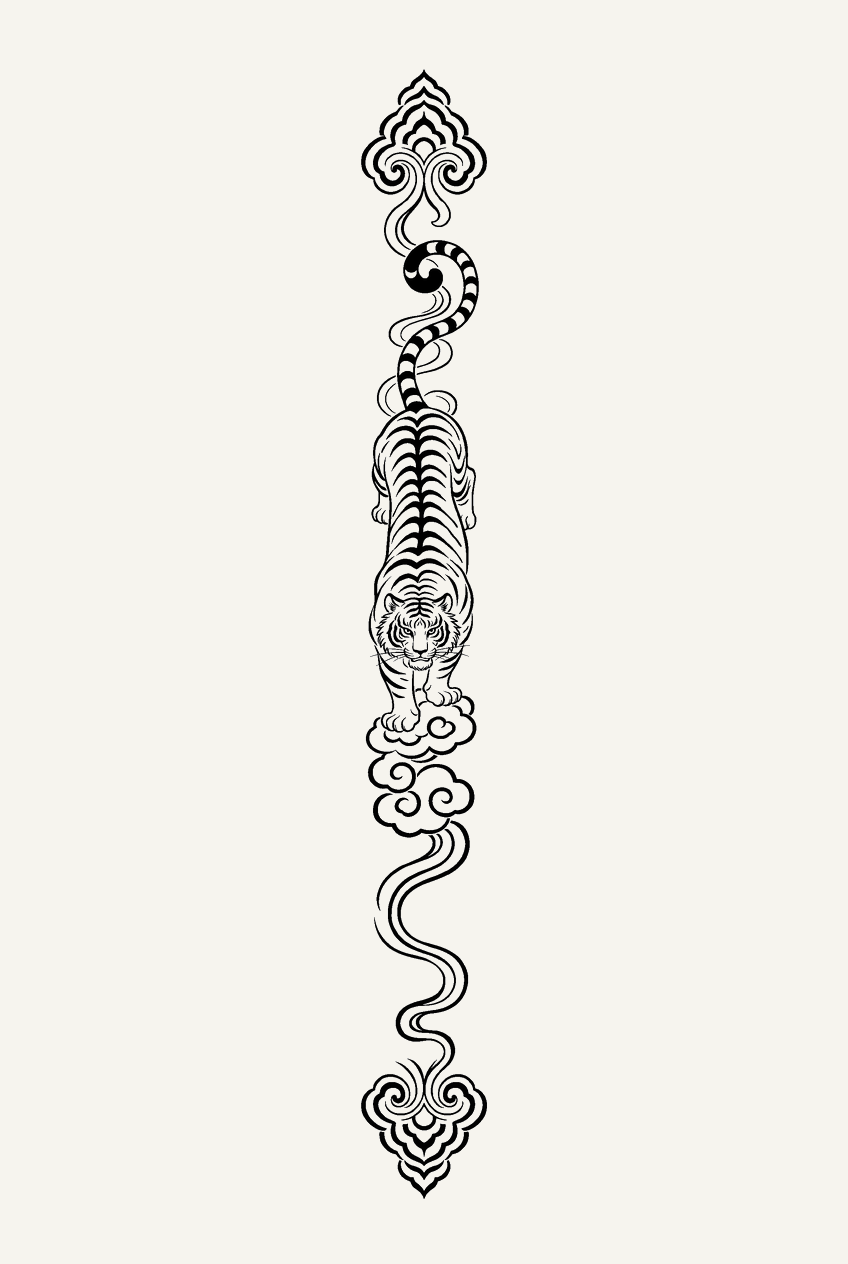
白描虎带 · Bái Miáo Hǔ Dài
The Ink Tiger
Series: Symbols & Patterns · Design #22
Style: Line-drawn tiger vertical band · outline-and-stroke tiger with rolling clouds, ink-line discipline · white ground with black pattern lines · full arm-band or leg-band wrap · scalable 12–18 cm
Form: 图案
The Name
bái miáo hǔ dài — the tiger with nothing but the truth. *Báimiáo* (白描), "plain drawing," is the Chinese line discipline: no wash, no color, no shading — the subject exists entirely in the stroke. A tiger rendered in baimiao cannot lean on mass or menace. Every bone, every claw, every stripe must be said in one unbroken line, the way a calligrapher says a character: once, correctly, without retouching. What survives that discipline is not less fierce than the black tiger. It is fierce the way a sentence is fierce — because nothing can be taken back.
白描虎带(bái miáo hǔ dài)——只剩真话的老虎。白描,是中国画的线条戒律:不晕染、不设色、不涂阴影——对象全部活在笔道里。用白描画虎,靠不了体块与气势。每一根骨、每一爪、每一条纹,都必须用一根不断的线说完,像书家说一个字:一遍,写对,不回笔。经得起这戒律的虎,并不比黑虎少凶。它的凶是一句话的凶——因为什么都收不回去。
Source & Provenance
The baimiao line tradition of Chinese painting — outline-only drawing practiced from Tang figure masters through Song Chan painting to Ming book illustration — applied to the tiger, the west guardian of the four-symbol system (Han tile-ends and star charts) and the mountain ruler of Chinese animal painting. The *Shuowen* gives the animal's standing in one line: 「虎,山兽之君」 — "the tiger, sovereign of the beasts of the mountain." Folk tradition adds the protective register: tiger images at the gate and on children's clothes against the five poisons. Historical form reference: line-drawn tigers in Chinese painting traditions with cloud scrolls. Inking note: this design adapts the classic line construction of the traditional motif and re-inks it as tattoo linework.
中国画的白描传统——从唐代人物大家到宋代禅画再到明代书籍插画,一路只勾轮廓的画法——施于虎身:虎是四方体系的西方之守(汉代瓦当与星图),也是中国画里的山林之君。《说文》一句话定了它的地位:「虎,山兽之君。」民俗又给它添了守护的登记项:门上与孩童衣上的虎,镇五毒。形制参考:中国画传统中伴流云的线描虎。墨线转写:本设计以传统母题的经典线条造型为底,转写为纹身墨线。
Design Inspiration
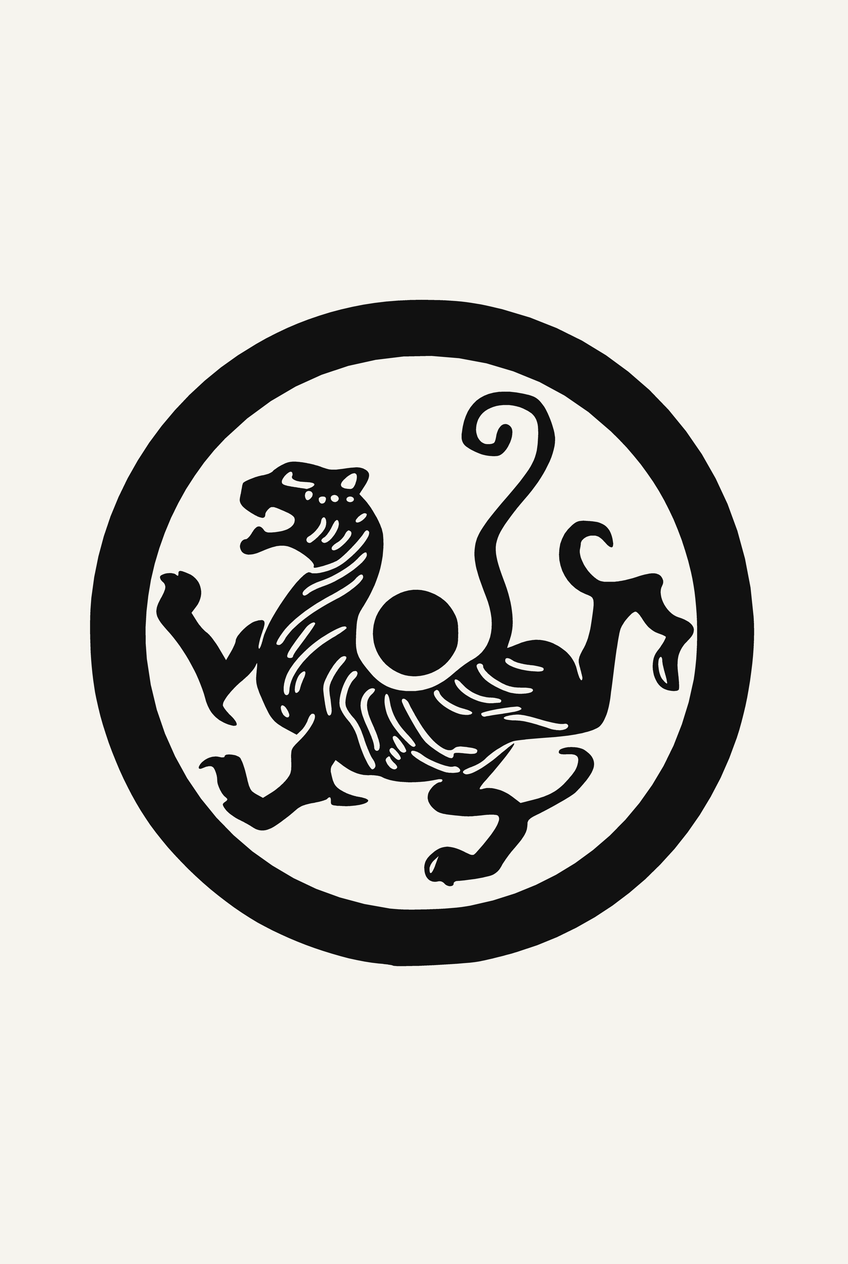
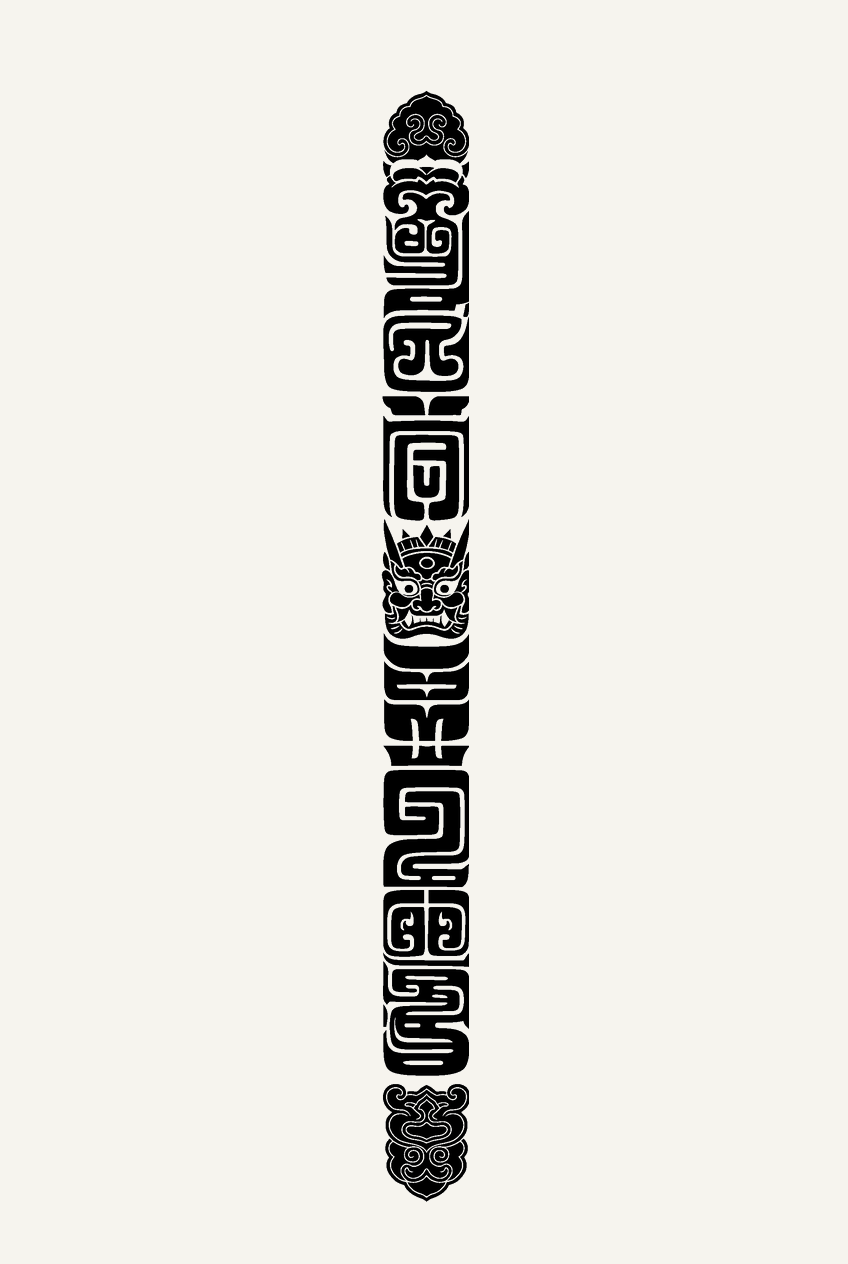
Every form decision on this design points to a recorded source, element by element. ① The outline tiger — body said in contour line alone, the baimiao discipline. ② The stripe as brushstroke — each stripe a single tapering stroke, never a filled band. ③ The rolling clouds — scroll clouds drawn in the same line weight, the painting tradition's companion ground. ④ The white-ground polarity — black line on paper white, the inverse twin of the solid-black tiger band.
本版每一处形制决定都有出处可查,逐条对账。① 轮廓虎——身体只用轮廓线说完,白描戒律。② 条纹即笔触——每条纹是一笔带收锋的单笔,绝不是涂满的色带。③ 回卷流云——同一线重的卷云,画学传统里的标配地纹。④ 白地极性——纸白上黑线,与实黑虎带互为反转的孪生。
The Story
The painted tiger and the real tiger have a contract that has run for two thousand years: the painting does not try to be scary, and the respect arrives anyway. Chinese painters learned early that the tiger's power is not in its mass — a painted mass is just ink — but in its certainty. The way the shoulders roll. The way the stripes break exactly where the body turns. The way the tail states rather than waves.
Baimiao is the strictest school of that certainty. Remove the wash and what remains is the drawing's honesty: every line is a decision, visible forever. A stripe wobbles, the tiger wobbles. So the artists who drew tigers this way were showing their hand — this is what I know about tigers, said all at once, in one pass, no corrections.
The band carries that honesty around the arm. Tiger and clouds share the same line weight, black on paper white, the inverse twin of the solid-black band beside it in this collection. Two tigers, one statement made twice: the first shouts it, this one says it quietly — and the quiet version is the one you cannot argue with.
画里的虎与真虎之间有一份跑了两千年的合同:画不负责吓人,敬意照样到账。中国画师很早就明白,虎的力量不在体块——画出来的体块只是墨——而在它的确信。肩滚动的样子。条纹恰好在身体转折处断开的样子。尾巴是「陈述」而不是「摇摆」的样子。
白描是这份确信最严的学堂。撤掉晕染,剩下的是线稿的诚实:每一根线都是一次决定,永远可见。一条纹抖了,整只虎就抖了。所以这样画虎的艺术家是在亮牌——「这是我关于虎所知的一切」,一次说完,一遍过,不修正。
这条带把那份诚实绕在臂上。虎与云用同一线重,纸白上黑线,是本系列里实黑虎带的反转孪生。两只虎,一句话说两遍:前一只喊出来,这一只平静地说——而平静的那个版本,才是你没法反驳的版本。
What It Means
Skill you don't have to raise your voice for. The baimiao tiger is mastery as evidence: the power is in the line's certainty, not its volume. Also clarity — the design strips the tiger to what is true about it. For people whose authority is competence rather than noise, this is the band.
不需要提高音量的本事。白描虎是「功力作为证据」:力量在线的确信里,不在音量里。也是清晰——设计把虎剥到只剩关于它为真的部分。给那些权威来自胜任而非喧哗的人,就是这条带。
Where It Sits
Full arm band on the upper arm or forearm, 3–5 cm wide, tiger and clouds wrapping the limb. As a leg band at the calf the line-drawing style reads like ink on skin. Pairs deliberately with the solid-black tiger band (hu-dai) as a two-person or two-placement set.
上臂或前臂整圈臂环,宽 3–5 厘米,虎与云绕肢而行。小腿腿环上,线描风格读作「皮肤上的墨」。与实黑虎带(hu-dai)构成刻意的呼应:双人或双位成套。
Before You Ink
Line-only work is unforgiving: choose an artist whose single strokes stay confident at length — this band is a linework audition. ② Minimum 3 cm width; the fine stroke lines blur first. ③ The stripe direction must follow the body's turn around the limb — a stripe drawn straight across a curve breaks the anatomy. ④ Ink-only by design: no shading, no fill — the drawing is the discipline. ⑤ Line-weight consistency is the touch-up criterion: book reviews annually.
纯线作品不留情面:选长线单笔依然笃定的纹身师——这条带就是一场线稿面试。② 至少 3 厘米宽;细笔道最先糊。③ 条纹方向必须顺着身体绕肢的转折——在弧面上直着画的条纹会毁掉解剖。④ 只宜墨线:不晕不填——画就是戒律。⑤ 线重一致性是补色判据:每年复查。
Every character on this card was selected and checked stroke by stroke by a native reader of Chinese.