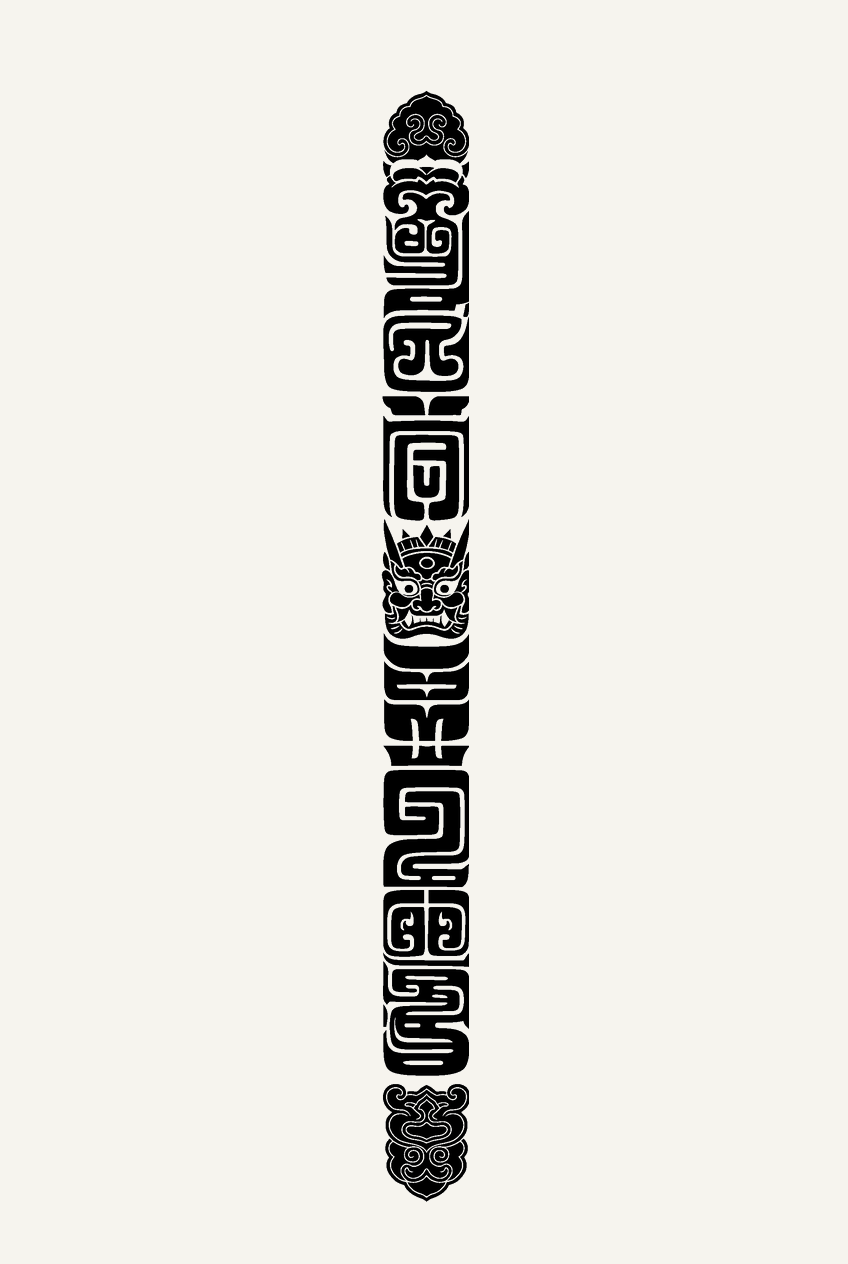
蝉纹带 · Chán Wén Dài
The Cicada's Return
Series: Symbols & Patterns · Design #14
Style: Bronze cicada vertical band · geometric registers in black-and-white block contrast · full arm-band or leg-band wrap · scalable 12–18 cm
Form: 图案
The Name
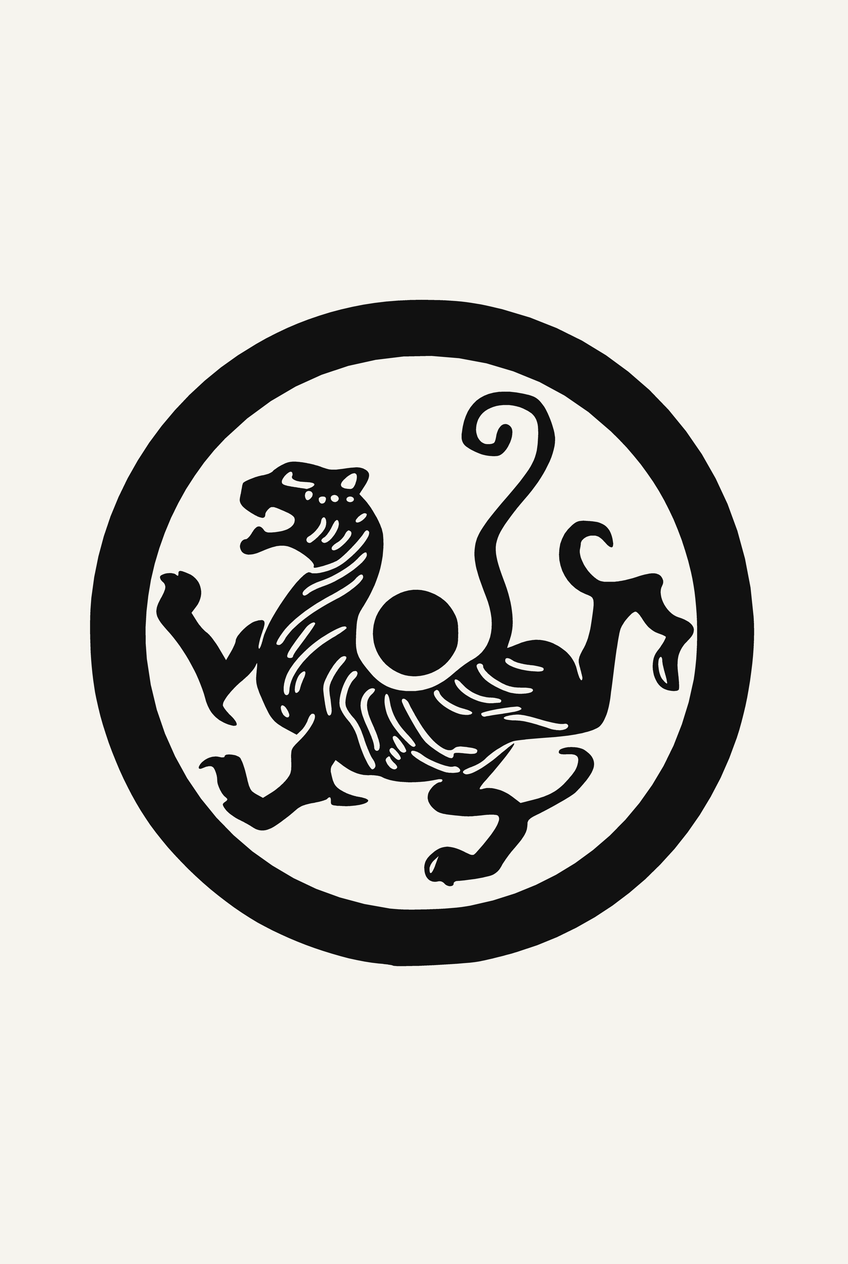
chán wén dài — the cicada, cast in bronze three thousand years before anyone wrote a poem about leaving a shell behind. On Shang and Zhou ritual vessels the cicada appears again and again: a blunt triangular body, bulging eyes, neat rows of legs, reduced to pure geometry. The Chinese never stopped reading meaning into it. The cicada lives underground, climbs, sings, and sheds its skin — the ancients watched that and wrote two of the most durable words in the language: chán tuì, the cicada's shed shell, the word for rebirth through retreat.
蝉纹带(chán wén dài)——蝉,在任何人写下一句「留壳而去」的诗之前三千年,就被铸进了青铜。商周的礼器上,蝉一次次出现:一个钝三角的身体、鼓凸的双眼、排列整齐的足,被简化成纯几何。中国人从未停止往它身上读出意义。蝉在土里蛰居、攀高、鸣叫、蜕壳——古人看着这一切,写下了语言里最耐久的词之一:蝉蜕,退一层壳,换一次新生。
Source & Provenance
Cicada registers on late Shang and Western Zhou ritual bronzes — the geometric cicada rows cast along vessel bodies and stands, triangular head, protruding eyes, banded legs. The motif returned for two millennia in jade: Han-dynasty jade cicadas were placed with the dead as tokens of transformation, and the living wore cicada jade for purity. Sima Qian's portrait of Qu Yuan gives the moral gloss: 「蝉蜕于浊秽」 — "shed the shell and leave the mire behind" (*Records of the Grand Historian*). Historical form reference: cicada registers on Shang-Zhou bronzes and Han jade cicada carving. Inking note: this design adapts the classic line construction of the traditional motif and re-inks it as tattoo linework.
商代晚期与西周青铜礼器上的蝉纹带——几何化的蝉成行成列,铸在器身与器座上:三角的头、突出的眼、成段的足。这个母题在玉里又延续了两千年:汉代的玉蝉随葬,是蜕变的信物;生人佩蝉,取的是高洁。司马迁写屈原,给它配了道德注脚:「蝉蜕于浊秽」——脱一层壳,把浊秽留在身后(《史记》)。形制参考:商周青铜蝉纹与汉代玉蝉雕法。墨线转写:本设计以传统母题的经典线条造型为底,转写为纹身墨线。
Design Inspiration
Every form decision on this design points to a recorded source, element by element. ① The geometric cicada body — the blunt triangle with twin bulging eyes, the Shang bronze reduction. ② The banded legs — rows of short hooked legs, cast not drawn. ③ The geometric registers above and below — square-folded fret-like fields framing the cicada band, the bronze way of building a register. ④ The alternating black ground — black and white swap band by band, as bronze decor shifts between raised and recessed planes.
本版每一处形制决定都有出处可查,逐条对账。① 几何蝉身——钝三角加一双鼓眼,商代铜器的减法。② 成段的足——一行行短钩足,是铸出来的,不是画出来的。③ 上下几何纹段——方折回环的几何地纹框住蝉带,青铜造段的老办法。④ 黑地交替——黑与白逐段翻面,如铜饰纹在凸起与凹下两种平面间的切换。
The Story
The cicada spent seventeen years underground before anyone heard it sing. The ancients did not know the number, but they knew the arc: out of the dark, up the trunk, out of the shell, into the trees — singing. No other animal performs its own escape so completely, and no other animal leaves its old body hanging on the tree as proof.
Bronze founders saw it and thought of vessels. Jade carvers saw it and thought of journeys. Sima Qian saw it and thought of Qu Yuan, the poet who would not stoop: "he shed the shell in the mire and floated free of the dust." Two thousand years later the phrase still works, because the insect still works: the shell cracks, the wings fill, the same creature comes out brand new.
This band is that whole arc, drawn as a bronze register. The cicada sits in its geometric field, framed by the square-folded patterns of the vessel world — a small, patient monument to the most useful sentence in a hard year: this is not the final form.
蝉在地下住了十几年,才轮到别人听见它唱歌。古人不知道那个数字,但他们看得见那条弧线:从黑暗里出来,沿树干向上,从壳里出来,进树——开始唱。没有别的动物把「自救」完成得这么彻底,也没有别的动物把旧身体挂在树上作证。
铸铜的人看见它,想到的是器物。琢玉的人看见它,想到的是远行。司马迁看见它,想到的是不肯折腰的屈原:「蝉蜕于浊秽,以浮游尘埃之外。」两千年后这句话仍然成立,因为这只虫仍然成立:壳裂开,翅撑满,同一只虫崭新地出来。
这条带,就是把整条弧线画成一段青铜纹。蝉坐在它的几何格子里,四周是器物世界的方折地纹——一枚小小的、耐心的碑,刻着难熬的年份里最有用的一句话:现在还不是最终形态。
What It Means
Exit, with proof. The cicada is the Chinese emblem of transformation that leaves evidence: you do not just change, you hang your old shape on the tree and walk away clean. Purity earned by climbing, voice earned by waiting — patience that ends in song.
离场,且留证据。蝉是「蜕变留证」的中国图腾:不只是变,而是把旧壳挂在树上、干干净净走掉。向上挣来的干净、等出来的声音——耐心最终以歌唱收尾。
Where It Sits
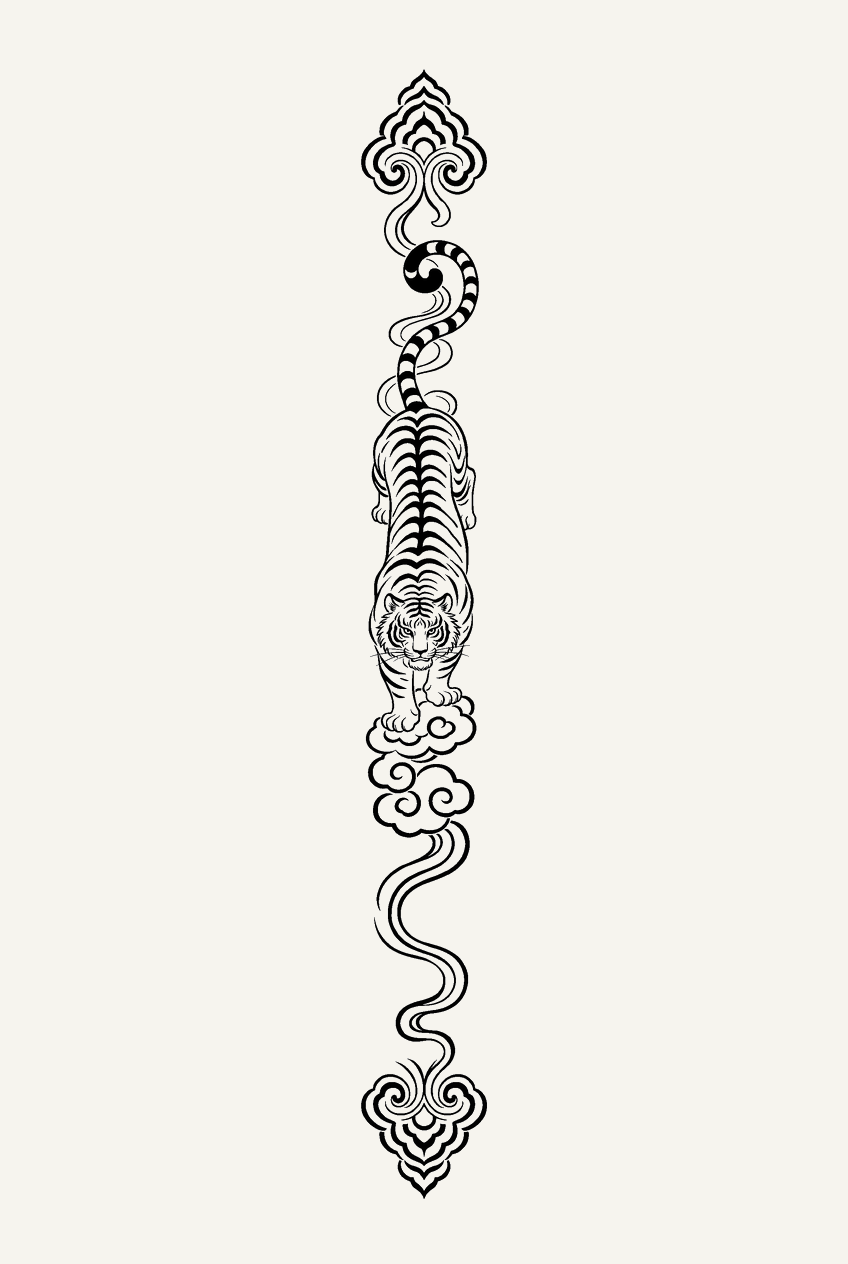
Made for the arm band: the registers wrap the upper arm in a full ring, 3–5 cm wide. As a leg band it suits the calf; on the forearm it runs as a partial strip. Keep the cicada register facing out — it is the face of the band.
为臂环而造:纹段绕上臂一整圈,宽 3–5 厘米。作腿环适合小腿;前臂可作半条。蝉段朝外——它是这条带的脸。
Before You Ink
The geometric body needs straight-parallel skill: pick an artist whose linework does not wobble on long borders. ② Keep band width at 3 cm minimum; the white cut-lines inside the black fields close up if the band heals too narrow. ③ The seam should fall in the geometric registers, never across the cicada. ④ Ink-only by design: the two-tone block structure carries the pattern; color would dilute it. ⑤ Inner-arm friction blurs white lines first — plan the first touch-up within the first year.
几何蝉身考验平行直线功夫:选长边界不抖的纹身师。② 带宽至少 3 厘米;愈合后黑地里切出来的白线会收窄,带太细就糊。③ 缝口落在几何纹段里,绝不许跨过蝉。④ 只宜墨线:黑白块面结构就是图案本体,加色反而稀释。⑤ 臂内侧摩擦先磨白线——第一年内安排首次补色。
Every character on this card was selected and checked stroke by stroke by a native reader of Chinese.