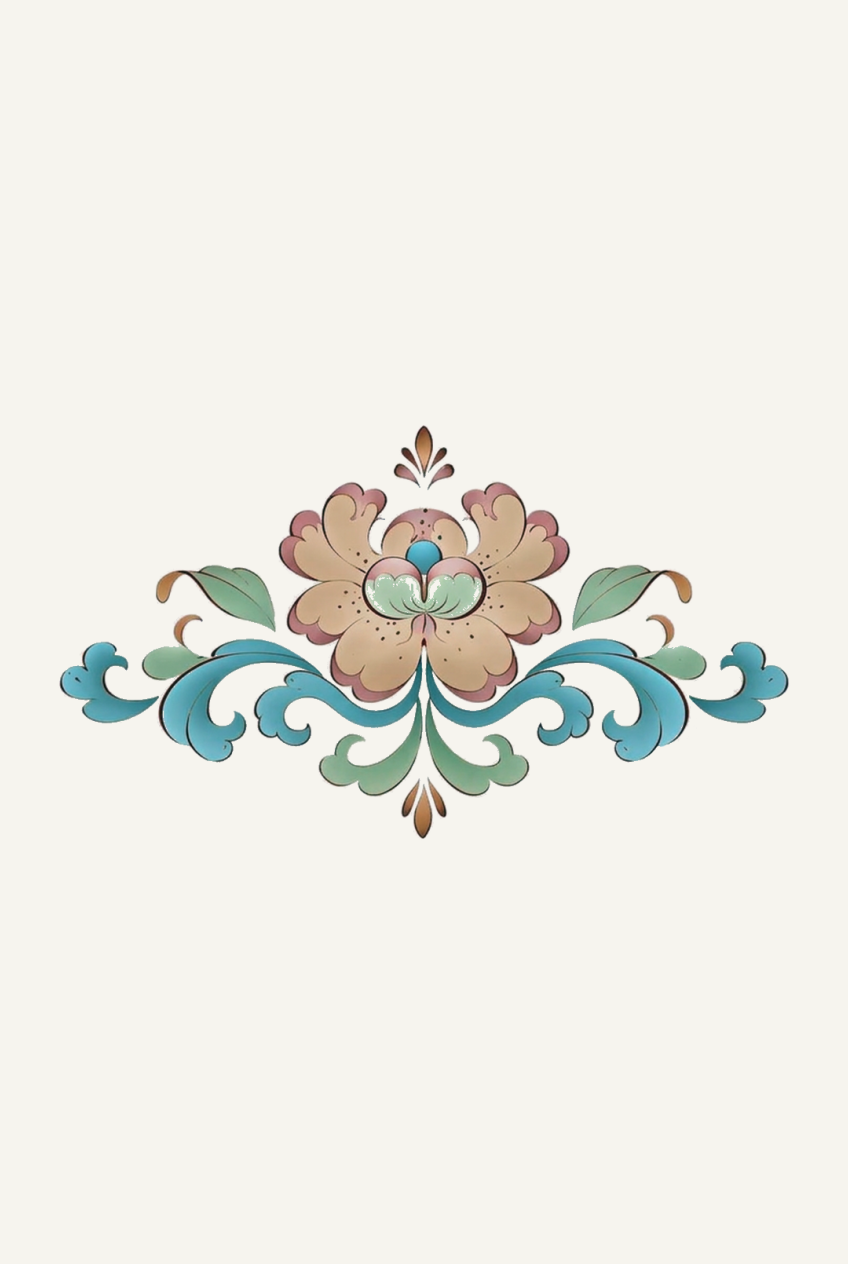
茶花纹 · Chá Huā Wén
The Camellia
Series: Symbols & Patterns · Design #31
Style: A single open camellia with curling leaves thrown to either side · ornamental fill · centered horizontal balance · scalable 10–15 cm
Form: 图案
The Name
*chá huā wén* — the "tea flower pattern," the camellia. The Chinese name ties it to tea not by botany but by company: it flowers in the same cool season the tea gardens are picked. Where the plum is thin and the peony loud, the camellia sits somewhere in between — a full, many-petaled bloom that opens in cold weather and lasts. The motif is usually one flower, plain, held up by leaves rather than surrounded by them.
茶花纹(chá huā wén)——「茶花」就是山茶。中文名字把它和茶绑在一起,不是因为植物学,而是因为时令:茶园采摘的凉季,正是它开花的日子。梅花清瘦,牡丹喧闹,山茶在两者之间——一朵重瓣的、饱满的花,在天冷时开,而且开得久。纹样里通常是单独一朵,不簇不拥,靠叶子托着。
Source & Provenance
The camellia (山茶) has been cultivated in southern China since at least the Tang, and Li Shizhen records it in the *Běn Cǎo Gāng Mù*. Poets of the Tang and Song wrote it into the cold season — a flower that keeps its color when others drop theirs — and by the Ming and Qing it was counted among the celebrated Ten Flowers. Decoration took the single open bloom rather than the whole branch: the layered petals and the waxy, dark leaf became a stock motif on ceramics, textiles and lacquer. Historical form reference: single-bloom camellias on Ming and Qing ceramics and textile prints. Inking note: this design adapts the classic line construction of the traditional motif and re-inks it as tattoo linework.
山茶至迟在唐代已见于江南栽培,李时珍《本草纲目》亦收其条。唐宋诗人把它写进寒天——众芳摇落,它还留着颜色;到明清,山茶列入著名的「十大名花」。装饰取的是那朵单开的花,不是整枝:层叠的花瓣与蜡质的深绿叶,成了瓷器、织物与漆器上的常见题材。形制参考:明清瓷器与织物印染上的单朵山茶。墨线转写:本设计以传统母题的经典线条造型为底,转写为纹身墨线。
Design Inspiration
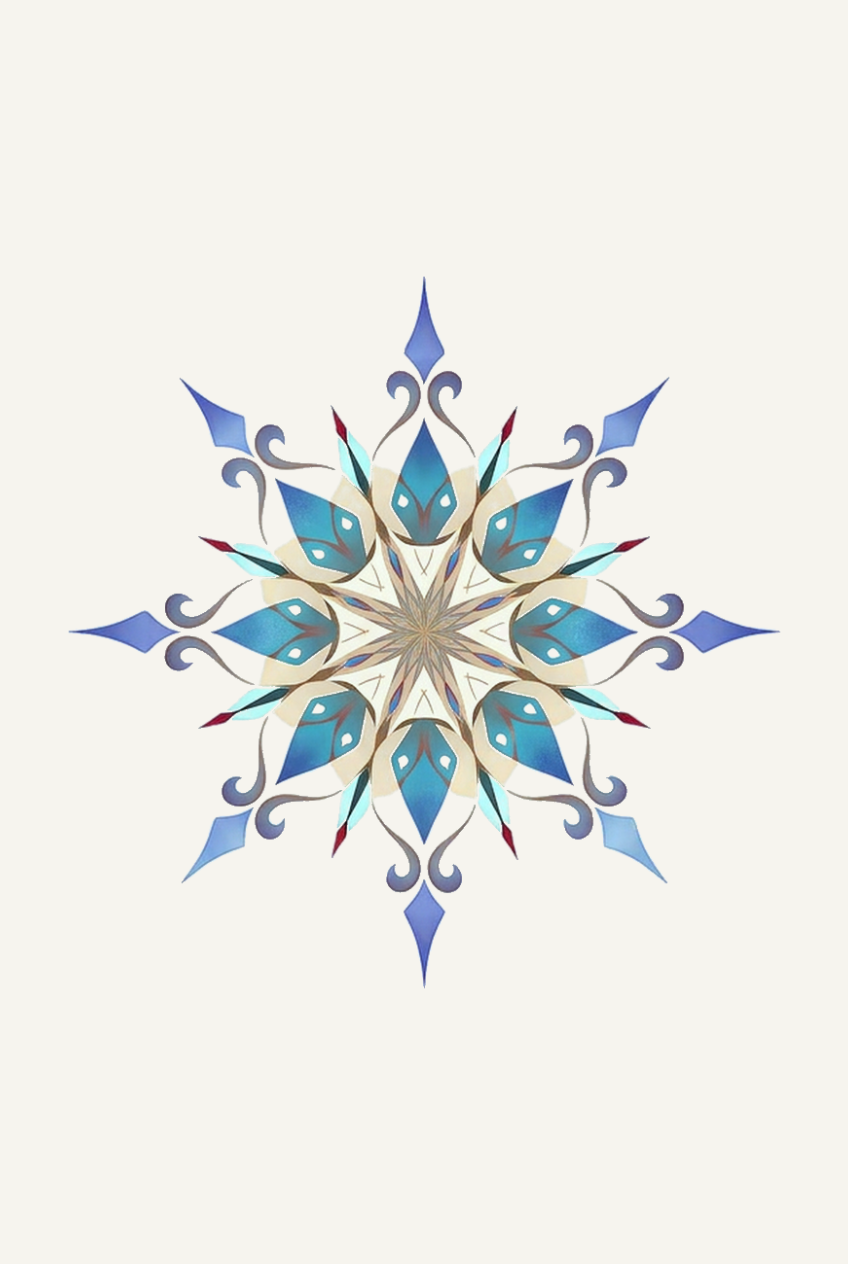
The design keeps to the single-bloom type, element by element. ① The open flower — a many-petaled bloom read straight on, petals stacked in two rings around the center, not a bud and not a side view. ② The curling leaves — blue-green leaves thrown left and right in mirror, their tips rolled like the camellia's own waxy edge. ③ The small buds — pale green buds tucked among the leaves, the only concession to a branch. ④ The four-color fill — rice-pink and lotus-red petals against blue-green leaves and small green buds, kept deliberately light.
本版守着「单朵」这一类纹样,逐条对账。① 盛开的花——一朵正面的重瓣花,花瓣分内外两轮围着花心,不是花苞,也不是侧看。② 翻卷的叶——青蓝的叶子向左右镜像抛出,叶尖卷起,学山茶蜡质叶缘的劲。③ 小花苞——粉绿花苞藏在叶间,是全图唯一对「枝」的让步。④ 四色填彩——米粉与藕荷的花瓣,配青蓝的叶与浅绿的花苞,颜色刻意留得轻。
The Story
The camellia is a flower that refuses the calendar. It opens in the cold months, holds its petals through frost, and drops them whole rather than brown and ragged. That is why it kept appearing in the winter poems and on the winter side of the porcelain: it was the flower you could count on when the others had gone.
As a motif it stayed modest. No sprawling branch, no bird, no full garden — just the one bloom, laid out flat so you could read every petal, with two leaves thrown out to hold the balance. The discipline is what gives it dignity: everything the eye needs is in the flower itself.
On skin that same restraint works in your favor. A single open bloom reads at a glance and ages well; the mirror leaves keep it settled on the body; the cold-season meaning needs no explanation to anyone who has kept their color through a hard stretch. It is a small design about lasting, worn lightly.
山茶是一朵不认日历的花。它在冷天开,带着花瓣熬过霜,落下时也是整片地落,不枯不烂。所以它反复出现在冬天的诗里、瓷器的冬景一边——是别的花都走了之后,你还数得上的那一朵。
做成纹样,它也一直克制。没有旁逸的枝,没有鸟,没有满园——就是那一朵,摊平了让你数清每一瓣,两片叶子向左右抛出,把平衡稳住。正是这份克制给了它体面:眼睛需要的东西,花本身全给了。
放到皮肤上,这份克制反而占便宜。单朵盛放一眼就读懂,也不容易看腻;对称的叶让它贴着身体坐得稳;「寒天还留着颜色」这层意思,对熬过一段难日子的人不必解释。这是一个关于「撑得住」的小图案,戴得轻。
What It Means
Holding color in the cold. The flower that opens late and lasts, that drops whole rather than ragged. Wear it for endurance without noise — the kind that keeps its own color and lets the season do the talking.
在天冷时还留着颜色。开得晚、开得久,落也是整片地落。给不声张的韧性——自己守着颜色,让季节去说。
Where It Sits
A single centered bloom likes a flat, readable field: upper arm or thigh at 10–13 cm, shoulder blade at 11–14 cm, and center of the back at 13–16 cm. Keep the flower itself unbroken; the leaves may follow the body's line, but the petals want a flat plane.
单朵居中花喜欢平整、看得全的地方:上臂或大腿 10–13 厘米,肩胛 11–14 厘米,后背正中 13–16 厘米。花心别破;叶子可以顺着身体走,花瓣要一块平面。
Before You Ink
Keep the bloom single. The design is one flower, not a spray — adding branches dilutes the point. ② Color is optional, line is not. The reference uses rice-pink, blue-green and bud-green; the transfer linework alone carries the flower, and many keep it ink-only. ③ Respect the scale. Minimum 10 cm — smaller, the inner and outer petals merge and the bloom clogs. ④ Choose a flat plane. The layered petals need a stable surface; avoid joints and the high-friction sides of the torso.
保持单朵。 本图是一朵花,不是一枝花——添枝就散了主题。② 颜色可选,线不可省。 参考图用米粉、青蓝与苞绿;转印线稿本身就撑得住花,很多人只留墨线。③ 留够尺寸。 最小 10 厘米——再小内外瓣并在一起,花就堵了。④ 选平面。 层叠的花瓣需要稳定的面;避开关节与躯干高摩擦的两侧。
Every character on this card was selected and checked stroke by stroke by a native reader of Chinese.