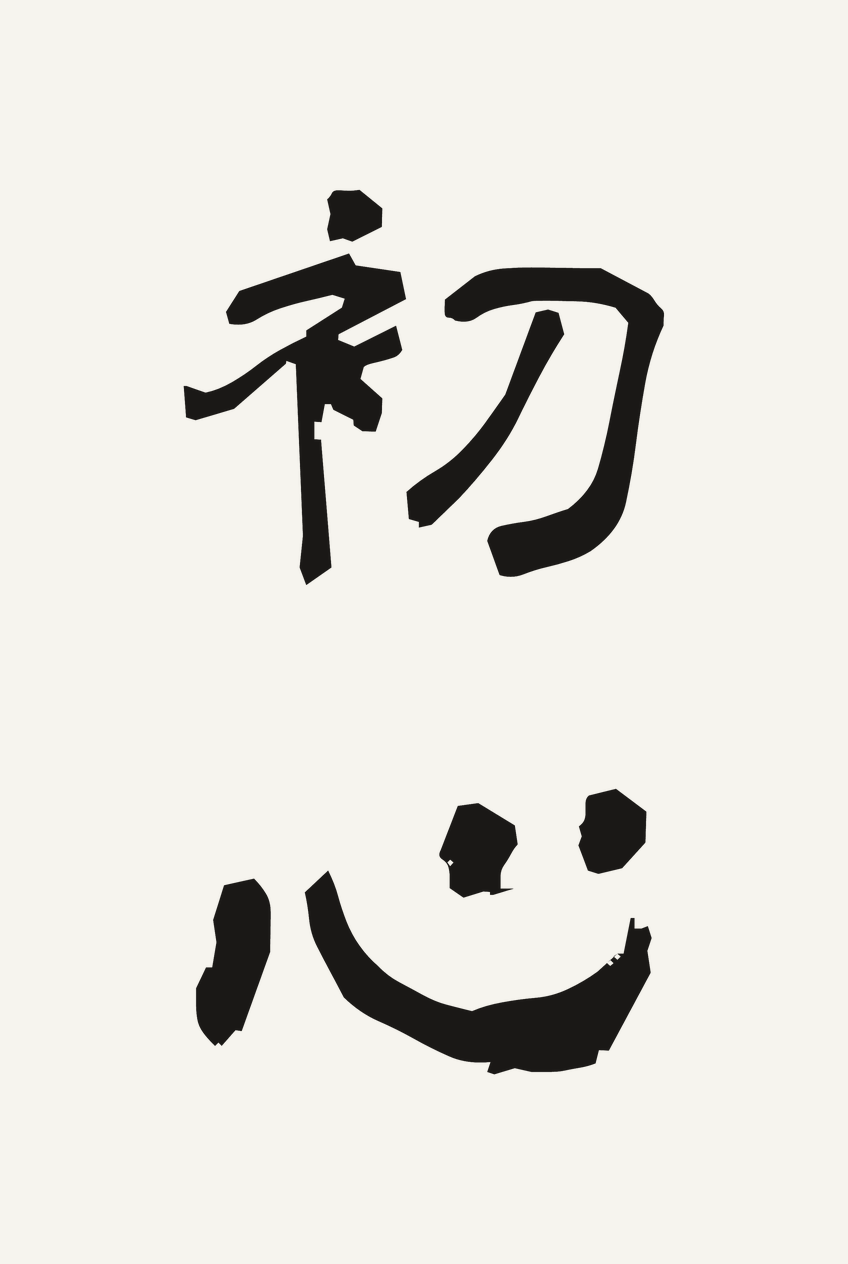
初心 · Chū Xīn
The Original Heart
Series: Single-Character Zen · Design #07
Style: two characters, vertical column · clerical script (lishu) · same form 初心 · small-to-medium
Form: 文字
The Name
*Chū xīn* — the first heart. Not the first emotion; the first reason. The word is Buddhist in origin — 初發心, the mind of a practitioner at the very first vow, before technique, before audience, before the thing became a job. Zen later made it a koan-adjacent ideal: the beginner's mind that sees without the filter of expertise. As a tattoo, it is a compass that points backward — toward the version of you who started something for the right reason.
初心——不是最初的情绪;是最初的理由。这个词源出佛典——初發心,修行者发第一个愿时的心:在技术之前,在观众之前,在这件事变成一份工作之前。禅宗后来把它磨成近于公案的理想:初学者之心,看得见没有专业滤镜的东西。纹下它,是一枚指向身后的罗盘——指向那个因为正确的理由开始做某件事的你。
Source & Provenance
From the Avatamsaka Sutra: 初發心時,便成正覺 — "at the moment of the first resolve, right awakening is already present" — the beginning was never a rehearsal; it contained the thing itself. Chinese literati kept the phrase sharp: 明代《菜根譚》 warns that those who finish poorly started hot — 千里之行始于足下's sister caution. Inking note: this design adapts the classic line construction of the traditional motif and re-inks it as tattoo linework.
《华严经》:「初發心時,便成正覺」——起点从来不是彩排;它本身就包含着那个东西。文人把这个词磨得更利:明《菜根谭》警醒——行到末路的,往往是当初起头起得太热的。墨线转写:本设计以传统母题的经典线条造型为底,转写为纹身墨线。
Design Inspiration
Every form decision points to a recorded source, element by element. ① Two characters, one vertical column — the compound as it is chanted; 心 (heart) sits at the base, where hearts belong. ② Clerical script, same form 初心 — the characters are the same in both shapes: what was true at the start is true now; even the glyphs refuse to drift. ③ Small-to-medium scale — 8–10 cm; a private instrument, not a proclamation. ④ Black ink only — the first draft's palette was already correct.
本设计的每一处形制决定都有出处可查,逐条对账。① 二字竖列——如念诵时的叠置;「心」落在底部,心本来就该在的地方。② 隶书、同形「初心」——两字简繁同形:起点为真的,现在仍为真;连字形都拒绝漂移。③ 小到中尺寸——8–10 厘米;一件私用的仪器,不是一篇宣言。④ 只用墨——第一稿的配色已经是对的。
The Story
The sutra's claim is almost arrogant: the first resolve already contains the completed awakening — not that you finish at the start, but that the start, honestly made, is the whole path in miniature. Every later complication is accretion: technique that forgets its purpose, success that reroutes the motive, audience that replaces the work. 初心 is the audit word. It does not ask if you have improved. It asks what the improvement was for.
The Zen masters turned it into the beginner's paradox: in the beginner's mind there are many possibilities; in the expert's mind, few. Expertise narrows until it fits its own grooves. The discipline of 初心 is not nostalgia for being young — it is the refusal to let competence become opacity. The most experienced hand in the room should still be able to see the thing the way the first day's hand saw it: unowned, surprising, worth doing for its own sake.
经文的主张近乎狂妄:第一个愿心就已经包含着完成的觉悟——不是说你在起点就到了终点,而是说诚实的起点本身,就是整条路的微缩。此后的一切复杂都是附着:忘了目的的技术、改道了动机的成功、取代了作品的观众。初心是那把审计用的尺。它不问你有没有进步。它问:这个进步是为了什么。
禅门把它翻成初学者的悖论:初心里有无限可能;专家心里,可能性寥寥。专业收窄,直到合进自己的沟槽。初心的功课不是怀念年轻——是拒绝让熟练变成不透明。屋里最有经验的那双手,应该仍然能看见第一天那双手看见的东西:不属于谁的、令人惊讶的、本身值得做的。
What It Means
For founders, artists, parents, practitioners — anyone years deep into something and unsure the motive survived the miles. It works as a tuning fork: hold the work of the last month against the first reason, and listen for the beat drift.
给创业者、创作者、父母、修行者——所有在一件事里走了很多年、不确定动机是否熬过里程的人。它是一把音叉:把最近一个月做的事,对着最初的理由,听有没有走音。
Where It Sits
Two characters, one plane: inner wrist, collarbone, sternum. 8–10 cm reads as a private instrument; the wrist placement keeps the heart low, where the word belongs.
两个字,一个平面:腕内侧、锁骨、胸骨。8–10 厘米读作私用的仪器;戴在腕上,「心」落得低,字本来就在的位置。
Before You Ink
Two characters are the whole design. ② Same form 初心. No archaic shape to hide behind — the modern glyph is the promise. ③ Clerical script stays level. The steadiness is the vow's register. ④ Minimum 6 cm for stroke clarity. ⑤ It is a question, not a trophy. 初心 tattoos the standard, not the achievement — if the work has drifted, the ink is a repair order, and it accepts that job.
两个字就是全部设计。 ② 同形「初心」。 不借古形当掩护——现代字形本身就是承诺。③ 隶书保持平。 笔画的稳,就是这句誓词的语域。④ 6 厘米起,笔画才清晰。⑤ 它是问题,不是奖杯。 初心纹的是标准,不是成绩——如果事情已经走音,这枚墨是返修单,它接这个活。
Every character on this card was selected and checked stroke by stroke by a native reader of Chinese.



