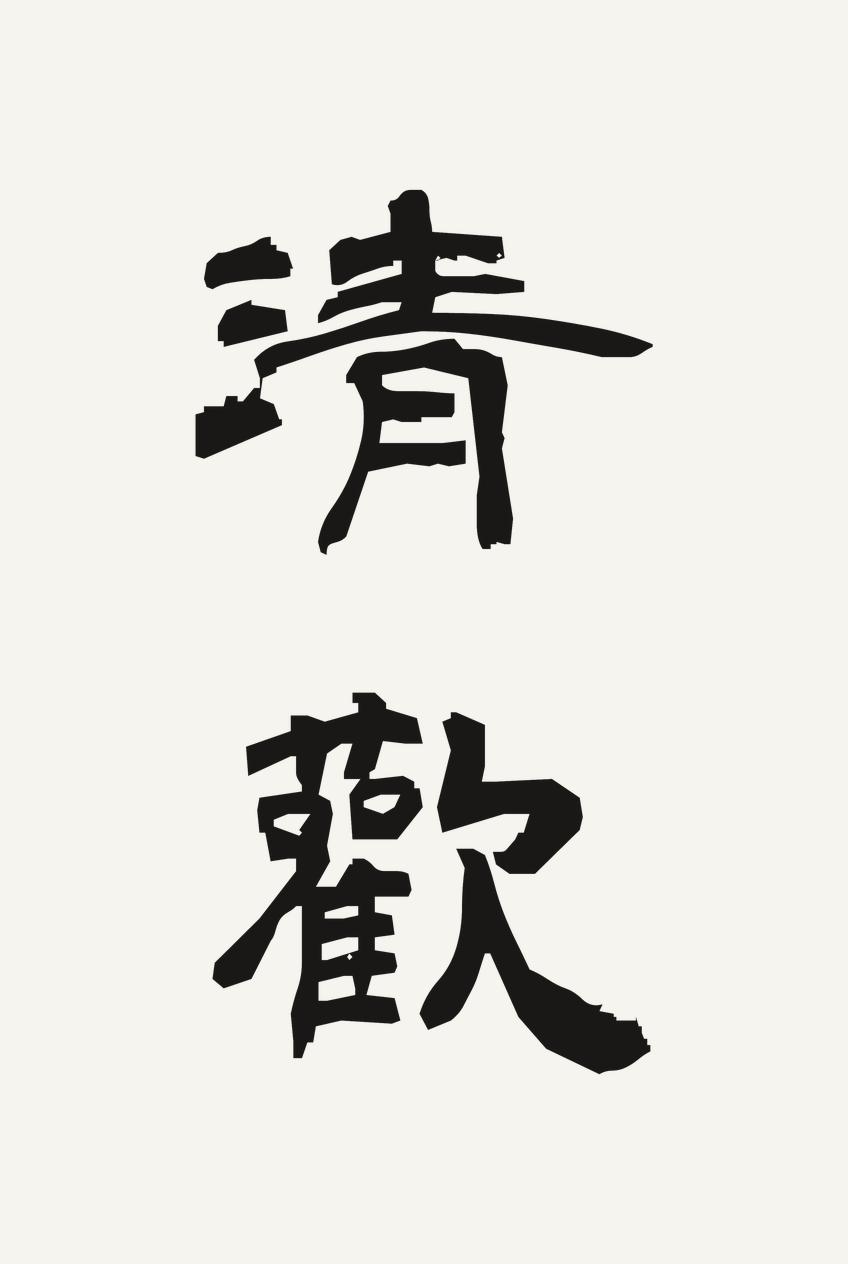
清欢 · Qīng Huān
Plain Joy
Series: Single-Character Zen · Design #43
Style: two characters, vertical column · clerical script (lishu, traditional form 清歡) · small-to-medium
Form: 文字
The Name
Su Shi, after a morning of rain and a lunch of spring vegetables and weak tea, wrote the closing line of a ci poem: 人間有味是清歡 — the flavor the human world actually has is plain joy. Not the feast; the 温field lunch after it. 清欢 is joy with nothing to prove: thin, clean, and — the hard part — chosen.
苏轼在一个下了雨的上午、吃了一顿春蔬配淡茶的午饭之后,写下一首词的收尾:人間有味是清歡——人间真正有的味道,是清欢。不是那场宴席;是宴席之后的那顿田边饭。清欢是没什么可证明的快乐:淡、干净,以及——难的那部分——是被选的。
Source & Provenance
Su Shi, to the tune "Huanxi Sha" (浣溪沙·細雨斜風作曉寒, 1084): 人間有味是清歡 — the two-character compound is the poet's own coinage inside the line; provenance is the poem itself. Inking note: this design adapts the classic line construction of the traditional motif and re-inks it as tattoo linework.
苏轼《浣溪沙·细雨斜风作晓寒》(1084):人間有味是清歡——二字复合词是诗人在句中自铸的;出处就是这首词本身。墨线转写:本设计以传统母题的经典线条造型为底,转写为纹身墨线。
Design Inspiration
Every form decision points to a recorded source, element by element. ① Two characters, one vertical column — 清's water-radical above, 歡's open mouth-radical below: a spring and a meal. ② Clerical script, traditional form 清歡 — light, even strokes; the design refuses display weight on principle. ③ Small-to-medium scale — 6–8 cm; deliberately the quietest size class. ④ Black ink only — plain joy wears plain ink.
本设计的每一处形制决定都有出处可查,逐条对账。① 二字竖列——清的三点水在上,歡的口旁在下:一眼泉,一顿饭。② 隶书、繁形「清歡」——轻而匀的笔画;本设计按原则拒绝展示性重量。③ 小到中尺寸——6–8 厘米;刻意选全店最安静的尺寸档。④ 只用墨——清欢穿素墨。
The Story
The poem's context is the luxury market of experience: the same journey included mountain scenery and a tavern noon. Su Shi — who knew feasting from the inside, and exile from several sides — priced the day on one line and picked the vegetables. 清欢 has since become the word Chinese uses for the happiness that needs no audience and no upgrade: first tea alone in the morning, the walk without the phone. It is a small word with an expensive prerequisite: you must once have had the loud joy, to be credible choosing the quiet one.
这首词的语境是体验的奢侈品市场:同一段行程里有山景,有酒馆的正午。苏轼——宴饮他懂,流放他亲历过好几轮——只用一行给那一天定了价,选了那盘野菜。此后,清欢成了汉语表达「不需要观众、也不需要升级的快乐」的那个词:清晨一个人的头道茶,不带手机的散步。它是个小词,前提却贵:你得曾经拥有过热闹的快乐,选安静的那才可信。
What It Means
For the ones who have tried the loud version and priced it correctly: the downgraded phone, the canceled plan, the second pot of tea. It is the smallest tattoo in the shop with the longest prerequisite list.
给试过热闹版本、并给它定对了价的人:降级的手机、取消的局、第二壶茶。这是全店最小的纹身,前置条件清单最长。
Where It Sits
Two characters, one column: inner wrist, nape, sternum; 6–8 cm; minimum 5 cm for 歡's density.
二字竖列:腕内侧、后颈、胸骨;6–8 厘米;「歡」的密度需 5 厘米起。
Before You Ink
Two characters are the whole design. ② Traditional form 清歡. ③ Small by intent — oversize kills the word. ④ Minimum 5 cm. ⑤ It is a chosen joy, not a consolation prize — the line only works if the feast was genuinely available and declined.
两个字就是全部设计。 ② 繁形「清歡」。 ③ 小,是刻意的——放大会杀死这个词。④ 5 厘米起。 ⑤ 它是被选中的快乐,不是安慰奖——这句话要成立,得是宴席真的摆在面前、而你选了野菜。
Every character on this card was selected and checked stroke by stroke by a native reader of Chinese.



