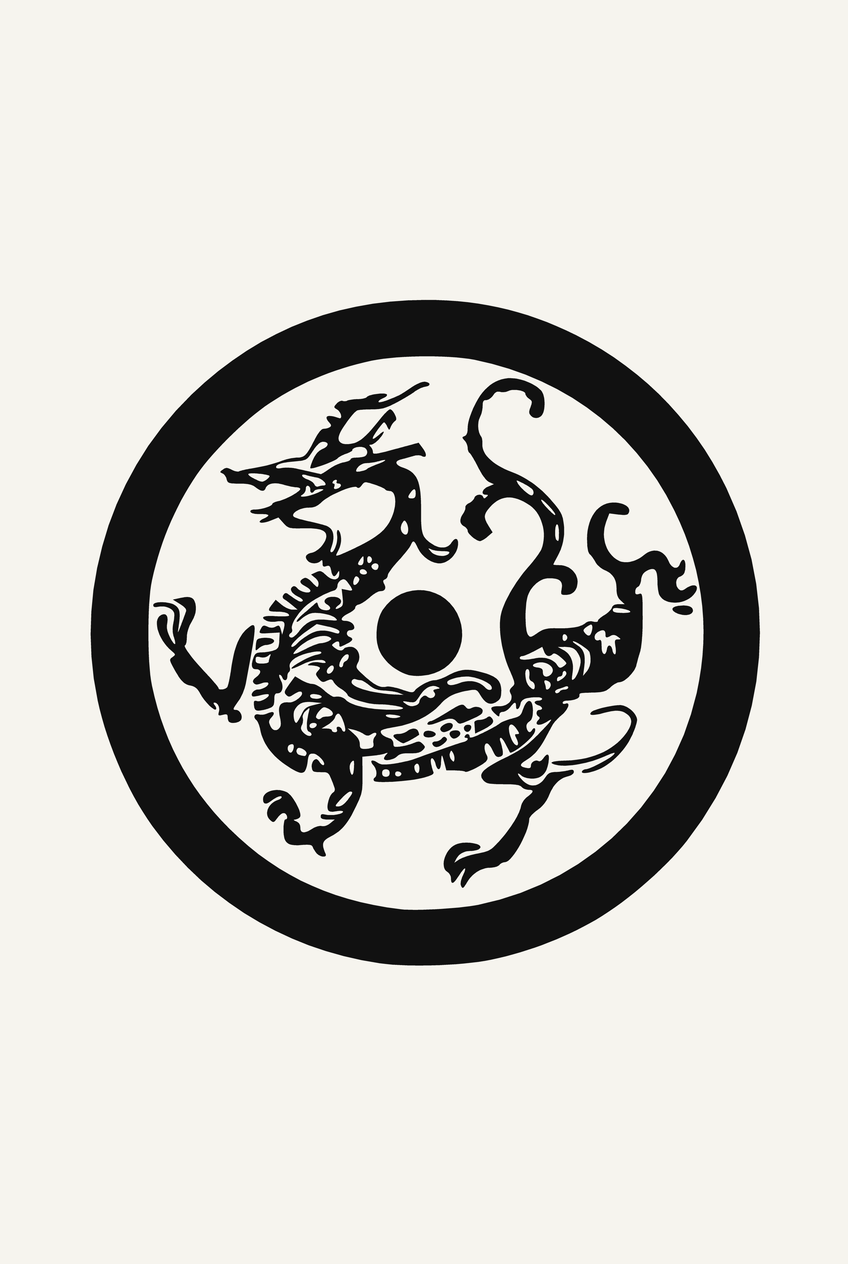
青龙 · Qīng Lóng
The Azure Dragon of the East
Series: Pattern Symbols · Design #25
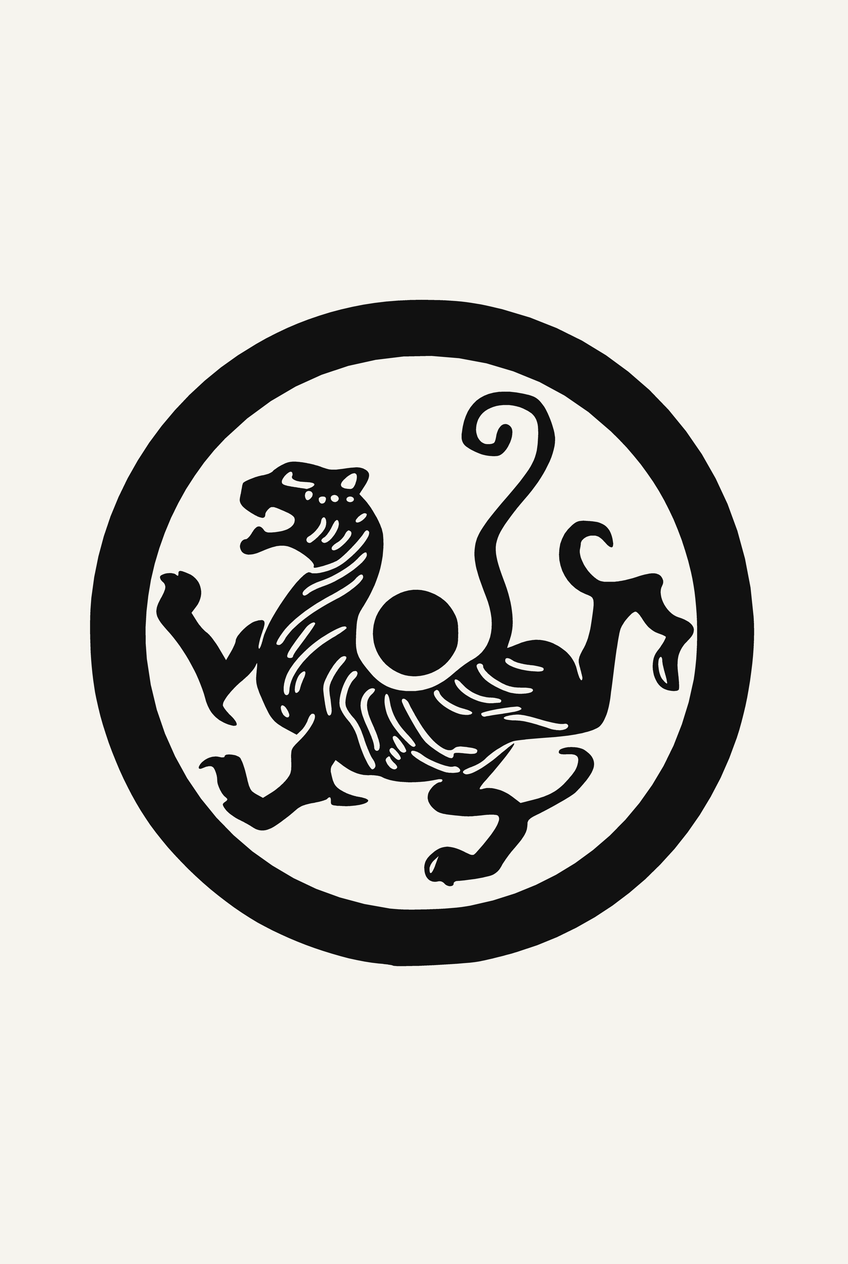
Style: circular roof-tile medallion · solid black with carved white lines · medium-to-large
Form: 图案
The Name
*Qīng lóng* — the Azure Dragon, the guardian of the East. In the Han-dynasty ordering of the heavens, the sky was cut into four palaces, and the eastern palace's seven lunar mansions were drawn together as one great serpentine dragon — azure, the color of growing wood, of the season when everything lifts its head. This design is that dragon as it was cast into clay: the round face of a Han roof-tile end, the beast coiling inside its ring.
青龙——东方之神。汉人把天切成四个宫,东方七宿连起来,就是一条蜿蜒的长龙——青色,属木,属春,是万物抬头的那个季节的颜色。本设计就是铸进陶土里的它:一枚汉代瓦当的圆面,兽形盘在环内。
Source & Provenance
The motif is the four-divinities roof-tile (四神瓦当) of the Western Han: the round end-cap of the pantile that closed each rafter line, molded in relief with one of the four directional beasts. In the Han system recorded in the Sanfu Huangtu, the four — Azure Dragon east, White Tiger west, Vermilion Bird south, Dark Warrior north — were "the four spirits of heaven, set to govern the four quarters," each presiding over a season, an element, a color. Tiles bearing the Azure Dragon have been excavated from the Han Chang'an city site. This tile face keeps the grammar of those excavated examples: the heavy outer ring, the round boss at the center, the long-bodied dragon with ribbon-like wing and tail streamers. Inking note: this design adapts the classic line construction of the traditional motif and re-inks it as tattoo linework.
母题是西汉的四神瓦当:封住每行椽头的筒瓦端头,模印四方位神兽之一。据《三辅黄图》所记的汉制——青龙东、白虎西、朱雀南、玄武北,「天之四灵,以正四方」,各主一季、一行、一色。汉长安城遗址出土的瓦当中即有模印青龙者。本瓦当面保留出土品的语法:粗外环、当心圆乳钉、环内长身之龙与飘带状的翼尾。墨线转写:本设计以传统母题的经典线条造型为底,转写为纹身墨线。
Design Inspiration
Every form decision points to a recorded source, element by element. ① The heavy ring — the tile's own rim, the boundary the relief could not cross. ② The solid center boss — the round tile nut that took the nail in functional caps, kept plain in the beast tiles. ③ The side-view striding dragon — horned head thrown left, scaled body sweeping the ring, claws gripping, the wing and tail running out as ribbon curls, exactly how the excavated Han examples pose him. ④ Solid black with carved white lines — the rubbing's own language: ink mass, and the mold's relief lines reading as white carving inside the black.
本设计的每一处形制决定都有出处可查,逐条对账。① 粗外环——瓦当自己的边,浮雕出不去的界。② 当心实心圆乳钉——实用瓦当上承钉的当心,兽面瓦里保留为素圆。③ 侧面走龙——有角之首要向左扬,鳞身扫过全环,利爪攫地,翼与尾甩成飘带卷——出土汉瓦正是这么摆它的。④ 实黑加白雕线——拓片自己的语言:墨块成面,范上的浮雕线在墨里读成白色雕纹。
The Story
Han builders put the sky on their roofs. A tile ends each line of rafters, and at the eaves those ends face the world — so the makers of Chang'an gave them faces worth facing the world: the four palaces of heaven, one to a direction. The Azure Dragon took the east, and the east meant spring: the seven mansions of that quarter — Horn, Neck, Root, Room, Heart, Tail, Winnowing Basket — strung across the winter sky like a long body, which is why the astronomers of the age drew them as one dragon at all. Farmers read him as the season turning; emperors read him as the year beginning; the altars of the state offered to him in the first month of spring, when the plowing opened.
Inside the tile, he is caught mid-stride — a creature made of weather. His body is wind moving through a valley; his mane and tail streamers are the same lines the clouds make when they commit to a direction. A dragon pressed into roof-clay is a strange and confident act: clay is the most earthly material there is, and the Han used it to hold the eastern sky over every doorway it covered. The tile has outlived the roofs, the dynasty, and the city it guarded. The ring that held him was never a cage — it was a door frame, and he was what came through it every spring.
汉人把天放在屋顶上。一枚瓦封住一行椽头,出檐处瓦当朝外——于是长安的造作者给了它们值得朝外的脸:天的四宫,一方向一位。东方归青龙,东方就是春天:那一宫的七宿——角、亢、氐、房、心、尾、箕——在冬夜天空里连成一条长身,占星家因此把它们画成一条龙。农人读他读出的是季节在转;皇帝读他读出的是一年在始;国家祀典在孟春正月向他献祭,春耕由此开犁。
瓦当里的他被擒在迈步的瞬间——一只由天气做成的兽。他的身体是穿过山谷的风;鬃与尾的飘带,就是云拿定主意要走某个方向时的那些线。把龙压进屋顶的陶土,是一件古怪而自信的事:陶土是最「地上」的材料,汉人却用它把东方的天悬在每一处门楣之上。瓦当活得比屋顶久,比王朝久,也比它守着的那座城久。圈住他的环从来不是笼子——是门框,而他正是每年春天从那里进来的东西。
What It Means
The direction things grow in. East, spring, wood, the color of new leaves — the Azure Dragon is the one guardian whose job is not to guard but to begin: the first thaw, the first green, the year daring to start. Carried as a tattoo, he is for people standing at a threshold — the move being made, the thing being started that will take seasons to show. He does not promise it arrives quickly. He promises it arrives from the right direction.
万物生长的那个方向。东方、春、木、新叶之色——青龙是四神里唯一不以「守」为职、而以「始」为职的一位:头一回解冻、头一回见绿、一年里那记敢开始的决心。把他带在身上,是给正站在门槛上的人——正在进行的迁移、正在开头而需要几个季节才见分晓的事。他不许诺来得快。他许诺的是:方向是对的。
Where It Sits
The round frame reads best where the body itself is round: the outer shoulder cap, the upper arm, the calf. Placed whole with the ring, it sits like a seal; the dragon's stride follows the curve of the muscle. Medium-to-large — the ring needs its circle to stay true, and the beast needs room to stride.
圆框在身体本来就是圆的地方最顺:肩头、上臂、小腿。连环保留时,它像一方印;龙的步态正好沿着肌肉的弧线走。中到大——环要保持正圆,兽要有迈步的余地。
Before You Ink
The ring is yours to keep or lose. The heavy outer circle is the tile's rim — keep it and you wear the complete medallion, a bold round frame that reads clean on shoulder, upper arm or calf; have your artist remove it and the dragon strides alone. Both are correct; decide by placement, not by habit. ② The center boss stays. The solid round dot is the tile's heart — removing it empties the design. ③ Side view, always. The dragon is a striding profile, not a coiled front face; if a studio redraws him facing out, it becomes a different animal. ④ Only ink. The design lives in black mass and white carved line, the rubbing's own two tones — no color needed. ⑤ Mind the fine lines. The white scale-lines inside the body are thin; they need at least 10 cm of finished size to hold.
环,由你决定去留。 粗外环是瓦当的边——保留它,你带走的是完整的瓦当:肩头、上臂、小腿上一圈干脆的圆框;让纹身师去掉它,龙就独自迈步。两种都对,按部位定,不按习惯定。② 当心乳钉不能省。 当心那枚实心圆点是瓦当的心——去掉它,整件设计就空了。③ 永远是侧影。 这条龙是侧面走姿,不是正面盘坐;若师傅给他改成正脸,那就是另一只兽了。④ 只用墨。 本设计活在墨面与白雕线的两色里——拓片自己的语言,不必上色。⑤ 细线要留量。 龙身里的白色鳞线很细,成品尺寸至少 10 厘米才撑得住。
Every character on this card was selected and checked stroke by stroke by a native reader of Chinese.