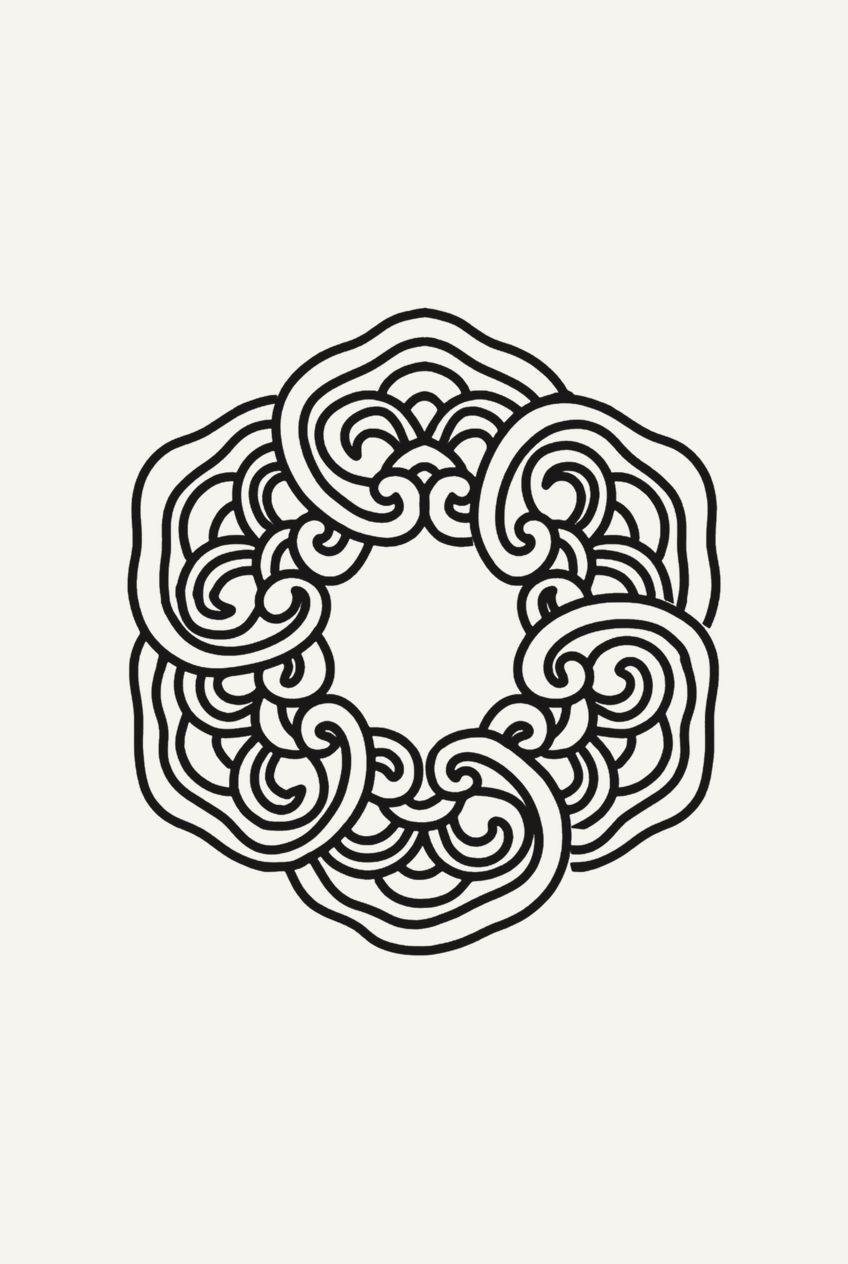
如意纹 · Rú Yì Wén
As You Wish
Series: Symbols & Patterns · Design #05
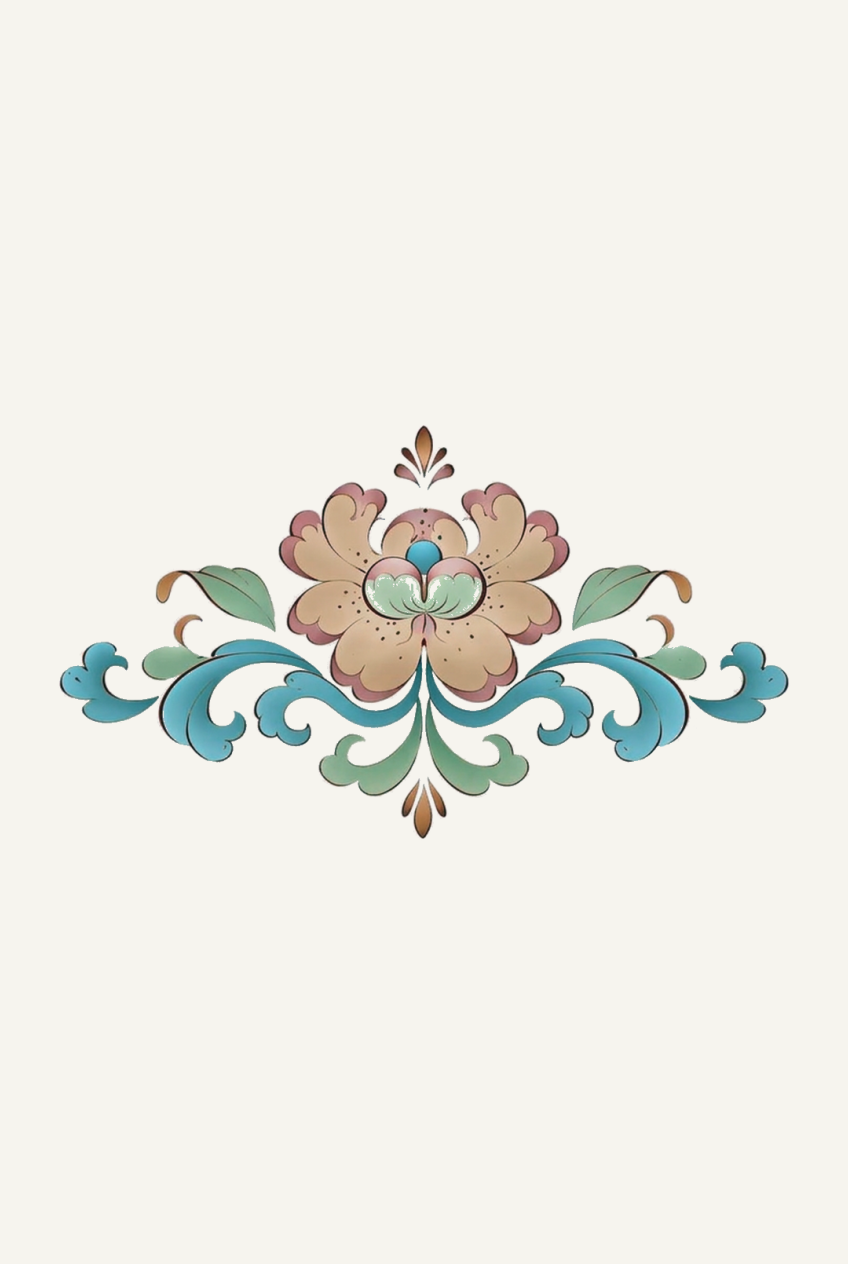
Style: Heart-shaped ruyi cloud head with curled tail · fine-line · single head or mirrored pair · scalable 3–8 cm
Form: 图案
The Name
*rú yì wén* — the ruyi pattern, and the name is the whole blessing: 如意, "as you wish." The shape is a heart with a tail — the head of the ruyi scepter, the object Chinese emperors held when they wanted luck made physical. Where Western luck symbols shout, this one murmurs: it does not promise wealth or long life specifically. It promises that things will go your way.
如意纹(rú yì wén)——名字本身就是全部祝词:如意,「如你所愿」。形状是一颗带尾巴的心——如意头的形,也就是中国皇帝把好运攥在手里时握着的那件东西的头部。西方的幸运符号在喊叫,它在低语:它不具体承诺财富或长寿,它承诺的是——事情会顺着你。
Source & Provenance
The ruyi object began as the curved claw-staff of Han and Six-Dynasties courts — the 「爪杖」, a back-scratcher of honest purpose, its bent head shaped "so the hand could not reach." Buddhist monks carried it as a lectern staff, and painted it into the hands of bodhisattvas such as Mañjuśrī. By the Ming and Qing the scepter had become pure ceremony — a court gift for birthdays and new years — and its head had become a motif: heart-shaped ruyi cloud heads on furniture rails, ceramic rims and robe borders. The four-joined version, 四合如意云, is the canonical cloud of Ming-Qing textiles. Historical form reference: ruyi cloud heads on Ming-Qing furniture and textiles. Inking note: this design adapts the classic line construction of the traditional motif and re-inks it as tattoo linework.
如意之器起于汉魏宫廷的弯柄爪杖——本分到近乎憨直的用途:挠背,头弯成「手够不到的地方」刚好够得到的形状。僧人执之如讲筵之器,画家把它画进文殊菩萨等像的手中。到明清,如意已成纯礼器——宫廷寿诞岁首的馈赠——而它的头变成了纹样:家具的栏、瓷器的口、袍服的缘上,处处是心形如意云头。四朵相合的「四合如意云」是明清织物的标准云形。形制参考:明清家具与织绣上的如意云头。墨线转写:本设计以传统母题的经典线条造型为底,转写为纹身墨线。
Design Inspiration
Every form decision on this design points to a recorded source, element by element. ① The heart-shaped head — the ruyi scepter's three-lobed cap, the lingzhi-shaped crown of the object. ② The inward spiral — the tight curl at the head's center that the word 如意 is named for. ③ The trailing tail — the tapering cloud tail of the ruyi cloud form, lifted from Ming-Qing robe borders. ④ The mirrored pair — twin heads facing each other, the composition Ming carpenters carved across a chair back.
本版每一处形制决定都有出处可查,逐条对账。① 心形头——如意杖首的三瓣灵芝形冠。② 向心螺旋——如意头正中的紧卷,「如意」得名的那一笔。③ 拖尾——如意云形的渐细云尾,取自明清袍缘。④ 镜像双朵——相向而立的两朵,明清匠人在椅背上的标准构图。
The Story
Start with the most humble object imaginable. Two thousand years ago the staff of Chinese courts was a bent stick with a claw at the end — a back-scratcher. The name they gave it was perfect: 爪杖, claw-staff. Its curved head existed so the hand could reach what the hand cannot reach. There is a joke inside the design, and the joke is honest.
Then the monks got hold of it. Buddhist teachers carried the staff as they lectured, its curve just right for propping sutras; painters put it into the hands of bodhisattvas. And somewhere along that road, the object stopped scratching backs and started granting wishes. Its very name did the work: ruyi — "as you wish." A bent stick became the most graceful word in the language given a handle. By the Ming and Qing, no court ceremony was complete without them: jade ruyi, enamel ruyi, ruyi of red lacquer and inlaid pearl, presented at new year, stacked on palace altars, held in official portraits. The Qing court collected them the way modern collections collect watches.
The pattern is the scepter's head, detached and set free: a heart, coiled at the center like a fiddlehead fern, trailing a vapor tail. Ming cabinetmakers set pairs of them face to face across chair backs and cabinet doors; robe borders ran them in rows; and when four heads joined at the center, the composition became the four-joined ruyi cloud — the canonical cloud of the dynasty, the one you see on imperial dragon robes. The spiral at its heart is the same one that runs through this collection: cloud-thunder curl, softened by five centuries into a wish.
It is the gentlest motif here, and the most direct. A dragon carries an emperor's burden of meaning; a lotus carries sutras. The ruyi head carries one word — may it go the way you wish — and lets you fill in the wish yourself. Behind the ear, at the collarbone, on the inner wrist: small enough to be private, curved enough to follow the body. Luck, written in the shape of something that used to scratch backs. The Chinese would tell you that is exactly where good luck should come from.
从最不起眼的物件开始。两千年前中国宫廷的杖是一根弯头带爪的棍——挠背耙。名字起得极妙:爪杖。弯头存在的意义,是让手够到它本来够不到的地方。这个设计里藏着一个玩笑,而且是个诚实的玩笑。
然后僧人接过了它。法师讲经时执杖在手,弯度刚好托经卷;画家把它放进菩萨手中。沿着这条路,这件器物不再挠背,开始许愿。它的名字替它办了事:如意——如你所愿。一根弯棍成了这门语言里最温柔的词,还被装上了柄。到明清,宫廷典礼没有它不完整:玉如意、珐琅如意、剔红嵌珠的如意,岁首进献,堆在宫中案上,握在御容画里。清宫收如意,像今天的人收表。
纹样就是杖首,脱离了柄、被放飞了:一颗心,正中卷如蕨芽,拖一道渐细的云尾。明代的木匠把两朵相向刻在椅背与柜门上;袍缘把它们排成行;当四朵在正中相合,构图就成了四合如意云——明清的标准云形,你在龙袍上见到的那一种。它正中的螺旋与整个系列的血脉同源:云雷卷,经五百年柔化,成了一句愿望。
它是这里最温柔的纹样,也是最直接的。龙背负着帝王的重量,莲花背着经卷。如意头只背一个字——愿你心想事成——愿望本身留给你自己填。耳后、锁骨、腕内:小到可以私密,弯到可以贴身。好运,写在一件曾经挠背的物件的形状里。中国人会告诉你:好运就该从这种地方来。
What It Means
"As you wish" — the open-ended blessing. Not a specific promise but an orientation: things bending your way. The most personal pattern in the collection, because the wish it carries is blank on purpose. Also the natural pair-piece to the auspicious cloud (xiang-yun-wen): same lineage, softer voice.
「如你所愿」——开放式祝词。它不承诺具体事项,只给出方向:事情朝你弯过来。全系列最「私人」的纹样,因为它承载的愿望刻意留白。它与祥云纹是天然成对的一件:同一血脉,声音更柔。
Where It Sits
A single head, 3–4 cm, is perfect behind the ear, at the nape, or on the inner wrist. A mirrored pair, 5–8 cm total, sits naturally on the collarbone or wraps the forearm as a facing couplet. The trailing tail wants to follow body lines — let your artist curve it along existing contours.
单朵 3–4 厘米,最适合耳后、颈后或腕内。镜像双朵合计 5–8 厘米,天然属于锁骨,或以「对联式」相向环绕小臂。云尾天生要贴着身体线条走——让纹身师顺着你的轮廓弯它。
Before You Ink
The direction of the spiral matters to collectors of detail: the ruyi curl winds inward, toward the wish — keep it. ② Do not let anyone "correct" the tail into a Japanese cloud scroll; the ruyi tail tapers to a point, the Japanese form ends in a rounded lobe. ③ Pairs should be mirror-true: the two heads face each other, as on Ming furniture. ④ Ink-only by design: the head's linework carries everything; a single red dot at the spiral's heart is the one traditional option (see the collection's color rule). ⑤ Respect the scale. Single head minimum 3 cm, pair minimum 5 cm total — under that the inner curl fills in. Inner-wrist placement fades fastest; plan for maintenance.
螺旋方向是细节控在意的事:如意卷向内收、朝向愿望的方向——保持它。② 别让任何人把尾巴「改」成日式云卷:如意尾渐细收尖,日式云尾是圆瓣收头。③ 成对要镜像严格:两朵相向,一如明式家具。④ 只宜墨线:本图为纯墨线;传统上有「螺旋正中点一粒朱砂红」的做法,若想要可请纹身师落针时加(见本站色彩规则)。⑤ 留够尺寸。 单朵不小于 3 厘米,双朵合计不小于 5 厘米——再小内卷就填死了。腕内位褪色最快,预留补色计划。
Every character on this card was selected and checked stroke by stroke by a native reader of Chinese.