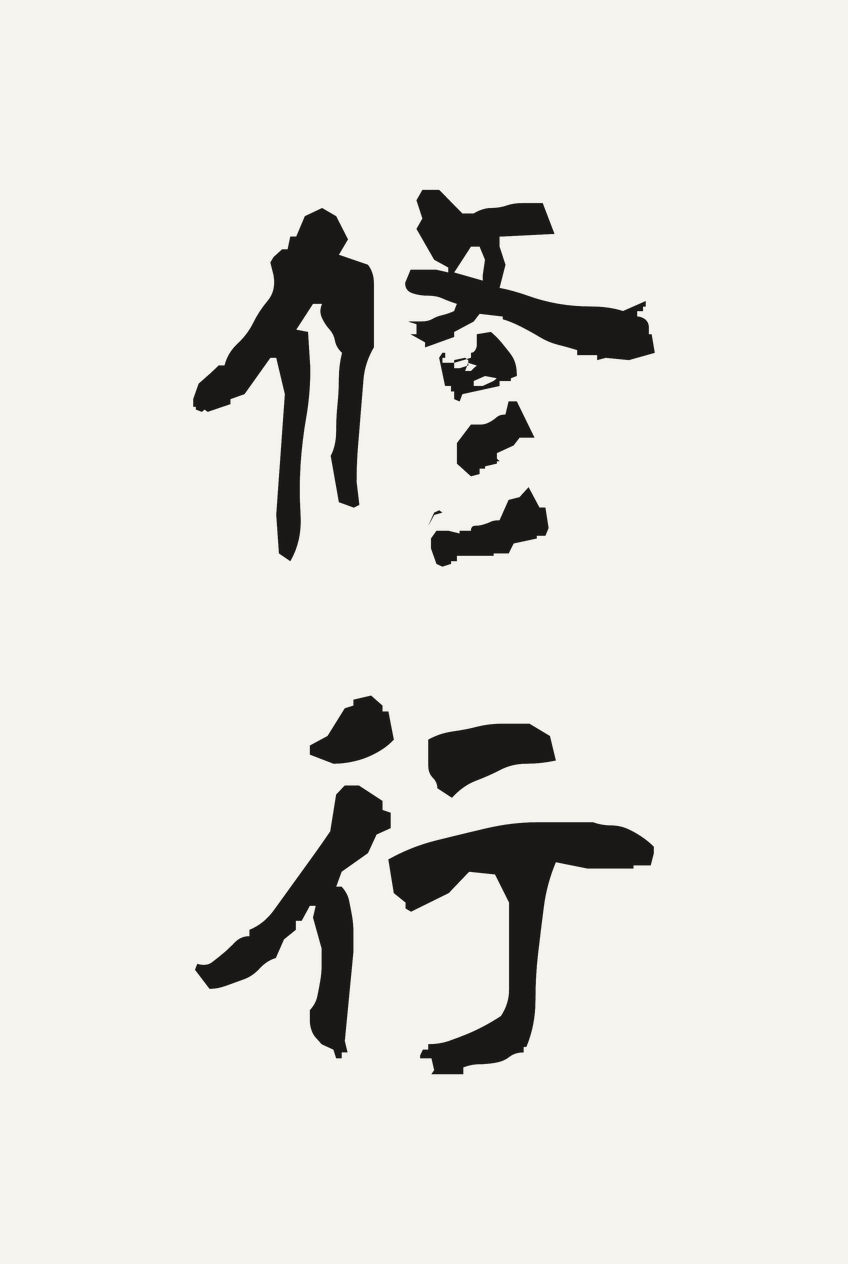
修行 · Xiū Xíng
The Practice
Series: Single-Character Zen · Design #32
Style: two characters, vertical column · clerical script (lishu) · traditional form 修行 · small-to-medium
Form: 文字
The Name
Repair, then walk. 修's oldest job is repair — the character shows a shaved-and-armed figure working with a tool: fixing, honing, dressing stone. 行 is walking: the radicals of crossroads and footsteps. 修行 is not "spirituality"; it is maintenance in motion — a craft practiced on the self, daily, unfinished by design. Where the West says "self-improvement" and imagines upgrades, 修行 imagines upkeep: the temple roof needs it every monsoon. As a tattoo it is a working order, not a badge.
先修,再行。「修」最古老的职责是修理——字形是一个持工具的 Armed 人在劳作:修补、打磨、整石。「行」是走:字根是十字路口与脚步。修行不是「灵性」;它是移动中的维护——一门以自身为工件的日常手艺,按设计永不完工。西方说 self-improvement,想象的是升级;修行想象的是保养:寺庙的屋顶每个雨季都要修。纹上它,是一张工单,不是一枚徽章。
Source & Provenance
Buddhist and Daoist usage both: the term spans 戒定慧 (discipline, concentration, wisdom) as the threefold training; the Zhuangzi's craftsmen (Cook Ding's nineteen-year blade as 修 in motion) supply the working-class reading. Colloquially, 修行 in Chinese daily speech covers meditation, martial drill, and doing the dishes — any practice that keeps the self walkable. Inking note: this design adapts the classic line construction of the traditional motif and re-inks it as tattoo linework.
佛道两家用:术语覆盖戒定慧三学;庄子笔下的匠人(庖丁十九年不钝的刀就是行进中的「修」)提供了工人阶级读法。口语里,中文日常的「修行」覆盖打坐、练武、洗碗——任何让「自己」保持可走的练习。墨线转写:本设计以传统母题的经典线条造型为底,转写为纹身墨线。
Design Inspiration
Every form decision points to a recorded source, element by element. ① Two characters, one vertical column — the workbench (修) above the road (行): the sequence is the doctrine. ② Clerical script, traditional form 修行 — 修's right side carries the tool and the three strokes of dressing; 行's twin crossroads keep the feet moving. ③ Small-to-medium scale — 6–8 cm. ④ Black ink only — workshop ink, not decoration.
本设计的每一处形制决定都有出处可查,逐条对账。① 二字竖列——工作台(修)在路上(行)之上:次序就是义理。② 隶书、繁形「修行」——「修」的右侧带着工具与三道修整的笔画;「行」的两个十字路口让脚不停。③ 小到中尺寸——6–8 厘米。④ 只用墨——作坊的墨,不是装饰的墨。
The Story
The Zhuangzi's Cook Ding has been carving the same ox for nineteen years and the blade is still like new from the whetstone. Asked how, he says: I look with my spirit, not my eyes. The story is usually filed under wu wei, but it is the manual of 修行 too: the cook practices a craft on himself through his craft on the ox. Every pass of the blade trains the attention; the attention is the blade. The distinction between the work and the worker quietly disappears — that disappearing is the practice.
Compare the modern gym membership, the abandoned course, the year of good intentions. What breaks is not effort but architecture: self-improvement assumes a finish line; 修行 assumes a roof that needs you every season. The tattoo is for people who have stopped promising to arrive and started paying daily rent — the daily pages, the daily miles, the daily sitting. Nineteen years, and the blade stays new.
庄子的庖丁解同一头牛解了十九年,刀刃还像刚从磨石上取下来。问他怎么做到的,他说:我以神遇,不以目视。这个故事通常归档在「无为」名下,但它同样是修行的手册:庖丁通过对牛的手艺在自己身上练一门手艺。刀每走一遍,注意力就练一遍;注意力就是那把刀。「工作」与「工作者」的界线悄悄消失——那个消失就是修行。
对照现代的健身卡、弃坑的课程、满载善意的一年。坏掉的不是努力,是架构:self-improvement 假设有一条终点线;修行假设一个每季都需要你的屋顶。这个纹身属于那些已经停止承诺「抵达」、开始按天付租的人——每日写的页、每日跑的里、每日坐的坐。十九年,刀刃还新。
What It Means
For the daily practitioners — whoever outlasted their own motivation. It is not an achievement; it is a subscription to the unfinished.
给每日练习的人——任何活得比自己动机久的人。它不是成就;它是对「未完成」的订阅。
Where It Sits
Two characters, one plane: inner wrist, nape, sternum. 6–8 cm private, 10 cm stated; minimum 5 cm for 修's tool-side density.
两个字,一个平面:腕内侧、后颈、胸骨。6–8 厘米私人,10 厘米公开;「修」的工具侧密度需 5 厘米起。
Before You Ink
Two characters are the whole design. ② Traditional form 修行. ③ Clerical script stays level — a maintenance word earns even strokes. ④ Minimum 5 cm. ⑤ Rent, not trophy. The word promises no graduation. If you stop practicing and keep the tattoo, the ink becomes a photograph of someone you used to be — resume or return.
两个字就是全部设计。 ② 繁形「修行」。 ③ 隶书保持平——一个讲维护的词配得上均匀的笔画。④ 5 厘米起。 ⑤ 是租金,不是奖杯。 这个词承诺不了毕业。如果你停止练习却留下纹身,墨就变成一张「你曾经是谁」的照片——要么恢复练习,要么当作归还。
Every character on this card was selected and checked stroke by stroke by a native reader of Chinese.



