云纹 · Yún Wén
The Cloud
Series: Symbols & Patterns · Design #36
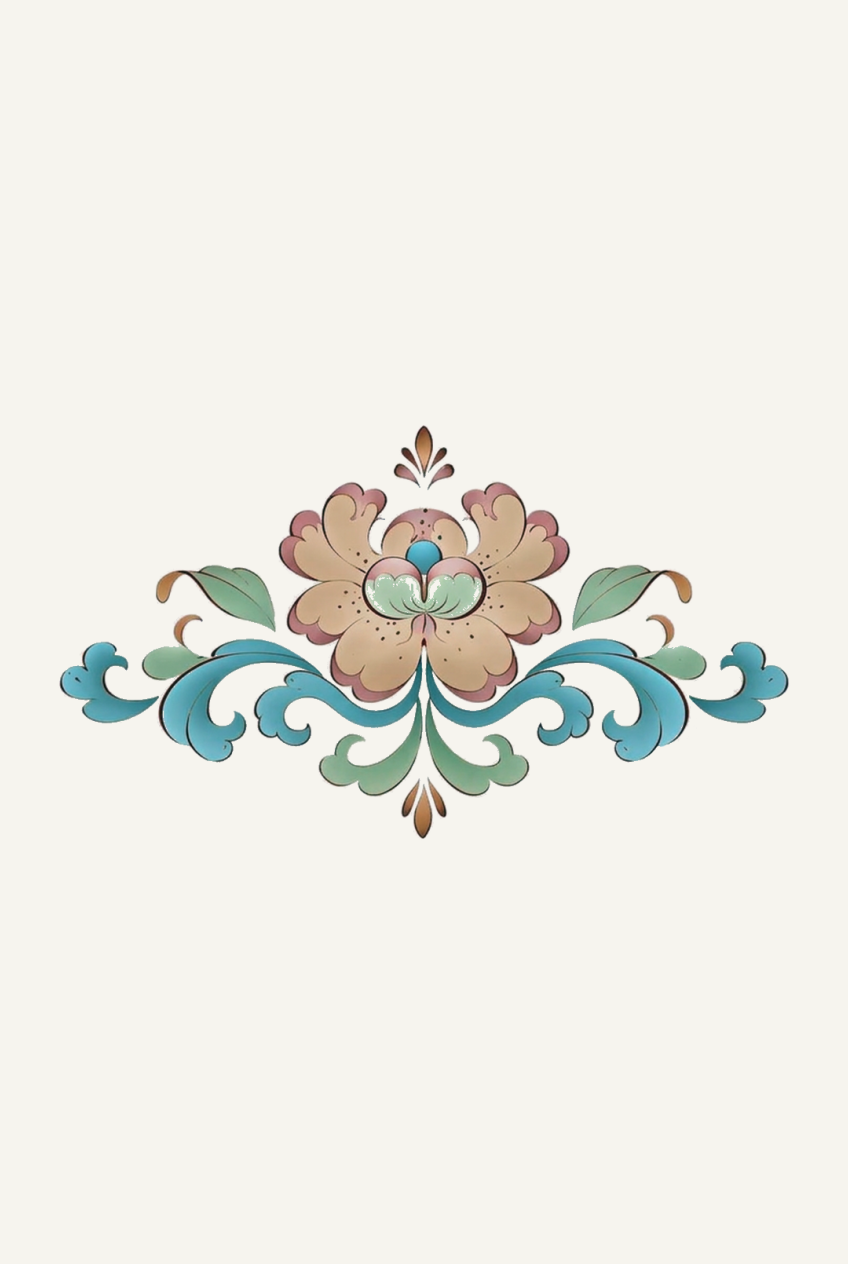
Style: Three ruyi-cloud scrolls stacked in a horizontal composition — celadon above, cream through the middle, amber below, with streaming tails · ornamental fill · scalable 12–18 cm
Form: 图案
The Name
*yún wén* — the "cloud pattern." The Chinese cloud is never a photographic cloud; it is a cloud with a hook at the end of every curl, a head like a ruyi scepter and a tail that streams into a ribbon. The type is named for what it imitates and improved on: real clouds have no outline, while the 云纹 gives them one, and makes the outline the whole subject. Three scrolls are stacked here, each one completed by the ones above and below.
云纹(yún wén)——中文的云从来不是写实的云:每一卷的末端都带钩,云头像一柄如意,云尾拖成飘带。这一类名目以它模仿的东西命名,又把它改好了:真的云没有轮廓,云纹给了它轮廓,还让这道轮廓成了全部的主题。这里三朵云上下相叠,每一朵都靠上下的云把它收完整。
Source & Provenance
The cloud is one of the longest-running forms in Chinese ornament. It begins with the cloud-and-thunder spirals (云雷纹) of Shang and Zhou bronze, loosens into the flowing cloud-qi (云气纹) of the Han, is sharpened into the ruyi-headed scroll in the Tang, and reaches its most elaborate form in Ming and Qing silk, lacquer and palace architecture. The ruyi head ties it to the scepter of the same name and to the lingzhi fungus — both emblems of blessing — so the cloud carries a wish as well as a shape: 祥云, an auspicious cloud. Historical form reference: ruyi-headed cloud scrolls on Ming–Qing textiles and architectural painting. Inking note: this design adapts the classic line construction of the traditional motif and re-inks it as tattoo linework.
云是中国装饰里延续最久的形之一。它起于商周青铜上的云雷纹,到汉代舒展成流动的云气纹,唐代收成如意头的卷云,明清在织锦、漆器与宫殿彩画上到了最繁盛的样子。如意头把它和同名的如意、和灵芝连在一起——两样都是祥瑞之物——所以云带着的不只是形状,还有一份愿:祥云。形制参考:明清织物与建筑彩画上的如意头卷云。墨线转写:本设计以传统母题的经典线条造型为底,转写为纹身墨线。
Design Inspiration
The design keeps to the ruyi-cloud type, element by element. ① The ruyi heads — each cloud begins in a hooked spiral like the head of a scepter, the feature that makes a cloud a 祥云 rather than a smear. ② The three-color stack — celadon above, cream through the middle, amber below, the layers separated by fine outlines so they read as stacked silk, not shading. ③ The streaming tails — ribbons trailing left and right, giving the stacked clouds the motion the type is named for. ④ The fine gold threads — hairline描金 strokes crossing the middle cloud, the detail that rewards a closer look.
本版守着如意云这一类,逐条对账。① 如意头——每朵云起于一个带钩的旋涡,像如意的一端;正是这个特征让它是「祥云」,不是一团糊。② 三色相叠——上青绿、中米白、下橙黄,层与层之间用细线隔开,读起来像叠起来的丝绸,不是阴影。③ 飘带尾——向左右拖出的飘带,给这叠云带来这个纹样名字里的「动」。④ 描金细丝——穿过中间云的几根发丝般的金线,是凑近看才有的东西。
The Story
A cloud in Chinese ornament is a contradiction resolved: something shapeless given a shape, something weightless given a outline you could trace with a finger. That outline has been refined for three thousand years — from bronze spirals to Han cloud-qi to the ruyi-headed scroll of the Tang and after. Each century made the cloud a little more deliberate, until it could carry a blessing in its very curl.
The ruyi head is the key. It borrows the scepter's shape, and with it the wish the scepter stands for — that things go as one intends. A 祥云 is thus never just weather; it is weather with a good omen built into its outline.
This design stacks three of them. The top one is cool and high, the bottom one warm and low, and the middle one holds the two together with its streaming tails. On skin, a horizontal stack like this wants a long, flat field — a forearm, a thigh, a flank — where the tails can run. It is a design for someone who wants the old blessing worn lightly: not a symbol announced, but a cloud passing through, leaving its shape behind.
中国装饰里的云,是一个被解决了的矛盾:没有形状的东西被给了形状,没有重量的东西被给了一道能用手指描的轮廓。这道轮廓磨了三千年——从青铜的旋涡,到汉代的云气,再到唐代以降的如意头卷云。每个世纪都把它做得更刻意一点,直到它光靠那一卷,就能装下一个祝愿。
如意头是关键。它借了如意的形状,也借了如意所代表的那句话——事事如人所愿。所以「祥云」从来不只是天气,是把吉兆砌进轮廓里的天气。
这一张叠了三朵:上面一朵清冷、位置高,下面一朵暖、位置低,中间那朵用飘带把上下连住。放到皮肤上,这样一幅横向叠云要一块长而平的地方——小臂、大腿、腰侧——好让飘带跑得开。它适合想把老祝福戴得轻一点的人:不是一个宣告出来的符号,是一朵路过的云,把形状留了下来。
What It Means
An auspicious passage. The ruyi head carries the wish; the streaming tail carries the movement; the stacked colors carry the height. Wear it for things going as they should, and for change that passes through without staying.
一段吉祥的经过。如意头装着愿,飘带尾装着动,叠色装着高低。给「顺遂」,也给「经过而不停留」的变化。
Where It Sits
A horizontal stack with tails wants a long, flat field: the outer forearm at 12–16 cm, the thigh at 14–18 cm, or along the flank / side of the back at 16–18 cm. Give the streaming tails room to run — a short, narrow space will crowd the composition.
带飘带的横向叠云要一块长而平的地方:小臂外侧 12–16 厘米,大腿 14–18 厘米,或沿腰侧/后背侧面 16–18 厘米。给飘带留够跑开的地方——又短又窄的位置会把构图挤住。
Before You Ink
Let the tails breathe. The streaming ribbons are half the design; don't crop them to fit a smaller spot. ② Color is optional, line is not. The reference stacks celadon, cream and amber with gold threads; the transfer linework alone carries the clouds, and many keep it ink-only. ③ Respect the scale. Minimum 12 cm — this is a wide composition, and below that the three scrolls merge. ④ Choose the direction. Clouds read as rising when the tails trail backward; decide the flow with your artist before marking the skin.
让飘带喘气。 飘带占了半个图案;别为了塞进小块地方把它裁掉。② 颜色可选,线不可省。 参考图叠青绿、米白、橙黄并描金;转印线稿本身就撑得住云,很多人只留墨线。③ 留够尺寸。 最小 12 厘米——这是横向构图,再小三朵云就并在一起。④ 定好方向。 飘带向后拖时,云读作「升」;下针前和纹身师先把走向定下来。
Every character on this card was selected and checked stroke by stroke by a native reader of Chinese.