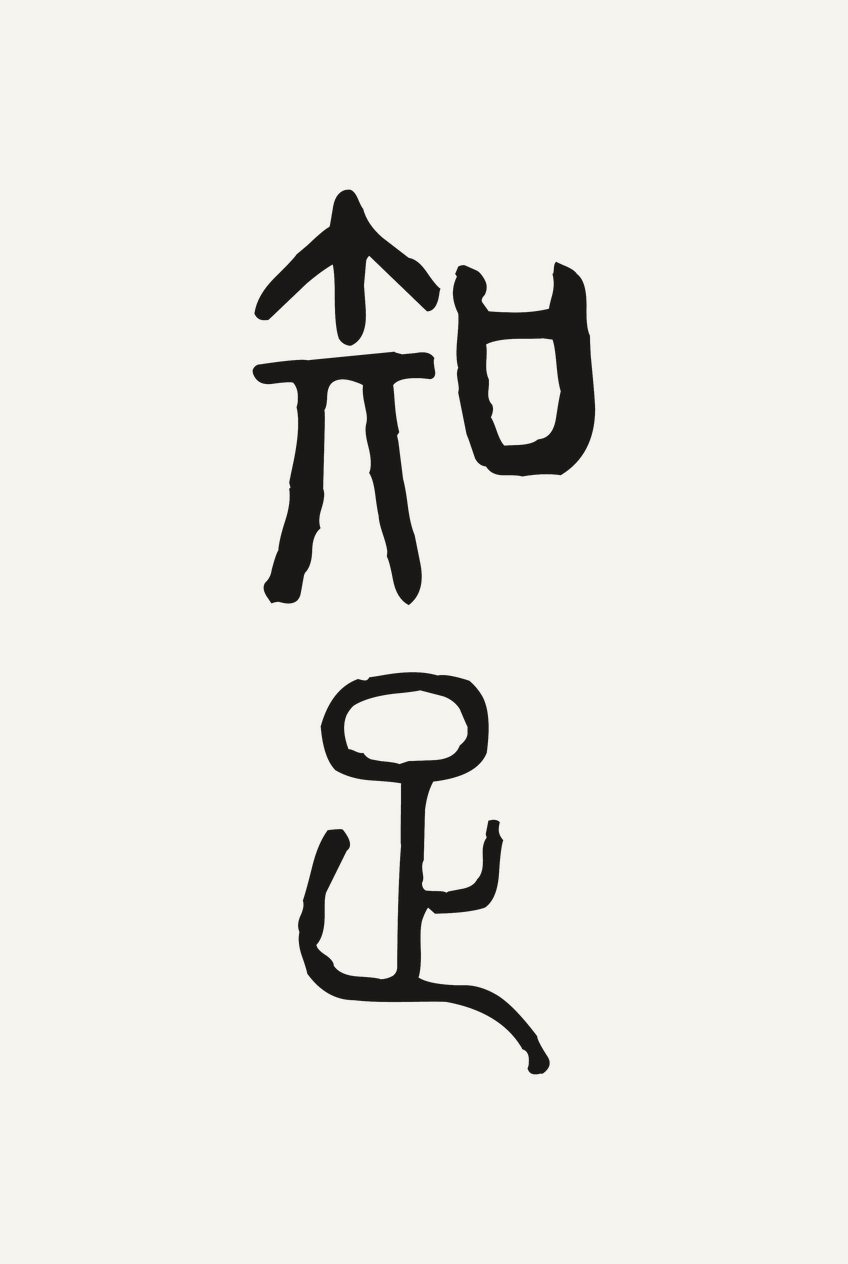
知足 · Zhī Zú
Knowing When It Is Enough
Series: Single-Character Zen · Design #06
Style: two characters, vertical column · seal script (zhuanshu) · same form 知足 · small-to-medium
Form: 文字
The Name
*Zhī zú* — knowing enough. The verb is 知, to know — not to have. The phrase does not describe a full life; it describes the person who can recognize fullness when it is present, which is a rarer skill than filling it. Laozi's twist is radical: the one who knows enough is rich — 知足者富 — wealth as a verb of recognition, not accumulation. As a tattoo, it is a boundary stone set inside the wearer.
知足——动词是「知」,不是「有」。这个短语不描述一种满盈的人生;它描述那个能在满盈到场时认出满盈的人——这比把人生填满更稀有。老子的翻法很狠:知足者富——富有是认出的动词,不是囤积的动词。纹下它,是在佩戴者身体里立的一块界碑。
Source & Provenance
Laozi, three times over: 知足者富 (*Daodejing* 33); 知足不辱,知止不殆 (44); and the deepest cut, 禍莫大於不知足 — "no disaster is greater than not knowing enough" (46). The Chan tradition took it into daily practice: the meal is the teaching, and the teaching is that the meal, as served, is already enough. Inking note: this design adapts the classic line construction of the traditional motif and re-inks it as tattoo linework.
《老子》三见:「知足者富」(三十三章);「知足不辱,知止不殆」(四十四章);最深的一刀,「禍莫大於不知足」(四十六章)。禅门把它化进日用:一顿饭就是一堂课,课的内容是——端上来的这顿,已经够了。墨线转写:本设计以传统母题的经典线条造型为底,转写为纹身墨线。
Design Inspiration
Every form decision points to a recorded source, element by element. ① Two characters, one vertical column — the pair as it is recited; 足 (enough) grounds the base. ② Seal script, same form 知足 — the oldest hand for the oldest advice; the archaic curves slow the reading, and slowness is the content. ③ Small-to-medium scale — 8–10 cm; a boundary stone does not need a monument. ④ Black ink only — enough colors; one is enough.
本设计的每一处形制决定都有出处可查,逐条对账。① 二字竖列——如念诵时的这一对;「足」落在底部,落地生根。② 篆书、同形「知足」——用最老的手写最老的劝告;古体的弧线让阅读慢下来,慢正是内容。③ 小到中尺寸——8–10 厘米;界碑不需要纪念碑。④ 只用墨——颜色够多了;一种就够。
The Story
Laozi's forty-sixth chapter is a war poem. Calm horses are pregnant — requisitioned to bear soldiers' supplies; war mares are foaling in the lines. The cause, he says, is the largest appetite in the room: 禍莫大於不知足. Wanting-without-knowing-enough is not a personal vice; it is the engine of armies. The counter-force is therefore political in scale and personal in practice: one person who can say "this is enough" withdraws fuel from the whole machine.
The Chan cooks made it muscular. In the monastery, the lunch is served without commentary; you receive exactly what is in the pot. The practice is not the renunciation of good food — it is the accurate seeing of what is already in the bowl. Most hunger, the cooks observe, is for the second helping you are imagining, not the one in front of you. 知足 aims the eyes back at the bowl.
《老子》四十六章是一首战争诗。安静的母马怀着驹——被征去做军需的驮马;战马在军阵里下驹。他说,原因是屋里最大的那个胃口:禍莫大於不知足。不知足的想要不是个人的恶习;它是军队的发动机。因此对抗它的力量,在尺度上是政治的,在实践上是个人的:一个能说出「这样够了」的人,就给整台机器撤了一份燃料。
禅门的典座把它练成了肌肉。寺里,午饭端上来不说一句评论;你领到的就是锅里的。功课不是放弃好饭——是准确看见碗里已经有的东西。典座们观察道:多数的饿,是冲着想的那第二碗去的,不是眼前这一碗。知足,就是把眼睛拉回碗里来。
What It Means
For anyone whose life keeps scoring well and feeling short: the promoted, the re-financed, the scrollers. 知足 is not resignation — it is the accurate pricing of what you already hold. Wear it and the question arrives daily, in a voice you cannot unhear: enough yet?
给人生明明得分不低、却总觉得差一点的人:升职的、加杠杆的、无限下滑刷着的。知足不是躺平——它是对你已有之物的准确定价。纹上它,那个问题每天都会来,用你无法屏蔽的声音:够了吗?
Where It Sits
Two characters, one plane: inner wrist, ankle, sternum. 6–8 cm reads as a boundary stone; the ankle placement walks the lesson with you.
两个字,一个平面:腕内侧、脚踝、胸骨。6–8 厘米读作一块界碑;戴在踝上,这堂课跟着你走路。
Before You Ink
Two characters are the whole design. ② Seal script is deliberate. The oldest hand for the oldest advice; the curves slow the eye to the phrase's own tempo. ③ Black ink only. ④ Minimum 6 cm for the seal curves to resolve. ⑤ Do not tattoo it over an acquisition. If the ink marks a raise, a purchase, or a wedding, it will age as an excuse; mark it on the recognition, not the haul.
两个字就是全部设计。 ② 篆书是刻意的。 用最老的手写最老的劝告;弧线让眼神降到这句话自己的节奏。③ 只用墨。 ④ 6 厘米起,篆书的弧线才收得住。⑤ 不要纹在一次「到手」上。 如果这枚墨标记的是一次加薪、一次购买、一场婚礼,它会像借口一样变旧;纹在「认出」上,不要纹在「收获」上。
Every character on this card was selected and checked stroke by stroke by a native reader of Chinese.



