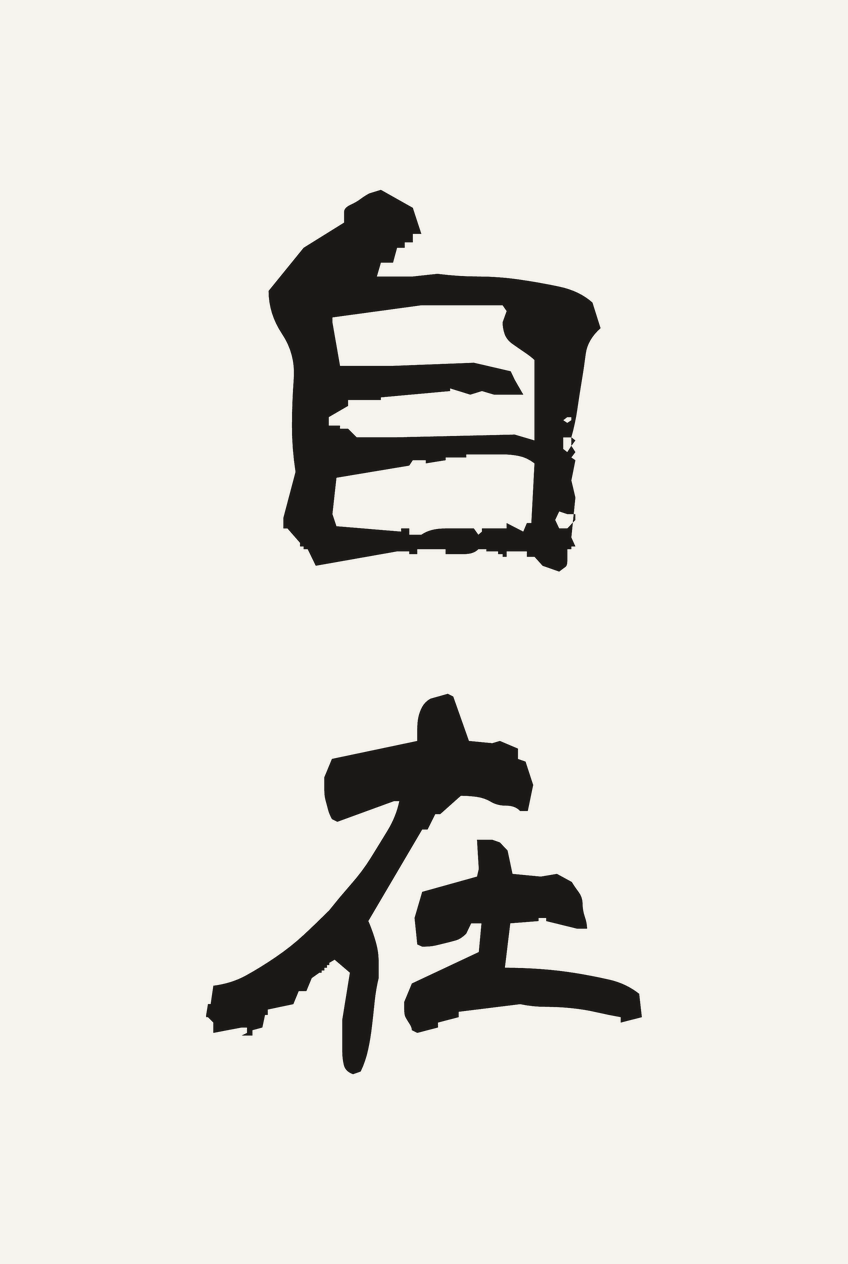
自在 · Zì Zài
At Ease in One's Own Being
Series: Single-Character Zen · Design #22
Style: two characters, vertical column · clerical script (lishu) · same form 自在 · small-to-medium
Form: 文字
The Name
*Zì zài* — self present. Literally "self" + "at/dwelling in": the self, at home in itself, unobstructed. The Buddhist term (īśvara-adjacent, 无碍) names a specific freedom — not the freedom of no constraints, but the freedom of nothing snagging you: the person who can enter a room, a conversation, or a bad stretch of fortune without parts of themselves going missing. As a tattoo, it is two characters that fit in a watch face and describe how you intend to occupy your own life.
自在——自我在场。字面即「自」加「在」:自我安住于自身,无碍。这个佛教术语(与 īśvara 相关、义为无碍)命名一种特定的自由——不是「没有约束」的自由,是「没有任何东西绊住你」的自由:能走进一个房间、一场对话或一段厄运,而没有一部分自己走丢的人。纹下它,是两个能装进表盘的字,描述你打算如何居住在自己的人生里。
Source & Provenance
The word is canonized in the Heart Sutra's opening: 觀自在菩薩 — "Avalokiteśvara, the sovereignly-at-ease one" — whose entire job description is fearless presence in the world's worst moments. 自在 as a free-standing term runs through Buddhist translation literature as "unobstructed" (無礙): power over the only territory it actually covers, oneself. Later Chinese made it domestic: 自在 in the tea house, the novel, the grandmother's verdict on a guest — utterly at ease, no part of them performing. Inking note: this design adapts the classic line construction of the traditional motif and re-inks it as tattoo linework.
这个词由《心经》开篇立为正典:觀自在菩薩——那位「安住自在者」——祂的整个职责描述就是:在世界最坏的时刻里无所畏惧地在场。「自在」作为独立术语贯穿佛教译典,义为「无碍」:对唯一真正管辖的领土行使权力——自己。后来的中国人把它过成了家常:茶馆里的自在、小说里的自在、祖母对某位客人的评语——那个人彻底放松,没有任何部分在表演。墨线转写:本设计以传统母题的经典线条造型为底,转写为纹身墨线。
Design Inspiration
Every form decision points to a recorded source, element by element. ① Two characters, one vertical column — the etymology stacked: 自 (self) above, 在 (present) below; the self, located. ② Clerical script, same form 自在 — 自 closes at the bottom like a settled breath; 在's horizontal stroke opens outward: a person with no parts held back. ③ Small-to-medium scale — 6–8 cm; the word is already small in the best way. ④ Black ink only — ease needs no costume.
本设计的每一处形制决定都有出处可查,逐条对账。① 二字竖列——字源叠置:自(自我)在上,在(在场)在下;自我,被定位了。② 隶书、同形「自在」——「自」在底部收合如一次安顿的呼吸;「在」的横笔向外打开:一个没有藏着掖着的人。③ 小到中尺寸——6–8 厘米;这个词本来就以「小」为佳。④ 只用墨——自在不需要戏服。
The Story
The Heart Sutra's bodhisattva is named for a state, not a miracle: 觀自在 — the one whose presence is unobstructed even while observing the world's suffering. That is the word's original register: not weekend relaxation but sovereignty over your own interior. The sutra shows the sovereign working: eyes open, watching arising and passing, nothing snagged. The Buddhist translators chose 自在 because the characters already meant it — the self (自), dwelling (在). Not "self-improved." Not "self-optimized." Present.
Chinese domestic life adopted the word precisely because it describes a rarity: the guest who is fully at ease and therefore makes everyone else at ease; the elder who enters a crisis without their voice going up an octave. Its opposite is not tension but 在不在 — the self being elsewhere: performing, bracing, rehearsing. Everyone has met people who were physically in the room while entirely missing. 自在 is the claim that the opposite is available as a permanent address. Worn on skin, the two characters are small — appropriately. Presence is not loud. It is just there, like the tattoo: quiet, located, impossible to lose except by leaving.
《心经》的菩萨以状态为名,不以神迹为名:觀自在——即使观察着世界的苦难,在场也无所障碍的那一位。这是这个词的原初语域:不是周末放松,是对自己内在的主权。经文展示这位主权者工作时:眼睛睁着,看着生起与消逝,没有任何东西绊住。佛教译师们选中「自在」,因为这两个字本来就这个意思——自(自我),在(安住)。不是「自我提升」,不是「自我优化」。是在场。
中国人的日常收养这个词,恰恰因为它描述一种稀有:那位彻底放松、于是让所有人放松的客人;那位走进危机而声调不上扬的长者。它的反面不是紧张,是「在不在」——自我去了别处:表演着、绷着、预演着。每个人都见过人在房间里、整个人却缺席的样子。自在宣告的是:反面也可以成为常住地址。戴在皮肤上,两个字是小的——恰当。在场不喧哗。它就是在那里,像这个纹身:安静、有定位、除了离开没有别的丢失方式。
What It Means
For the performers and the bracers — the ones whose shoulders live near their ears, who rehearse conversations before entering rooms. It is not a promise of confidence; it is a promise of location: all of you, present, wherever you stand.
给表演者与绷紧者——肩膀常年住在耳朵附近的人、进门前预演对话的人。它不承诺自信;它承诺位置:全部的你,在场,无论站在哪里。
Where It Sits
Two characters, one plane: inner wrist, nape, sternum. 6–8 cm reads as a private address; below 5 cm 在's open strokes jam.
两个字,一个平面:腕内侧、后颈、胸骨。6–8 厘米读作一处私人住址;低于 5 厘米「在」的舒展笔画会卡。
Before You Ink
Two characters are the whole design. ② Same form 自在 — identical in traditional script. ③ Clerical script stays open. 在's horizontal must not shrink; the openness is the content. ④ Minimum 5 cm. ⑤ Presence is a practice, not a purchase. The Heart Sutra's bodhisattva is watching suffering while at ease — the ease is not the absence of hard things. Wear it at the wrist and check it mid-brace: am I here, or rehearsing?
两个字就是全部设计。 ② 同形「自在」——简繁同形。③ 隶书保持舒展。 「在」的横笔不能缩;舒展就是内容。④ 5 厘米起。 ⑤ 在场是修行,不是购物。 《心经》的菩萨是「看着苦难而自在」——自在不是没有难事。戴在腕上,绷紧的中途看它一眼:我在这里,还是在预演?
Every character on this card was selected and checked stroke by stroke by a native reader of Chinese.



